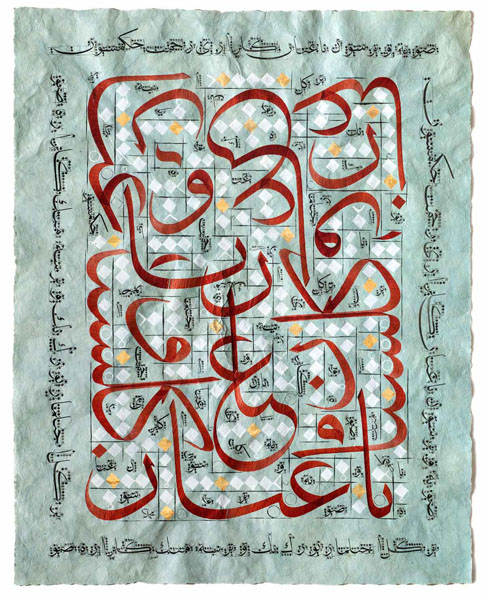
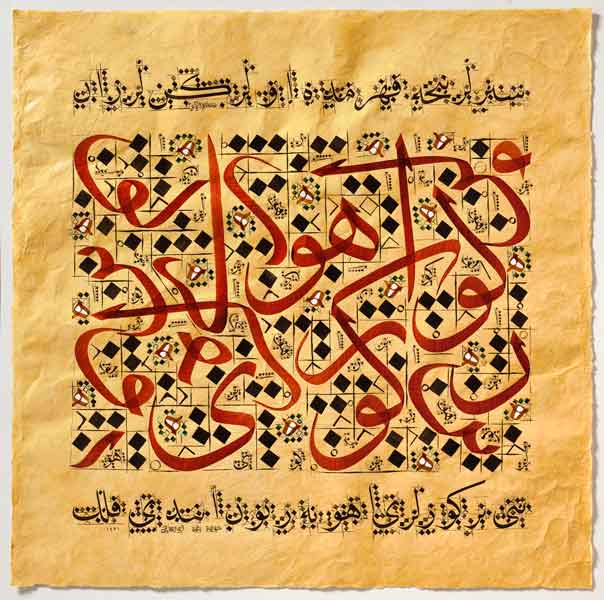
لكَ قُرْبٌ مِنّي ببُعدِكَ عنّي وحنوٌّ وجدتهُ في جفاكا
…
فَتراءيتَ في سِواكَ لِعَينٍ بكَ قَرّتْ، وما رأيتُ سِواكا
وكذاكَ الخَليلُ قَلّبَ قَبْلي طرفهُ حينَ راقبَ الأفلاكا
You have nearness with me in your distance from me
…
In other than thee, You showed Yourself to my eyes
Which, delighting in you, saw nothing but you
Even so, before me did the Friend (Khalil) so turn his gaze
When he beheld the spheres [of planet, moon, and sun]
The verses above and below make reference to the following verses of the Qur’an:
Thus did we show unto Abraham the dominion of the Heavens and the Earth, that he might be of those possessing certainty. When the night grew dark upon him, he beheld a planet and said: ‘this is my Lord’. Then, when it had set, he said: ‘I love not things which set.’
And when he saw the moon rising, he said: ‘This is my Lord.’ Then when it set, he said: ‘Unless my Lord lead me, I must needs become one of the folk who have gone astray.’ And when he saw the sun rising, he said: ‘This is my Lord. This is the greatest.’ Then when it set, he said; ‘O my people, verily I am innocent of all that ye place beside God. Verily I have turned my face towards Him who created the Heavens and the Earth.” (6:75-9)
Shaykh al-‘Alawi’s commentary on these verses reads:
“He did not say ‘This is my Lord’ by way of making comparisons, but he spake thus in utter affirmation of God’s Transcendence, when there was revealed to him the Truth of all Truths that is indicated in the noble verse: Whereso’er ye turn, there is the face of God. He informed his people of this Truth that they might show piety unto God in respect of each thing. All this was on account of what was revealed unto him of the dominion of the Heavens and the earth, so that he found the Truth of the Creator existent in every created thing.”
qtd, in A Sufi Saint of the Twentieth Century by Martin Lings
Hafez
On Love’s path, there is neither near nor far
I see you clearly, and I send you a prayer
در راه عشق مرحله قرب و بعد نیست
می بینمت عیان و دعا میفرستمت
Though we are far from you, we drink to your recollection
There is no distance in the spiritual journey
گر چه دوریم به یاد تو قدح میگیریم
بعد منزل نبود در سفر روحانی
I am the comrade of the steed of imagination and patience’s companion
The partner of the fire of exile, and the intimate of separation
(lit. I have the same Qur’an of separation or I have the same joining with separation-the wordplay is impossible to translate)
رفیق خیل خیالیم و هم ركيب شکیب
قرین آتش هجران و هم قران فراق
The radiance of his face is not revealed to mine eyes alone
The sun and moon are also taking this mirror around
جلوه گاه رخ او دیده من تنها نیست
ماه و خورشید همین آینه میگردانند
I have not seen any equal to my friend even though I held
the mirrors of sun and moon before his face
نظیر دوست ندیدم اگر چه از مه و مهر
نهادم آینهها در مقابل رخ دوست
Niffari
He stayed me in Nearness, and said to me:
1. Nothing is nearer to Me than any other thing, and nothing is farther from Me than any other thing, except inasfar as I establish it in nearness and farness.
2. Farness is made known by nearness, and nearness is made known by spiritual experience: I am He whom nearness does not seek, and Whom spiritual experience does not attain.
3. The least of the sciences of my nearness is, that thou shouldst see the effects of my regard in everything, and that it should prevail in thee over thy gnosis of it.
4. The nearness which thou knowest is, compared with the nearness I know, like thy gnosis compared with my gnosis.
5. My farness thou knowest not, and my nearness thou knowest not, nor my qualification knowest thou as I know it.
6. I am the Near, but not as one thing is near to another: and I am the Far, but not as one thing is far from another.
7. Thy nearness is not thy farness, and thy farness is not thy nearness: I am the Near and the Far, with a nearness which is farness, and a farness which is nearness.
8. The nearness which thou knowest is distance, and the farness which thou knowest is distance: I am the Near and the Far without distance.
9. I am nearer to the tongue than its speech when it speaks. Whoso contemplates Me does not recollect, and whoso recollects Me does not contemplate.
10. As for the recollecting contemplative, if what he contemplates is not a reality, he is veiled by what he recollects.
11. Not every recollector is a contemplative: but every contemplative is a recollector.
12. I revealed Myself unto thee, and thou knewest Me not: that is farness. Thy heart saw Me, and saw Me not: that is farness.
13. Thou findest Me and findest Me not: that is farness. Thou describest Me, and dost not apprehend Me by My description: that is farness. Thou hearest my address as though it were from thy heart, whereas it is from Me: that is farness. Thou seest thyself, and I am nearer to thee than thy vision of thyself: that is farness.
From The Book of Spiritual Stayings of Al Niffari. Edited for the first time, with translation, commentary, and indices, by Arthur John Arberry, Luzac & Co, London, 1935.
Shaykh Aḥmad al-‘Alāwi
“The outwardly Manifest is veiled by naught but the strength of the manifestations, so be present with Him, nor be veiled from Him by that which hath no being apart from Him.”
–Mināh al-Qudussiyyah, cited in A Sufi Saint of the Twentieth Century by Martin Lings
Ibn ‘Arabī
“So glory be to Him who veils Himself in His manifestation and becomes manifest in His veil!
No eye witnesses anything other than He, and no veils are lifted from Him.”
Futūḥāt III 546.24, cited in The Self Disclosure of God by William Chittick
From the Ḥikam of Ibn ‘Atā ‘Llah
164
The Truth is only veiled from you
due to its extremity of closeness to you
إمنا حجب احلق عنك – شده قربه منك .
165
It is only veiled due to the intensity of its manifestation
and It is only hidden from sight
due to the splendour of Its Light
إمنااحتجب لشدة ظهوره ، وخفى عن األبصار لعظم نوره .
15
That which shows you the existence of His Omnipotence
Is that He veiled you from Himself
By what has no existence alongside of Him.
ما يدلك على وجود قهره – سبحانه – أن حجبك عنه مبا ليس مبوجود معه .
16
How can it be conceived that something veils Him,
since He is the One who manifests everything?
How can it be conceived that something veils Him
since He is the one who is manifest through everything?
How can it be conceived that something veils Him,
since He is the One who is manifest in everything?
How can it be conceived that something veils Him,
since He is the Manifest to everything?
How can it be conceived that something veils Him,
since He was the Manifest before the existence of anything?
How can it be conceived that something veils Him,
since He is more manifest than anything?
How can it be conceived that something veils Him,
since He is the One alongside of whom there is nothing?
How can it be conceived that something veils Him,
since He is nearer to you than anything else?
How can it be conceived that something veils Him,
since, were it not for Him,
the existence of everything would not have been manifest?
It is a marvel how Being has manifested in nonbeing,
and how the contingent has been established
alongside of Him who possesses the attribute of Eternity!
كيف يتصور أن حيجبه شيء ، وهو الذي أظهر كل شيء ؟
كيف يتصور أن حيجبه شيء ، وهو الذي ظهر بكل ؟ كيف يتصور أن حيجبه شيء ، وهو الذي ظهر يف كل شيء ؟
كيف يتصور أن حيجبه شيء ، وهوالذي ظهر لكل شيء ؟
كيف يتصور أن حيجبه شيء ، وهو الظاهر قبل وجود كل شيء ؟
كيف يتصور أن حيجبه شيء ، وهو أظهر من كل شيء ؟
كيف يتصور أن حيجبه شيء ، وهو الواحد الذي ليس معه شيء ؟
كيف يصور أن حيجبه شيء ، وهو أقرب إليك من كل شيء ؟
كيف يتصور أن حيجبه شيء ، ولواله ما كان وجود كل شيء ؟
يا عجبا ! كيف يظهر الوجود يف العدم !؟
أم كيف يثبت احلادث مع من له وصف القدم !؟
218
How can the Truth veil Himself with something
when He is apparent in that by which he is veiled,
and is present and found [in it]?
كيف حيتجب احلق بشيء ، والذي حيتجب به – هو فيه ظاهر ، وموجود حاضر !؟
223
Pleasure, even if manifest in many forms, is only through
viewing His closeness. Pain even if manifest in many forms
is only through being veiled from Him. the cause for
pain is the presence of the veil. The perfecting of pleasure is
by viewing His Noble Countenance.
النعيم وإن تنوعت مظاهره – إمنا هو لشهوده واقترابه ، والعذاب وإن تنوعت مظاهره – إمنا هو لوجود حجابه ، فسبب العذاب – وجود احلجاب ، وامتام النعيم – بالنظر إىل وجهه الكرمي .
As Hafez says,
I asked the doctor about the state of the Friend, he said
There is pain in distance from him, and health in nearness to him
پرسیدم از طبیبی احوال دوست گفتا
فی بعدها عذاب فی قربها السلامه
244
If it were not for the battlefields of the souls,
there would be no travel for the travelers on the Path
since there is no distance between you and Him
that your journey would shorten
and there is no separation between you and Him
that your reaching Him would eliminate.
لو ال ميادين النفوس – ما حتقق سري السائرين ، إذا المسافة بينك وبينه ؛ حىت تطويها رحلتك ، وال قطعة بينك وبينه ؛ حىت متحوه وصلتك .
In addition to Ibn ‘Arabi’s famous poem (see this post), the “religion of love,” the root of all religion and worship beyond all distinctions and differentiations, plays an important role in other Sufi poetry, especially that of Rumi, Hafez, and Ibn al-Fariḍ:
Rumi
ملت عشق از همه دینها جداست
عاشقان را ملت و مذهب خداست
The sect of Love is different from all other religions
For lovers, their sect and religion is simply God
طریق عشق ز هفتاد و دو برون باشد
چو عشق و مذهب تو خدعه و ریاست بخسب
The way of love is outside of the seventy-two sects
Go to sleep, for your love and religion are deceit and conceit
خرد نداند و حیران شود ز مذهبعشق
اگر چه واقف باشد ز جمله مذهبها
Wisdom is bewildered by the religion of love
Although it knows all other religions
بسگل ز جز این عشق اگر در یتیمی
زیرا که جز این عشق تو را خویش و پدر نیست
در مذهب عشاق به بیماری مرگست
هر جان که به هر روز از این رنج بتر نیست
Leave all that is other than this love, if you are an orphaned pearl
For apart from this love, you have neither family nor father
In the religion of lovers, whosoever’s suffering does not make him better
He is possessed of the sickness of death
تا شب میگو که روز ما را شب نیست
در مذهب عشق و عشق را مذهب نیست
عشق آن بحریست کش کران ولب نیست
بس غرقه شوند و ناله و یارب نیست
Until night, say that there is no night for our day
In religion, there is no Love, and Love has no religion
Love is that ocean without boundary or shore
Where lovers drown without sigh or cry
در راه طلب عاقل و دیوانه یکیست
در شیوهٔ عشق خویش و بیگانه یکیست
آن را که شراب وصل جانان دادند
در مذهب او کعبه و بتخانه یکیست
In the way of seeking, the sane and the mad are one
On the path of love, friend and stranger are one
That one who has tasted the wine of union with the supreme soul
In his religion, the Ka’aba and idol-temple are one
عاشق تو یقین دان که مسلمان نبود
در مذهب عشق کفر و ایمان نبود
در عشق تن و عقل و دل و جان نبود
هرکس که چنین نگشت او آن نبود
In loving you there are certainly no Muslims
In the religion of Love, there is no infidelity or disbelief
In Love, there is neither body nor reason nor heart nor soul
Everyone who does this is not separate from that
در عشق موافقت بود چون جانی
در مذهب هر ظریف معنی دانی
از سی و دو دندان چو یکی گشت دراز
بیدندان شد از چنان دندانی
In love there is harmony because you become pure spirit
you will know the essence of the religion of each subtle one
If one of the 32 teeth grows large
from that tooth, you will become toothless
با دو عالم عشق را بیگانگی
اندرو هفتاد و دو دیوانگی
سخت پنهانست و پیدا حیرتش
جان سلطانان جان در حسرتش
غیر هفتاد و دو ملت کیش او
تخت شاهان تختهبندی پیش او
Love is a stranger to the two worlds: in it are seventy-two madnesses.
It is hidden; only its bewilderment is manifest:
The soul of the spiritual sultan longs for it.
Love’s religion is other than the seventy-two sects:
Beside it the throne of kings is just a floorboard.
unverified “Rumi”
I was unable to find Persian poems attributed to Rumi that correspond to these English verses that have been attributed to him. If these are indeed translations and you know the original from which they are derived please let me know in the comments section. In any event, I am sure Malwana wouldn’t object to these verses, even if they never came from his pen.
“I belong to no religion.
My religion is Love.
Every heart is My temple”
Whatever you think of War, I am far, far from it
Whatever you think of Love, I am that, only that, all that
Like a compass I stand firm with one leg on my faith
And, with the other leg, roam all over the seventy-two nations
The Seventy-Two nations learn their secrets from us:
We are the reed-flute whose song unites all nations and faiths
In all mosques, temples, and churches, I find one shrine alone
I profess the religion of love,
Love is my religion and my faith.
My mother is love, My father is love
My prophet is love My God is love
I am a child of love
I have come only to speak of love
Ibn al-Fāriḍ
The sights do not swerve in any faith
nor do the thoughts stray in any sect.
وما زاغت الأبصار من كل ملة
وما زاغت الأفكار في كل نحلة
Every part of me kissed her veil
With every mouth whose touch held every kiss
If she dissolved my body, she would see in every atom
each and every heart filled with each and every love
ويلثم مني كلّ جزء لثامها
بكلّ فم فى لثمه كلّ قبلة
فلو بسطت جسمي رأت كلّ جوهر
به كلّ قلب فيه كلّ محبة
As for my way in love, I have no way
If I turn from it (Love) for a day, then I have left my religion
And if I think of other than you, even momentarily
I would consider it as my apostasy
عن مذهبي في الحب ما لي مذهب
وإن ملت عنه يوما فارقت ملتي
وإن خطرت لي في سواك ارادة
سهوا على خاطري قضيت بردتي
And part of my way is love of lands for the sake of their people
and people, in what they love, have many ways
-Abu Firas Hamadani
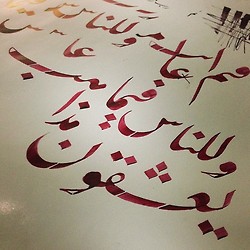
و منْ مذهبي حبُّ الديارِ لأهلها وَللنّاسِ فِيمَا يَعْشَقُونَ مَذَاهِبُ
لابو فراس الحمداني-
He saw the lightning in the East and longed for the East, but if it had flashed in the West he would have longed for the West. My desire is for the lightning and its gleam, not for places and earth.
–Ibn ‘Arabi
رأى البرْقَ شرقيّاً، فحنّ إلى الشرْقِ، ولو لاحَ غربيَّاً لحنَّ إلى الغربِ
فإنّ غَرامي بالبُرَيْقِ ولمحِهِ وليسَ غرَامي بالأماكِنِ والتُّرْبِ
لابن عربي
Ḥallāj
تَفَكَّرتُ في الأَديانِ جِدّ مُحَقّق فَأَلفَيتُها أَصلاً لَهُ شَعبٌ جَمّا
Both robb’d of air, we both lie in one ground ;
Both whom one fire had burnt, one water drown’d
A Burnt Ship
Out of a fired ship, which by no way
But drowning could be rescued from the flame,
Some men leap’d forth, and ever as they came
Near the foes’ ships, did by their shot decay;
So all were lost, which in the ship were found,
They in the sea being burnt, they in the burnt ship drown’d.
Rumi
A candle is made to become entirely flame.
In that annihilating moment
it has no shadow.
It is nothing but a tongue of light
describing a refuge.
Look at this
just-finishing candle stub
as someone who is finally safe
from virtue and vice,
the pride and the shame
we claim from those.
(Coleman Barks’ “translation”)
There is a candle in the heart of man, waiting to be kindled.
In separation from the Friend, there is a cut waiting to be stitched.
O, you who are ignorant of endurance and the burning fire of love–
Love comes of its own free will, it can’t be learned in any school.
THE SHIP SUNK IN LOVE
Should Love’s heart rejoice unless I burn?
For my heart is Love’s dwelling.
If You will burn Your house, burn it, Love!
Who will say, ‘It’s not allowed’?
Burn this house thoroughly!
The lover’s house improves with fire.
From now on I will make burning my aim,
From now on I will make burning my aim,
for I am like the candle: burning only makes me brighter.
Abandon sleep tonight; traverse for one night
the region of the sleepless.
Look upon these lovers who have become distraught
and like moths have died in union with the One Beloved.
Look upon this ship of God’s creatures
and see how it is sunk in Love.
O light, from seeing your beauty, my soul became candle-like
Turn my fortune so I can shed myself candle-like
The promise of the morning breeze, of joining Thee day and night
Burning, yellow, shaking, crying and humble, candle-like.
Thy flowing hair, like scissors sheer my soul at its height
In this fire of separation burn me no more, candle-like.
Pearls overflowing from the sea of my eye, fill my bosom in delight
My burning heart sent its flames blazing upward, candle-like.
Solar flares set in the celestial lantern, sooth the sight
Every morn dam my tears and shed no more, candle-like.
Thy face is spring-like, thy fire sorrows fight
How long burn in this solstice of separation, candle-like?
From the memory of thy light, every night flames take flight
If only my heart’s fire would burn my soul candle-like.
How long burn thyself Shams-e Tabrizi, thy love beaming bright?
We know of nothing other than this burning, candle-like.
(trans. by Shahriar Shahriari)
Original:
ای منور از جمالت دیده ی جانم چو شمع
از در بختم درآ تا جان بر افشانم چو شمع
از هوای خنده ی صبح وصالت روز و شب
زرد و لرزان و گدازان زار و گریانم چو شمع
زلف چون مقراض بر كش رشته جانم ببر
بیش از این در آتش هجران مسوزانم چو شمع
آستین و دامنم پر در شد از دریای عشق
تا علم زد آتش دل از گریبانم ، چو شمع
آتش خورشید را ، در مشعل سبز فلك
هر سحر از آبگیر دیده ، بنشانم چو شمع
ای رخت نوروز عالم زآتش ، جانسوز شمع
چند سوزی در شب یلدای هجرانم چو شمع
آفتاب از خاطرم ، شعله فروزد هر شبی
آتش دل گر بسوزد ، رشته ی جانم چو شمع
چند سوزی خویشتن را شمس تبریزی ز عشق
ماورای سوختن ، كاری نمیدانم چو شمع
Ana Moura
Translation:
My eyes are two candles
Casting a sad light on my face
Your eyes are two candles
Casting a sad light on my face
Marked by the pains
Of longing and grief
When I hear the ringing of the bells
And the afternoon is coming to an end
I pray, out of longing for you
An “Our Father” for me
But you do not know how to pray
Nor how to ache with longing
Why do you disturb me so
Why do I want you so much?
For my despair you are like
The clouds that fly high
Every day I wait for you
Every day you stand me up
Original:
Os meus olhos são dois círios
Dando luz triste ao meu rosto
Os teus olhos são dois círios
Dando luz triste ao meu rosto
Marcado pelos martírios
Da saudade e do desgosto.
Quando oiço bater trindades
E a tarde já vai no fim
Eu peço às tuas saudades
Um padre nosso por mim.Mas não sabes fazer preces
Não tens saudades nem pranto
Por que é que tu me aborreces
Por que é que eu te quero tanto?
És para meu desespero
Como as nuvens que andam altas
Flee to God’s Qur’an, take refuge in it
there with the spirits of the prophets merge.
The Book conveys the prophets’ circumstances
those fish of the pure sea of Majesty.
I long to escape the prison of my ego
and lose myself in you.
There is no salvation for the soul
but to fall in Love.
Only lovers can escape
out of these two worlds.
This was ordained in creation.
Only from the heart
can you reach the sky:
The Rose of Glory
can grow only from the heart.
Hafez
( the poem inscribed on his tomb)
مژدهى وصل تو كو كز سر جان برخيزم
طاير قدسم و از دام جهان برخيزم
Where are the tidings of union with you, so that from life I may rise?
I am a bird of heaven, from the world’s snare I must rise
به ولاى تو كه گر بندهى خويشم خوانى
از سر خواجگى كون و مكان برخيزم
I swear by your love, if you call me your slave
From the mastery of the universe I will rise
يارب از ابر هدايت برسان بارانى
پيشتر زانكه چو گردى ز ميان برخيزم
O Lord, let the cloud of guidance rain
Before that time when, like dust from the earth, I rise
بر سر تربت من با مى و مطرب بنشين
تا ببويت ز لحد رقصكنان برخيزم
Sit beside my grave with musician and wine
So from your scent, dancing from the dust, I may rise
خيز و بالا بنما اى بت شيرينحركات
كه چو حافظ ز سر جان و جهان برخيزم
O sweetly-moving idol, rise and show me your shape
So, like Hafez, from life and world, dancing, I may rise
گرچه پيرم، تو شبى تنگ درآغوشم كش
تا سحرگه ز كنار تو جوان برخيزم
Though I am old, for one night, in your bosom hold me tight
So when morning comes, young from your embrace, I may rise
Condemned to live sad
Is he who loves much.
You, my heart, never withstood
The love that the pain inflames.
Again my tortured heart
Sought shelter in thy breast, uselessly;
No one will console the burning thirst
Nor is it is satisfied with the delights of passion.
And always, for any act,
There is a price of suffering,
Until the sweetness of the last touch
Eventually dies in regret.
And like the bodies snared
One day everything goes and there is only loneliness.
Perhaps will there be someone to kill
the fire of this damned passion?
I know love is a sin
So I also cursed the heavens
that I was tied for life
to one who deceived me
Love never failed me
With tenderness and embraces
But freed my longings,
Never such remembered.
And always, for any act,
There is a price of suffering,
Until the sweetness of the last touch
Eventually dies in regret.
And like the bodies snared
One day everything goes and there is only loneliness.
Perhaps will there be someone to kill
the fire of this damned passion?
Original:
Condenado a viver triste
É sina de quem muito ama.
Nunca tu, meu coração, resististe
Ao amor que a dor inflama.
Mais uma vez meu torturado coração
Buscou abrigo no teu peito, inutilmente;
Não há quem lhe console a sede ardente
Nem ele se farta das delícias da paixão.
E sempre, para qualquer acto,
Há que pagar com o sofrimento,
Até que a doçura do último tacto
Acabe por morrer num lamento.
Por mais que os corpos se enlacem
Um dia tudo passa e só fica a solidão.
Haverá porventura alguém
que mate o fogo de tão maldita paixão?
Eu sei que amar é pecado
Por isso também a mim o céu castigou
Fiquei pra vida amarrado
A quem sempre me enganou
Jamais o amor me faltou
Com ternuras e afagos
Mas libertar meus anseios,
Nunca de tal se lembrou.
E sempre, para qualquer acto,
Há que pagar com o sofrimento
Até que a doçura do último tacto
Acabe por morrer num lamento.
Por mais que os corpos se enlacem,
Um dia tudo passa e só fica a solidão.
Haverá alguém capaz de matar
O fogo de tão maldita paixão?
Hafez
Translation:
I am the friend of the sweet face, and of the heart-snatching hair
I’m infatuated with the intoxicated eye and pure, unmixed wine
You asked, “Say one word about the secret of the covenant of Alast.”
“Once I’ve drunk two cups of wine, then I’ll tell you,” I replied.
I am the Paradisal Adam, but in this worldly journey
Now I’m a captive of the beauty of youth
In love, there is no escape from pain and suffering
I am standing like the candle, don’t try to scare me with fire
Shiraz is the mine of ruby lips and the quarry of beauty
Because of that, a poor jeweler like me is so distraught
I’ve seen so many drunken eyes in this city, I think
I’m tipsy, although I’ve had nothing to drink
From all six directions, it is a city full of lovely glances
And I’ve nothing if I don’t buy all six of them
If Fortune should be so kind as to guide me to the Friend
Even the Houri’s hair will sweep the sweet dust from off my bed
Hafiz, my nature’s like a radiant, hopeful bride
But no mirror have I to see myself, and because of that I sigh
Dick Davis’ translation:
My love’s for pretty faces,
For heart-bewitching hair;
I’m crazy for good wine,
A languorous, drunk stare …
In love there’s no escaping
The burning of desire;
I stand here like a candle –
Don’t scare me with your fire.
I am a man from heaven,
But on this path I see
My love of youth and beauty
Have made a slave of me.
If Fate will help me, I
Will take myself elsewhere –
My bed will be swept clean
By some sweet houri’s hair.
Shiraz is like a mine
Of ruby lips, a store
Of loveliness … and I’m
A jeweler who’s dirt-poor.
I’ve seen so many drunk
Eyes in this town, I think
I’m drunk, although I swear
I’ve had no wine to drink.
You asked me to explain
Eternity for you –
Well certainly, when I
Have downed a drink or two.
Hafez, my nature’s like
A hopeful bride, but I
Lack mirrors to array
Myself – that’s why I sigh.
The great Indian Sufi shaykh, disciple of Mu’in ad-Din Chisti and master to Baba Farid, is said to have heard the following verses during a qawwali performance:
كشتگان خنجر تسليم را
هر زمان از غيب جان ديگر است
For the victims of the dagger of surrender
There is new life at every moment from the unseen
and fell into a trance for three days. On the fourth day he died, and became known as the “Martyr of Love.” These verses are now considered taboo in qawwali performances-you don’t want to kill the best members of your audience!
Before he died, Shaykh Kaki wrote some beautiful poetry of his own that is still peformed
by qawwals today:
Translation and original (courtesy of Fuad Naeem):
1. Dil pareeshan deeda hairan kardah ee . . . Jan-e mun too kardah ee haan kardah ee
دل پریشان دیدہ حیراں کردہ ای ۔ ۔ ۔ جانِ من تو کردہ ای ہاں کردہ ای
You took away the peace of my heart, and dazzled my eyes . . . O! My life ! you have done that, have done that!
2. Deedah giryaan, seena biryab kardah ee . . . ( 2nd part of the couplet is unintelligible ).
You make my eye shed tears, and my heart to burn . . .
3. Shokhee o baibaki o naaz o adaa . . . Behr-e yak-dil een cheh samaan kardah ee
شوخی و بیباکی و نا زو ادا ۔ ۔ ۔ بہرِ یکدل ایں چہ ساماں کردہ ای
Your playfulness, openness, vanity and captivating demeanor . . . All this to enchant the one (poor) heart of mine!
4. Az kuja mee aayee aey toofaan-e husn . . . Aalmay ra khana weeran kardah ee
از کجا می آئی اے طوفانِ حسن ۔ ۔ ۔ عالمے را خانہ ویراں کردہ ای
Your beauty is like a tsunami . . . from where has it come to come to crash and lay bare the entire world?
5. Jan hum shukrana ast aey dard-e ishq . . . Murdan-e dushwar az aasaan kardah ee
جان ہم شکرانہ است اے دردِ عشق ۔ ۔ ۔ مردنِ دئشوار از آسان کردہ ای
My life is an humble offering at the alter of my (painful) love for you . . . You have made my dying harder from easier ( i.e., I cherish your love so much and hence my life all the more, my life is of more value to me now as I cannot love you unless I am alive).
6. Murgh-e sahra dar qafas afgandah ee . . . Bay-gunahay ra ba-zindaan kardah ee
مرغِ صحراء در قفس افگندہ ای ۔ ۔ ۔ بیگئاہے را بزنداں کردہ ای
You have (captured and ) put in the cage the free bird of the wild ( i, e , my carefree heart). . . O! you have imprisoned an innocent one!
7. Mun cheh goyam hust too Khawja Mueen . . . Abd-e khud ra qutb-e dowraan kardah ee
من چہ گویم ہست تو خواجہ معین ۔ ۔ ۔ عبدِ خود را قطبِ دوراں کردہ ای
O Khawaja Mueen! mine are only the (vain) words, but you embody the reality . . . (As) you have elevated your slave to the Axial Saint (Qutb) of this age.
Sung lyrics:
Dil pareshan dida hairan kar gayi
Dil pareshan dida hairan kar gayi
Zanemangi kar dayi aaa kar dayi kar dayi
Dil pareshan
Sukhiyo baiba kiyo naazo ada
Behre ek dil eeche saama kar gayi
Man che goyam basbe to khwaja moinuddin
Ab de khudra khud pe daura kar gayi
Dil pareshan dida hairan
Kar gayi kar gayi
The following verse, which perfeclty expresses the connection between love, spirituality, and music, is also attributed to Qutb ad-Din Bakhtiar Kaki:
What is music and why there is so much of the enchantment of love in it?
Music is the secret of Love and Love is the secret of God