Thursday, December 6th, 2012
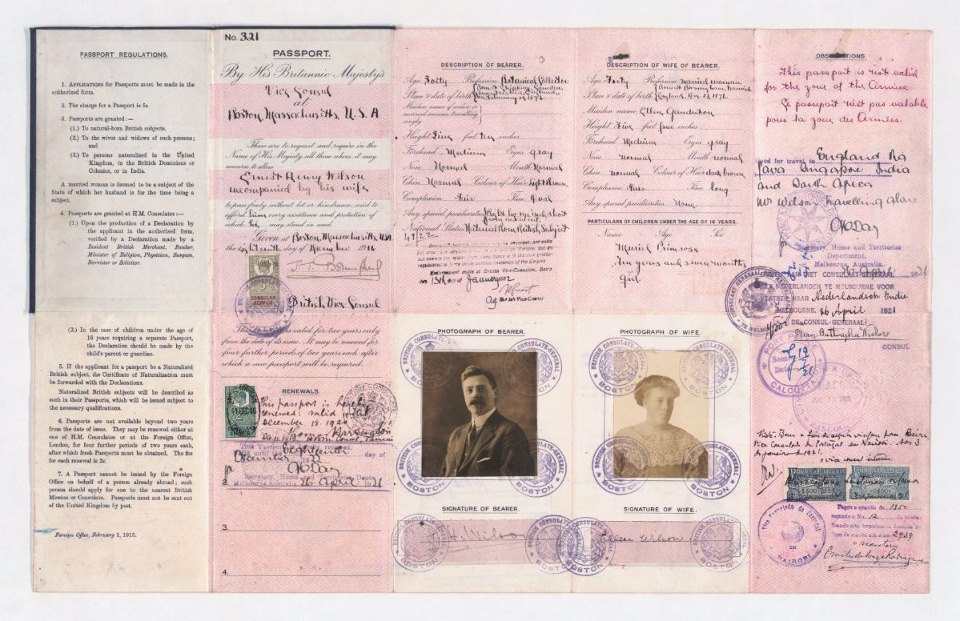
Botanical and Cultural Images of Eastern Asia, or, the Story of Plant Hunters in the Early 20th Century.
More than 4,500 botanical and cultural images of Eastern Asia by John George Jack (1861–1949), Ernest Henry Wilson (1876–1930), Frank Nicholas Meyer (1875-1918), William Purdom (1880–1921), Joseph Hers (1884–1965) and Joseph Charles Francis Rock (1884–1962) from the Arnold Arboretum Horticultural Library at Harvard University.The collection represents the work of intrepid plant explorers who traveled to exotic lands in the early years of the twentieth century and returned to the Arboretum with not only seeds, live plants, and dried herbarium specimens, but also with remarkable images of plants, people, and landscapes
http://arboretum.harvard.edu/library/image-collection/botanical-and-cultural-images-of-eastern-asia/
Wednesday, December 5th, 2012

Patrick Hanan, Victor S. Thomas Professor of Chinese Literature emeritus at Harvard University, has donated his special collection in Chinese literature to the Harvard-Yenching Library. The books are now stored in the rare book room. A digitization project will be launched next year by the library for this collection.
Catalogue of Hanan Collection:
http://hollis.harvard.edu/?q=language-id%3Achi+Hanan+collection+
From the collection:
新華編輯社,色迷寶箴,上海:新華書局,1922。
Sunday, December 2nd, 2012
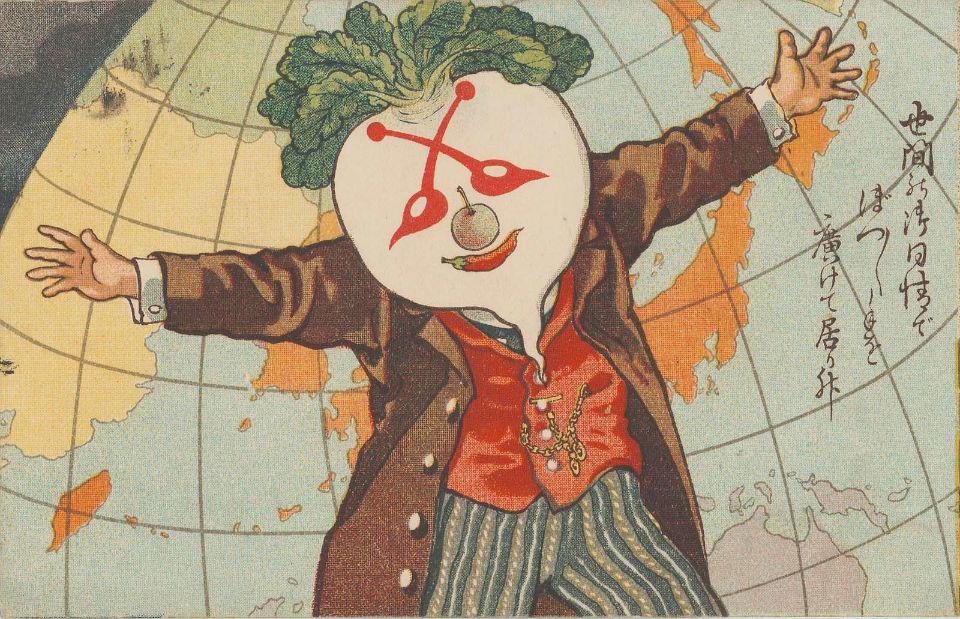
The Museum of Fine Arts in Boston has one of the largest collections of Japanese artistic works outside Japan. Some 11,000 Japanese postcards in the early 20th century, covering a variety of topics, are now viewable on its website. Many of them were used in the the Russo-Japanese War as propaganda, but there are other styles as well. A stunning collection!
http://www.mfa.org/search/collections?keyword=Japanese+postcard
Sunday, December 2nd, 2012

174 diplomatic treaties and agreements of the late Qing including Treaty of Nanking, Treaty of Shimonoseki, and Boxer Protocol, preserved in the Ministry of Forign Affairs of Taiwan, can now be viewed online.
http://npmhost.npm.gov.tw/ttscgi/npmkm3/ttswebx?%400%3A0%3A1%3Anpmcpkm%40%400.9067052751779556
A page from Treaty of Nanking in 1842
Sunday, December 2nd, 2012

Today is the birthday of Ida Pruitt, an American writer, educator, and social worker born in China in 1888.
Ida Pruitt lived in Hwanghsien, a village in Shantung Province, until she was twelve and then went on to be educated in the United States. She attended Cox College in College Park, Georgia (1906-1909); received a B.S. from Columbia University Teachers’ College (1910); and studied social work in Boston and Philadelphia. In 1912, Pruitt returned to China as an adult to become a teacher and principal of Wai Ling School for girls in Chefoo (1912-1918). The Rockefeller Foundation later appointed her chief of the Department of Social Services, Peking Union Medical College (1921-1939). During the Japanese occupation of China in the 1930s, Pruitt and social reformer, Rewi Alley, organized Chinese Industrial Cooperatives (CIC), an international committee that worked to promote Chinese self-sufficiency. She also served as executive secretary (1939-1952) of Indusco, the American fundraising arm for the CIC, and was an author and translator of several books including, A China Childhood (1978) and Daughter of Han: The Autobiography of a Working Woman (1945). Pruitt died in Philadelphia on July 24, 1985; she was survived by two adopted daughters, Kuei-ching Ho and Tania (Cosman) Wahl.
Her personal archives, including correspondence, diaries, notebooks, published and unpublished writings of her and her family, are now stored in Schlesinger Library of Harvard University. For finding aid, see
http://oasis.lib.harvard.edu//oasis/deliver/deepLink?_collection=oasis&uniqueId=sch00076&digital=Y
An online exhibition of Papers of Ida Pruitt and Marjorie King, 1891-1994:
http://www.flickr.com/photos/experimental_archives/collections/72157629840700987/
Saturday, December 1st, 2012
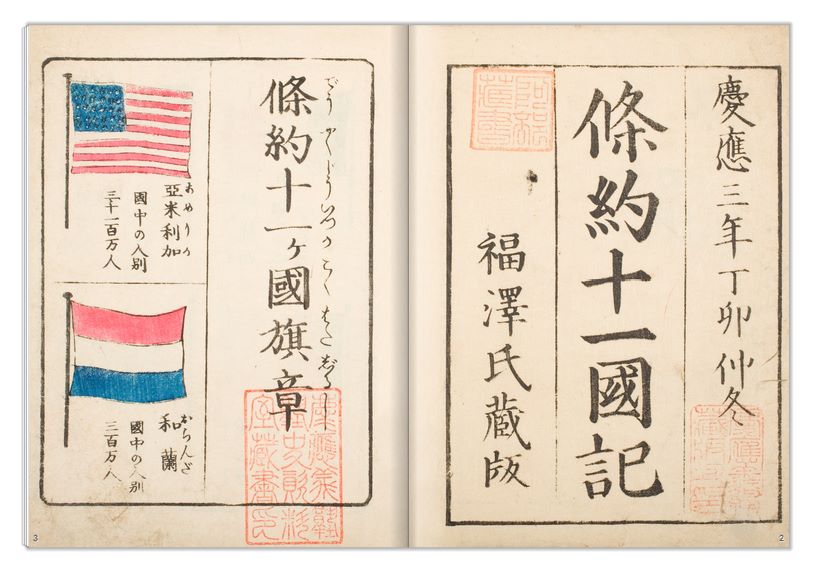
Fukuzawa Yukichi was one of the most important intellectuals in the modern history. Born in 1835, he played an critical role in introducing Western learning to Japan. Now you can read his works in this digital library of Keio University:
http://project.lib.keio.ac.jp/dg_kul/fukuzawa_tbl.php
Wednesday, November 28th, 2012

Explore eighteenth-century Beijing — the Forbidden City, temples, and hutongs — on 乾隆京城全図 brought to the digital world by Toyo Bunko. Click thumbnails on the overview map to access high-resolution images.
http://dsr.nii.ac.jp/toyobunko/II-11-D-802/V-1/page/0001.html.en
The map can also be viewed on Google Earth
http://dsr.nii.ac.jp/geography/historical-maps/toyobunko/II-11-D-802/1.0/all.kmz
Saturday, November 24th, 2012

“According to the Management Division, the use of matches was limited to one box every two months, but Old Tong used only three matches in the past six months. In the past three years, six towels have been distributed, but he used only one of them. This year, the government gave an extra one for him as a reward, so he still has six towels. In the past two years, four shirts, four pairs of sandals, and two pairs of cotton-padded shoes have been distributed, but he still has three new shirts, a new pair of trousers, and three new sandals. He also economizes the use of soap, giving away two cakes and keeping five.”
(管理科規定兩個月用一盒洋火,可是老佟半年只用了三根火柴。三年來發了六條毛巾,他只用了一條,今年公家獎勵了他一條,現在還是六條毛巾。兩年來發了四套襯衣,四雙草鞋,兩雙棉鞋,他現在還有三件新上衣,一條新褲子,兩雙新草鞋,公家發給他的肥皂也節省使用,送人二塊,還存五塊。)
機關節約模範佟玉新。中共西北中央局調查研究室,1944。
http://pds.lib.harvard.edu/pds/view/14288290?n=151&imagesize=1200&jp2Res=.5&printThumbnails=no
Thursday, November 22nd, 2012

Two databases on trial until 1/31/2013
(Log in with Harvard ID and pin number.)
中国基本古籍库 Database of Chinese Classic Ancient Books
(http://nrs.harvard.edu/urn-3:hul.eresource:DCLR)
The database includes more than 10,000 titles (160,000 juans) across all dynasties to the Republican period, and 1.7 billion characters (12 million pages). Full-text searchable.
敦煌文獻庫 Database of Chinese Dunhuang Manuscripts
(http://nrs.harvard.edu/urn-3:hul.eresource:DCLR)
The database includes 30,000 manuscripts (3 millions pages) from Dunhuang. An important source for studying medieval Chinese history. Full-text searchable.
Wednesday, November 21st, 2012

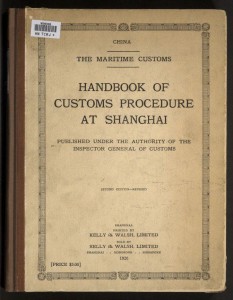
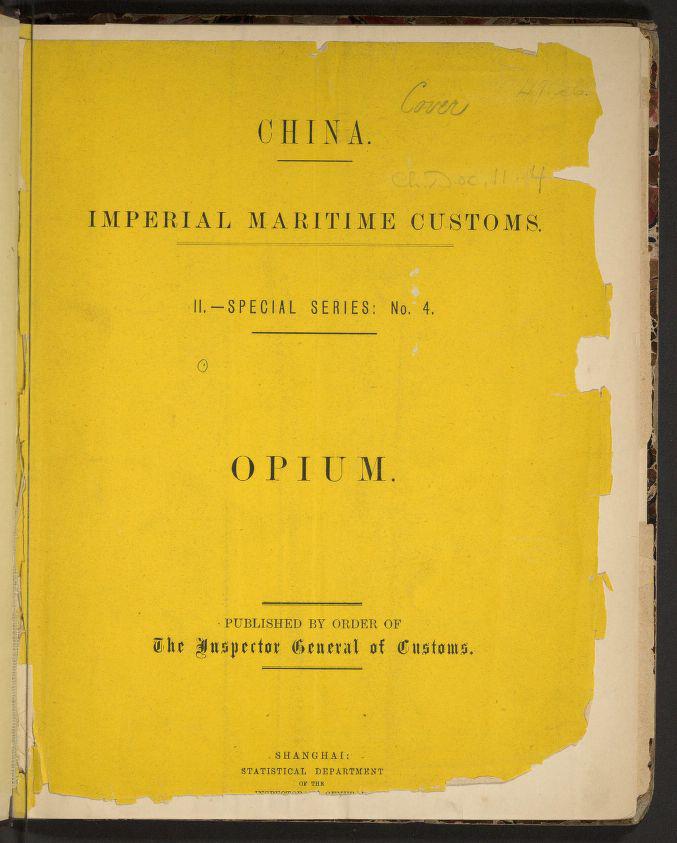
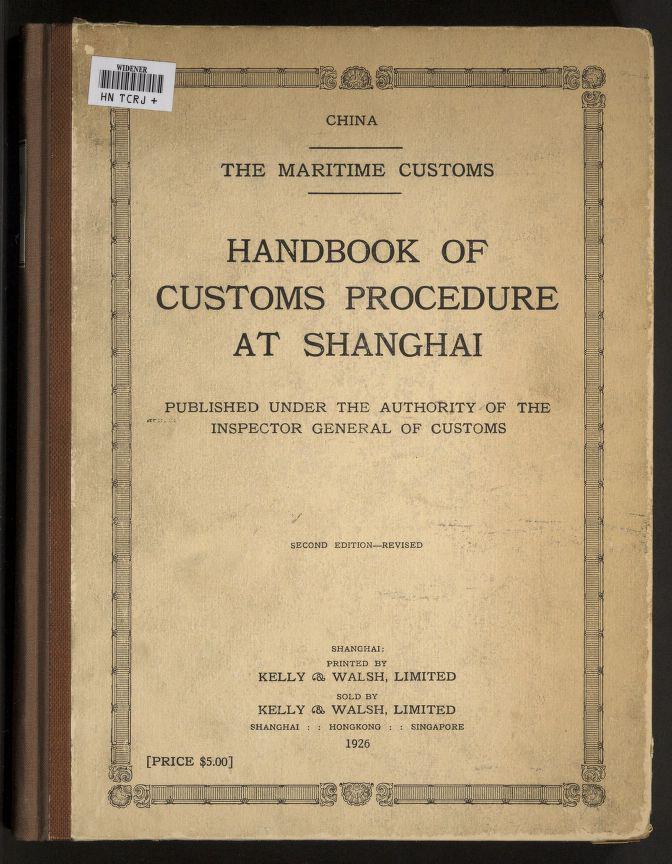
Chinese Maritime Customs Digitization Project of Harvard Yenching Library is now online. The project covers a wide variety of documents from Chinese Maritime Customs in the late 19th and early 20th centuries, including statistics, codes of regulations, reports on commodities and local societies, dictionaries, and handbooks for officials, etc.
Explore this amazingly rich collection by yourself! http://hollis.harvard.edu/?q=ex-Everything-1.0%3A%22Chinese+maritime+digitization+project.%22+