Archive for January, 2022

Smart grid and renewable energy must support the agricultural sector, not destroy it

Saturday, January 29th, 2022

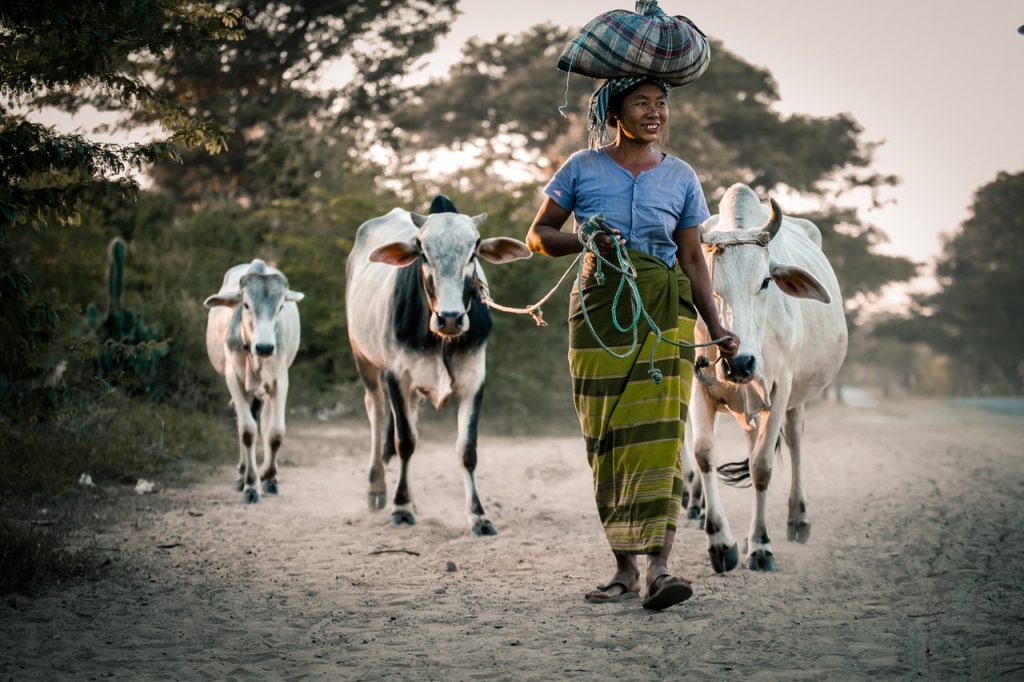
Photo by Sippakorn Yamkasikorn


A smart grid is a digitally enabled electrical system that collects, distributes, and works with data on all electricity providers and consumers’ behaviour in order to enhance the efficiency, reliability, and sustainability of power delivery.


Smart grids generate massive amounts of data, which may be examined using data analytics and with machine learning, converted into valuable insights. Weather conditions, demand and supply records, and location are all examples of data metrics. 


With this data, operators may make smarter judgments about the transfer of energy from one location to another, proactively ensuring supply and minimising waste.


Southeast Asia is definitely a rising smart grid industry that is making tremendous progress and offers big advantages for customers as well as significant potential for suppliers by the end of this decade. 


Countries in Southeast Asia are growing rapidly and extending their web of electrical grid to more communities. With more foreign capital inflow and a growing middle-class, it makes perfect sense for governments to build smart grid roadmaps with implementation strategies. 


Outside of China and India, Southeast Asia has the greatest expected GDP growth rate of any emerging smart grid market. These strong GDP growth rates, however, are not assured and might pose structural, political, and social difficulties to Southeast Asian countries.


According to Global Climate Scope, Southeast Asia would invest up to $14 billion by 2030 to achieve universal power access, with distant microgrid systems serving 75 percent of the off-grid population.


Already, there are significant hurdles to crafting policies to tackle connection costs, network costs, maintenance cost while ensuring a healthy amount of return of investments for investors, suppliers and operators. 


Actual construction is another set of obstacles as some of the Southeast Asian countries might have to cough up the manpower and expertise to undertake huge infrastructure projects to lay underwater cables between islands, provinces and states.  


In the roadmap of some Southeast Asian countries, the administration had planned for the smart grid to enable single proprietors and individual business owners to sell a small quantity of power generated by their own entrepreneurship to the grid via a smart meter.


This can potentially be another issue if the pricing is not done right and could impact the agriculture industry. 


Agriculture is critical to the economy’s survival and growth. It’s the foundation of everything that motivates humans to survive. It not only produces food and other basic resources, but also presents job opportunities. Yet in many countries, agricultural workers are leaving the sector. 


According to the Indonesian National Development Planning Agency (Bappenas), their projections show a steady drop of agricultural workers. It revealed that in 1976, 65.8 percent of Indonesian employees were employed in the agriculture sector. 


However, in 2019, it fell dramatically to only 28%. Part of this reduction might be attributed to agricultural employees moving to other industries, particularly to the service sector. The service sector workers accounted for 23.57 percent in 1976 and 48.91 percent in 2019.


When farm owners are able to sell the power generated by their own renewable energy devices such as solar panels, windmill, etc to the grid, they might consider giving up farming entirely. These farm owners might find it financially feasible to install more renewable energy devices and sell the electricity instead of rearing animals, performing soil maintenance and taking care of agriculture produces. 


In other parts of the world, a growing number of farmers and ranchers are supplementing their income by capturing the wind that blows over their land and converting it into electricity. In addition, new renewable alternatives are becoming accessible.


NPR reported in the United States that farmers in the Midwest both support and oppose major solar generating ventures on farms. Some people make significantly more money leasing land than they do cultivating crops. Others are concerned about the loss of productive land.


Leaving the situation entirely to market forces, will have the farm owners to simply choose the option that yields the highest return, but this might further jeopardise the agriculture sector in years to come.


Renewable energy sources and smart grid must be able to support core sectors like agriculture, not destroy it. 

Creating new breakthroughs by thinking without the box

Sunday, January 23rd, 2022

I often use the term “Thinking without the box”, something that leaves people puzzled so I decided to articulate a little bit more about this concept. It’s about inspiring brainstorming by reaching into the abyss of the deep unknown.


Many technological innovations were very much informed by experiences. That is, experiences that were shaped by our interactions with our environment. Early humans observed the flow of water bodies and decided to use water mill to harvest its energy. From this, it inspired the invention of the engine and sparked the development of a mechanical system made entirely out of gears, axles, wheels, etc.


Things might have turned out differently if the early human decided to focus first on other sources of energy, for e.g., sunlight, geothermal, etc and that might have given rise to a different type of mechanical system.


Let’s say, for example, instead of transmitting energy from engine to gears and axles, we might have inherited a system that depended on expansion and contraction for energy transmission. That might make a lot of differences to how we conceptualise future designs, shifting from ideas that depended largely on linear movement to maybe one that’s omni-directional in 2D.


Like some of you, I like to drive cars occasionally and I am always amazed when I take the steering wheel. Even till now, I still wonder why car design turned out the way it is. Why the steering wheel? Why the gear box? Why the car design?


Cars are generally shaped to be elongated so that it reduces wind drag in a single direction. Its wheel design is thus shaped to assist cars with bi-directional movements i.e., that are to move back and forth.


Who would have known, maybe, in another place with different environmental conditions, the early inhabitants might have focused their initial attention on harvesting other forms of energy which then inspired them to build things differently?


We might inherit a different type of car design, maybe one that spherical, triangular, etc? Why must everyone sit in the same cabin? Can’t it be individual vehicular pods that connect to each other mid-way for distribution of energy and to save energy for long distance travel, then disconnecting from body of connected vehicular pods when it is charged or no longer has the same travel path as the rest of the pods?


Maybe instead of having wheels, we might depend directly on the body shape of the vehicles for movement.


Why not?


So, what I am saying is, most of our innovations are inspired by early innovators’ experience with the environment, and it continually influences future concepts and designs.


You could think within the box or think outside the box, but somehow or rather, that particular box has some influence in how we think. To think without the box is to break free from existing ideas and underlying assumptions for breakthroughs.


One way to strengthen this type of mindset is to continually question why we innovate the way we do, why we create the way we do. Through deep introspective questioning, we would uncover the constraints that prevent us from shaping ground-breaking concepts.


Why these assumptions for mathematics? Why do our machines understand instructions in binary code? Why such propulsion systems? What if our first machines were developed to understand instructions in different spectrum of colours instead? Would data transmission be faster? Inspired a different type of computer system setup or changed the way how data are stored?


Who knows? But it’s entirely possible.


The thing is many of our innovations are built on past experience. These type of solutions or innovations may be useless for a business industry that may disappear in time to come.


Let’s be really radical with a thought experiment. What if people from the future no longer “see” time on a watch dial? Some revolutionary time keeping devices could change the way people prefer to keep track of time. Shifting their habit to listening to time instead? Or maybe visualising (think) time within their mind or in their contact lenses. Ok, let’s be really radical, what if people preferred to feel time or maybe even smell time?


Some might think it’s crazy to feel time or smell time.


Let’s take a step back if we think that this concept is ridiculous. Why do we even think that it is ridiculous? Could it be that we are too conditioned by our past experience of tracking time in numerical values, to the point that we can’t even consider other methods? Could this subconscious restraint prevent us from making new breakthroughs?


Let’s throw ourselves into a dramatically different future.


What if in the far future, the Sun expanded by so much that the sunlight has almost destroyed human’s physical vision and because of that, we had to depend on other sensory faculties to keep track of time?


Now, it doesn’t seem to be that crazy to read time by thinking, smelling, feeling or listening.


Doesn’t it?


So, a device that allows you to tell time by thinking, smelling, feeling or listening, wouldn’t do much good if it doesn’t have any traction with the buyers. Many new breakthroughs started out this way, with zero traction.  That’s why we need a solid marketing and user experience plan that builds adoption steadily, in order to disrupt an existing business.

Quick thoughts about 2021 and moving forward

Friday, January 14th, 2022

Like many, I left 2021 with a lot of thoughts but I’ll try to summarise. Artificial Intelligence (AI) is one of the main things that keeps me awake at night. I don’t think that AI is going to reach the intelligence level of humans yet, but at the current level of development, it certainly has the potential to replace a lot of people in their jobs. 


Many organisations employ roles that involve retrieving, processing and sending information. Any processes that involve digital data, are at risk of being replaced by AI. At the moment, some of the latest startups are able to take on work that used to be done by a much larger company. 


As company structures become leaner, some say that the gap between the top management and the workers will become greater. On the other hand, I think it’s going to be closer. I think that the coming period will be very testing for top management. This will be especially so for management that thrived on the old management models.


The availability of AI tools, freely available knowledge on the web and a workforce that’s more educated than ever before, will equalise the playing field. The coming generation will be drastically different from the earlier generation. I’ve already witnessed children as young as five years old, doing simple computer programming, producing videos, discussing in detail about the human body’s anatomy and its functions, etc. Imagine what they can achieve in the future.


The workers of the next generation will increasingly challenge their seniors and supervisors, believing themselves to be equal if not better. Leaders will no longer be able to rely adequately on past experiences or knowledge to secure their positions. The younger generation, with the help of AI tools and internet hive mind, will only measure success according to current results. 


I’m guessing that in the mid to longer term, different types of company structures might become popular. One possibility could be in the form of cooperatives. Cooperatives are formed on the principle of participatory governance, and its structure encourages the sharing of resources among members and a democratic style of management. This form of enterprise might become more popular when more power shifts towards content creators, professional service providers and original thinkers. 


Chasing after money is outdated. The trend right now is for money to chase after original contents. Copycats will be second class to original thinkers. In the increasingly digital age, it’s only going to be easier to sieve out the original thinkers from the copycats and blockchain technology could be a huge part of that movement. If you remembered, BMW wasn’t a top car maker until it decided on the strategy to be original and cutting-edge. The same will apply to companies and maybe even countries. Money will chase after the original thinkers. 


Places that rely on immigrants to grow their economies will experience immense pressures. Incentives to work overseas will diminish when work-from-anywhere arrangement becomes common. Cryptocurrency might make it worse.  If any one of the cryptocurrencies becomes the common standard for global transactions, then why the need for the British Pounds or the US Dollars? The concept of growing the economy with immigrants will become outdated.  


Environmental, Social and Governance (ESG) trends will also destabilise many companies, to the point that some might no longer be able to carry on with their businesses. The same fate will fall on some of the companies in both developed and developing countries. Sustainability of business will depend on the willingness to drive operational and contractual transformation. 


All these trends, together with the development of blockchain technology might affect the relevancy of today’s government models. The current government models are already facing immense pressure of being relevant in the face of a changing landscape. Reinvention for relevancy is needed more than ever. Creativity plus vision for the future is critical to charting pathways. 


Anyway, I think it’s going to be very exciting in the future. I can’t wait to witness how the technology of the future will shape the next episodes. I think that the future is going to be exciting for problem-solvers.