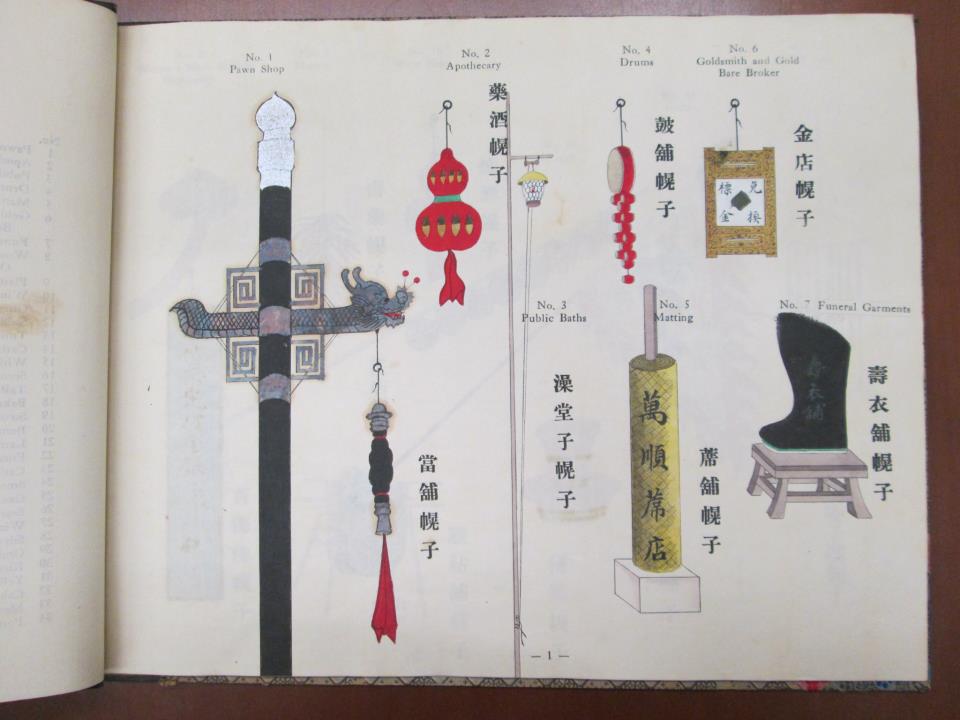
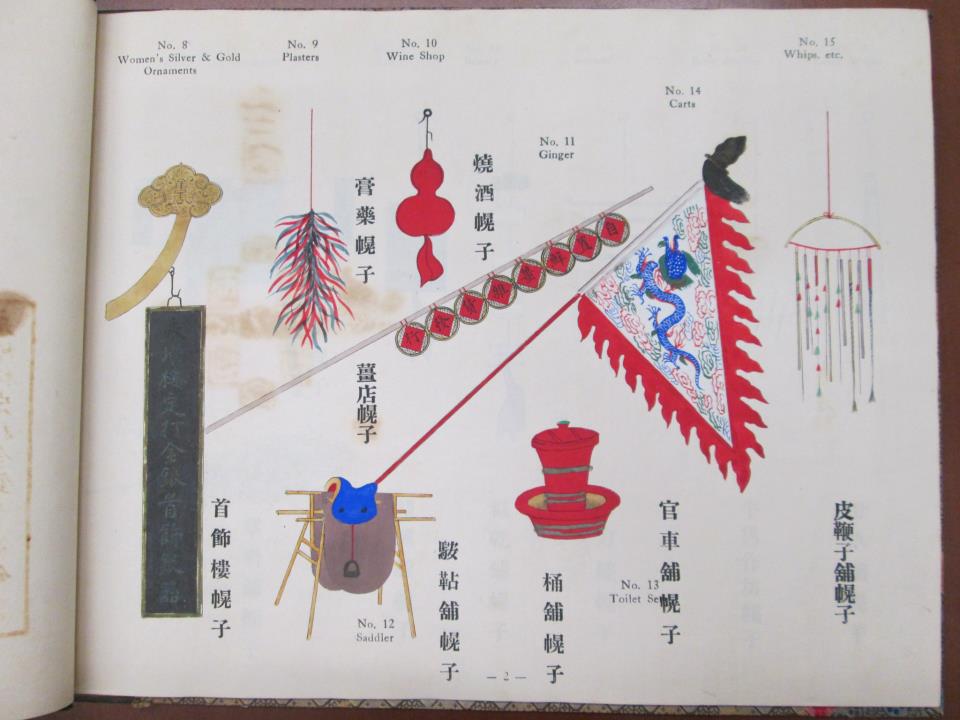
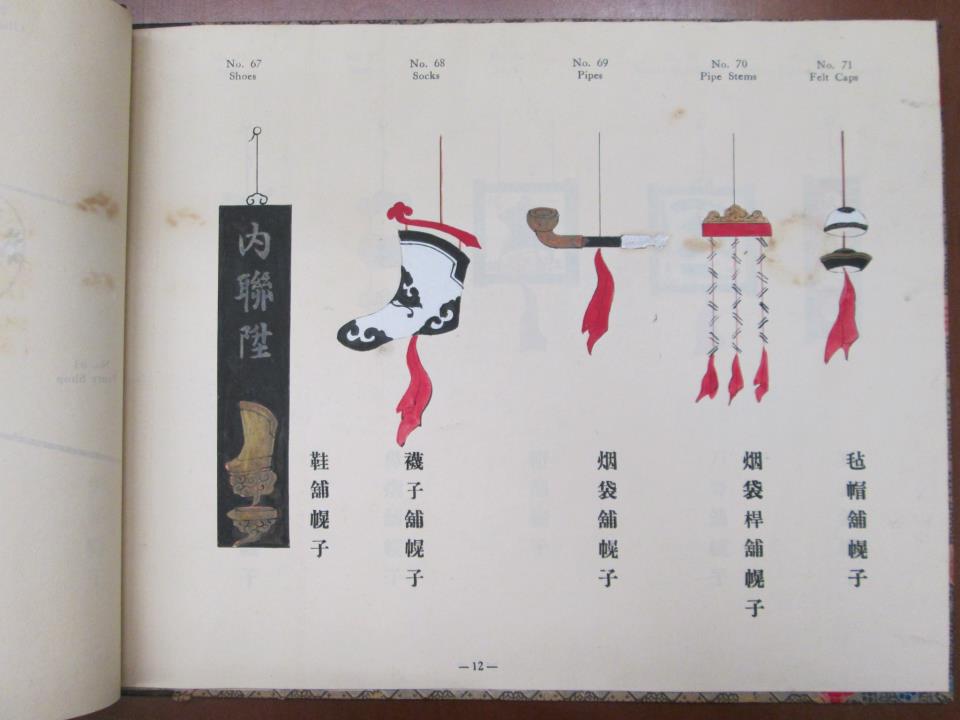
What can you buy on the streets of Beijing in the 1930s? This book will tell you.
Yan du shang bang tu 燕都商榜圖 aka The Shop Signs of Peking, published in 1931 by Chinese Painting Association, contains 100 shop signs in Beijing. The book is limited to 100 copies. Harvard-Yenching Library is fortunate enough to have one copy in its collection, as the author H. K. Fung writes in the preface that, “The only explanation that I can give for the existence of these pictorial signs is that in the former times the percentage of illiteracy among the people was very low. I am sure with the establishment of the new public school system that most of the Chinese people can read the written language of the country. Therefore it is plain to see that these signs will gradually disappear as they are no longer necessary. Eventually they will become nothing but relics of the ancient Chinese Customs. So it is very advisable for those who are interested in things Chinese to add a copy of this album to their collection in Orientalia.”
In case that you missed this extremely exciting message, Harvard-Yenching Library will start the digitization project for its collection of the Mongolian books next month. You can expect to see most of the Mongolian books online in Hollis no later than June 2013. After the Mongolian project, we will continue digitizing the Manchu collection, first with 60 titles of the archival materials, then the regular texts.
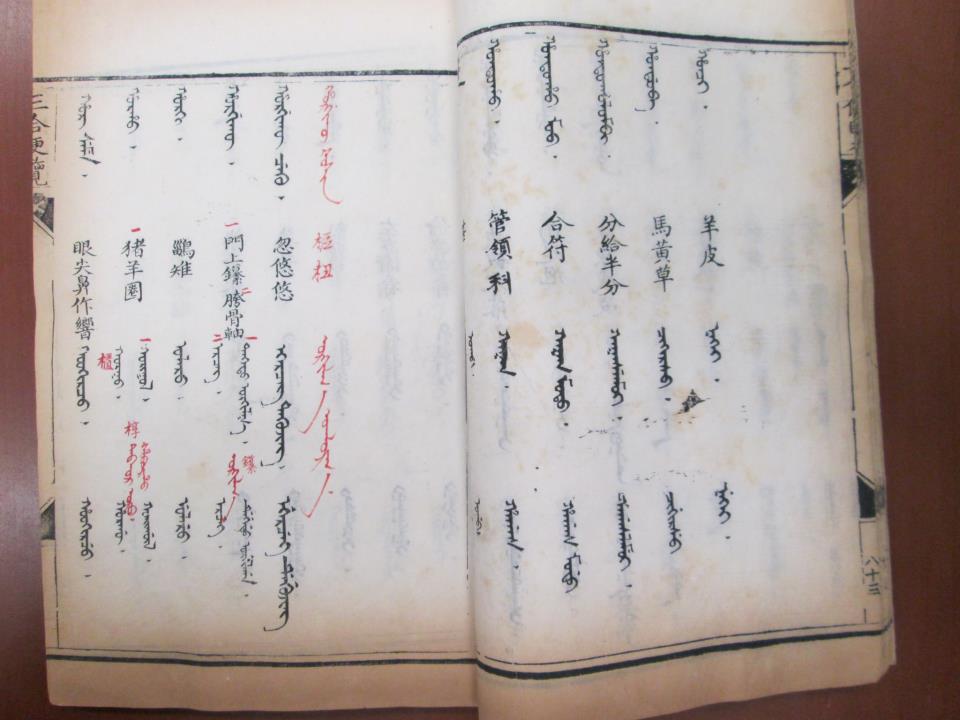
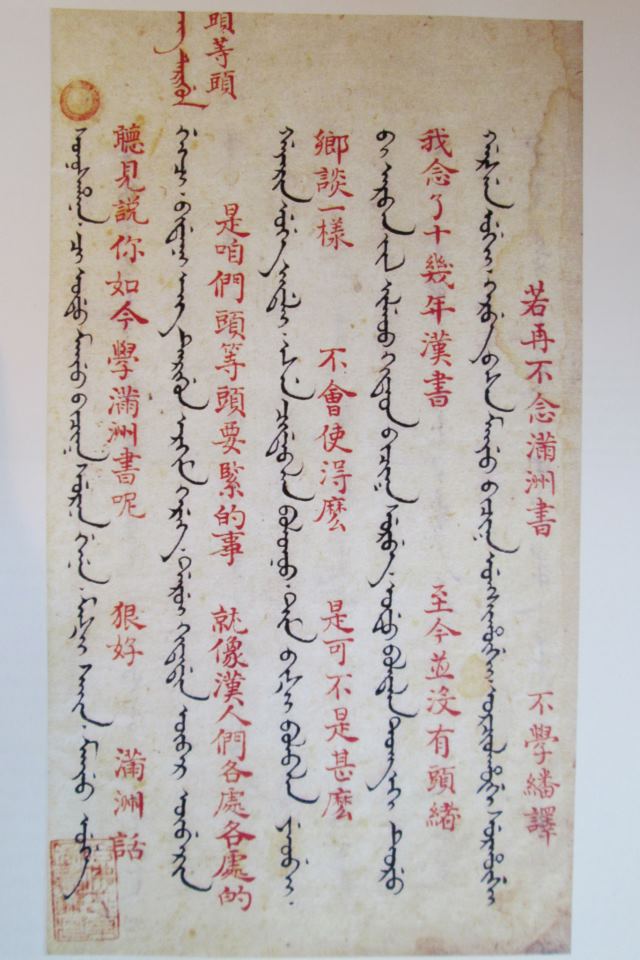
Photo: Jingzhai 敬齋, San he bian lan 三合便覽, 1792.
(How many languages in the picture have you learned?)
The second round of library orientations is coming! Don’t miss this wonderful chance to getting familiar with the library collections, digital resources, and, above all, our absolutely professional and lovely librarians.
Schedule:
Monday, November 5 at 3 pm Chinese language resources, with Xiao-he Ma, Sharon Yang (in Common Room)
Tuesday, November 6 at 3 pm Japanese language resources, with Kuniko McVey (in Common Room)
Thursday, November 8 at 3 pm Korean language resources, with Mikyung Kang (in Chinese Bibliographic Room)
(Can you recognize who the person in this photo is? If not, you should come to the orientations and learn how to find it out!)
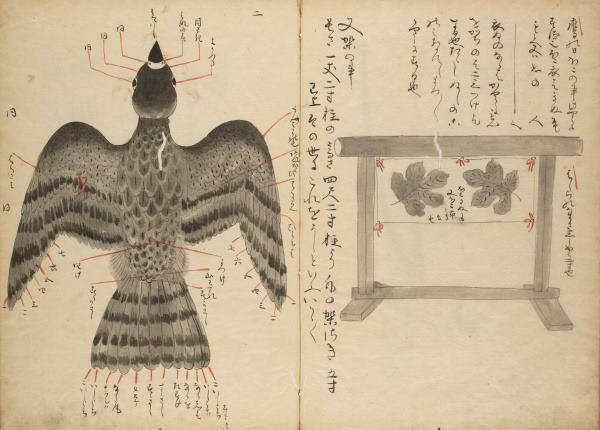
This afternoon (3:30pm), the library is hosting a site visit for the Take Note conference. Many note-taking examples will be shown at the bibliography room, including 18th century Japanese Falconry manuscripts once held at the library of Matsudaira Sadanobu 松平定信, the famous Daimyo in the Edo period. Don’t miss it!
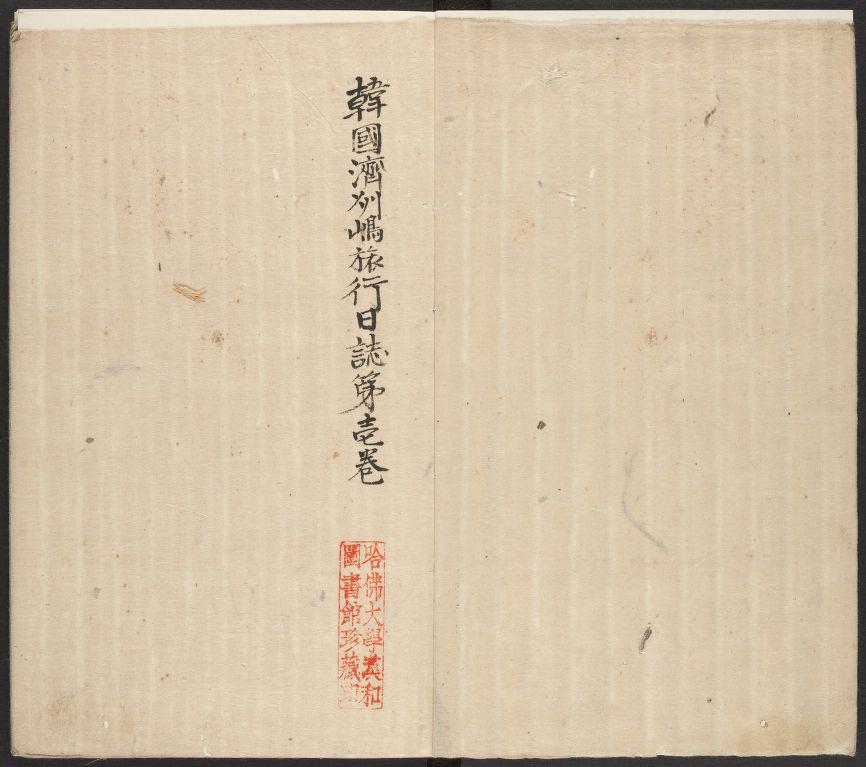
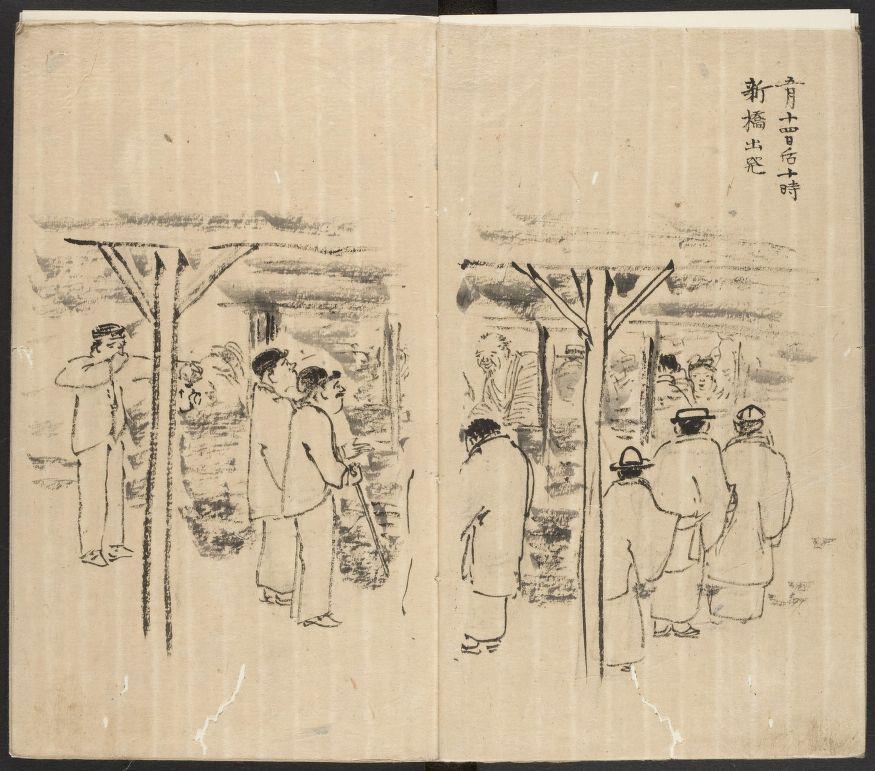
제주도, an island off the southern coast of South Korea, has been one of the most popular tourist destinations for Koreans and people from East Asia. This book, Han’guk Cheju-do yŏhaeng ilchi (Kankoku Saishūtō ryokō nisshi 韓国濟州島旅行日誌), records a four-month journey from Japan, via Busan, to this beautiful island in the early 20th century, with abundant illustrations on the local culture, everyday life, and sceneries.
Michinoku Shinroku-den みちのく震録伝, a digital archive for the 311 earthquake created by Tohoku Univeristy 東北大学, has released more than 10,000 photos taken after the earthquake, in addition to several digital projects.
“The collection of Manchu and Mongolian books that occupies a quiet corner of the Rare Book Room is perhaps one of the Harvard-Yenching Library’s best-kept secrets. There is no published catalogues of the collection, non of its titles is accessible online, and potential users will not find any signs to guide them to its location. But this very modest public profile is misleading, for the Harvard-Y
enching possesses one of the most important collections of Mongolian and especially Manchu materials in the world.” — Mark C. Elliott and James Bosson
Update: The catalogues of Manchu and Mongolian books are now accessible online!
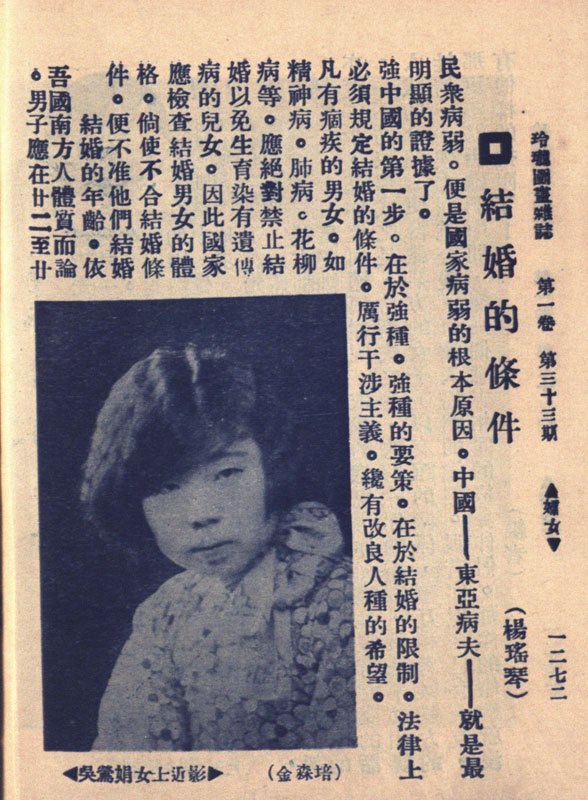
“Ling long women’s magazine 玲瓏雜誌, published in Shanghai from 1931 to 1937, was popular during a time of dramatic material, social, and political change in China. Today, the magazine offers researchers a unique glimpse into women’s lives in Republican-era (1911-49) Shanghai.”
The extravagant fantasies of sex in Edo Japan have long been known as one of the most surprising characteristics of the era and keep amazing modern readers. You can now browse these impressive pictures online in 近世艶本総合データベース by Ritsumeikan University:
The database collects 2,995 titles of Enhon, or erotic texts, from Ritsumeikan University, Nichibunken and the British Museum, among others, with 429 digitized items.
For the texts with English translations, see Nichibunken Collection of Erotic Texts of the Early Modern Period:
Early Photography of Japan is a virtual collection of more than 40 souvenir photograph albums and illustrated publications with over 2,000 images from Widener Library, the Fine Arts Library, and Harvard-Yenching Library. These images primarily document the early history of commercial photography in Japan and are representative of what is often called Japanese tourist photography or Yokohama shashin. They reflect the Western image of traditional Japanese culture before the dramatic transformation brought about by modernization during the Meiji period (1868-1912).