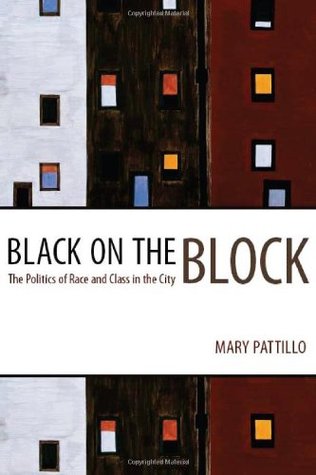
E. Franklin Frazier attracted a lot of criticism for his scathing critique of the black middle class in the mid-20th century. Much of this criticism was justified, since—as Professor Bobo mentioned in class—the same black middle class that Frazier excoriated also played an enormous role in launching the civil rights movement almost as soon as Black Bourgeoisie was published. This movement achieved significant progress for blacks of all socioeconomic levels in education, housing, employment, and many other aspects of life. But at the same time that this success was achieved—and partially because of the opportunities opened up by this success—middle-class blacks were moving out of inner-city neighborhoods and into the suburbs. As Mary Pattillo emphasizes in the video, they didn’t get very far, and were largely just as isolated from whites and economic success in the inner suburbs as poor blacks in the inner city were. However, their migration did increase the already high concentration of poverty in cities across America, leading to the creation of a “truly disadvantaged” urban black community, in the words of William Julius Wilson, similar to what Hunter described as “secondary marginalization” in Black Citymakers.
When considering more modern evidence of Frazier’s argument, we can look to the rise of the War on Drugs and mass incarceration. A recent New York Times op-ed by Michael Javen Fortner struck me as very relevant to our discussion of the black middle class. Fortner argued that the black middle class played a large role in advocating for and implementing the punitive drug laws in the 1970s that disproportionately hurt poor blacks. Though they supported these laws because of real concerns about crime and violence in black communities, the War on Drugs would turn out to have a disastrous impact on the black community, representing, in the words of Michelle Alexander, a “new Jim Crow.” Another contemporary example is the complaint that the black elite—intellectuals, public figures, and politicians—has lost touch with poor inner-city black communities. In a verse in his song “That’s Life” that particularly struck me, rapper Killer Mike argues “To all you rich bourgeoisie [expletives] out there/Stop ignoring your cousins in the ghetto/Because they’re there/Stop looking down on ’em.” Once again, however, arguments like these may be precipitating important movements—this time, the Black Lives Matter movement—which are driven in large part by the black elite and middle class. It remains to be seen whether arguments in the vein of Killer Mike and E. Franklin Frazier will once again be disproved by the success of a movement driven by the same groups that they criticize.