Week 13: Identities

IMG_4120

Medium: watercolor

In the Reluctant Fundamentalist, the main character, Changez, describes a series of events from his adolescence and young adulthood. When I first read the story, I focused primarily on the evolution of his conceptualization of religious and national identity. Later, I began to think more about how his interpersonal, academic, and professional experiences affected his mindset and personality, which in turn affected his response to political and religious experiences. I find this concept fascinating. The question I found most interesting for my response paper was: “What role does the love story between Changez and Erica play in the plot? How does it shape Changez’s identity?” After thinking more carefully about the role that Erica played in Changez’s life, I became more interested in how his relationship with Erica actually ended up shaping his identity. As the course progressed, we began to focus more on themes of the politicization of Islam. I think the most interesting part of religious politicization is its impact on the identities of the various people affected, and I found this story so engaging because it dealt with exactly that issue.

For my creative response this week, I chose to paint a collection of things that affected Changez’s identity. Some are quite straightforward: at various times he identifies as a Pakistani (flag of Pakistan), as a Muslim (Allah), as a Princeton student (Princeton shield), as an analyst at Underwood Samson & Company (company logo), or as a New Yorker (big apple). But some are less concrete or seemingly much smaller: he identifies as someone who has been in love (heart), someone who has had his heart broken (broken heart), someone who has been rejected from the United States (in and out arrows), someone who has loved someone with mental illness (medical symbol), and a Muslim who drinks although it is illegally in Pakistan (wine bottle). Focusing in on the widely varied experiences that contribute to Changez’s identity helped me better understand the rich and complex nature of every person’s identity. Ultimately, Changez is a character in a story, and a relatively short story at that; the identity of a real person is even more fascinatingly intricate and multi-layered. Being a Muslim and being from a middle eastern country each are only part of Changez’s identity. This exercise also demonstrates how feelings of alienation due to discrimination can become a large part of someone’s identity as well.

Mohsin Hamid, The Reluctant Fundamentalist 

Week 11: Complaint, Answered

IMG_4118

Medium: watercolor

Muhammad Iqbal’s Shikwa and Jawad e Shikwa together comprise a fascinating commentary on the themes of declining Islamic power and the variations in Muslim identity. In Shikwa, or “Complaint,” Iqbal writes as a group of Muslims explaining their own religious virtues, lamenting the fall of the Islamic empire, and requesting that God remedy their problems. I found particularly amusing the rather strong language that was used in the Shikwa. Two of my favorite couplets are below:

Now no more for us Thy favors Thy old benevolence
How and wherefore is Thy pristine kindliness departed hence? (18)

All we have is jeers from strangers, public shame, and poverty—
Is disgrace our recompense for laying down our lives for Thee? (19)

The melodramatic language of the Shikwa has an especially satisfying foil in one of the opening scenes of the Jawad e Shikwa, or “Response to the The Complaint.” After an introductory stanza, Iqbal includes a brief conversation between planets wondering aloud how the humans on earth had mustered the gall to sincerely voice complaints to the heavens:

Listening, the ancient Sphere said, “Someone seems to be about;”
Cried the planets, “There is someone, in the upper ether pure;”
“Not so lofty,” called the Moon. “Down on the earth there, not a doubt;”
“No,” the Milky Way retorted. “He is hiding here, for sure.”
Guardian Rizwan, he if any, my complaint distinctly heard;
“He is man, just newly driven out of Eden,” he averred. (38)

All the angels in amazement shouted, “Why, whose voice is it?”
Dwellers in the firmament were baffled by the mystery.
“Shall a mortal man aspire in our high firmament to sit?
Can that little speck of dust take wings, and soar so loftily?
They have clean forgot their manners, those inhabitants of earth;
What effrontery, what rudeness for such things of lowly birth!”

I found this image to be an entertainingly snide response; it was quite effective in communicating the author’s frustration with the tone of the Shikwa, and likely also with the tone of complaints Iqbal had heard in his own life. Dramatically demonstrating the beautiful insignificance of human life by describing planets unable to even confidently discern humans living on earth is quite bold. This boldness inspired me to focus on this image for this week’s blog post. I interpreted the “ancient Sphere” to be the sun. I drew just two planets in order to leave room for the majority of the painting to represent the empty space, in order to highlight the distance. I think part of the appeal of the image that the poem conjured was how unrealistic it was to imagine a conference of space items of drastically different locations and sizes. In order to carry this into the painting, I tried to arrange the four space items in a position that would be reminiscent of a meeting and tried to paint the space objects in a way that would highlight the absurdity of their placement and sizing.

Although this image was interesting and well-placed within Shikwa and Jawad e Shikwa, I found it worthy of further thought because it highlights how views on religion and faith can vary so fundamentally. The politicization of different aspects of Islamic life (i.e. headscarves, apparel, calls to prayer, etc.) arises from discrepancy in views about religious practice. Here we see a great example of why these issues are so incredibly complicated and multilayered: If the relationship between God and humans can vary so drastically (the Shikwa alludes to a very close-watching God that is in major contrast to the image from the Jawad e Shikwa that I depicted in my painting), then naturally ideas about how to best serve or show allegiance to God will vary drastically.

Muhammad Iqbal, Complaint and Answer

Week 10: A Conference in Cambridge


IMG_4114Medium: colored pencil

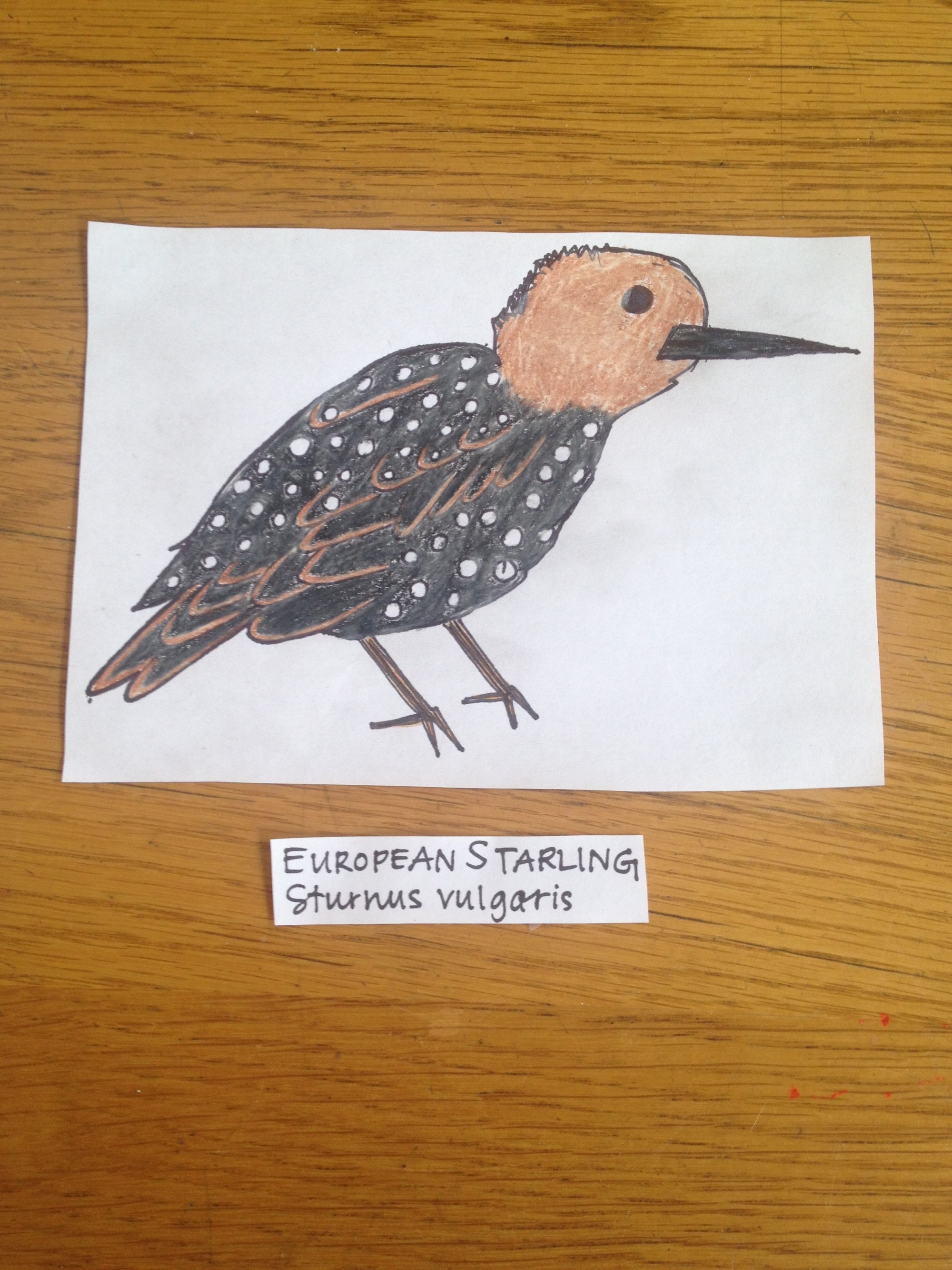
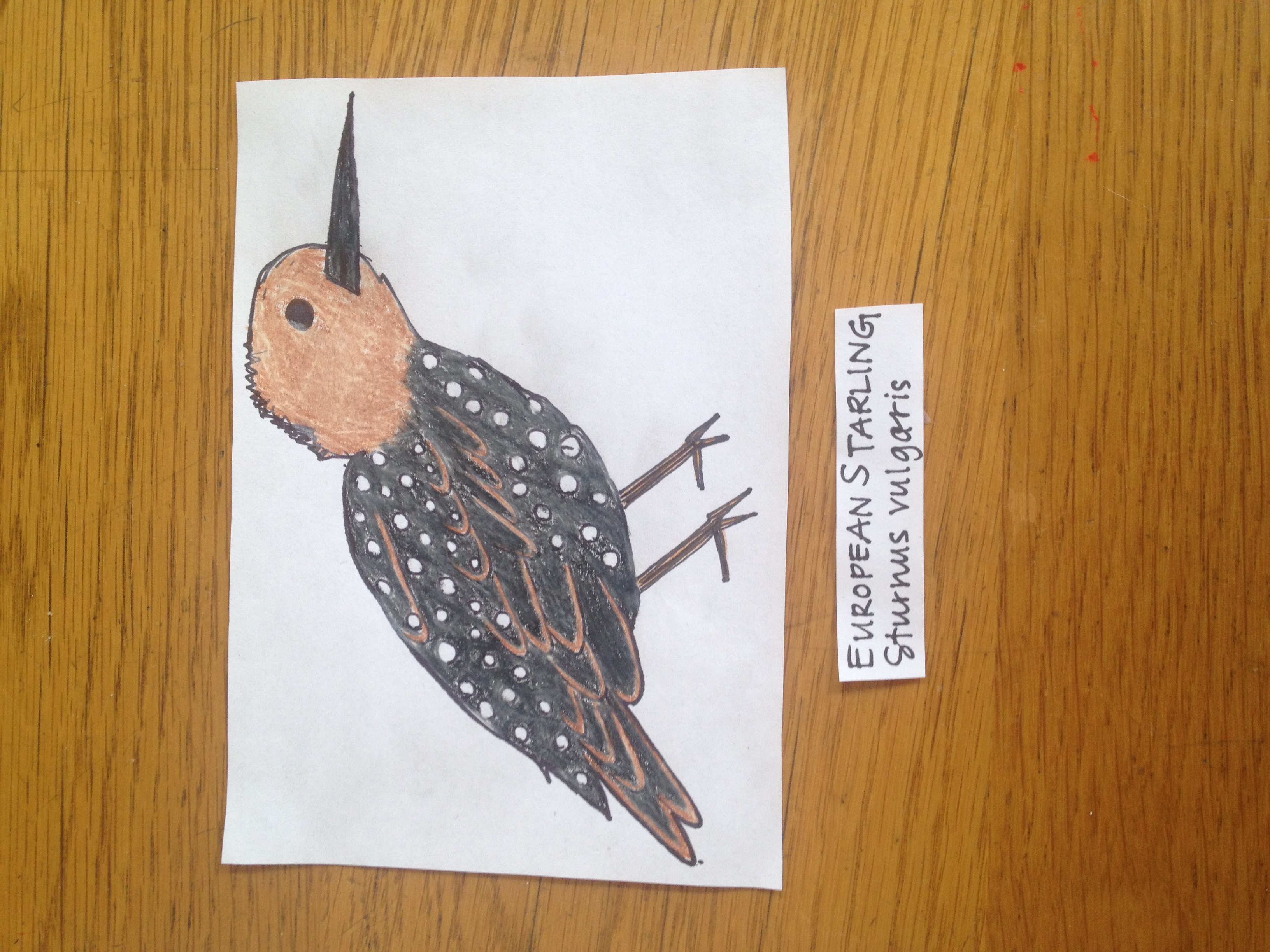
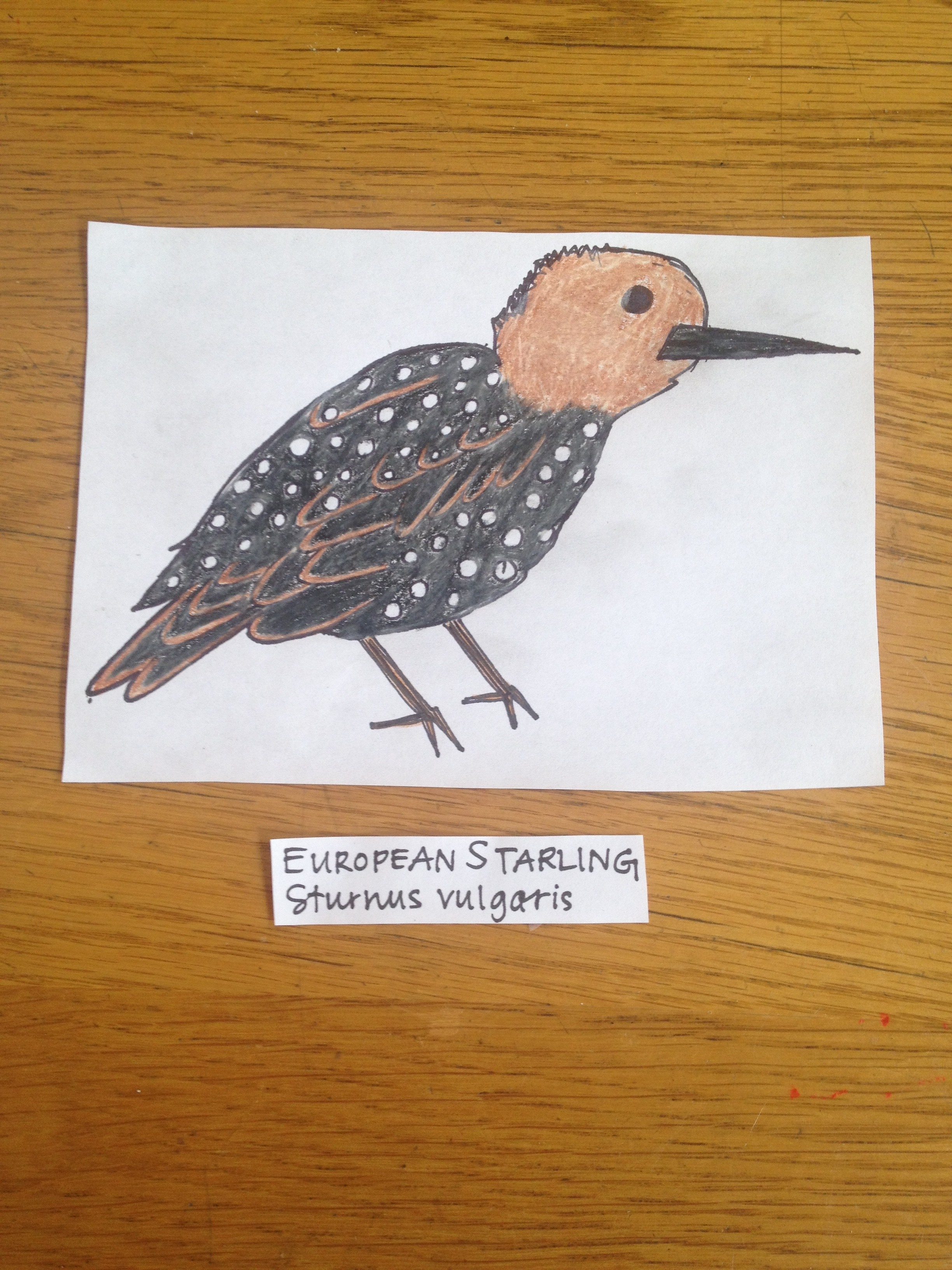
The epic poem the Conference of the Birds details the journey of several birds in their search to find and select a king. Before the journey begins, the hoopoe bird must first convince the other birds to participate, as they are initially hesitant to believe they need a king. For my creative response this week, I chose to translate this scene to a Harvard context: if Harvard students were approached to join a search for the Simorgh, what would they say? I chose three aspects of life at Harvard that students might easily find themselves obsessed with, and I created three imaginary birds who have taken one of these parts of Harvard life too far. A hypothetical bird who is obsessed with one very specific part of campus life would be uninterested in the search for Simorgh. I ascribed these obsessions to three birds common to this area.

IMG_4115
In the Conference of the Birds, the nightingale tells the hoopoe that he is “completely drowned in the ocean of love” and does not have time to look for Simorgh. This reminded me of the feeling of being “completely drowned” in responsibilities for their extracurricular activities, so I imagined a student who prioritizes clubs over all else. This bird would find it difficult to spare a single minute outside of meetings, performances, and activities to go to class—much less to look for Simorgh. I chose the European starling (Sturnus vulgaris) as the Cambridge analog of the nightingale because it is highly gregarious, just like students who are very involved in extracurriculars. Starlings are known for the beautiful flight patterns of large and incredibly tightly packed flocks, which reminded me of the close-knit and idiosyncratic social aspects of many extracurriculars at Harvard.

IMG_4117The partridge in the story has determined that jewels are the only permanent wealth and so wants only to acquire and protect his different gemstones. This reminded me of the feeling of being obsessed with one’s letter grades. There can be something tempting about protecting the sanctity of a very good transcript, so I imagined a bird who has taken conscientiousness to an unhealthy level. This bird would not take a certain class that they are interested in because it is reputedly difficult or would take a class they are not invested in simply because it is purportedly graded easily. This bird would be so paralyzed with obsession over GPA that they would not agree to leave campus to look for Simorgh. For the Cambridge analog of the partridge, I chose the American robin (Turdus migratorius), because it is friendly in the summer but remarkably anti-social in the winter.

IMG_4116
In the Conference of the Birds, the homa thinks his relationship to the royalty of Persia makes him too important to look for Simorgh. The social scene at Harvard can be trick to navigate; I imagined a bird who has found a place for himself within the social scene that is he is so satisfied with that he does not think he should be required to look for Simorgh with the others. For the Cambridge analog of the homa, I chose the common grackle (Quiscalus quiscula), because it is strikingly beautiful and very territorial.

Attar, Conference of the Birds, trans. A. Darbandi and D. Davies

Week 6: Mosque Diversity

Medium: ink

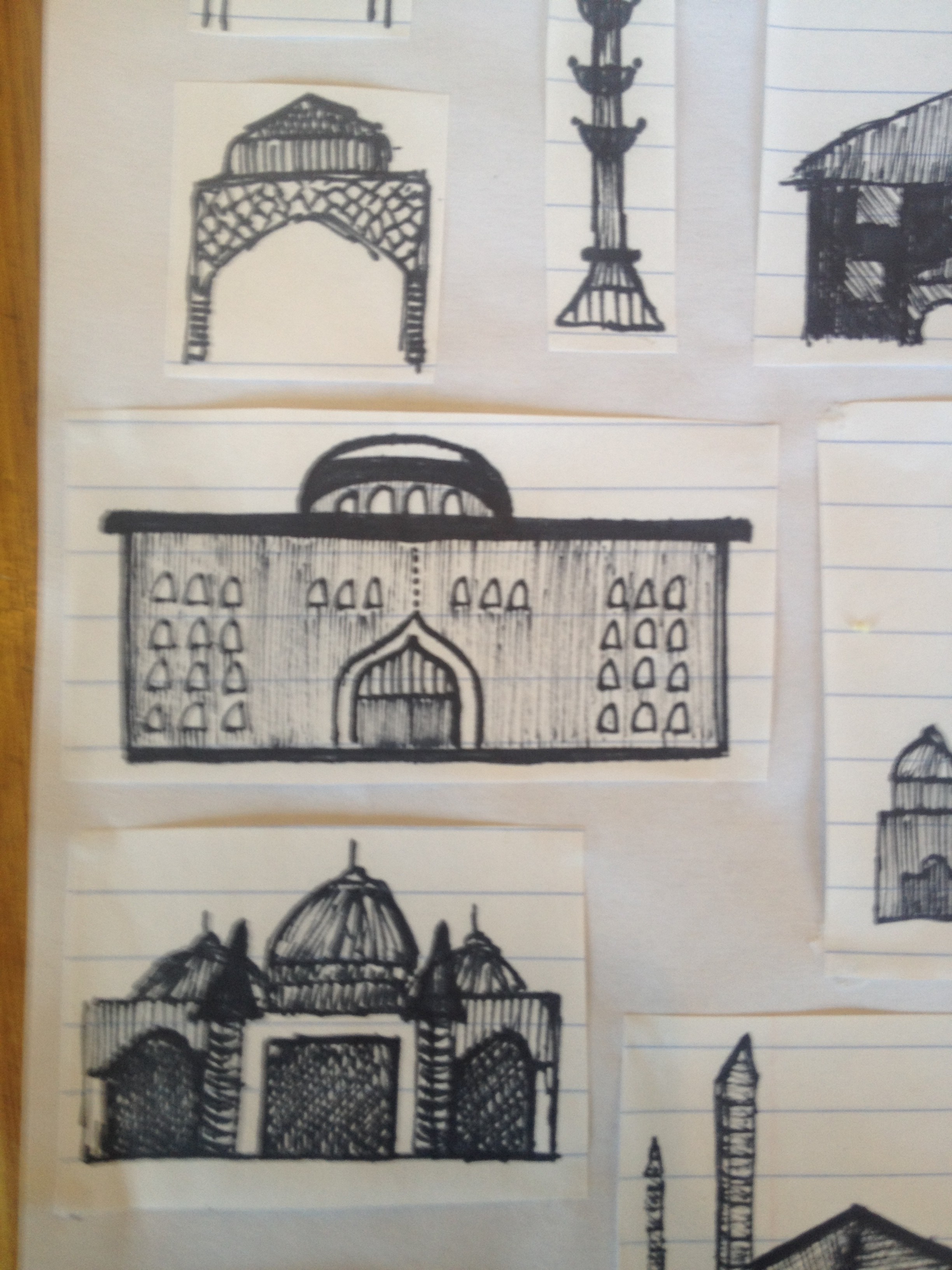
In their book The Mosque, Frishmann and Khan emphasize the great diversity of Islamic architecture used to create mosques. Although architecture changes over time, the most dramatic differences in mosque architecture are seen in different geographic regions. I have really enjoyed our brief introduction to Islamic architecture.

For my creative response this week, I wanted to draw some of the beautiful architecture thatwe have seen in the slideshows in lecture as well as some other famous structures of Islamic architecture. I used line drawings in plain black in so that the variations in color, size, and background of these different structures is not the focus of the piece. I wanted to draw attention to the diversity of themes in the different structures while unifying them in some way. I chose to keep each picture separate—as opposed to overlapping, collage style—so as not to conceal parts of the some of the structures that I drew. In order to provide contrast between the background of each line drawing and the background of the piece, I drew each structure on lined school paper. I chose this because a mosque is, among many other things, a place of learning. I in part borrowed the sentiment from another Abrahamic religion: I thought of the word shul, which literally means “school” in Yiddish but is used for a Jewish synagogue, because a synagogue is a place of learning. Though some of the structures I drew were simply arches or towers from lecture slideshows, I also depicted renditions of some famous structures. The second row represents (from left to right): the Stockholm Mosque in Sweden, the Taj Mahal in India, the Great Mosque of Xi’an in China, and the Great Mosque of Djenné in Mali. The two large mosques in the bottom row represent the Faisal Mosque in Pakistan (left) and the not-yet-completed Cologne Central Mosque in Germany.

M Frishmann and H. Khan, The Mosque

Week 3: Qur’anic Reciter

Medium: paper

This week, my artwork is a response to Kristina Nelson’s piece, “Reciter and Listener: Some factors shaping the Mujawwad style of Qur’anic reading.” Nelson describes several aspects of this style of Qur’anic reading and briefly discusses the influences that developed the style. At the end of the article, she focuses on a major criticism of some Qur’anic recitation: that it is too musical. We spoke considerably in both lecture and section about the limitations of viewing non-western art—particularly Islamic art, and particularly Qur’anic recitation—only within the likely familiar categories and constraints we use to evaluate western art. Nelson touches on this concept, but goes further to address criticisms that Qur’anic reciters are performers with celebrity similar in magnitude and quality to that of popular musical artists. She describes aspects of the lifestyle of an acclaimed Qur’anic reciter that yield these criticisms (e.g. appearing in magazines or being interviewed on talk shows), but she does not discuss them extensively, saying only that they “…blur the line between reciter and singer in terms of the reciter’s professional identity and the listeners’ expectations.” (46) Ultimately, she writes that the “personal attitude of the reciter towards these shaping forces [determines] the extent of musicality in his personal style.” (46)

I would like to suggest the possibility that critics are attempting to conflate the fame of two very different artists in a way that does not quite work. Just as thoughtless categorization of Qur’anic recitation as vocal performance in the western sense is neglecting to understand the nuances of music in a different context, I think that categorization of a professional Qur’anic reciter as a vocal performer is equally neglectful. The nuances of the two things Nelson mentions, “reciters’ professional identity” and “listeners’ expectations” are exactly what might separate the two types of fame. I don’t know that every reader of every magazine article about a Qur’anic reciter or every viewer of every interview with a Qur’anic reciter differentiates their interest in those publications from stories about actors or musicians. However, I do think that attempts to suppress musicality of recitation in effort to avoid celebrity for Qur’anic reciters may be, in some part, derived from an incomplete understanding of how people perceive notable reciters and how they experience recitation.

In my artwork, I decided to explore similarities between a Qur’anic reciter and a western pop star. The focus of the piece is the word hafiz, someone who has memorized the entire Qur’an, which I chose to appear in a print of stars that I created. The stars are meant to represent the fame of a western star or starlet. I drafted a list of similarities between the two personas and chose images to represent these concepts, which I used for the border. The list is as follows, with the image I chose to represent the concept in parentheses following the similarity: performance is better live (concert venue), person uses a microphone (microphone), famous (stars), person is adored (hearts), person has fans (cheerleaders), person uses pauses for dramatic effect (pause and play buttons), person is talked about (newspapers and magazines), person’s work is on the radio (radio), person is interviewed in the media (television), person must audition (director’s chair), person must adhere to a strict practice regimen and performance schedule (sunrise), person is an artist (canvas).

K. Nelson, Reciter and ListenerEthnomusicology (1982)

Week 2: View from the Madrasa

Medium: watercolor

In the first chapter of Ziauddin Sardar’s book Reading the Qur’an: The Contemporary Relevance of the Sacred Text of Islam, Sardar includes a line that especially resonated with me. The chapter, entitled “The Qur’an and Me” is centered on the author’s personal background with the Qur’an and with Islamic faith in a more broad sense. He includes a description of his introduction to formal religious education: “Children begin their reading at the end. So I started with the 30th Sipara. It contains short chapters, or suras, some just a few verses long, all rather easy to commit to memory. When I had memorized most of the chapters in this Sipara, and it was time to tackle the longer suras, my mother decided to send me to the madrasa, or religious school, at the local mosque. It is vaguely equivalent to going to Sunday School, but with rather more emphasis on the school since the curriculum is set and the same everywhere: learning to read the Qur’an. Most mosques have a madrasa attached to them; and I suppose my madrasa was like a madrasa in any mosque, anywhere in the world.” (4)

This paragraph, particularly the last clause of the last sentence, stuck out to me and has remained a sentiment I think about when synthesizing the material from lecture and discussion readings. We spend a lot of time talking about the importance of differentiating Islamic art, traditions, and faith from one time period, region, or community from those from different contexts. And it is true, of course, that Islam can and does look very different in different contexts. Though many students of the Qur’an “begin their reading at the end” with the 30th Sipara, I am sure that some do not; it is also unlikely that every student studies in a madrasa similar to the one that Sardar describes in the chapter. However, regardless of the specific motive for attending madrasa, students in the class learn to read the same texts in potentially comparable settings. This paragraph reminded me of the strength of likely similarities in the experiences of many people who identify as Muslims, and of many young students learning to read the Qur’an.

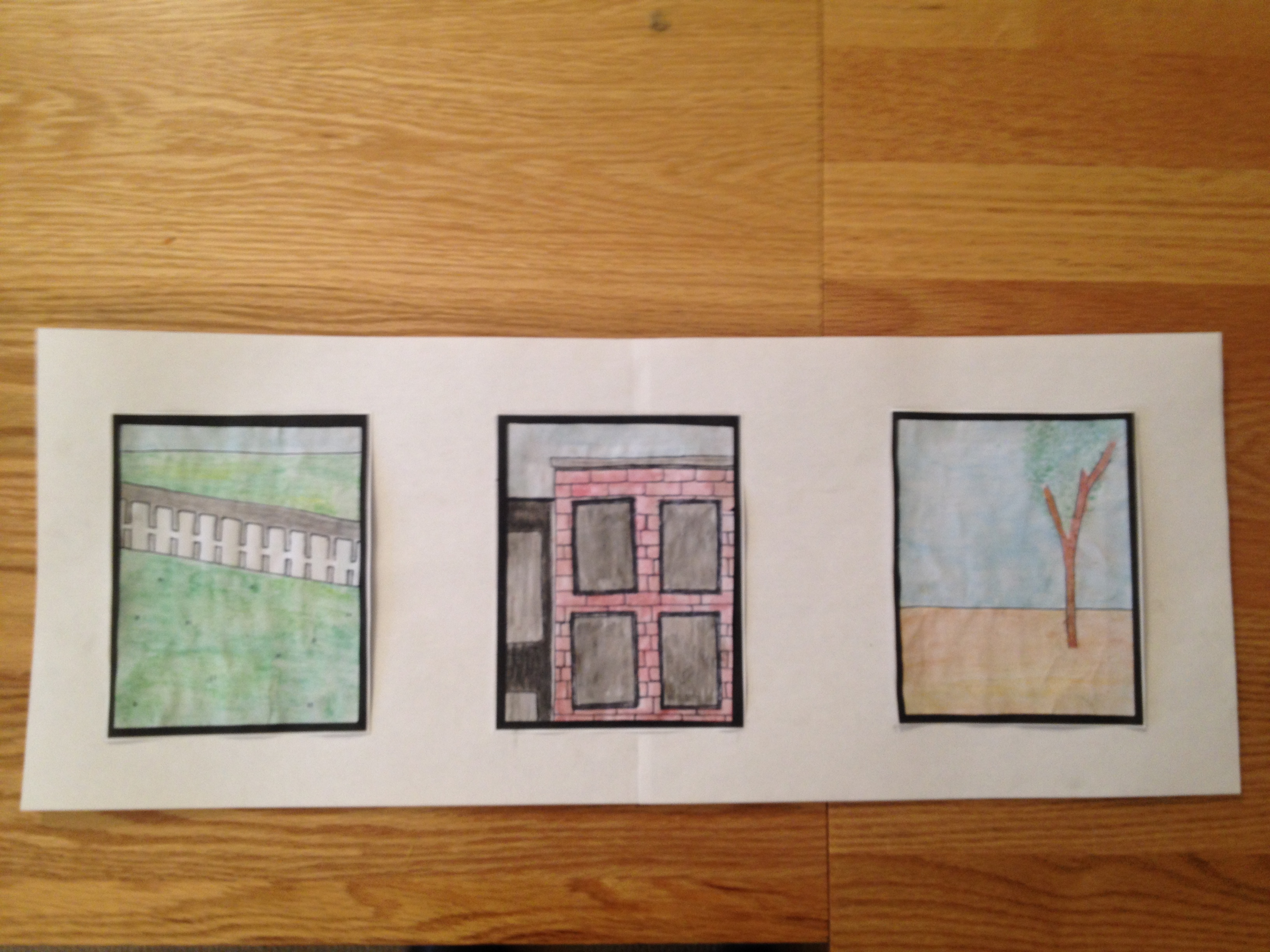
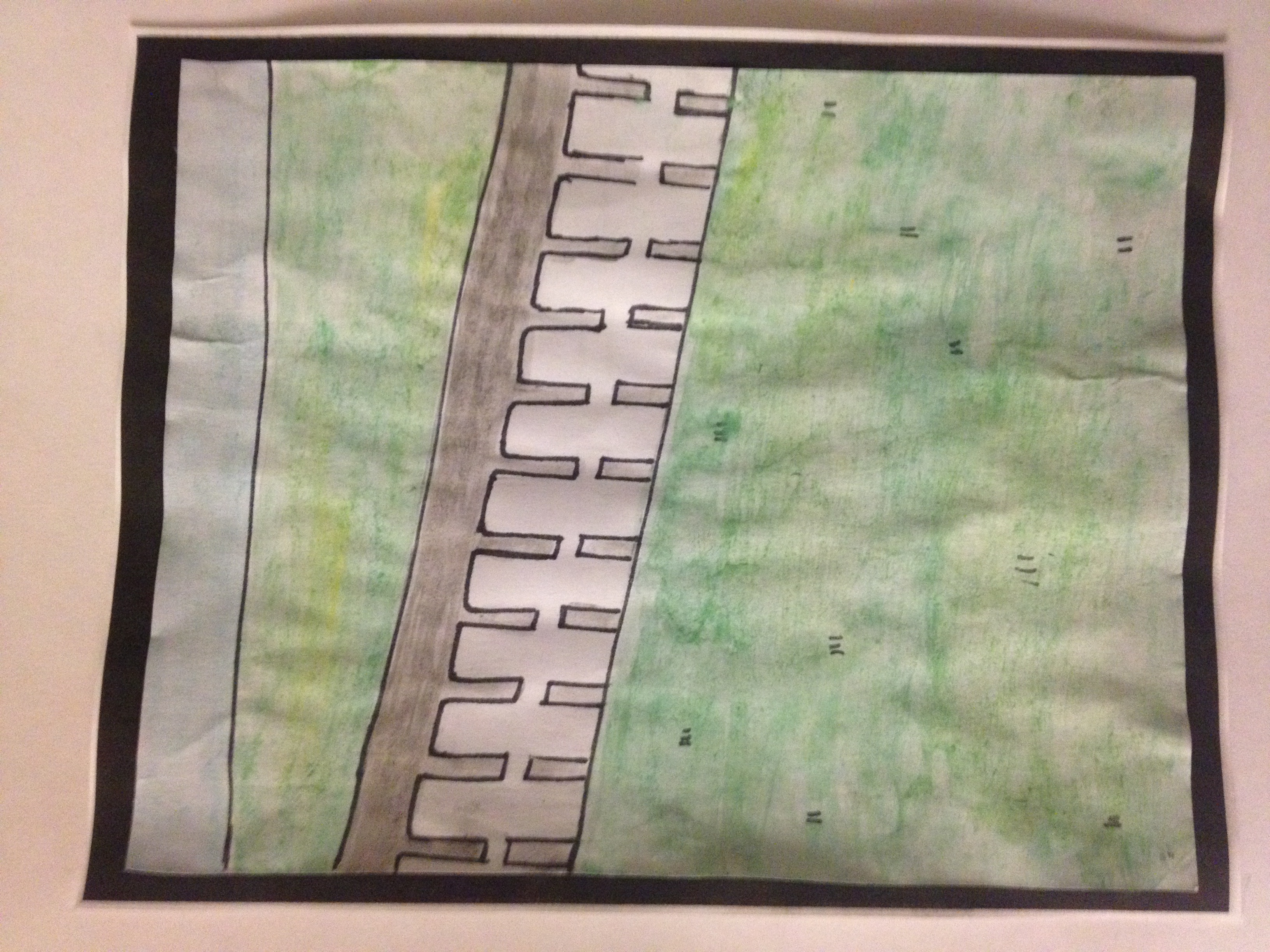
For my creative response this week, I chose to explore the universality of the madrasa setting by highlighting the major difference between many madrasas: the world outside the classroom window. I imagined the view that a student might have outside the window in three different settings: one from the madrasa of the urban mosque on a busy street that I pass by frequently when driving at home (center); one from the madrasa of a mosque in rural Anatolia, Turkey that is described in a novel I read (right); and one in a suburban area, like the neighborhood where I live (left). I chose to use watercolor as the medium for this project because I was inspired by Sardar’s methodical support of viewing the Qur’an as a multi-layered text that can help readers see truth. Watercolor is a somewhat unforgiving medium that can require many layers of work to create rich color and that requires flexibility when mistakes are made. I think this multi-layered approach and flexibility are similar to how Sardar advises one should view the Qur’an.

Z. Sardar,  Reading the Qur’an