Tony A. Thompson, founder of Gin Bender Poetry Review
and host of the Coffee.Tea.Haiku weblog, has announced
publish its first edition in April 2006.
“WisteriaUSDA”
Tony says: “Wisteria is dedicated to publishing original, English-
language, or contemporary haiku, senryu, and tanka. The journal
will be published quarterly (January, April, July & October) begin-
ning in 2006. It will be a small sized (4 1/4 x 5 1/2), desktop pub-
lished, saddle-stapled, card stock cover magazine.”
Writers and readers of haiku, senryu and tanka can still
participate in the launching of Wisteria — click here for
information on Submissions and Subscriptions.
wisteria in bloom–
voices of pilgrims
voices of birds
land of vegetables–
a tea house with blooming
wisteria
the setting place
for the spring sun…
wisteria blossoms
translated by David G. Lanoue
“WisteriaKQatsi”
p.s. Tony’s new hokku enterprise reminds me of my favorite
passage about the significance of haiku. It’s be Lee Gurga:
“Wouldn’t it be great if there were a kind of poetry that could be
written anywhere, anytime, by anyone? A kind of poetry that children
could enjoy yet even accomplished poets needed years to master?
A poetry with the simple aim of making us aware of life’s simple gifts
and everyday joys? An antidote to irony, consumerism, and narcissism?
A kind of poetry in which the best journals invited all excellent work, no
matter who the writer knew or did not know?
“There is: haiku is that kind of poetry.”
Lee Gurga, from Haiku: A Poet’s Guide (Modern Haiku
Press, 2003), from the introduction, “An Invitation to Haiku.”
“WisteriaUSDA”
February 12, 2006
Wisteria (the Journal) is coming in April
Comments Off on Wisteria (the Journal) is coming in April
February 11, 2006
hotham on saturday night
The f/k/a gang is not feeling very inspired today. But, we
have our stash of Honored Guest poetry for your enjoyment,
and chose a few winners from Gary Hotham:
the dog takes a sniff
— snow that didn’t go
with the first warm day
thrown away
without counting–
birthday cards
warm night —
a soda machine rejects
my coin
three caws
and the crow has flown
over
each lull
in the winter wind:
you and I
“snowflakeS” gary hotham
“the dog takes a sniff” – The Heron’s Nest (Dec. 2005)
“warm nights” – The Heron’s Nest VII:2
“thrown away” frogpond XXVII:3
“each lull” & three caws” – breathmarks (1999)

potluck
of our beloved Schenectady, NY, or Metroplex, its economic development
agency, it is only fair to give a standing ovation for a great success story.
Supported by a $9.5 million Metroplex grant, and its own fund drive, our
already grand Proctor’s Theater has expanded its stage area, in order to
accommodate even the largest Broadway roadshows. The boosters promised
to bring those shows to our small city (which is part of the NY Capital Region,
along with Albany, Troy, and Saratoga Springs), and to put some life into our
mostly moribund downtown com-mercial scene.
To prove it, and despite the skeptics, Proctor’s lured the road production
of The Phantom of the Opera to Schenectady, for the longest run in the
old vaudeville Theater’s history — the entire month of February. A week
into the run, Proctor’s announced that all but one hundred of the 80,000
available tickets have been sold (with all the remainders being single
seats).
Perhaps more important, with a cast and crew of 150, plus the thousands
of theater-goers bringing customers to restuarants, hotels and other es-
tablishments, downtown businesses are beaming and crowing. (Fox23News,
Albany, NY, “Ecomonic Boom with Phantom of the Opera“, Feb. 10, 2006).
Proctor’s has always been able to bring business to downtown Schen-
ectady only one night at a time. If it becomes a destination of choice
for major Broadway roadshows and their audiences, the foot-traffic that
has been so sorely missing, and the core of business needed to sustain
a lively downtown, may indeed be possible in the near future — in this
City that has lost so much of its jobs, population, stores, and hope over
the last few decades. Thanks and best wishes to Proctor’s “Next Stage”
and all who have made it possible.


Comments Off on hotham on saturday night
February 10, 2006
clients clipped in fat-booty coupon settlement
 ethicalEsq first complained about class action “coupon settlements“ — with their tiny benefits for clients and giant fees for lawyers — in June 7, 2003, at the end of this weblog’s first week of posting. Like most practices in our litigation system that feed on lawyer greed, the problem has apparently not diminished since then, despite efforts by the Federal Trade Commission and the constant vigilance of Walter Olson at Overlawyered.com.
Let’s hope, however, that the NY Appellate Division’s decision In Klein v Robert’s Am. Gourmet Food, Inc (N.Y. A.D. 2d Dept. Jan. 31, 2006), gets the attention of the class action bar (and bench) and helps to reduce significantly the likelihood of scam coupon settlements. Walter at Overlawyered.com, Point of Law‘s Ted Frank and Tom Perrotta at the New York Law Journal, have spotlighted this “Pirate’s Booty” case over the past few days. It involves a 2003 class action settlement that was approved by Nassau County Supreme Court judge Ute Wolff Lally As NYLJ summarizes (Feb. 7, 2006):
.
“A $3.5 million class action settlement — and $790,000 in attorney fees — over snack foods that were found to have more fat than advertised has been thrown out by a state appeals court in Brooklyn. “The [ruling] found that the trial judge who approved the settlement did not adequately consider the relevant factors in certifying a class over Pirate’s Booty snacks . . It remanded the case for further consideration. “The court, in a signed opinion by Justice Steven W. Fisher, said the attorneys who worked on the case had offered an insufficient explanation of their work to justify the fees. . . .
“Robert’s had advertised its snacks — Pirate’s Booty, Fruity Booty and Veggie Booty, among others — as low-fat, low-calorie snacks. But tests from Good Housekeeping’s Institute found that the products contained 8.5 grams of fat and 147 calories per 1-ounce serving, rather than the promised 2.5 grams of fat and 120 calories.”
“[It] is unlikely to confer any benefit, either direct or indirect, upon those members of the Class who have the most serious grievances. “Class members who purchased the Products largely because of their advertised low fat and caloric content are those most likely to have been injured by the alleged misrepresentation. Yet, having sought a low-fat, low-calorie snack food, they would be the least likely to purchase the Products again now that their higher fat and caloric content has been revealed. Thus, they would be the least likely to reap any benefit from the distribution of discount coupons.”
Ted Frank points out that press reports have “understated how outrageous the case and settlement was. This was not a case where lawyers uncovered the truth, and brought a recalcitrant defendant to justice. Rather, journalists discovered the error in fat-content in the product labels; Robert’s immediately apologized for the error and corrected it; and then free-riding lawyers sued in four different states, with the New York class action being certified on a nationwide basis first . . ” Ted also noted that ” the plaintiffs sought to claim as a class benefit justifying the attorneys’ fees the very marketing Robert’s was likely doing anyway. ” We wonder: Would you have to be a knave or a fool to contend that this was a good settlement for your clients?
Robert I. Lax (real name), the lead attorney for the Nassau plaintiffs couldn’t even bother to sumbit a detailed affirmation to justify the request for bloated attorneys’ fees. As the court notes:
“The affirmations, however, contained only brief and general descriptions of the work performed by the firm as a whole, and, other than total hours, included no information regarding the tasks performed by any of the individual attorneys. For example, over 481 hours of work performed by the firm serving as lead counsel for the plaintiffs was attributed only to “drafting of pleadings, review of discovery, drafting of memoranda of law, and participation in settlement negotiations.” Another 106 hours of work performed by another law firm is described in exactly the same terms. Without more, such descriptions were insufficient to support an award of an attorney’s fee.
Meredith Berkman (a Manhattan journalist who had sued Robert’s in Manhattan), objected to the settlement. I agree with the comment of her lawyer, David Jaroslawicz: “This is the type of thing that brought class settlements into disrepute.” Do you think Justice Lally will know what to with this matter when it arrives on his desk on remand?
 a path made by bears
bear needs no second look at me
night clouds gone the supply of infinity
……….. by Jim Kacian– “night clouds” – from NOON2
talk of war
the spin cycle’s
steady humheatwave
waiting for him to tell me
what I already know….………………… by Roberta Beary .

February 9, 2006
pelicans on posts
breathe in, breathe out
poems and mountain
air
in the pink dusk
with pimples
moon
scrabbling for crumbs
amid the pigeons
sparrow
judges and juries
pelicans
on posts
cloudy valley
the dog barks
at himself
David G. Lanoue author of the haiku novels Haiku Guy,
– and Kobayashi Issa‘s prolific & humble translator –

potluck
How should law professors teach cases and topics (such as “fedupskif”
sexual harassment law) that involve “graphic” descriptions of
a sexual, violent or profane nature? Prof. Wenger raised the
subject at Concurring Opinions, and the topic has been taken
up at Workplace Prof Blog by Paul Secunda. There are quite
a few lengthy comments at each weblog. I’m in the camp of
those who believe that law students are adults and should be
expected to both handle the subject matter and take it seriously
(that means cool it with the sophomoric remarks, gentlemen).
Although professors might want to give a low-key warning about
particularly hard-hitting matierials, they should not be watering-
down or cleaning up their pedagogy in order to spare the feelings
of the most sensitive, fragile, or easily-offended students.
If you still wonder how Google decides which results end up
at the top of its query results, check out its Newsletter for Librarians
article “How does Google collect and rank results?” (Dec. 2005, via
“snowflakeS”
Comments Off on pelicans on posts
EsqChecker: show your commitment to legal ethics
We had forgotten all about ethicalEsq‘s EsqChecker project
(an “ethics certification” — seal of approval — program), until
last night, while looking for our founding editor’s valedictory post.
In the process, we located Professor Yabut‘s brief self-introduction as
the new editor, along with his scandalized account of the EsqChecker
program. [see ethicalEsq Sells Out, April 1, 2004] Go here for our
amended reprise.
esq “tinyredcheck” er
Comments Off on EsqChecker: show your commitment to legal ethics
February 8, 2006
i’m just not that weird (honest)
haijin: I’ve been Weird-Tagged and can’t come up with any examplesof “weird habits” of mine, much less five of them. Although I just mightend up with a plethora of examples, I think I’ll email a few friends andfamily members to see if they can help fill my Weird list.Meanwhile, a little background on getting tagged: Ellen M Johns,of the Coffee Granules weblog, reached all the way over from theUK, and tagged me at dagosan’s haiku diary — apparently duringher very first visit there (yes, pretty forward, indeed). Ellen wastagged by poet and author Pris Campbell. At Pris’ surprise-filledSongs To A Midnight Sky weblog, I learned that Ellen is waiting tosee whether I, and the four other males she tagged, “have risen tothe challenge!!!” Great, more performance expectations.Reading about Pris Campbell, I discovered that she — like myself —has been living with CFS/CFIDS (chronic fatigue immune dysfunctionsyndrome) for many years. On her website About page, Pris beginsher story:“I didn’t start out as a poet. I wanted to be a novelist until amajor illness wiped out that idea. On September 23, 1990,I woke up with a severe case of what was later to be diag-nosed as CFIDS. . . ..“When this illness hit, I felt as if I had been transported to aplace I no longer recognized.”Although I have talked about my having CFS at this website (mostlyto the illness’ limitations and frustrations), I have not said much aboutthe great transformation this illness has caused in my life. Of course,I bet my astute readers could figure out what it might mean to loseone’s profession and livelihood, all financial security and most socialcontacts. Nor have I discussed the dispiriting aspects of having a mere“syndrome,” that sounds trivial, doesn’t make you “look sick,” and offersno roadmap back to good health.Prior to CFIDS, Pris had been a ‘health nut’ and former clinical psy-chologist, who was an aspiring author. She biked daily, kept a garden,and was active with friends and in the community. If you are at allcurious about this illness, which has greatly affected the lives of hun-dreds of thousand of people (plus their families), I recommend that youread Pris’ story — and her tips about how to relate to us CSFers.One thing Pris and I appear to have in common: an appreciation forthe insights and values gained living with this illness. When I thoughtI had to give up “ethicalEsq” (the prior name of this weblog) for good,I wrote something worth repeating (if only for my own edification):I know that some of the new friends I’ve made out there inWeb Log Land are a little worried about me and my health,but they shouldn’t be. I’m not seeking sympathy by tellingpersonal details in this public place. I’ve learned some veryimportant lessons while dealing with a serious health conditionover the past decade, and I’m glad to have learned them andlived them. Besides discovering my own inner strength, I foundout that there are things far more valuable to me than the typicalAmerican symbols of “success” — power, influence, recognition,wealth.I still haven’t learned how to pace myself, to avoid doing my body harmin a constant hyper-weblogging mode. Maybe Pris can share some ofher experience with me..On the other hand, perhaps she can lend me a few “weird habits” soI can get this darn List done. Soon, Ellen (honest).poems from Lee Gurga that fit my mood tonight:arc of a rubberbandback and forth across the room;winter eveningfirst snow —little boy laughingin his sleepthe sky black with stars —coyote tracks up and downthe frozen creek


sought: haiku-sans-e
I just learned about Georges Perec‘s 2005 novel A Void (translated
from the French by Gilbert Adair): As the New Yorker explains:
“Here is a true tour de force: a novel without
a single letter E. The translator’s dazzling re-creation
of the French original conveys the author’s near magical
cleverness while preserving an underlying seriousness
that makes this book much more than a curiosity.”
A Void‘s publisher says:
A Void is a metaphysical whodunit …. It is also an out-
rageous verbal stunt: a 300-page novel that never once
employs the letter E. Adair’s translation, too, is astounding;
Time called it “a daunting triumph of will pushing its way
through imposing roadblocks to a magical country, an
absurdist nirvana of humor, pathos, and loss.”
Not only has Perec saved a lot of e’s for us to send to Robert Soble’s
Flickr trendoids, he has also inspired me to attempt this game on
a very micrio scale — with my own haiku. I quickly learned how
difficult eschewing that vowel can be.
Looking through the hundreds of haiku and senryu that dagosan
posted at f/k/a last year, it became clear that not using e’s does
not come naturally — none of my poems was e-less (even though
they are almost always shorter than 17 syllables). Today, with a
little struggle, this paltry example arose from the depths of my
pysche:
our long
bathtub soak —
almost a full moon
dagosan
My Schenectady neighbor, Honored Guest Yu Chang has a
name that promises e-lessness. Nonetheless, out of approx-
imately 50 of his poems that have appeared here, only one
has no e:
rough landing
the warmth
of your hand
Yu Chang– Upstate Dim Sum (2004/I
I’m going to search my Yu Chang collection to see if I can find
more. Meanwhile, I’m asking all the haijin out there to submit, by
email or as a Comment, some haiku-sans-e. Please don’t cheat by
resorting to extremely truncated poems. Let’s make 9 or 10 syllables
(as in the dagosan example above) the minimum. One tactic
might be taking one of your favorite haiku and re-writing it without
an e.
Everyone is invited to join in this exercise, but if you don’t know what
we mean here by “real haiku,” please read “is it or ain’t it haiku?” for
a quick lesson. (Yes, the Haiku Police are on patrol.)
If the book is as good as the critics have suggested, Georges Perec
deserves a hat-tip for his achievement in A Void. I’ve got about
299 pages to go to catch up. Now, it’s your turn.
update (Feb. 8, 8 P.M.): For a brief glimpse of the wit and erudition
that won George Wallace, and his Fool in the Forest weblog the
Blawg Review Award 2005 for “Best Personal Blog by a Legally-
Oriented Male Blogger,” see his Comment to this post, which
is a pithy, positive review of A Void, with special emphasis on the
excellent and most difficult translation performed by Gilbert Adair.
haiku-sans-e updates:
sting
of the old man’s
fastball
A Void, by Georges Perec –


February 7, 2006
nice judge-$ta-position
Did you notice that on the very same day
(1) The New York Law Journal announced that NYC BigLaw
$145,000 for first-year associates (plus expected year-end
bonuses of $20 to $40K) (by Anthony Lin, Feb. 6, 2006, via
(2) Judith Kaye, Chief Judge of the New York State Court
System, was begging the Legislature for a pay increase
for state judges — pointing out that there have only been
two raises in 18 years, and that the typical state Supreme
Court judge [the highest trial court] receives $136,700 a
year.” State of the Judiciary Address (Feb. 6, 2006) (NYSBA
agrees with Judge Kaye on the need for raises.)

potluck/potlawk
reaction to anti-blawg campaigners. He responded by saying that
my facts are wrong, and that there is indeed a group that has coined
a special word for their category of weblogs. He cites me to “milblogs,”
which I learned means “military blogs.” Frankly, I think Abnu has in fact
strengthened my argument. To wit:
The current and former military service-persons who come
under the “milblog” classification continue to call what they
do “blogs.” They have added a prefix that alerts the audience
that there may be a special focus or source (although just
what it might be is surely not clear without further inquiry)
for their weblogs, but there is no doubt that they are “blogs.”
This avoids the confusing nature of the term “blawg,” and does
not have the trivializing look of that term.
Meanwhile, Prof. Bainbridge (our favorite Cafeteria Conservative)
is like all bent out of shape because Mick Jagger and the Stones
have gone corporate — see When did Jagger jump the shark? (Feb. 6,
2005). Mick’s sin? He let the Super Bowl tv executives lower the
volume twice to cover up a couple raunchier lyrics. As I commented
at Steve’s place: “It is not the least bit ‘corporate’ to take your audience
into account when singing lyrics. It shows a maturity (and self-confidence)
that most 20-somethings do not have, but I would hope that those over 40
do.”
On the other hand, Prof. B is correct that I should not
have suggested he would have called for censorship, if
those very same lyrics had in fact been audible. Although
I have no doubt that his “political, philosophical, and religious
allies would be complaining mightily today, if Mick had in fact
sang the more sexually-explicit lyrics in an audible manner.”
and Steve often does complain about the low morals of the
entertainment industry, he has been consistently against
government censorship.
More important, Steve is also right that I should not have
used the terms “blowhard” or “blowhole” to describe his
venting. My sincere apologies, Prof. B, if you were insulted.
update (11 PM): Today, on behalf of the band, spokeswoman Fran
Curtis complained about the NFL’s censorship of their lyrics — with
the lame statement, according to CNN, that “the band may have known
about it, but that doesn’t mean they liked it . . . Jagger sang the full lyrics
during his performance.” (CNN.com, “Stones: NFL censorship ‘ridicu-
lous‘,” Feb. 7, 2006) Nothing like living according to your principles,
Mick.
to the law-oriented sector of the internet. It promises news and
commentary on recent developments in antitrust, along with dis-
cussions of classic cases and economic theory. David Fisher,
Hanno Kaiser, Manfred Gabriel and Dan Crane are the co-conspirators.
smitten lawyer –
can Her Honor
read his mind?
underpaid judges –
Prof. B
suggests a tip jar
“tinyredcheck” Let’s end with some class — two poems selected
for inside the mirror: Red Moon Anthology 2005, from
Andrew Riutta:
quiet hillside
children climb one another
into the trees
apple wine
his story better
the second time
“apple wine” – Roadrunner Haiku Journal V: 4 (Nov. 2005)
“quiet hillside” – The Heron’s Nest (Sept. 2005)

Comments Off on nice judge-$ta-position
bummr: where did all those e’s go?
We’ve been so busy fighting the “blawg” scourge that threatens
our profession and language, that we almost missed the brave
cultural/linguisitc battle launched by Microsoft’s Robert Scoble
on February 5, 2006:
“I’ve seen several geek projects lately use the
‘r’ naming that Flickr made popular and I don’t like it.”
Valleywag joined the fray in defense of the English Language,
explaining Scoble’s cause and then offering a kinder, and
perhaps more effective response:
“Robrt Scoble says he’s sick of Flickr-style *r names
Microsoft bloggr be kindr in his dismissal?”
“Valleywag readrs are urged to donate “e”s to needy
trendoids. By cutting “e”s and passing on the credits
to these Web 2.0 victims, you too can be a hro.”

That’s right, Scoble wants the “e” put back in the “agent”
-er suffix. Valleywag is right that we should try to help the
culturally impoverished, who are so indifferent or ignorant of
their language legacy. To help those who are particularly im-
pervious to subtle gestures, we suggest that you dig out any
old, unused Scrabble games and remove the 12 “e” tiles.
Then, send one each to the dozen trendoids you know who
most need a reminder of how our language operates (perhaps
with instructions).
We want to go further, however, and try to understand this
hypo-e disorder — especially after having such informative
discussions recently with two linguists at Language Log.
You can help by commenting on some of the possible
theories and suggesting your own:
simply run out of e’s over the last decade, after
sticking one in front of every pre-existing concept
that found its way into computers or onto the internet?
word “weblog” by chopping off its “we-,” did they
grow up without any sense of conscience over
abandonment of e’s and other forms of language
abuse and neglect?
little word to denominate weblogs
should have created a surplus by now of
trillions of extra e’s. (The w’s, however,
were surely used up in all those URLs,
because compu-nerds took the only letter that
is not mono-syllabic and used it three times
— forcing speakers to say 9 syllables when-
ever giving out a website address. Sorry,
wrong vent.)
instant messaging and tiny handheld devices burned
out the crucial “e” synapses in trendoid brains,
while also rapidly aging their thumbs?
most of their real-word reading in traffic, at red lights
— thus mistaking license plate lingo for literature?
One thing for sure: haiku writers did not cause the shrinkage
of the agent-e-suffix. We don’t care about letter count, and
Flickr, Grabbr and the rest still have two syllables each.
We need your input and your e’s. You’ve (almost) never let
us down before. Don’t start now. No Quittrs allowed.
for the great pointr. (makes my skincrawl just
looking at those pathetic e-less non-words.)
update (Feb. 6, 6 PM): I don’t know whether UPenn linguist
Benjamin Zimmer talks fast, but he surely does read and type
quickly. He’s already posted at Language Log in reaction to
this post, reminding us of prior campaigns seeking the
donation of letters.
update (Feb. 7, 2005): A Comment from Pat M. pointed me
to Georges Perec‘s 2005 novel A Void (translated from the
French by Gilbert Adair): The book was written (and trans-
lated) without using the letter “e.” This tour de force deserves
its own post, and it got one today — sought: haiku-sans-e, in
which haiku poets are asked to submit a haiku that is e-less.
here are examples of some real English and real haiku
from teacher Tom Painting and accountant paul m:
midday blues
a row of icicles
taking shape
nursing home
my father
the way I left him
“midday blues” – mariposa 13
“nursing home” – Haiku Poets of No. Calif,
senryu contest, hon mention 2004
daffodil shoots–
all these years
as an accountant
orderly fields
of an Amish farm
the things I can’t tell her
drifting seed fluff . . .
the rented horse
knows an hour’s worth
“orderly fields” – Acorn 14
“daffodil shoots” – The Heron’s Nest (Sept. 2005)
“drifting seed fluff” – The Heron’s Nest (June 2005)


February 6, 2006
what i learned from Blawg Review #43
today at her Online Guide to Mediation weblog. And, honestly, I would
have told you about BR #43, even if Diane hadn’t mentioned Your Editor
and this weblog (favorably) a bunch of times. [Thanks, Diane, I’m glad
my Mother was able to lobby successfully on behalf of her youngest child.
Emoticon implied.] What did I lawrn from the blawgy folk?
Diane struggled to find a theme for this week’s Blawg Review, and
ended up waxing dramatic on the interplay between William Shake-
spear and the law (plus, the world of lawyer weblogs):
Why not Shakespeare?
Shakespeare and the law alike embody the power of language–
the poetry and nuance of the written and spoken word. Both stand
as enduring institutions, yet are fluid enough to lend themselves to
reinterpretation. Shakespeare and law are theatre–captivating audi-
ences with tales of comedy, tragedy, crime, justice, betrayal, ambition,
villainy, and love. Both exert profound influence, igniting public passion
and imagination.
“shakespearePlays”
Moreover, law and justice emerge often as themes and metaphors
throughout Shakespeare’s work. For further reading, click] . . . As
I mulled this idea over, it suddenly dawned on me that we law bloggers
even have our very own Bard (true, David Giacalone pens haiku, not
Elizabethan sonnets, but, hey, allow me some poetic license here).
That clinched it for me (especially the serendipitous discovery that
David had been a mediator like I am).
Therefore, I welcome you to the Shakespearean edition of Blawg Review.
Sounded really good to me, too. You’ll probably enjoy it also, as
Diane mixes lines from Shakespeare with descriptions (and links) to some of the
best law-oriented weblogging of the past week, and more — such as our 2003
essay on the profession’s response to Shakespeare’s “kill all the lawyers” line.
I always like to discover one good new-to-me weblog at BR‘s weekly carnival,
and Blawg Review #43 did not let me down. After checking out Dan Hull‘s
What About Clients?, I know I will be returning regularly. Given my feelings
about lawyer branding, I’m looking forward to seeing Dan’s perspectives, and
plan to enjoy the series that began with “Law Firm Logos are Goofy, Useless,
and a Waste of Time and Money.” (see our Brand LEX) I wonder what Dan
thinks about Pape & Chandler’s Pit Bull Logo.
If you come here often, you know that procrastination is an important part
of my personal, professional, and poetic work ethic. So, I was also quite
pleased to find a pointer at BR #43 to David Maister’s recent posting
Done at Last! Thoughts on Procrastination — at least until I saw he was
trying to cure people of procrastination. Nonetheless, you might know
someone who needs it. For myself, despite having a big deadline tonight,
I think I’ll reread Jacob A. Stein’s column in the January Washington Lawyer
“E=procrastination=mc2.” Even if you’re not trying to put off something
unpleasant, I recommend heading over to Blawg Review #43.
community theater –
the audience
is nervous
writer’s block
I try drawing
a woman


winners from jim kacian
Congratulations to Jim Kacian (f/k/a‘s very first Honored
Guest Poet and godfather), whose poem was recently
awarded 2nd place in the Haiku Society of America’s
unpublish haiku. Here’s jim’s haiku — a great example
that fewer (syllables and lines) can be more:
gunshot the length of the lake
judges’ comments)
Serendipity Alert: I literally just went downstairs and found the newest
annual version of The Red Moon Anthology of English-Languish Haiku
in my mailbox — the most-anticipated annual anthology by many haiku
lovers, including myself. Jim Kacian is the editor and publisher of
Red Moon Press, and the Anthology series has won many awards
and much praise, for assembling “each year the finest haiku and re-
lated forms published around the world in English.”
RMA 2005 is titled inside the mirror (click to see the colorful cover).
The ten co-editors who helped Jim select the poems included in RMA
2005, selected three of Master Kacian’s poems, and here are two
excellent one-liners:
flurries after our argument the need to tell you
the voices I hear aren’t talking to me spring twilight
Let’s celebrate with a few more
haiku from Jim:
a cow comes
out of the barn
half hay
sharp wind
the metal gate bangs shut
bangs shut
three-quarter moon–
imagining she can feel it
move inside her
“moonWaneCres”
the lake laps
all night the same
quiet thoughts
Jim Kacian from Presents of Mind (1996)
except: “three-quarter moon” – mariposa 6; pegging the wind
p.s. You can find a Red Moon Press order form here.


Comments Off on winners from jim kacian
February 5, 2006
More Domestic Violence at Xmas than Super Bowl?
Domestic Violence is a serious subject — one I ran into a lot in my
decade practicing in family court. Like all serious subjects, though,
it should be addressed without hyperbole and fear-mongering, and
certainly without distorting statistics. One of the biggest distortion
campaigns in recent years is the one stating that Super Bowl Sunday
has the highest incidence of domestic violence against women of any
day in our national calendar.
thin winter coat
so little protection
against her boyfriend
Along with several other sources, Snopes.com has done a good job of
debunking the SB/DV link, in its “Super Bull Sunday,” which includes
a timeline by Christina Hoff Summers showing “how the apocryphal
statistic about domestic violence on Super Bowl Sunday was foisted
upon the public over the course of a few days leading up to the Super
Bowl in January 1993″ — when the group FAIR convinced NBC Television
network to run a public service announcement prior to the start of the
Super Bowl broadcast. The announcement warned: “Domestic violence
is a crime.” The Snopes piece states:
“Unfortunately, nearly every cause will encompass a sub-group
of advocates who, either through deliberate disingenuousness
or earnest gullibility, end up spreading ‘noble lies’ in the further-
ance of that cause. The myth of Super Bowl Sunday violence is
one such noble lie.”
“Sommers concluded, ‘How a belief in that misandrist canard
can make the world a better place for women is not explained’.”
When pressed for statistics, in 1993, those who most strongly touted
the SB/DV link basically stated they never said they had statistical studies,
but only referred to anecdotal reports” from domestic violence shelters and
advocates (suggesting a 40% increase in incidents). Statistics backing
up the link still do not exist, but we discuss a study below that rebutts it.
These debunking efforts led to many articles last January saying that
the SB/DV link is just a myth, and many again this year. See, e.g.,
Seatlle Post-Intelligencer, “Big game, bigger urban legends,” Feb. 2,
2006; 15Now.com, Madison, WI, “Super Bowl/ Domestic Violence Link
a Myth;” and (with a somewhat misleading headline) Public Opinion Online,
“Domestic violence numbers go up in January” (Feb. 3, 2006).
Why am I irked and writing on this topic today? It’s because I searched
Google News for Super Bowl” +”domestic violaence“> yesterday and
found a number of results on the first two pages that linked to efforts to
re-establish the connection. None of them present any additional, useful
evidence or argument.
For example, an article at the Alcoholism/Substance-Abuse section of
About.com asks “Does Domestic Violence Increase on Super Bowl
Sunday?” In a section labelled “Debunking the Debunkers”, however,
the piece merely repeats the 1993 claims by FAIR spokesperson Laura
Flanders that the group had never claimed to have statistics or studies,
but was using anectodal evidence. About concludes:
“What is the bottom line on this issue? Flanders’ article spelled
it out: “Workers at women’s shelters, and some journalists, have
long reported that Super Bowl Sunday is one of the year’s worst
days for violence against women in the home. FAIR hoped that
the broadcast of an anti-violence PSA on Super Sunday, in front
of the biggest TV audience of the year, would sound a wake-up
call for the media, and it did.”
“That PSA saved lives, Flanders said.”

Not a lot of meat there. Nonetheless, the About.com piece ends up being
the most substantive one I could find. WFAA-TV, KVUE.com in Austin, TX,
has an online article, by Rebecca Lopez, Feb. 3, 2006. that is headlined
“Super Bowl weekend may see domestic violence rise,” Here is the entire
piece:
“This weekend may be a big one for football fans but there’s also a
darker side many people may not realize. Super Bowl Sunday is a very
busy day for domestic violence calls. Around the world – one out of every
three women has been beaten, coerced into sex or otherwise abused in
her lifetime. Many people watched yesterday’s police car chase unfold
on television. A man holding a rifle to his girlfriend after allegedly kidnap-
ping her and her young daughter.”
Finally, on Feb. 3, KVEWtv in Washington State’s Apple Valley had a segment/
article headlined “Police Expect Busy Super Sunday Domestic violence calls
and drunk driving arrests spike during Super Bowl,” by Jessica Swain. Here is
the entire text, which never again mentions domestic violence:
“Super Bowl Sunday traditionally makes for a busy evening for law
enforcement in the Mid-Columbia. Extra Washington State troopers
will be on the highways, and police will be watching streets within city
limits looking for drunk drivers. Police say with the Seahawks in the
game this year, it’s sure to be a party in the Mid-Columbia. “If you
start doing 2, 3, 4 drinks an hour, you’re becoming intoxicated and so
you need to monitor it and if you’re a party make sure there’s food,”
says Sgt. Ken Lattin with the Kennewick Police Dept.
“You’ve heard it before: if you do plan to drink in Sunday, police say
plan ahead, designate a sober driver or take a cab home.”
All Hat and No Cattle.
Before I leave this topic, I want to address two more issues: First, at his
weblog Communication, Cognition, and Arbitrary Thoughts, S.D. “Sam”
Bradley has a post today called “Regrettable side of the Super Bowl.”
Sam presents data from a significant study headed by Walter Gantz,
that looked at the SB/DV link. They were not able to get statistics from
women’s shelters and emergency rooms, but they did receive date-specific
information on 911 domestic violence dispatches from 15 of the 30 police
departments in NFL cities that we targeted — ending up with 26,192 days
of domestic violence data.
Despite the headline on the post, Ganz et al. did not find a significant
showing that the Super Bowl is a domestic violence villain:
“In the final analysis, we were looking at 1,366,518 separate
domestic violence dispatches. How many were statistically
related to the Super Bowl? According to our analysis, 272 of
those incidents were due to a Super Bowl falling on a given
day (we also included the day following the Super Bowl to
apture any 911 dispatches that happened after midnight since
the Super Bowl starts so late on the East coast). In the total
pool of incidents, this is a small fraction (.0199 percent); however,
for those 272 individuals, the threat is very real.
“If we look at all of the incidents on Super Bowl days, then those
272 incidents represent 6.5% of the total incidents for those days.
This is no small increase — especially for those involved. To put the
Super Bowl in perspective, however, our analysis predicted that 1,238
incidents — almost 1,000 more — were due to Christmas.”
Sam explains further: “In the end, the Super Bowl does not look like a Super
villain. Instead, it looks a lot like a holiday. The Super Bowl puts more people
together and sprinkles in alcohol. In the final piece, we wrote:
“Viewed from this perspective, it appears that the Super Bowl has
all of the elements to spark holiday-related domestic violence: increased
expectations, close domestic interaction, and alcohol consumption.”
An earlier press release for their preliminary study said it well:
“Previous studies have raised concerns about a pattern of violent behavior
against women around the time of the Super Bowl. But the preliminary
study . . found that the number of cases that day was relatively small
compared to those reported on holidays such as Christmas or Memorial
Day.”
The report on this study will soon appear in Handbook of sports and media,
A. A. Raney & J. Bryant (Eds.), in a chapter entitled “Televised NFL games, the
family, and domestic violence,” Gantz, W., Bradley, S. D., & Wang, Z. (2006).
One last issue, is a question: Just what would those who see a major link
between the Super Bowl and Domestic Violence have us do? Most important,
what would they have “high-risk” women do? Tell their significant other they
will be on guard, invite protectors to their home, pack a weapon? Today, at her
Banned Breed weblog, Raine Devries has a post called “Serious Sunday,” where
she states (emphasis added):
“Before I get to the heart of today’s opinion, I would like to mention
that on Super Bowl Sunday, there are higher than normal reports
of domestic violence. If you or someone you know is at risk today,
please invite them to a film, go to a restaurant, or just get together and
watch something on TV — just get them out of the line of fire for a few hours.”
That sounds to me like a recipe for turning what could be an enjoyable day for a
couple into a major sore spot — before and after the woman gets home. If the male
is drunk, and either unhappy or empowered by the results of the Game, the “today,
I’m really afraid of you” posture does not seem to be desirable or beneficial.
As I said at the top, Domestic Violence is serious business. It deserves serious,
frank discussion, treatment and action.
superbowl sunday…
the priest presents a sermon
on paganism
touchdown
momentum shifts
to the bookie
“loveSeatF”
now that I have
turned off the television
the winter night
Quiet Enough (Red Moon Press, 2004)
on Super Bowl Sunday.
Super Bowl Party –
the aging bachelor
brings the Beano
dagosan


. “snowflakeS”
Comments Off on More Domestic Violence at Xmas than Super Bowl?
Al Lewis: from Meister to Munster & much more
Vampires live long and play many roles, and Al Lewis was no exception.
His Grandpa Munster character was so original, and lovably-grumpy, that
he turned a two-season tv series into a true cult classic, and will forever
be known as “Grandpa.” But, this “generous, cantankerous, engaging
spirit” did so many things well, and with style and wit, that we can only
admire his full life as we mourn his passing. (Washington Post/AP,
Munster’s Al ‘Grandpa’ Lewis Dies at 95, by Larry McShane, Feb. 4,
2006).
curtain call
for Grandpa Munster —
supine ovation
dagosan
Let’s compare the curriculum vitae of Al Lewis, nee Alexander Meister,
with the aspirations of so many of the best and brightest law students —
you know, the track that goes from college to law school to BigLaw to very
comfy retirement near a famous golf course. Before he ever played the
roles of Officer Schnauzer in “Car 54 Where Are You?” and Grandpa in
“The Munsters,” Al Lewis [see Starpulse bio]
– had been a circus performer, a school teacher, and a
vaudevillian, plus a hot dog vendor at Ebbets Field
– had earned a doctorate in child psychology from Columbia
University, authored two children’s books, and served as a
high school basketball scout
Later, he produced a kid-oriented home video, and hosted a series of
Saturday morning television shows on WTBS. He has also owned and
haunted Grandpa’s Restaurant in Greenwich Village for many years.
Munster’s Revenge (1981)
Long after The Munsters ended its original run, Grandpa Lewis reprised his
role in a feature movie Munster Go Home (1966), and a made-for tv sequel
Munster’s Revenge (1981). He has also hosted a weekly radio talk show on
WBAI-FM in New York right up to his death, and was well-known for his
irreverent and raunchy appearances on various tv and radio shows.
Al Lewis came back into focus for me, 7 years ago, when (per AP):
“Just two years short of his 90th birthday, a ponytailed Lewis ran
as the Green Party candidate against incumbent Gov. George
Pataki. Lewis campaigned against draconian drug laws and the
death penalty, while going to court in a losing battle to have his
name appear on the ballot as “Grandpa Al Lewis.”
“He didn’t defeat Pataki, but managed to collect more 52,000
votes.”
All in all, a pretty amazing life. When asked what accomplishment he is
proudest of, he firmly replied, “My three sons.” On working with a young
Robert Zemeckis on one of Zemeckis’ first films, Used Cars (1980):
“That kid couldn’t direct traffic.”
One of a kind. Al, I’m glad to have been on this planet while you were
here. Thankgoodness you didn’t go to law school. Sure wish I had
done a little circus and vaudeville.
I wonder what Grandpa thinks of the CNN.
International/Entertainment headline that has been online
all this evening: “Grandpa ‘Munster’ dies at age 82” (Feb. 4,
2006). A dozen years taken away — radio show host,
Green Party candidate for Governor, long-suffering patient.
I bet he wouldn’t have traded the good and interesting times
to avoid the pain.
“snowflakeL”
grandpa drags his daybed
to the front porch. . .
mockingbird’s songs
coffee shop . . .
the only empty seat
still warm
the pinwheel stops
grandpa catches
his breath
funeral procession . . .
snowflakes blowing
into the headlights
cedar walking cane
hangs from the coat rack
dust on the handles curves
Randy Brooks from School’s Out (Press Here, 1999)

Comments Off on Al Lewis: from Meister to Munster & much more
February 4, 2006
dear haijin: a multi-breath nag
Two months ago, I posted let’s all join Haiku Society of America, urging
writers and other lovers of haiku and related forms of poetry to join the
Haiku Society of America. That’s still a very good idea, for all the
reasons I gave in December, including that:
Along with the regular membership fee of $33 ($30 for students
and senior citizens), come the three annual editions of Frogpond —
HSA’s venerable haiku journal (and source of many f/k/a haiku and
senryu); newsletters; plus much good feeling, camaradie. and occa-
sional familial wrangling.
In addition, there’s one other major benefit to HSA membership — the oppor-
tunity to appear in the annual HSA Members’ Anthology. Click here to see
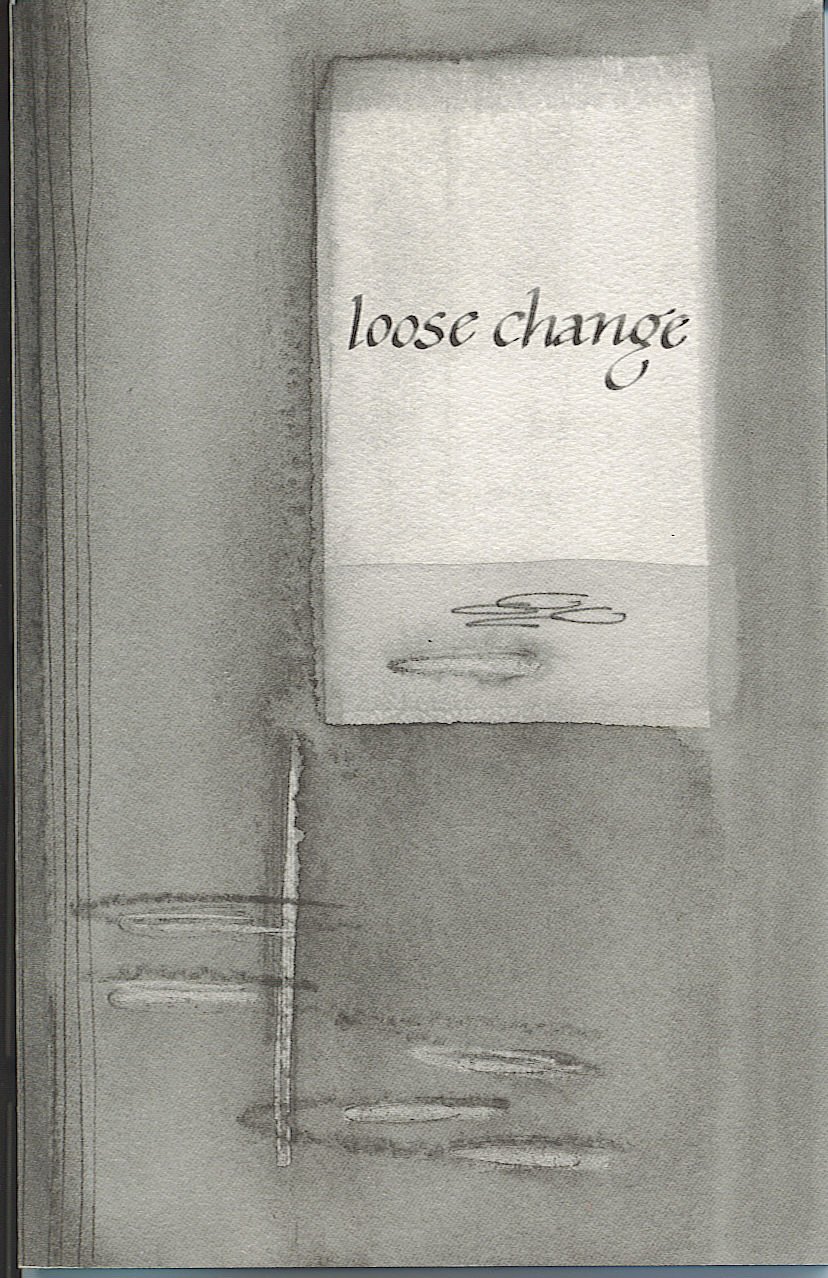
the cover of the 2005 Anthology, Loose Change, which has one haiku or
senryu from more than 220 HSA members (and is available for only $10).
big thaw overnight —
reflections
on the river
david giacalone, loose change
Every year, members who wish to participate send 5 poems (newbies can send
10) to the editors, who select one to appear in the Anthology. It’s a great way
to encourage neophyte poets to write and submit haiku, while assuring them
of publication. And, its a great way for the Association to show the variety and
quality of its members’ work.
Here comes the nag for Current HSA Members: Note that Loose Change has
over 220 poems, but that means that 600 HSA members chose not to participate
in the Anthology for 2005. Let me get on my soapbox, and say that being part
of the Anthology seems, to old haikuEsq, to be more than a benefit of membership,
it’s also a responsibility — and one that can be easily fulfilled by currently or previ-
ously active haijin, as submitted poems can be either published or unpublished.
Convinced? Think about it a moment, and then please click
Roberta Beary and Ellen Compton are co-editors for this year’s edition. I’m
sure they would want me to remind you, especially:
is much better)
1718 Connecticut Ave., NW, Suite 201
Washington, DC 20009
When my 2006 Anthology arrives in the mail in December, I’d like it to be twice
the size of this year’s — 150 pages, instead of 75. It would indeed be a great
resource for, and reflection of, HSA’s membership. Please do your part.
“tinyredcheck” Seventeen of f/k/a‘s Honored Guest Poets appear
in Loose Change, HSA’s Members’ Anthology 2005:
(I guess I need to work on the other nine). Here, in
alphabetical order, are their contributions, which
say much about the quality of the publication.
harvest moon
the long pull
of farway children
roberta beary
just long enough
to leave an impression
dragonfly
yu chang
Valentine’s Day —
I forget to get
the garbage out
tom clausen
a steady breeze
the last child
leaves home
devar dahl
“snowflakeS” “snowflakeS”
so suddenly winter
baby teeth at the bottom
of the button jar
carolyn hall
without islands in the dead center loneliness
jim kacian
spring breeze
the wine of a carpenter’s
saw
david g. lanoue
he comes to bed
cleanshaven . . .
winter stars
peggy willis lyles
migratory ducks
I have never
kept a diary
paul m.
ikebana
a stone turning
in my palm
pamela miller ness
whittling
the changes
in his face
w.f. owen
deep winter
I search the lease
for a loophole
tom painting
winter night
a pulling sensation
under the bandage
john stevenson
Abandoned barn
one bale of hay with twine
unraveling
george swede
“snowflakeS”
first visit
seeing the colors
she lives with
hilary tann
morning sickness —
the patter of spring rain
on our new roof
michael dylan welch
chilly evening —
the wine full of summer
in a far country
billie wilson
edited by Pamela Miller Ness & Tom Painting; Stanford M. Forrester, contributing ed, 2006)
Weekend Bonus: The newest edition of Roadrunner Haiku Journal
went online yesterday (VI: 1, Feb. 4, 2006). In addition to several features,
it includes three haiku or senryu from each of 15 haijin — including Aurora
Antonovich, Eric Houck, Jr., and Bruce Ross, along with a number of our
own Honored Guests. Here are one each by Peggy Willis Lyles and
John Stevenson:
a lantern
in the pothole–
moonset





Comments Off on dear haijin: a multi-breath nag