[updated: Feb. 4, 2006] After merely slapping the wrists of two cooperating
co-conspirators, U.S. District Court Judge J. Garvan Murtha sentenced dis-
barred lawyer Andrew J. Capoccia to 188 months imprisonment, for stealing
millions of dollars from thousands of clients, through his “debt reduction”
centers in New York and in Vermont. (WNYT.com, “Attorney gets over 15 years
for cheating clients;” Associated Press, “Capoccia sentenced to 15 years;”
Feb. 3, 2006) Albany Times Union‘s “His debt is 188 months in prison,” by
Alan Wechler; Rutland Herald‘s “Fraud mastermind gets 15-plus years in prison,”
by Daniel Barlow, Feb. 4, 2006.]
From his bench in Rutland, Vermont, Judge Murtha Murtha called Capoccia’s
crimes “horrendous” because they targeted victims who were trying to avoid
bankruptcy and because he purposely surrounded himself with “weak” asso-
ciates he could control and intimidate to maintain his fraudulent practices.”
Judge Murtha stated:
“This is judgment day as far as I’m concerned, Mr.
Capoccia.”
The TU reported that: “Before the sentencing, Vermont attorney [Tom]
Zonay made a passionate appeal to the judge, first asking that Capoccia
be sentenced to only two years in prison, and then asking that he be re-
leased after sentencing to allow him to work on an appeal. ‘He shouldn’t
be detained today,’ Zonay said. ‘There’s just no reason for it.’ Murtha
disagreed.
“He victimized thousands of people. He knew what he was
doing . . . As far as I’m concerned, Mr. Capoccia has no respect
for the law.”
“Murtha ended with an optimistic word for the man who will likely be in his
late 70s when he exits prison. ‘He has many talents,” Murtha said of
Capoccia. ‘Hopefully when he gets out of prison, he will be able to use those
talents’.”
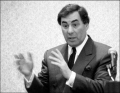
Andrew J. Capoccia (1999)
Capoccia was convicted in April 2005 on conspiracy, laundering and fraud
charges. According to the Albany Times Union (“Capoccia sentence,” Feb.
3, 2006):
“Capoccia had asked in a motion filed Wednesday not to be
sent away immediately, in order to work on an appeal. But
Murtha said he didn’t think an appeal would have merit, and
he also indicated he didn’t expect any of the Capoccia con-
victions to be reversed.
“Capoccia sold his debt-reduction firm to lawyers in Bennington in
2000. Three years later, the Law Centers closed, leaving thousands
of clients who had paid money to have their debts resolved in even
more debt.”
In addition to jail time, Capoccia will have three years of supervised release
and must make restitution of more than $7.26 million. He also must give 10
percent of all earnings after his release to victims. Three other co-defendants
have been ordered to pay more than $800,000 in restitution.
Prosecutors had asked for a sentence of 360 months in prison, or 30 years.
During Friday’s hearing, Zonay pointed out that others charged in the case had
received little or no jail time. [Ed. note: Howard Sinnott and Thomas Daly, both
disbarred lawyers, were given 3-months and one-month imprisonment, respec-
tively; Jerry Forkes, the former executive director of the Law Centers, and the
first co-defendant to enter into a plea arrangment, was sentenced to two years’
probation and ordered to pay $20,000 restitution.]
According to the Times Union, Assistant U.S. Attorney Gregory Waples pointed
out that the other defendants had pleaded guilty and testified against Capoccia.
“Their criminality, while substantial, is absolutely dwarfed by what
Mr. Capoccia did,” Waples said. “They seemed truly, genuinely contrite.
Mr. Capoccia, by contrast, is unrepentant.”
Waples, in the Herald story, described Capoccia as a white-collar criminal who
abused the trust of his clients by stealing their “children’s education savings and
mortgage payments.” “They went to Mr. Capoccia for help and only suffered
more,” he said.
AAG Waples told the judge Friday that prosecutors are still determining the number
of victims in the case and the total amount stolen. He estimated there to be more
than 5,000 victims found so far and the financial fraud total to be close to $23 million.
Waples said some of the restitution will come from nearly $3 million prosecutors
seized from accounts held by Capoccia’s wife. (Rutland Herald, Feb. 4, 2006)
“tinyredcheck” Although this may seem like a wonderful victory for justice, please take a
look at my lengthy treatment of this entire “debt reduction” matter in the
essay “blame bar counsel for letting Capoccia harm clients” (March 8, 2005).
As I lamented (with details) last year:
This lawyer scandal and client catastrophe could have been avoided —
minimized and stopped in its tracks — if bar counsel acted responsibly
and competently when the first barrage of suspicious ads came out in
1997; or when they received detailed complaints from myself, a member
in good standing of the bar [starting in Dec. 1997]; or when they were
flooded with client complaints (which at first were not even accepted, but
were instead referred to the State Attorney General’s office); or when news-
paper and tv reports emerged about angry and injured clients.
“doghouseN”
Or, or, or . . Instead, toothless and blind watchdogs did nothing, while their
cousin the wolf (with main offices on Wolf Rd. in Colonie, NY) plundered the
flock. There is little chance of reimbursement for the cheated clients and
many may never be able to repair their bad credit.
Because the debt reduction behavior was never challenged by the Grievance
Committees [he was disbarred for bringing frivolous lawsuits and ignoring court
orders], Capoccia’s partners were able, at their “Law Centers for Consumer
Protection,” to continue attracting and bilking clients — some say up to 20,000.
My first complaints against Capoccia were made when he was claiming to have
“helped hundreds of clients.”
I’m pleased that Judge Murtha has finally given a serious sentence in this case, but I’m
still angry on behalf of the unnecessarily injured clients and the unnecessary additional
blot on the reputation of lawyers. Effective lawyer discipline — especially the willingness
to investigate clearly excessive contingency fees* — would have saved a lot of people a
lot of misery.
* What made this scheme so lucrative for Capoccia was his
fee system. He said that he took “only” 25 or 27% of the
amount of debt reduction achieved for the client. In actuality,
he took the entire fee — usually thousands of dollars — up
front, before doing anything for the client, and calculated it
on the basis of clearly optimistic outcomes (predicting the
ability to reduce debts by 50 to 75%). If that scheme, which
clearly violated ABA Formal Ethics Opinion 93-373 (regarding
“reverse” contingency fees, which are based on savings, rather
than winnings), and ABA Formal Opinions 94-389, had been
declared unethical, there would have been no incentive for
Capoccia to continue providing his “service.”
you look too
robber! dewdrops
in the grass
Issa,
translated by David G. Lanoue
February 3, 2006
Capoccia gets 15 years for swindling clients


more misplaced mercy from judge murtha
A month ago, we opined that J. Garvan Murtha, Chief Judge of
the U.S. District Court, Vermont, seems far too lenient to lawyer-
felons. We gave examples from two recent cases.
Well, he’s done it again, in the Andrew J. Capoccia Debt Reduction
fraud case — giving a one-month sentence to Thomas J. Daly, who
was one of the three main actors in a scheme that has left thousands
of clients with ruined financial histories and over $25 million in futile
claims for misappropriated monies by the Capoccia Law Centers of
Albany, N.Y., and (after Capoccia’s disbarment), its successor Law
Centers of Consumer Protection, in Bennington, Vermont.
The Rutland Herald reported yesterday (“Lawyer Admits Guilt in
Fraud,” Feb. 2, 2006):
“A former lawyer for a bankrupt debt-reduction firm in Bennington
is heading for a month in federal prison on fraud and tax evasion
charges. ‘I am so sorry,’ Thomas J. Daly, 44, of Bennington, told
Judge J. Garvan Murtha on Wednesday in U.S. District Court in
Rutland. ‘I did commit these crimes. I’m sorry for it’.”
” ‘You certainly played a role in the victimization of the people who
depended on you to do something for them'” Murtha told Daly . .
“The judge then sentenced Daly to one month in prison followed
by three years of supervised release, with three months of that time
to be served on house arrest. In addition, Daly was ordered to pay
$200,000 restitution.
“emptypocketsS”
“In his plea agreement, Daly acknowledged that he accepted nearly
$200,000 in bonuses — in addition to his $200,000 salary — at a
time when clients were demanding refunds of at least $1 million and
creditors of the firm were seeking even more.
“The money for the bonuses came from an escrow account and the
firm’s general accounts. According to federal prosecutors, Daly knew
or should have known that the firm was not capable of supporting those
payments, given that the firm had been embezzling client money to pay
its day-to-day expenses.”
As with the sentencing of his disbarred co-conspirator Howard Sinnott in
December, Daly’s role in this complicated, well-planned rip-off of consumers
who were trying to avoid bankruptcy (and the subsequent hiding of millions of
dollars sought by NYS and the federal government to compensate the victims
and creditors), was blamed on a personal flaw. Here, Daly’s defense counsel
told the court “that his client’s life had been ravaged by alcoholism, contributing
greatly to his legal problems.”
According to today’s Albany Times Union, Andrew J. Capoccia the disbarred
mastermind of the debt reduction scheme (explained in a prior post), is expected
to be sentenced today by Judge Murtha. (“Capoccia faces sentencing today,”
Feb. 3, 2006). Although Capoccia, who was convicted after trial last year,
could receive up to 20 years, Judge Murtha’s wrist-slaps to his co-conspirators
suggests we may see more “professional courtesy” mercy. We’ll keep you
apprised.
update (Feb. 3, 2006): See Capoccia gets 15 years for swindling clients .
“snowflakeS” For better judgment, consider the haiku and
senryu of our Honored Guest buddy Ed Markowski:
roller coaster
we have no advice
to offer the newlyweds
county fair…
the downcast eyes
of a blue ribbon steer
midwinter dusk
a fireman turns
to face the flames
“midwinter dusk” – Mainichi Daily (#680, Feb. 2, 2006)


February 2, 2006
a couple of lawttes, please
Hey, kids, don’t forget: some judges can Google. See this AP article:
“Mich. judge ridiculed on teens’ Web site strikes back,” Jan. 30, 2006,
which starts:

A judge who sentenced three teenagers to probation for
being drunk at their high school prom had them jailed after
he saw them drinking and ridiculing him on a Web site one
of them created.
“I told them, ‘If you think this gives me any pleasure, you’re
wrong,'” Oakland County District Judge Michael Martone said
after sentencing the last of the girls, Amanda Senopole, to 10
Ernie the Attorney Svenson has sympathy for young lawyers dealing
with the “High cost of legal education” (Feb. 2, 2006), quoting from
a National Law Journal piece “As Salaries Rise, So Does the Debts”
(LawJobs.com, Feb. 1, 2006). I don’t like seeing young people in
great financial distress either, but the best quotes in the NLJ article,
could have been said by some of the old curmudgeons around f/k/a
“carblueSF”
But law students are partly to blame, said Joseph Harbaugh,
dean of Nova Southeastern University Shepard Broad Law
Center in Fort Lauderdale, Fla. Would-be lawyers live too
comfortably while in school and fail to make the necessary
sacrifices, he said, adding that a quicklook at any law school
parking lot proves his point. “The students’ cars are better than
the faculty and staff’s cars,”said Harbaugh, who is also a board
member of Access Group, a nonprofit provider of student loans
for graduate and professional degrees.
Another important observation is made in the article via Harbaugh:
Law schools calculate the amount of money students need
for tuition and for living expenses into their budgets, which
helps determine how much federalloan money their students
can borrow. Harbaugh said that many law schools do a dis-
service to students by raising their budgets to accommodate
so-called cost-of-attendance fees, which are those expenses
that law students have for attending school other than tuition
and fees.
On the other hand, I do not buy the excuses of the Pace Law School
Dean:
Stephen Friedman, dean of Pace University School of Law in
White Plains, N.Y., points to the “basic economics” of law schools,
which, unlike corporations, cannot “sell more stuff or operate more
efficiently.” . . . Your only alternative is to raise prices — the
fundamental driver behind this extraordinary increase,” he said.
Well, Dean Friedman, I bet you could operate a bit more efficiently. How
about using more adjunct faculty? And, given that there are many times
more competent applicants for law professor slots than there are available
positions, how about trimming some of those fulltime teaching salaries?
The Chicago-School and federalist-types will surely understand the supply-
demand economics. (Cf. TCSDaily, How Wal-mart is like academia, by
James H. Joyner, R., Jan. 27, 2006; via RiskProf)

Ohio Supreme Court on the Report of its Code revision Task Force and
its Proposed Rules. As we explained in detail last week, Ohio consumers
need your voice to help assure them the protection and competition they
deserve. For example, as written, the Proposed Rules would continue to ban
lawyer ads that mention discount or cut-rate fees. In addition, a State Bar
committee had recommended against a proposed requirement for a written fee
and scope-of-engagement statement for each matter above $500.
E. Jane Taylor, hoping she would help assure that pro-
client positions were taken by OSBA’s House of Delegates
last Friday. She wrote back sayinglively debate was had
on both points you raise, as well as on many others.” I have
not, however, been able to find out the final recommendations
of OSBA. If you know, please leave a comment or email me.
In response to my statement that bar associations act far too
offten like guilds, Jane Taylor also wrote: “One of the many jobs
one has as the leader of a state wide bar association is to guide
the organization to find, in policy matters, the right balance be-
tween the interests of our members and our obligation to inform
and protect the public. The perspective of a person such as your-
self is quite useful to the process.”
Over at MyShingle, Carolyn Elefant wonders on behalf of ghost-writing
associates: “Why Would You Blog At Biglaw?“. There’s a nice debate
over whether it matters at Evan Schaeffer’s Legal Underground. Check
it out, along with my oh-so-reasonable perspective.
still life photographs of wine bottles (everybody needs a hobby). It looks
artistically promising, but he’s hoping photo buffs will help him with some
lighting issues.
“snowflakeS” Time for a relaxing, thoughtful moment with
Hilary Tann. Maybe Prof. B will bring the wine.
quietly
we become
audience
there should
be a name for it
snow light
sitting
where I sat as a child
I wait out the storm
mountaintop
winter grasses
blown clean of seed


February 1, 2006
finally: February
After jumping the gun on February two days ago,
I’m pleased to say it really is Feb. 1, 2006. The
best thing about February? We don’t have to
make believe the Year is still New.
“Snapshots2006”
If you had a Snapshots Press 2006 Haiku Calendar
on your desk right now, you’d be enjoying this winning,
featured haiku by our Honored Guest Roberta Beary:
snowed in
the dog clicks
from room to room
Because you’re visiting f/k/a, you get to enjoy
four more from our fabulous lawyer-haijin:
waiting room–
the ex-wife
looks past me
twilight
the words of his letter
darker and darker

snowfall
his fingers slowly
unbutton me
another snowstorm
a child’s braids her doll’s hair
over and over
“waiting room” – Pocket Change.
“twilight” & “another snowtorm” – Woodnotes #29
quite a few fans of snowmen and snow buddhas
hoping for a snowy February in the Northeast.

one-year pilot Lawyer to Lawyer Mentoring Program for lawyers
who graduate this May. New attorneys who participate in the
program will be able to use it to fulfill six hours of a 12-hour new
lawyer training require-ment that is mandatory for all Ohio attor-
neys in their first year. Attorneys who act as mentors must meet
certain criteria, such as a minimum of 5 years’ experience), and
earn six hours of continuing legal education credit at the completion
of the program. Get the details at the above link.
“SnowFlakeL”

Court permits School Board’s ban on Members reading IEPs
Note: Counsel for Plaintiff Deann Nelson is Arthur J. Giacalone,

Powered by WordPress