Archive for March, 2018

A Prophetic Light

Wednesday, March 21st, 2018

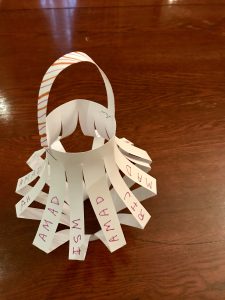
A major theme in Islam is the idea of light and its connection to God. In a passage from the Quran we read in class (24:35) it states, ““God is the Light of the heavens and the earth; the likeness of His Light is as a niche wherein is a lamp – the lamp in a glass, the glass as if it were a glittering star –kindled from a Blessed Tree, an olive tree that is neither of the East nor of the West, whose oil well-nigh would shine even if no fire touched it; Light upon Light; God guides to His Light whom He wills. And God strikes similitudes for man, and God has knowledge of everything.” This passage is important because in regards to artistic expression, it validates the use of light as a definitive expression of God and his creations/power. We also see this theme of light not only in regards to talking about God but also the prophet Muhammad (P.B.U.H) who is constantly referred to and describes as being “The Light of God”. The prophet, who is seen as the perfect example of what a good Muslim is to be, is considered the light because he illuminates the path to righteousness and God through the way that he lives his life. To illustrate this concept of Muhammad being a light for Muslims and human beings in general, I constructed this paper lamp. The names of the different communities of interpretation that are on the sides of the lamps are meant to show that even with their differences and tensions, these communities of interpretation are unified by their love and view of the Prophet Muhammad.


The Opening Design

Wednesday, March 21st, 2018

‘Surat al-Fatiha’ (The Opening), also known as ‘Ummul Qur’an’ and ‘Ummul Kitab’ meaning the ‘Mother of Qur’an’ and ‘Mother of the Book’ respectively, is the introductory chapter of the Quran. Believed to be the first completed chapter of the Qur’an revealed to the Holy prophet (PBUH), Muslims across the world recite this chapter on a daily basis for prayer. While there are so many things that are interesting about the fatiha, one of my favorite things about it was that in the Quran it is always decorated and adorned in a way that the other chapters of the Quran are not. Ranging from floral patterns to abstract designs and texturing the Fatiha page in the Quran is a consistent trademark of most Qurans. While most Qurans have designs for background of the opening chapter, each one is unique in its own way. Each fatiha design seems to evoke a different reaction and each one represents something different. In lecture we learned that aesthetics is a sign of divinity and most fatiha design certainly inspire a divine feeling. The designs also promote the theme in Islam that God loves beauty. To celebrate the beauty that is in these fatiha designs, I created a collage of different fatiha design pages from Qurans.

Diversity of Recitation

Wednesday, March 21st, 2018

In the beginning of the semester we spoke a lot about the Quran and how it is a text that is meant to be recited not just merely read. We spoke about the divine power and influence that the Quran has in the form of the sound of recitation and there is a set of rules that govern the way that the Quran is meant to be recited. While tajweed is important in Quranic recitation and is studied by many Muslims, recitation from country to country and person to person is very different.  In class we saw recitations by women, children, people from non-Arabic speaking countries, and people from all different nationalities all of whom had very different sounds when reciting. To illustrate this multitude in sound and recitation by Muslims (while within the general rules of Tajweed) I decided to compile a recording of 7 different famous Quran reciters performing the first chapter of the Quran, Surat Al-Fatiha. The recording begins with all 7 reciters saying “Bismillah, ar-Rahman, ar-Rahim” and then follows with each reciter contributing one line of the opening chapter. The sound, speed, and tone that the Quran is recited in has a huge impact on the provocation of emotion and the emphasis of certain messages or themes from passages. In this piece I want to illustrate, through the unification of all these reciters recordings, the concept that even with diversity in sound, speed, tone, and pitch, the power of the recitation of Quran stays a divine form that still evokes emotions in and a sense of beauty to those who hear it.