Are Picture Books Fading Away?

http://www.nytimes.com/2010/10/08/us/08picture.html?scp=1&sq=picture%20books&st=cse

The New York Times reports that children’s picture books have become “unpopular” and that publishers have “gradually reduced the number of picture books they produce for a market that had seen a glut of them.”  Jon Scieszka reports that his royalty checks have been “shrinking.”  At the same time, the Young Adult market has been flourishing.  The reporter, Julie Bosman, attributes the decline to parents pressing their young children to leave picture books behind and move on to chapter books.

I wonder if picture books really are on the wane.  Sales of Sendak and Seuss are evidently going strong, suggesting that the winner-takes-all syndrome may hold especially true during an economic downturn.  Picture books are expensive, and I suspect that many parents are turning to the robust secondary market in used bookstores and on Amazon.com.  And why not set up a swap system with other parents or with relatives when a book can cost up to $25?   For chapter books, the price point is quite low, and it doesn’t really pay to buy a book that costs $5-6 on the secondary market, since shipping charges are $3.99.  In short, I don’t doubt that sales of picture books are down, but I am skeptical about the assertion that parents are making the transition to chapter books sooner than they once were.  I have a clear recollection of my own resistance to chapter books (like Alice, I wondered what the use was of a book without pictures and conversations), and I doubt most children will stand for being rushed into chapter books.

Here’s my recommendation: Go to the Eric Carle Museum of Picture Book Art in Amherst, Massachusetts, and browse through their incandescent collection.  Ask for Andy, who will match you up with the exact book(s) you want.  He pulled Sarah Moon’s Little Red Riding Hood off the shelves for me, along with a few other volumes that were just what I wanted.  Try Ruth Sanderson’s radiant Goldilocks, which ends with a recipe for blueberry muffins, or Jane Yolen’s hilarious Sleeping Ugly.

Is it a sin to kill a mockingbird?

It’s the 50th anniversary of To Kill a Mockingbird, and everyone seems out for blood. In the Wall Street Journal, Allen Barra compares Harper Lee to other Southern writers, and finds her wanting: “And as for Harper Lee—Alabama born, raised and still resident—she doesn’t really measure up to the others in literary talent, but we like to pretend she does.” Only a few weeks earlier, Malcolm Gladwell complained that Lee’s novel reveals the limits of Southern liberalism: “A book that we thought instructed us about the world tells us, instead, about the limitations of Jim Crow liberalism in Maycomb, Alabama.” Does any novel really instruct us about “the world”? Don’t we learn about a specific time and place, and how a heroic character may be ahead of his time but not necessarily ahead of ours? Much of what makes Atticus great is that he is a flawed hero, growing up in a world that does not share our own understanding of social justice. http://www.newyorker.com/reporting/2009/08/10/090810fa_fact_gladwell?currentPage=all

Digs like these are not new. Back in 1960, Flannery O’Connor wrote, after a friend “insisted” on sending her the book: “I think I see what it really is–a child’s book. When I was fifteen I would have loved it. Take out the rape and you’ve got something like Miss Minerva and William Green Hill [a children’s book set in a small town in the South]. I think for a child’s book it does all right. It’s interesting that all the folks that are buying it don’t know they’re reading a child’s book. Somebody ought to say what it is.”

I’m reminded once again of Philip Pullman’s high-wattage Carnegie Medal Acceptance Speech, in which he said:

There are some themes, some subjects, too large for adult fiction; they can only be dealt with adequately in a children’s book.

The reason for that is that in adult literary fiction, stories are there on sufferance. Other things are felt to be more important: technique, style, literary knowingness. Adult writers who deal in straightforward stories find themselves sidelined into a genre such as crime or science fiction, where no one expects literary craftsmanship.

But stories are vital. Stories never fail us because, as Isaac Bashevis Singer says, “events never grow stale.” There’s more wisdom in a story than in volumes of philosophy. And by a story I mean not only Little Red Riding Hood and Cinderella and Jack and the Beanstalk but also the great novels of the nineteenth century, Jane Eyre, Middlemarch, Bleak House and many others: novels where the story is at the center of the writer’s attention, where the plot actually matters. The present-day would-be George Eliots take up their stories as if with a pair of tongs. They’re embarrassed by them. If they could write novels without stories in them, they would. Sometimes they do.

In the novel itself, Miss Maudie explains to Scout why Atticus declared that it was a sin to kill a mockingbird: “Mockingbirds don’t do one thing but make music for us to enjoy. They don’t eat up people’s gardens, don’t nest in corncribs, don’t do one thing but sing their hearts out of us. That’s why it’s a sin to kill a mockingbird.”

One popular edition of To Kill a Mockingbird includes that extract on the back cover and describes it as “a lawyer’s advice to his children as he defends the real mockingbird of Harper Lee’s classic novel–a black man charged with the rape of a white girl.” That seems a real stretch to me, and Atticus’s wisdom seems flattened by that statement. In the context of the recent assaults on Harper Lee’s novel, I can’t help but think that one way of understanding Atticus’s words is to imagine the mockingbird, master of mimicry, as the writer herself. Unfortunately, that makes the rest of us bluejays.

“Shoot all the bluejays you want, if you can hit ’em,” as Atticus puts it.


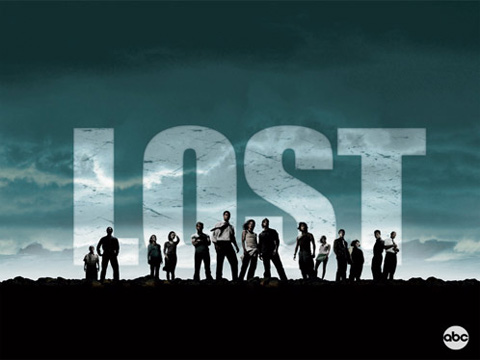
Lost & Children’s Literature

“I was never very good at literary analysis,” John Locke declares in an episode from Season 2 of Lost. The writers for the series, on the other hand, seem determined to load the series with literary references. Sawyer, the hardbitten conman, turns out to be a voracious reader, devouring everything from Watership Down to A Wrinkle in Time.

The series builds on one of the most celebrated literary tropes: survivors on a deserted island. Will they descend into savagery or rebuild civilization? The premise takes us to the heart of questions about human nature and the human condition and has functioned as the inspiration for literary thought experiments for writers ranging from Daniel Defoe (Robinson Crusoe) to William Golding (Lord of the Flies). The title Lost might also be seen as an allusion to the lost boys in J.M. Barrie’s Peter Pan, another narrative about adventures on an island.

Let me explain my own addiction to Lost, which started with a recommendation from my son and developed into a full-blown compulsion when I came down with the flu last week and found myself unable to concentrate on the written page. I went through all 24 episodes of Season 1 in 3 days. The last time I had become so immersed in an Otherworld was while reading Philip Pullman’s His Dark Materials, an experience that may have been richer and deeper but no more enthralling (blame the depleting effects of a virus). That made me wonder about the relationship of new visual media, particularly those that appear in serial form in much the way that Dickens’ novels were once packaged, to the novel.

We now know that new media never really break with old media and that they relentlessly recycle and refashion older technologies in the process of cultural production. Lost is full of allusions to writers and philosophers. There is John Locke and Danielle Rousseau, but also Edmund Burke and Hume. And there are debates about Dostoevsky and Hemingway, along with references to works ranging from The Odyssey and Alice in Wonderland to The Turn of the Screw and Of Mice and Men.

Astonishing to me was the number of references to stories for children.* Alice in Wonderland is almost de rigueur these days, and it did not surprise me to find an episode called Through the Looking Glass or talk about Wonderland. But I did sit up and take notice when The Turn of the Screw appeared on a bookshelf, when Hurley corrected Sawyer’s pronunciation of Babar, and when a character named Henry Gale showed up (an allusion to Dorothy Gale’s Uncle Henry in The Wizard of Oz) and claimed to have reached the island by a hot air balloon (the Wizard of Oz is also an aeronaut).

Why all the literary allusions in a visual medium? Well, for one thing, Lost was created by writers who are inserting themselves into a storytelling tradition with deep roots in print culture. And by paying homage to stories from the Age of Gutenberg, they are in a sense establishing their cultural legitimacy and revealing themselves to be defenders of the literary tradition rather than rivals of it. In aiming to create a new mythology, Lost also draws on biblical discourses and resorts to bricolage to create its own foundational story about origins and meaning. The discussions about faith versus reason and meaning versus nothingness may feel reductive but the premise itself demands them.

*Sawyer (note the name!) is an unlikely expert in children’s books, but in Season 2 he refers to Pippi Longstocking as well as Little Red Riding Hood.

For more on literary allusions in Lost, see http://www.losttvfans.com/page/Literary+Allusions

The Democracy of Reading

The Telegraph has a piece by Philip Pullman about his new book The Good Man Jesus and the Scoundrel Christ. The book itself is a fascinating read and retells the journey to the cross: “The story I tell comes out of the tension within the dual nature of Jesus Christ, but what I do with it is my responsibility alone. Parts of it read like a novel, parts like history, and parts like a fairy tale; I wanted it to be like that because it is, among other things, a story about how stories become stories.”

What I appreciated in the essay was Pullman’s view that his books belong to their readers. He worries about authors who argue with their readers about what their books mean. “Readers may make of my work,” he tells us, “whatever they please.” And he readily concedes that some have found patterns, connections, and interpretations that escaped him. I’ve always applauded Pullman’s irreverence and his critique of institutional religion, though my students are quick to point out that Pullman, as a secular humanist, develops orthodoxies of his own. Nonetheless, I like the democratic principles at work in his decentering of authorial authority.

The problem with my telling people what I think it means is that my interpretation seems to have some extra authority and that sometimes shuts down debate: if the author himself has said it means X, then it can’t mean Y. Believing as I do in the democracy of reading, I don’t like the sort of totalitarian silence that descends when there is one authoritative reading of any text.

http://www.telegraph.co.uk/culture/books/7564066/What-Jesus-Christ-means-to-me.html

Are Children Getting Older Younger?

articleInline

Are kids tethered to electronic devices? Tarmar Lewin writes in the New York Times that the “average young American now spends practically every waking minute — except for the time in school — using a smart phone, computer, television or other electronic device. http://www.nytimes.com/2010/01/20/education/20wired.html?scp=1&sq=children%20awake%20online&st=cse

Here’s my question: are adults tethered to electronic devices? And why is there a sudden moral panic about children texting and talking on their cellphones when adults spend so much of their time doing the same thing? Are kids getting older younger? Are they exposed through electronic media to words and images that even they do not want to see? What is lost in the transition from print culture/books to Kindles, Nooks, and i-pads? Will children get lost in stories? Can they still practice what Tim Wynne-Jones calls the deep read?

“The deep-read is when you get gut-hooked and dragged overboard down and down through the maze of print and find, to your amazement, you can breathe down there after all and there’s a whole other world. I’m talking about the kind of reading when you realize that books are indeed interactive. . . . I’m talking about the kind of deep-read where it isn’t just the plot or the characters that matter, but the words and the way they fit together and the meandering evanescent thoughts you think between the lines: the kind of reading where you are fleetingly aware of your own mind at work.”

These are some of the questions we considered this week in my class on Childhood. For the first time, I began to have the feeling that the medium affects not only the message but also rewires our brains. Is there such a thing as deep reading in an age of electronic devices. When I read books on a Kindle, I have a slightly eerie sensation: the words seem to disappear as I “consume” them. But who knows–that may change over time as I become more adept at using the various features on the device.

Taking the Magic out of College and Putting It Back In

art.harry.potter.wb

Lauren Edelson worried last week about how college tour guides deliver condescending pitches about how their schools resemble Hogwarts. Not a bad thing in my book, especially when you have seen schools that bear no resemblance at all to Hogwarts. Still, she makes a good point about how high school students are longing to grow up and out of Hogwarts: Leaving home and beginning life in a new place is a nerve-racking experience, and nothing seems more reassuring than imagining that college will be the realization of a fantasy world I’ve been imagining since childhood. Obviously colleges have picked up on this. But they’re trying too hard. They’re selling the wrong thing. And my friends and I won’t be fooled. After all, Harry Potter is frozen in high school, and we’re growing up.

http://www.nytimes.com/2009/12/06/opinion/06edelson.html

I was sold on her argument until Dani Duggan (Weston High School) weighed in: What I still don’t understand is why Ms. Edelson thinks “selling” Harry Potter is a problem. As my dad says, you’re old for a very long time. So what’s the harm in a little magic?

And apropos Harry Potter in College, CNN.com has an interesting piece on Pottermania in the college classroom and interviews students who are taking a range of courses in which J.K. Rowling’s series is read.

http://www.cnn.com/2008/SHOWBIZ/books/03/25/cnnu.potter/index.html


Lois Lowry Collaborates with Bagram Ibatoulline

9780545030359_xlg

Lois Lowry’s picture book Crow Call may be set in November, but it makes a perfect Christmas gift. Illustrated by the Russian artist Bagram Ibatoulline (The Miraculous Journey of Edward Tulane and Thumbelina, among others), it follows father and daughter on a hunting expedition that takes them from home, through the woods, and back again. In the middle of those woods (and in the precise middle of the book), Lowry describes, with characteristic understatement, an encounter that transforms both adult and child. It was fascinating to me how deeply Ibatoulline understood the story, turning to photographic realism on the very page that captures the fears of the father during his time in the combat zone and the anxieties of the daughter in times of peace.

Lowry alluded to “Little Red Riding Hood” in Number the Stars, and this story too reminds me of the power of a girl, a hunter, and an encounter in the woods. The elements of the fairy tale are configured here in an entirely new way and anchored in the mode of psychological realism. The relationship between father and daughter becomes poetically emblematic, revealing the “groping toward understanding each other” of parents and children (as stated on the last page) as well as the complexities of the human condition (our conflicted relationship to nature and to men and women from other nations and cultures).

“The Red Shoes” on Screen

RedShoes

Here’s Maureen Dowd on the stunning film version of Andersen’s “The Red Shoes.” Pressburger and Powell’s brilliant film brings Andersen’s story into the twentieth century, with a doomed heroine torn between love and ballet. Here’s Dowd on the Andersen story:

“The Red Shoes” is based on a Hans Christian Andersen fairy tale of the same name about a little girl who becomes vain about her red shoes and gets confused about her priorities. As in the movie, the shoes force the girl to dance day and night, and then she dies. But the fable has an even grimmer coda: The girl asks an executioner to cut off her feet.

Interesting that Dowd left out an important element in Andersen’s tale: the girl’s conversion experience at the end–her recognition that piety and prayer are superior to beauty and mobility.

http://www.nytimes.com/2009/11/08/opinion/08dowd.html

The Disappearance of Wonder?

GC_01143.jpg__1254517426_9401

http://www.boston.com/ae/movies/articles/2009/10/04/where_the_wonder_goes/

Ty Burr worries that children’s stories translated into the cinematic medium risk losing their “innocence.” He makes the point that successful stories for children “address profound aspects of childhood while seeming to look the other way.” Films, by contrast, refuse to look away and offer so much information that little room is left for the imagination. I was reminded of early anxieties about sound film. In an essay on the Culture Industry, Horkheimer and Adorno worried that film would leave “no room for imagination or reflection of the part of the audience.” The “victims” of sound film are so “absorbed” by what takes place on screen that they end up equating the cinematic spectacle with reality.

Looking at Burr’s inventory of cinematic adaptations that “work” or “don’t work,” it seems fairly obvious that the success of an adaptation has little to do with “too much information.” The MGM version of The Wizard of Oz is actually better than the book, and it is full of fanciful excesses. Or take Willy Wonka and the Chocolate Factory and Charlie and the Chocolate Factory. Why does one work and the other fall flat?

Aladin in Bollywood

aladin_l200909040708

Here’s Bollywood’s update of “Aladdin and the Magic Lamp,” a story added to the French translation of the Arabian Nights by Antoine Galland, who had the tale from a Syrian storyteller. Aladdin may have his origins in Arabic cultures, but he is actually Chinese, though living in an Islamic culture in China. Note that the press copy for this film describes India as the “land of myths and legends”–a not so subtle effort to claim that Aladin is really an Indian hero. Is the new spelling part of an effort to make Aladin native?

“A Tale of Secrets and Mysteries, Power and Passion, and a Loser”–the trailer reminds us that fairy-tale heroes often begin as simpletons, numbskulls, dummies, or, in today’s terminology, losers.

This is the second Bollywood production, the first going back to the 1960s. “Everything is possible. Look at this!” is spoken with a distinctly U.S. midwestern accent.

Thanks to Holly Hutchison for sending me a link to the trailer.

Here’s the website for the trailer and a press release follows:

http://www.apple.com/trailers/independent/aladin

From the land of myths and legends – India – comes a fantasy adventure for the entire family. Directed by Sujoy Ghosh, ‘Aladin’ is a modern re-imagining of the classic tale of ‘Aladin and The Magic Lamp’. Aladin Chatterjee (Riteish Deshmukh) lives in the city of Khwaish, an orphan who has been bullied since childhood by Kasim and his gang. But his life changes when Jasmine (Jacquiline Fernandes) gives him a magic lamp – because it lets loose the genie Genius (Amitabh Bachchan). Desperate to grant him 3 wishes and seek the end of his contract with the Magic Lamp, the rock-star Genius makes Aladin’s life difficult until the real threat looms on the horizon : the ex-genie Ringmaster (Sanjay Dutt). Why does Ringmaster want to kill Aladin? What is the dark secret about Aladin’s past that Genius is carrying? And what is Aladin’s destiny? Find out more in this swashbuckling fantasy adventure film from Eros Entertainment and Boundscript Motion Pictures.