Archive for October, 2015

Feminist Pakistani Poets response

Tuesday, October 27th, 2015

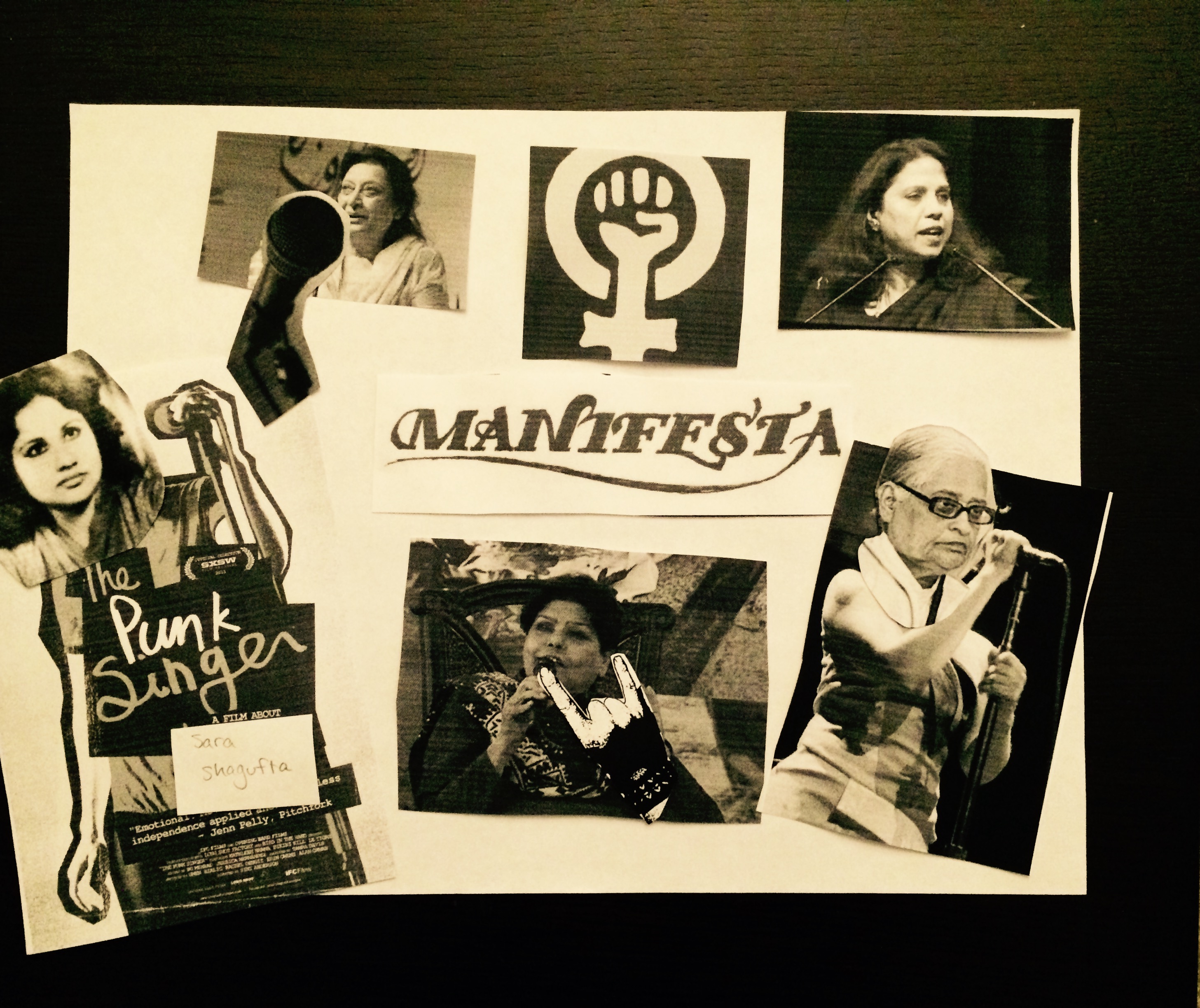
manifesta

I loved the reading “We Sinful Women”, as it gave me a chance to see the women who were fighting for their rights in other parts of the world. Women throughout the world still face so much oppression, though in different places, the battles are over different disagreements. I am well versed in the issues that face women in America, but until this reading did not know at all what the women in Pakistan were up against. I also recognize that there are intersectional problems, in which people face many sorts of interconnected oppression.

I found the photos online of the poets we read and connected them to the kind of feminism we recognize in America. I put Sara Shagufta’s face on a picture of Kathleen Hanna, who is a large representative of the current third wave feminism. I put the Manifesta symbol, of the feminist magazine at Harvard, in the middle of these pictures. I mostly wanted to show that we women may face different obstacles, but can come together to fight them.

I recognize that in colonized parts of the world feminism is rejected as a western ideal. I did not want to overwrite their stories with ours. I want to show the shared interest of giving Fahmida Riaz a larger microphone, and a larger platform to voice her opinion and effect change. I hope this picture shows our combined interests and how we can work together to end oppression rather than the cultural domination and appropriation that western feminism can seem like in other parts of the world.

Complaint and Answer response

Monday, October 26th, 2015

complaint and answer

The Complaint and Answer was a complicated poem, expressing human aggravation with God, and God’s disappointment in return.

The complaining humans were upset that they were receiving no political power as reward. They felt abandoned by God and saw God as disloyal. I represented this anger as fire in my picture. I used leaves to show the fire because being angry at God feels like a natural response that happens every once in a while, as we humans go through life’s cycles of good and bad, just like the leaves change colors through the natural cycles in weather. It’s okay to be upset and unhappy with your position in life, and this leaves (pun intended) you in a position to reevaluate your actions and choices.

God’s response in the Answer is that they shouldn’t be upset by their lot in life, because they weren’t being good enough Muslims. Had they been trying harder to progress and not gotten stuck on the rituals, things may have been better for them.

“I went to France and saw Islam without Muslims. I went to Egypt and saw Muslims without Islam.”

Iqbal is trying to say that the Europeans and muslims (people who submit) are continuing with progress, whereas the Muslims were falling behind. I represented God’s answer as water coming to take out the fire. He was showing them that this anger was coming from the wrong place, and tried to put out that fire, and direct them to the real problem: their behavior. Iqbal is hoping that the Muslims start acting as they are supposed to, as God’s representatives on Earth, meant to develop themselves to the highest force.

Wedding of Zein response

Monday, October 26th, 2015

rahma

I drew this picture in response to the story, The Wedding of Zein. This story portrayed its characters very strangely and as though they were not real people. Zein is seen as this always happy good luck charm for women to get married, but the people in the story are not interested in how that affects him. The villagers also do not take care of its disabled people all that well, and Zein, this unrealistic character, is the only one to treat them as normal people would. I drew Zein (to the best of my not too good abilities) with his odd characteristics (no eyebrows or hair, two teeth, and no shoes), backed up by what seemed to be his only real friends. Together, they are a group of real people that other people don’t recognize.

Nima is also described strangely. She is described as one overall merciful attribute, rather than as a human. She is beautiful, and almost perfect, and has this pity and motherly concern for Zein. She feels it’s her duty to use her life not for pleasure but for some greater message. This reminded me of an angel rather than a normal young woman, so I drew her with wings, to invoke the imagery of a celestial being.

Nima and Zein connect and marry because of the way Nima sees herself. Nima wishes she had been named Rahma, to represent mercy, and enacts this in marrying her cousin. This word connects them in my drawing, as he can fall in love with anyone, and she thinks she is saving him by marrying him.

Hello world!

Monday, October 26th, 2015

Welcome to Weblogs at Harvard Law School. This is your first post. Edit or delete it, then start blogging!