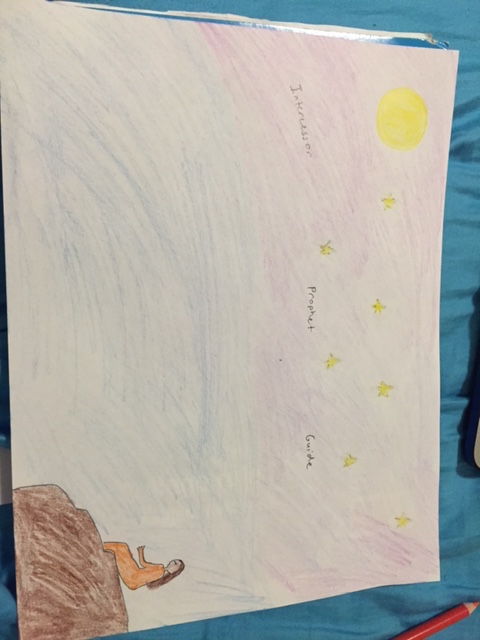
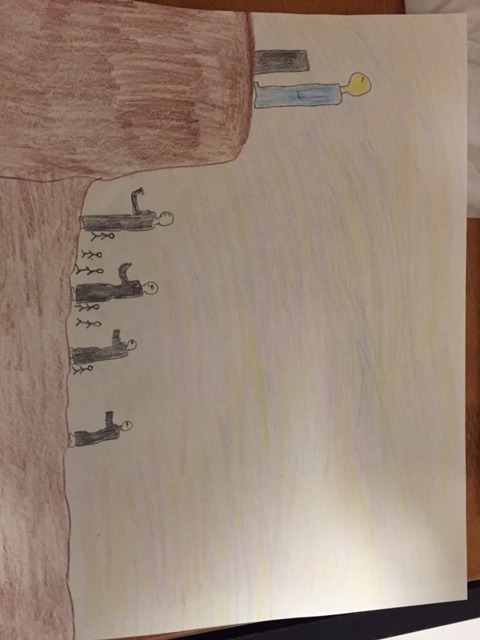
This blog showcases the various themes, notions, and ideas I have encountered in this seminar that have, to a considerable extent, resonated with me. Even as a Muslim, I found that I was able to learn valuable lessons from the seminar’s various readings, which in my opinion, illuminated important notions about not only the way we perceive religion, but also a realistic portrayal of the Muslim experience, rather than the fanaticism often depicted by the media. Perhaps the most important ideal I encountered, early on in this seminar, was that one must take a cultural studies approach in seeking to understand a faith as multifaceted as Islam. While many view the religion as a monolithic entity, often in a negative context, it is important to take into account the countless factors, ranging from social, educational, political, and economic, that play into how one chooses to interpret his or her faith. Thus, one must take into consideration that the adherents of Islam come from vastly different backgrounds. Failure to do so, as we learned in the seminar, leads to widespread ignorance that perpetuates fear and hostility towards the religion as a whole, often thought of as a violent “other”. This theme of religious myopia and the media’s faulty interpretation of Islam also comes up in discussion of the hijab, which many believe to entail oppression and subjugation of women. However, as was illuminated by the seminar’s readings and lectures, the hijab holds a multitude of different contexts in different societies. For example, the hijab is often utilized as a status symbol. In one of my creative responses, I aimed to showcase this disparity between how outsiders to the religion view the hijab and how the women and societies themselves regard the hijab. I decided to draw a picture of a woman wearing hijab, writing out ignorant or negative sentiments and ideas associated with the hijab on the bottom, and more accurate sentiments on top of the woman’s hijab, like modesty, status, and power.
In addition to the plethora of different contexts in which to interpret Islam, one must also take into account the various sects of Islam and the fact that despite the beliefs that connect these branches, Muslims adhere to a wide range of different sects. For instance, one must take into account not only the Sunni, Sufi, and Shia branches and the various practices and traditions espoused by each sect, but also who holds true religious authority. In such a pervasive, diverse religion, it naturally follows that the different sects turn to different individuals for religious guidance. This remarkable diversity was showcased by several of the readings, such as The Wedding of Zein, in which Haneen, a spiritual mystic, is revered by many in the village. Ironically, the Imam in the story, who many would assume to be the primary source of religious guidance due to his symbolizing a more institutionalized form of religion, is viewed with disdain and fear rather than reverence. This spiritual and mystical approach to Islam was also evident in The Suns of Independence, in which the protagonist’s wife Salimata depends on voodoo and charms to ward off evil spirits. In this same novel, the fetish priest and sorcerer practice customs native to the village. In this sense, the various cultural practices in The Suns of Independence are shown to have integrated with Islamic practices. As such, the characters in the novel espouse a way of life that exists at the convergence of the two. Throughout the seminar, I was highly intrigued by novels that depicted this phenomenon, because, in my opinion, this embodied and helped to convey realistic Muslim experiences, rather than society’s conception of what it means to be Muslim.
Another notion that proved to be an underlying theme throughout the seminar was the idea of the West, and all that Western societies embody, standing against the East, namely Muslim societies. Namely, in the novel Madras on Rainy Days, the protagonist Layla, who returns from America to India, her home country, is told by her parents to take advantage of the multitude of educational opportunities prevalent in the West. However, they vehemently oppose her integrating her own cultural roots with American culture, as they believe doing so will ultimately lead to corruption. Furthermore, the story itself demonstrated the contrast between Western secularism and the cultural practices prevalent in Muslim countries. For example, when Layla bleeds excessively due to a terminated pregnancy, the alim her family takes her to claims that her condition can be attributed to the evil spirits that have taken refuge inside her. However, throughout the class, various readings demonstrated the notion that despite this stark contrast, the two ideologies can exist simultaneously and enrich each other. For instance, in the short story “The Saint’s Lamp”, upon returning home to Egypt from his schooling in the West, the protagonist Ismail is appalled by the superstitious beliefs and practices prevalent in his village, which in his opinion preclude education and logic. Furthermore, his family expresses discontent with the influence of the West on Ismail, proclaiming that he has returned as an infidel and abandoned his roots. Although this quandary presents the East and West as espousing antithetical ideologies that are unable to coexist in harmony, eventually Ismail comes to the realization that faith and logic can exist simultaneously provided that one’s spiritual superstitions do not overtake and obscure reason and logic. Furthermore, this short story illuminated the notion that one’s faith can fortify his or her scientific pursuits.
A theme I found particularly compelling as it reappeared in various readings was the notion of poverty and societal injustice sparking violence and disarray. I found this theme to be highly significant in that it reinforced the notion that it is not religion that fuels terrorist acts, but rather humans and human qualities, such as greed. Namely, in The Beggar’s Strike, those with power fail to sympathize with the poor, who constitute a significant portion of society, choosing instead to dehumanize them and view them as a problem, often organizing raids in an attempt to rid society of their influence. As expected, this ultimately causes an uprising in which the individuals in power are overthrown. The situation as a whole seemed counterintuitive to me, as I had always imagined that since charity, or zakat, is one of the five fundamental pillars of Islam, Muslim societies would strongly encourage altruism. This, however, was not the case in The Beggar’s Strike, which proved the notion that one cannot tie Islam, or religion as a whole, directly to the issues that arise as a response to such oppression. Such was the case in Naguib Mahfouz’ Children of the Alley, in which oppression and a blatant lack of effective societal structure culminates into widespread chaos and immoral conduct. As I read the novel, it seemed that there were multiple parallels between the society that functioned as the setting and societies in the Middle East. This apparent comparison was significant, since many wrongly assume that the turbulence prevalent in the region can be attributed to Islam, which is not the case. Thus, the events of the novel further enforced the idea that humans, not the Islamic faith as an entity, are the root cause of the problems that face modern societies.
Multiple readings in this seminar addressed a theme I found particularly intriguing: how Muslims faced with oppression and injustice cope with their circumstances in regards to their religion. I found it interesting how, in Marjane Satrapi’s Persepolis, the main character Marji seemed to turn away from her faith, losing her relationship with God due to her believing that her prayers have been left unanswered. Along those same lines, the renowned poet Muhammad Iqbal, in his poem “The Complaint” depicts a Muslim’s anger and frustration as he laments the state of chaos and defeat that has, unfortunately, proved common among Muslims today. By contrasting these circumstances with the high status of Muslims of older times, the narrator seems to accuse God of turning his back on his believers. While this way of thinking was, to an extent, understandable, I found it counterintuitive that the complainer saw his condition as an indication of God’s abandonment rather than as a test from God. Furthermore, I thought it was hypocritical that the narrator of the Complaint seemed to concern himself more with life rather than the afterlife, which contradicts the fundamental tenets of Islam. For this reason, in another of my creative responses, I decided to write an “Answer” to this complaint that was distinct from the original “Answer” written by Iqbal in that instead of attributing the adversity common among Muslims to their lack of sincere piety, I emphasized in my response that a truly pious Muslim would value his or her relationship with God more than societal status and material wealth.
Throughout the seminar, I found that many recurring themes illuminated the obscure, multifaceted concept of the true experience of being Muslim. Furthermore, shifting focus to a new region provided cultural context and demonstrated the wide spectrum of ways in which people can adhere to one religion. In these creative responses, therefore, I aimed to depict these themes in a way that illuminated their significance.