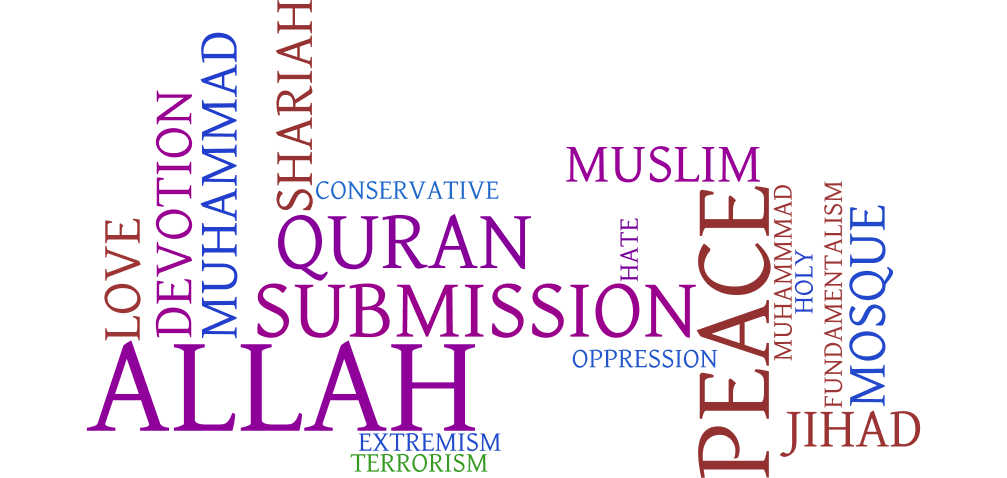
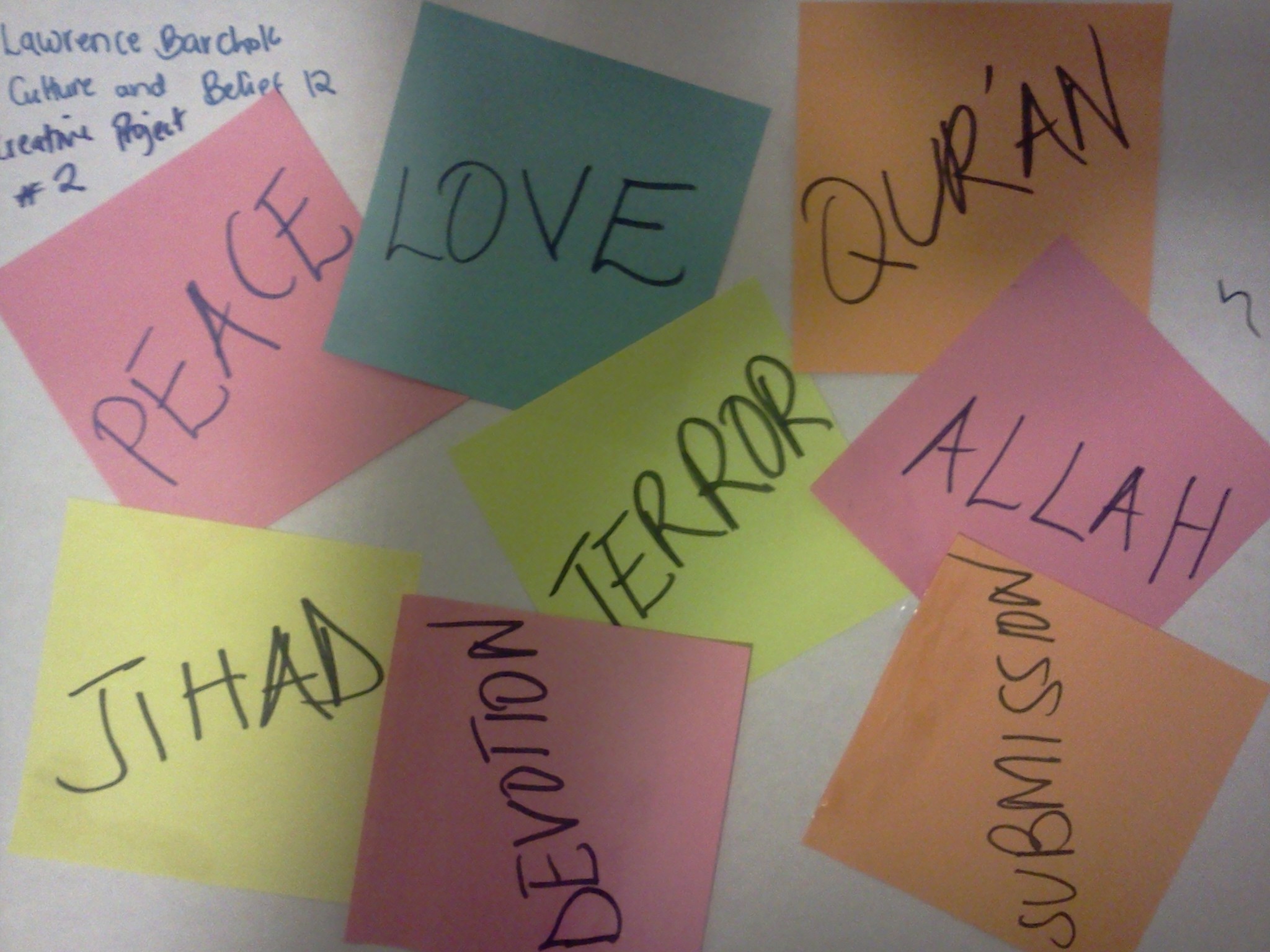
This piece was inspired by week 6’s debate on Islamic art. Through the piece, I hope to bring to light questions of accessibility to Islamic art, and/or their interpretations through different lenses. Through the piece, I hope to represent the different schools of thought on Islamic art, offered by Seyyed Hossein Nasr (Islamic Art and Spirituality) and Gulru Necipoglu (The Topkapi Scroll). On my short video clip, i show different slideshows of crescents and how they are represented as important symbols in different cultures and time periods. The crescent itself is a perfect representation of the two schools of thought in that, it is an important symbol in the Islamic faith, but also was a historical symbol of the Turks, associated especially with the Ottoman empire.
Nasr argues that Islamic art should be composed of “timeless forms that echo transcendent archetypes”1. In essence a static tradition, where symbols of Islam have unity in meaning across time, and ignores the historical and traditional cultures. And that it takes a certain level of Islamic spirituality to be able to penetrate the inner meanings of the art. Islamic art should reflect the mystical dimension.
“There is nothing more timely today than that truth which is timeless, than the message that comes from tradition and is relevant now because it is relevant at all times. Such a message belongs to a now which has been, is and will ever be present. To speak of immutable principles of heavenly origin and of their application to different moments of time and space… Islamic civilization presents an eminent example of a traditional civilization wherein can be clearly observed the presence of certain immutable principles that have dominated time and space.”1
Necipoglu, on the other hand takes a view that I’m more sympathetic too. She argues that reflections of Islamic art should take into account the historical and cultural period during which the art was created. In essence, her view appreciates some of the works considered as Islamic art, but were created by non-Muslims, for instance during the Ottoman empire.