The experimentation continues. Last week, I launched a new marketing and sales experiment for LinkedIn In 30 Minutes, a LinkedIn book for newbies. It involves bulk sales of the paperback to a special audience segment: Career services offices of colleges and universities in the United States.
My hypothesis: Staff at career services offices of colleges and universities directly serve an audience we are already targeting: People who need to know how to improve LinkedIn profiles in preparation for a job search. Students and recent grads may not have much professional experience to begin with, or in the case of graduate students, they may have career gaps because they have been out of the workforce for several years. They want to present themselves in the best possible light to potential employers and LinkedIn recruiters, and having a rock-solid LinkedIn profile is critical. These are the types of readers we want for LinkedIn In 30 Minutes!
But the problem is: They may not know about the guide, or may not be looking for this type of guide. How can we reach them?
The bulk order pitch to career services offices
I decided to reach out to a few career services offices at universities, ranging from smaller schools such as Suffolk University in Boston to larger schools such as the University of Texas system. I found the contact information of some schools on the Web, and crafted a simple email pitch. Here are the elements:
I am the publisher, and we have a new book. Here is a PDF sample to download for your personal review
I would be happy to mail you a paperback copy. Just say the word.
Here are some specific lessons that will help your students use LinkedIn
Find out more on the book website
We can also arrange for bulk orders
I was most interested in the response rate for the paperback book. If they asked for one, I figured that would indicate a strong interest for a bulk purchase. So, I set up some bulk purchase options for LinkedIn In 30 Minutes. Of the 5% who responded with a request for the paperback, I mailed them a copy with a cover letter outlining the bulk prices. So far, no one has indicated they want to purchase a bulk order, but I will follow up with a call next week (Update: three bulk sales so far!). I’m really interested in finding out whether the guide meets their needs, and if so, what sort of bulk purchase terms would be most suitable — for instance, payment by credit card or invoice, the size of the bulk order, etc.
Startup blogs give insights into the startup experience, warts and all!
Company blogs often get a bad rap, and for good reason. They can come across as awkward and unnatural as the cross-functional teams that oversee their existence (“Susan, check with marketing and legal before putting that up on the blog, m’kay?”). A few firms simply reprint press releases on their “blogs”. Others severely restrict the topics that staff can blog about, or deliberately hobble discussions with the outside world (including with their customers) by turning off comments.
Even companies which “get” digital media sometimes can’t do it right. Google’s official blog posts tend to come across as milquetoast missives that have gone through multiple layers of editing and approval, and commenting is frequently disabled. Microsoft is usually more open to blogging by staff, especially when it comes to reaching out to its development partners or customers of specific product lines, but a lot of its messaging is still communicated via press release and the news media. Apple doesn’t even bother with blogs.
But the examples above refer to corporate blogs, or blogs written by employees who work for large companies. In this post, I’d like to talk about startup blogs and small company blogs, as well as a big problem that afflicts a growing number of startup blogs.
Startup blogs vs. corporate blogs
Before I get to the problem, it’s important to understand a few things about startup blogs. They are different animals than their corporate cousins. Although startup blogs are sometimes written by a marketing director, they are frequently handled by the CEO or co-founders, or by a rotating cast of bloggers on staff. The blogging for In 30 Minutes guides is handled by yours truly, as well as the authors of Online Content Marketing In 30 Minutes and our new LinkedIn book. Posts vary in terms of length and target audience, but you can get an idea of the blogging style by looking at these posts about Google Docs new documents and Google Drive shortcuts.
Further, I generally find startup blogs to be far more informative than big company blogs. While corporate blogs will sometimes switch to show-and-tell mode with videos or step-by-step instructions, more often than not the big boys like to keep the explanations short and send prospective customers to support sites, product pages, and lead generation forms.
For readers, this makes a big difference. Startup blogs tend to have an authentic voice. They will often address market concerns in a direct way or give advice/share knowledge to attract and help new customers. There aren’t layers of editors and approvals to get something published.
Sometimes the voice on a startup blog can be brutally honest. Check out this post by Kinvey CEO Sravish Sridhar in which he gives a frank discussion of whether or not to talk about the competition. He lists his competitors — something that corporate bloggers almost never do — and further uses the opportunity to sell to potential customers of the Kinvey Backend-As-A-Service offering for mobile and tablet developers.
But startup blogs can be done poorly, too. A few years ago, as I was conducting research on startup accelerator programs, I noticed a big problem with certain startup blogs from the companies that had gone through various accelerator programs in the past: The blogs were abandoned. They hadn’t been updated in months, and in some cases, a year or more. I dug a little deeper, and found that there were various causes:
The startup is so swamped that no one has time to blog
The person who handled blogging left
The company doesn’t appreciate the value of the blog (even though people may still be visiting from Google)
The startup failed
To anyone who has founded or worked for a startup, the first reason is very understandable. If you’re getting by on just four hours of sleep per night taking care of the business, blogging usually ends up on the back burner until you can find the time to do it. The typical pattern is to see spurts of activity (especially early in the life of the blog) and then long periods of inaction.
I suspect that the second and third reasons are often accompanied by a feeling that someone will eventually get around to updating the blog, so for the time being just leave it dangling.
The fourth reason may seem strange, until you consider that startups have a high chance of failure. If the hosting is still paid for and the CMS is on autopilot, the old posts will continue to face the world, like the facade of an abandoned business.
The problem with abandoned startup blogs
Regardless of the reason, leaving an untended or derelict blog is a major mistake. An abandoned blog not only looks bad. It can actually call the credibility of the company into question, if the firm is still in business. It tells customers and users that the startup doesn’t care about keeping them up to date, can’t handle the workload, or maybe is distracted by something else, such as consulting, school, or another company. If it’s been more than a year since the last update, prospective customers or users may even wonder if the company is still in operation. Any doubt about the status of the company will of course result in a lower conversion rate, lost sales, or a wasted chance for building partnerships or prestige. In addition, because older content has more prominence, users and prospective customers may be left unaware of the company’s current products, features, pricing, or vision.
What are the solutions to this problem? I have suggestions tailored to the following scenarios:
Consider a company which is still in operation and understands the importance of blogging as a way to connect with customers and serve as an inbound marketing channel (among other uses). But there simply aren’t enough resources to devote to blogging. In this case, the most important thing to do is let people know what’s going on and point them to resources that can help them. Create a short post apologizing to readers and explaining that the blog won’t be updated as you work on the beta/feature X/migration/whatever.
You may also want to direct customers to resources where they can find answers (such as a support forum or customer service). Consider pointing them to alternative communications channels — such as a Twitter feed (much easier to update) or some other social networking resource that is regularly updated and/or monitored. Another trick: Start video blogging, either with a Web cam or smartphone camera. It takes less than ten minutes to create a clip, upload it/record directly to YouTube, and then embed the clip on your blog (or refer people to your YouTube channel). It’s not as fast as Twitter and may require some prep to make your office look presentable, but it’s much more efficient than blogging.
Startup blogs as part of a communications strategy
Longer term, you’ll need to figure out how blogging fits into your company’s communication and content strategies. Some companies with actual budgets bring in consultants to help them talk through these issues, or go out and get a hired gun to handle regular posts. Whatever you end up doing, don’t put off these discussions or plans for too long. It’s important for serving your customers and users, and attracting new customers/users. Schedule some time to talk about this internally or with advisors.
If the company is still in operation and doesn’t think blogging is important or necessary, my first suggestion is to reconsider. Talk with people who do it, start Googling around, or find someone who knows what they’re talking about. If blogging is still not a good fit for your startup, I see two paths:
If the blog has lots of posts or useful content, do not kill the blog. The content may still be useful to users, some customers and prospective customers, and may still be indexed by Google, which gives your site important visibility to prospective users and customers. Do this instead: Write a final post saying that the blog is being archived at the same location, and current news and information can be found at (other linked resource). But do remove the blog from site navigation, even though the URL stays the same. This will result in less traffic to the blog, but in my opinion it’s better to lose a little traffic than to send people to a resource that hasn’t been updated for months or years.
What if the blog has only a few posts? A typical scenario is the startup launched the blog because everyone else did it. After a handful of posts, there was no enthusiasm and the blog was abandoned. In this case, I would consider removing the posts and the navigation links, but only after someone has evaluated how the site has been indexed by Google and linked to by external sites. If you have just five posts, but one of them gets hundreds of referrals per month through links from Hacker News and Google, I would archive it at the same URL per the instructions above.
Lastly, if the company is dead and you’ve got a derelict site on your hands that for whatever reason you do not want to turn off, be courteous to the people who stumble upon the blog. Don’t let them believe that you are still in operation, and might still help them with whatever problem they have. Assuming you have already told your paying customers what happened, post a message or redirect that lets prospective customers, stragglers and other users know what happened and perhaps how you can be reached. Notifo’s final post from September 2011 (sorry, link no longer available) is a good example, and goes one step further by recommending some alternative services:
Hi Notifo users,
This is Chad, founder of Notifo.
I am reaching out today to announce some sad news. Over the past 20 months, Notifo has tried to be the best notification platform for multiple endpoints including iPhone, Android, Growl, Email, and a few more. Notifo has been my full-time job during this time.
However, Notifo never gained enough traction with publishers or consumers to make enough revenue to pay the bills and sustain it as a company. As such, I have had to seek full-time employment elsewhere in order to pay my own living expenses. What does this mean for you and Notifo? Practically, it means that I will no longer be working on Notifo. For now, Notifo will continue to run as-is with no further plans for development but will probably be shut down as a result. I will try to keep it alive as long as possible, but please know that it could go away at any moment. I will do my best to provide at least 30 days notice before Notifo is officially shut down.
While Notifo will continue to run in the interim, I encourage you to find alternative methods to accomplish your notification needs. Some alternatives include:
Boxcar for iPhone/iPad
Prowl for iPhone/iPad
SMS with Twilio
Urban Airship
Xtify
I want to thank all of you for using Notifo. I’m deeply sorry about this result. There may be a few more posts regarding this situation. Please feel free to email me at [chad at notifo dot com] with any questions you may have.
Thanks for all your support,
-Chad
One last thing I would like to make clear: Untended blogs aren’t just a startup problem. I see established companies making the same mistakes. But established companies tend to have staff resources and budgets that makes it far easier to handle updates. And in almost all cases, they should know better than to let a product or company blog gather dust.
I realize that other startup bloggers and consultants with expertise in content strategy may have different ideas about how to deal with some of the problems I have described above. Feel free to add your opinion in the comments at the bottom of this page.
Image: C3, Cambridge Innovation Center. Photo by Ian Lamont.
Last week, the latest In 30 Minutes® guide was released, a LinkedIn book. It’s really aimed at career-minded people who are just getting started with LinkedIn. However, I was reminded by the author — Melanie Pinola — that another target audience includes those people who have created rudimentary LinkedIn profiles, but have never optimized them for effective networking or job searches.
One of the challenges that Melanie and I faced was limiting the scope of the guide. LinkedIn can be a complicated tool — beyond profiles, there are a lot of features and extra services that are available. In line with the “In 30 Minutes” concept and the fact that the book targets LinkedIn newbies who might not even know what LinkedIn is, we really scoped it down to the basics: How to register for LinkedIn; how to improve your LinkedIn profile with keywords, headlines and summaries; networking strategies; job searches and the “hidden job market,” etc.
Dealing with too many LinkedIn features
Before she got started, Melanie produced an outline and we discussed the contents and what not to include. For instance, I asked her not to spend too much time on integration with Twitter. Setting up a LinkedIn company page is also out of the scope of the guide. I tell authors to aim for between 10,000 and 15,000 words, but in this case the first draft of the book came in at 18,000 words. While I like giving readers more than they bargained for, I also want to make sure the book can be read in a sufficiently brief period of time. What to cut?
A few wordy examples were obvious candidates for removal, but there were some other more significant sections — such as one about researching companies on LinkedIn — that were harder to get rid of. In the end, we decided to re-use as much as possible — some of the examples will reappear as blog posts that Melanie authors, while the more substantive examples will be “extra content” for the book website. We’ve also begun to plan posts for other audiences, such as this one targeting LinkedIn recruiters. It’s good for our readers, and it is also good for attracting new readers to LinkedIn In 30 Minutes .
What is a MOOC? When I posted an article about MOOCs to Hacker News and the /r/truereddit forum on Reddit, I thought many people in technology circles knew the answer — Massive Open Online Course. I was wrong, as evidenced by replies like this:
For people who follow online education, it’s easy to forget that MOOCs — basically prerecorded video lectures and online components such as discussion boards, surveys, and course materials intended for audiences of thousands of students — are a relatively new phenomenon. Soon, however, they will become mainstream, as more young people are exposed to MOOC coursework and colleges succumb to pressure to reduce costs related to faculty and physical classrooms.
HarvardX controversy prompts “What is a MOOC” post
The article that prompted the “What is a MOOC?” questions is actually very interesting. Titled, “Why Professors at San Jose State Won’t Use a Harvard Professor’s MOOC“, it covers the reaction of professors who reject the use of exported HarvardX teaching materials for their students in San Jose. They rightly point out that MOOCs are extremely lacking in interactive features. For instance, Harvard’s “Justice” course, taught in person by Harvard Professor Michael Sandel and provided as a MOOC through HarvardX, does not contain any mechanism that allows San Jose students to ask Sandel questions (related: More evidence of problems with distance education at Harvard). His response to the Chronicle of Higher Education:
“The worry that the widespread use of online courses will damage departments in public universities facing budgetary pressures is a legitimate concern that deserves serious debate, at edX and throughout higher education,” wrote Mr. Sandel. “The last thing I want is for my online lectures to be used to undermine faculty colleagues at other institutions.”
But I found the answer on this Hacker News thread to be most interesting, in part because it expresses the concerns of students:
At the risk of setting up false dichotomies, I wonder:
Will a MOOC instructor answer my emails, take a phone call, or meet with me in person?
Will a MOOC instructor help me network with potential employers and internship sponsors?
Will a MOOC instructor be my mentor and help me navigate an increasingly difficult job market?
Will a MOOC instructor connect me to other like-minded students and professors?
Will a MOOC instructor act as an advisor for any interest groups or clubs at my school?
Will a MOOC instructor know who I am?
One underutilized tactic for marketing how-to guides involves repurposing ebook content on blogs. This is not the same as giving away free chapters, which is common in the fiction world, or republishing excerpts of biographies, which sometimes appear in magazines or the Wall Street Journal. While both of those approaches are valuable marketing tools, they are mainly intended to introduce the title or author to a wider audience. By contrast, the main purpose of repurposing ebook content on blogs is to help people solve specific problems — which may help them see value in the rest of the how-to guide.
Let me give you an example. My second In 30 Minutes title about Google Drive is about 15,000 words long. It’s aimed at beginners just getting started with Google’s free online office suite. It contains everything from basic setup to sections on using Google Docs, Google Sheets, Google Slides, storage, collaboration, and other functions and features within the suite.
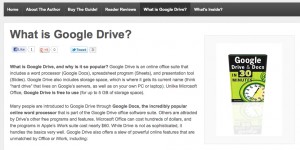
I realized that some of the ebook subsections could stand on their own as blog posts. For instance, “What Is Google Drive” became its own page on the official product website. It’s a common question among new users searching the Web for information, and may lead to some of them considering the ebook or paperback versions of the guide. Similarly, I took a few other 200-400 word bits (example: “How to revert to an old version of a Google Drive file”) and used them for a book promotion taking place on ITworld.com.
Why repurposing ebook content online is a good marketing tactic
This type of ebook content repurposed as blogs posts should not be viewed as “giving away the farm”. It’s only a small percentage of the total ebook content. Further, as I noted earlier, it can help new users solve a problem while seeing value in buying the rest of the ebook.
(This tactic, incidentally, aligns well with the online content marketing advice given by author Derek Slater in his recent In 30 Minutes guide).
Led Zeppelin I and II. Husker Du’s Zen Arcade. Slayer’s Show No Mercy. What do these three hard rock albums have in common? Besides being “classics” in their time, all were recorded in a very short period — weeks or a few months, compared to a year or more for established artists.
Led Zeppelin I took just three weeks to record. Led Zeppelin II was recorded in 1969 a string of studios in various cities on Led Zeppelin’s tour route, using songs they had written along the way or had prepared for the tour. In the case of Husker Du’s Zen Arcade, the double album cost just over $3,000 to make in 1983. All but two of the songs were recorded “live” in just one take, with a total recording time of 85 hours. The Slayer album was recorded in November 1983, and released just three weeks later, with the band promoting it using the singer’s Camaro and a rented U-haul trailer.
I’m fascinated by these examples, because it shows that great music can be made with limited resources. When I say “limited resources,” I am not just talking about money, but also time and even technology (according to Rolling Stone, Led Zeppelin’s drummer “played the percussion part to ‘Ramble On’ on a guitar case, a drum stool or a garbage can”). They proved that you don’t need huge budgets, lots of process, or the most expensive gear to produce something that fans like. In that sense, it fits the Lean Media philosophy.
When the music industry abandons Lean Media
However, lean processes can fall by the wayside as bands get big. Led Zeppelin, for instance, was famous for extravagant and sometimes unhinged recording sessions later in their career. When I was employed in the British music industry many years ago, I worked with an engineer who had some connection to Led Zeppelin in the 1970s, and said drummer John Bonham was often rip-roaring drunk, and once crashed his car at the estate they were using for recording. Their 1975 double album Physical Graffitireportedly took 18 months to record.
Lean Media in the music industry.
Singer Chino Moreno of Deftones offers an interesting perspective. Like many bands, Deftones started out lean, and moved to “fat” later as they became famous and had the financial resources to spend lots of time — sometimes even years — recording a new album. But they moved back to lean methods. Last year, he told Spin:
We recorded our last record, Diamond Eyes, pretty fast. I think we spent six months from writing it to recording it. Our whole work ethic changed at that point. Not dragging things out and really capturing a moment in time is a great way to make a record. We did a couple of records before that — Saturday Night Wrist and the self-titled record — both of those took a couple of years. Taking that long just is not a good work ethic. We’d have an idea, a riff, and it would be tweaked and mangled and months and years later, after enough things are added to it, you kind of lose the sense of what it was you were trying to do. Capturing the essence of what the idea was in the first place is very important.
The importance of the artistic purpose, and the creative elements that go into the writing of music and the production of an album cannot be overlooked. The creativity of the musicians, and the dynamics between them and the producer can lead to great music — or artistic and commercial failure — regardless of the budget or time spent in the studio.
There are other examples of albums that were lean. Bruce Springsteen’s Nebraska. Nirvana’s Bleach. What other albums do you think fit the Lean Media mode?
Dropbox In 30 Minutes has now been available for about nine months. For nearly as long, I have been monitoring interest in the Dropbox user guide, by closely watching sales. At first the book was only available as an ebook for the Amazon Kindle, but by the start of 2013 it was available for multiple e-reader, screen, and paper formats, including:
Direct purchases of .mobi and .epub (which bypasses Amazon.com, iTunes, and other corporate ebook stores)
It was fascinating watching the evolution of the readership, especially after the paperback edition of Dropbox In 30 Minutes was released last November. While the Kindle edition has been a strong seller from the start, sales have plateaued. Meanwhile, the paperback rapidly gained fans and by February 2013 had overtaken the Kindle and all other versions. Note, however, that Amazon is also responsible for all paperback sales — it owns the POD service CreateSpace, so the paperback listing is automatically fed into an Amazon product page (which is now linked with the Kindle product page).
Monitoring a sales slowdown in ebooks
Getting back to the Kindle version hitting a sales plateau: I’ve been thinking a lot about what could be happening. Certainly, there is more competition for readers, both on Amazon itself and online. But there are other possibilities, including falling interest in Dropbox among my target audience. What could cause a once red-hot technology to slow down in popularity? Factors could include competition from giants in the space (for instance, Microsoft Skydrive OneDrive or Google Drive), negative publicity (such as security concerns), or a maxing out of the potential audience. For now, I am discounting the idea that Dropbox is dropping in popularity, and am more focused on the competition — and how to make Dropbox In 30 Minutes and the free online resources such as videos and blog posts even better.
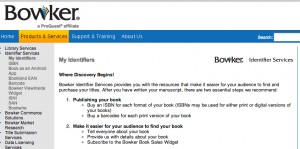
Earlier this month on the In 30 Minutes corporate blog, I wrote a post about Bowker’s deceptive ISBN business targeting new authors. Bowker is a monopoly that controls the assignment of ISBNs in the United States. ISBNs are numbers used by the book industry to track the publication and distribution of printed books.
You might think that Bowker’s ISBN business is suffering because of the rise of ebooks, and the decline of print. Not so! Bowker states that the number of ISBN registrations has actually exploded in recent years, and even recorded nearly 13,000 ebooks printed by “small presses” (e.g., independent authors and small publishers) in 2011.
Hold on. Why do so many indie authors bother registering ISBNs with Bowker? Consider this: ISBNs are not necessary for ebooks — Amazon, iTunes, and other platforms that sell ebooks don’t require them. Further, Bowker rips off people buying small lots — as I described in the In 30 Minutes blog post, Bowker charges $125 for those buying a single ISBN! What do they get? A thirteen-digit number. They are so cheap to produce, that Canada gives away ISBNs to Canadian authors for free, and Bowker sells them for a dollar or less to publishers buying huge lots.
Why buy a Bowker ISBN if you are a new author?
The reason why thousands of small authors are buying ISBNs is because many don’t know any better — and Bowker aggressively markets to inexperienced authors’ fears and concerns. The company tells new authors:
Buy an ISBN for each format of your book (ISBNs may be used for either print or digital versions of your books)
January was a big month for my book venture. I finally incorporated. The company is called i30 Media Corporation. For now, the official website is in30minutes.com, which contains links to all of the book websites in the In 30 Minutes® guides.
The venture began operations long before January. I published my first book ebook — a Dropbox for Dummies alternative — in July 2012. For the remainder of 2012 I operated the business as a “doing business as” entity. I used a DBA name for the publisher, but it was not a company in the sense of having liability protection, shares issued, or a distinct tax ID for revenue and banking. Even though I could have incorporated in 2012, I waited for several reasons:
The venture needed to be profitable and on a growth trajectory (profitability in the second month of operations, strong growth soon after)
I wanted to wind down operations of my previous venture before officially launching the new one (old company ceased operations in October, dissolved in November)
I did not want to launch at the end of 2012 and deal with corporate tax returns for just a few months, as well as and other formation costs
Company revenue had to be enough to cover formation costs and some other necessary post-launch fees
All of these conditions were met on January 1. I incorporated, using the very helpful guides at the Citizen’s Media Law Legal Guide (a project of the Harvard Berkman Center, which also hosts this blog!) as well as my own experience incorporating an earlier venture.
What the future holds for my publishing business
Will the venture be successful? That depends on a number of factors. But for the time being, I have created something that readers want and are willing to pay for. Now I have to deal with scaling the series while running it as a real business.
More news about the venture will be published in the coming months. Stay tuned …
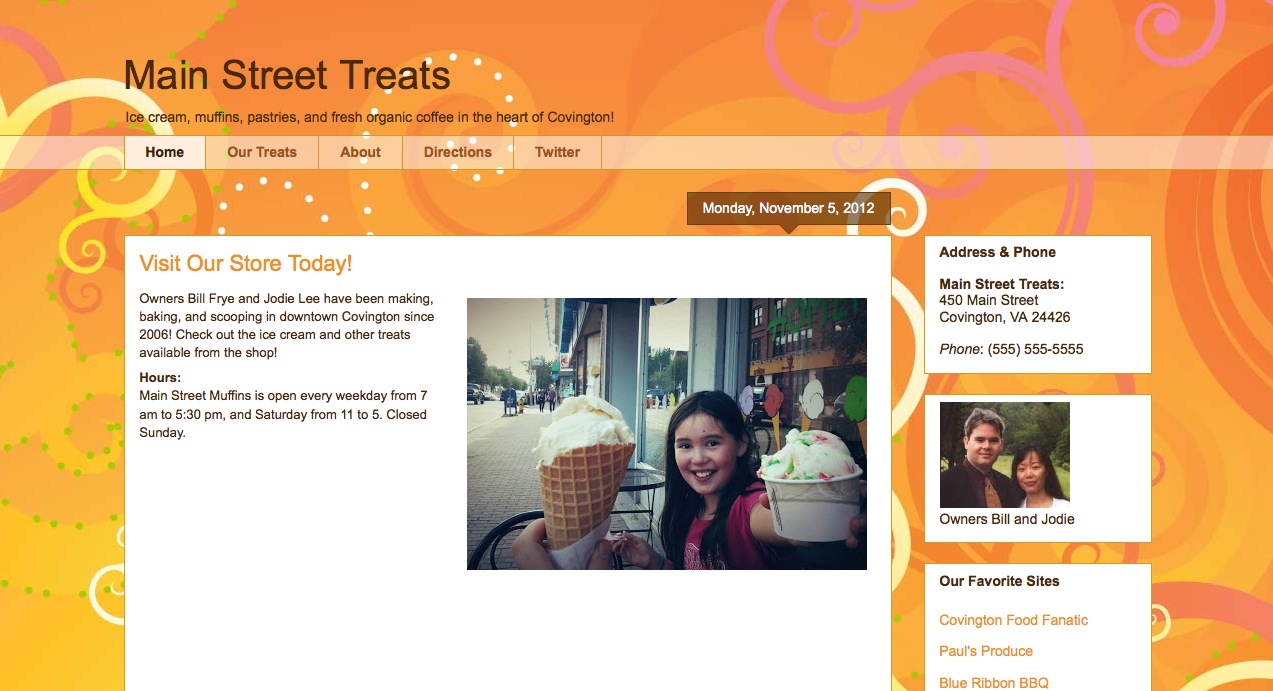
Last week, I published my latest book, I wanted to show small business owners how to cheaply and quickly build an informational website for their businesses using Google’s Blogger service. In the course of researching the book, I did a lot of experimentation with Blogger’s default templates. Which ones are the best?
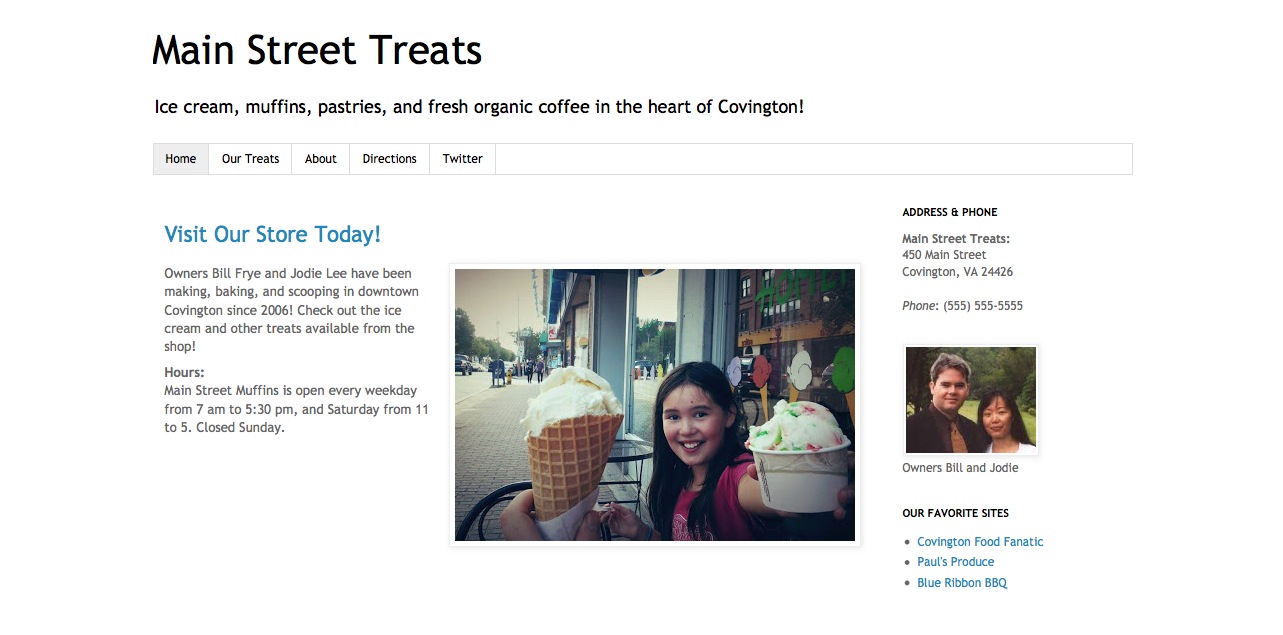
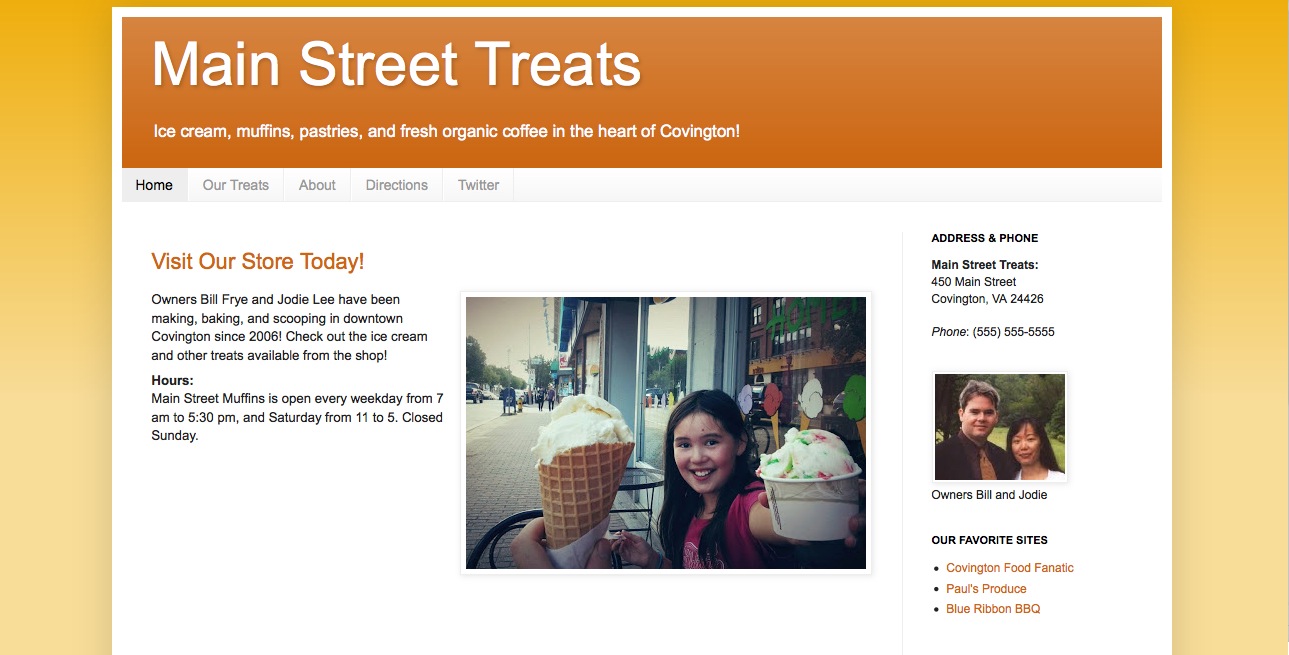
Awesome, Inc. Template: This is one of the template types that I used to build a sample website in the book. It has a bold look in terms of the colors, fonts, and box styles used. Here’s what the sample website looks like, using the basic gray Awesome, Inc. template, as well as an orange Awesome, Inc. template:
Simple Template: Blogger has a range of styles based on the “Simple” template. The colors and shapes are generally muted, but there are a few distinct types as well. Here are the Simple white and orange templates:
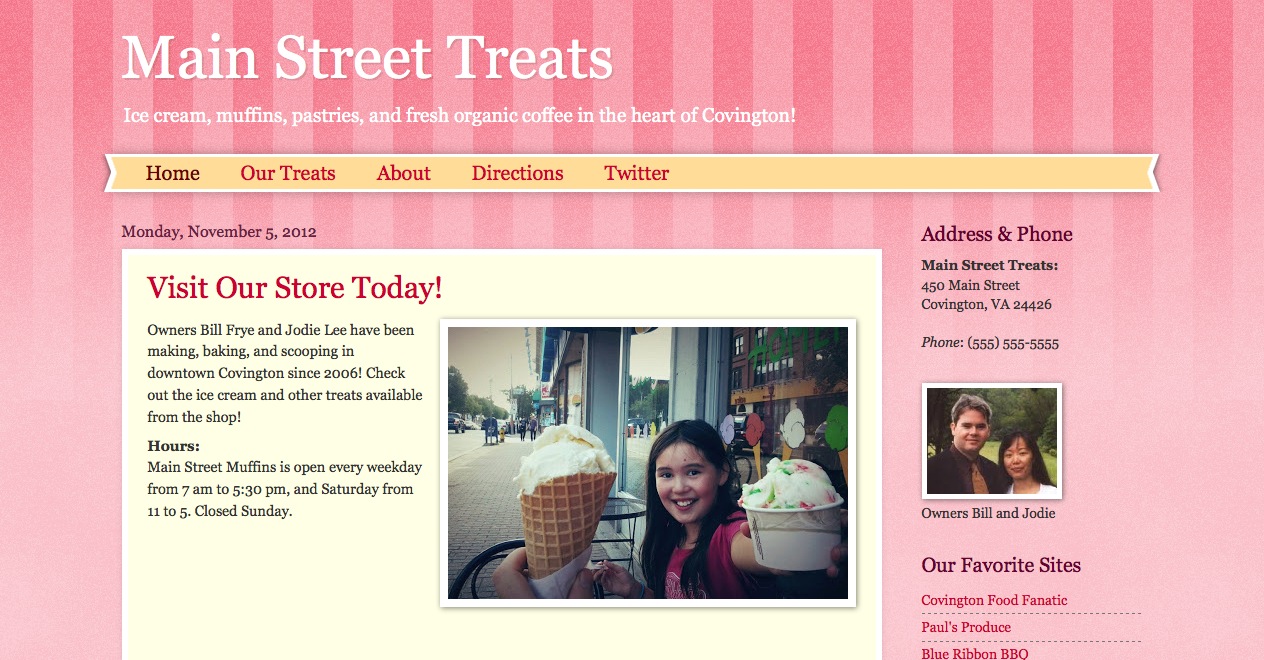
Watermark Template: Finally, there are some playful templates that might fit certain types of businesses or business blogs. Here’s the “Candy Stripe” version of the Watermark template:
What about the other Blogger default templates? Picture Window, Travel, and Dynamic Views are more oriented toward photographs. This is not a good fit more most small businesses, except for those which have lots of photographs to show. In addition, the Dynamic Views template is based on heavy use of javascript, which causes problems for some users.
Lastly, the Ethereal template is too gentle for most small businesses. I believe that most businesses need to make a strong impression, and Ethereal is just too emo.
What’s inside the book
My book explains how to choose different templates and customize them for static websites (that is, an informational website that seldom changes) or a small business blog. For people who are just starting a business, or don’t want to spend the time or money on an expensive website, this book will teach you what you need to know to get a small business website with its own .com domain for just $10 per year. You can see what’s inside the book here.
Of course, businesses with sophisticated design needs should go for a more advanced template. It’s possible to download custom templates for Blogger (I will write a post about this someday) but many businesses opt for WordPress. That’s fine, but note that WordPress comes with a much steeper learning curve, as well as additional financial and time management costs. I’ll be sticking with Blogger …
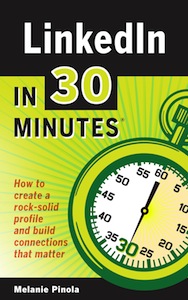 The experimentation continues. Last week, I launched a new marketing and sales experiment for LinkedIn In 30 Minutes, a LinkedIn book for newbies. It involves bulk sales of the paperback to a special audience segment: Career services offices of colleges and universities in the United States.