
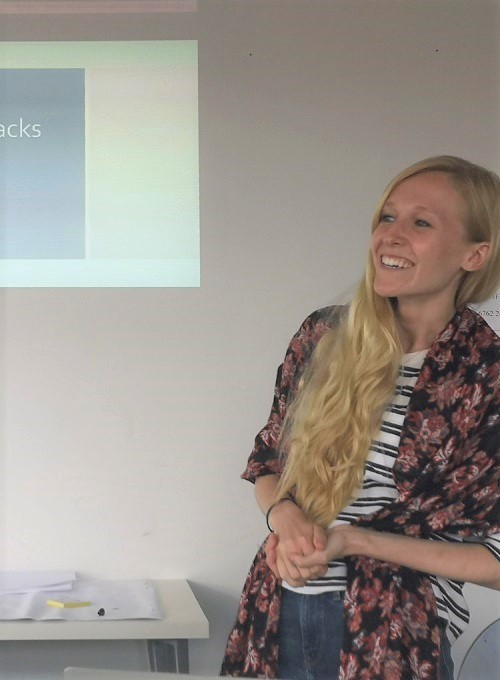
 by Delphine Rodrik ’20
I spent this past summer at the European Center for Constitutional and Human Rights (ECCHR), a German nonprofit organization focused on tackling impunity through human rights litigation. I worked within ECCHR’s migration unit, which works to address unlawful border practices, such as push-backs, aimed at deterring those fleeing conflict and hardship from reaching Europe. Working at ECCHR was a fantastic opportunity to gain substantive experience in transnational human rights litigation, and it was fascinating to compare the approach of litigation responses to migration policy in Europe with those in the U.S., which has similarly oriented policy crafted to keep asylum-seekers out and away from the county’s borders. Early on in my internship, I attended a conference in Berlin on refugee protection in Germany and Europe, which brought together academics, humanitarians, policy-makers and other practitioners in the field and provided me with insight into the key challenges facing the refugee response in Europe. This enabled me to better understand perspectives and points of contention on this topic, and experiences like this helped me to frame the work I was doing with reference to existing gaps in human rights protection and compliance. I also had the opportunity to take part in ECCHR’s “critical legal training” program, which included skills workshops, presentations by other staff and guest speakers, and discussions on challenges and critical issues in the human rights field, alongside other trainees from various countries. A highlight of my summer was getting to know and learn from the other trainees, as well as the staff at ECCHR, in these sessions.
Delphine Rodrik, now a third-year student at HLS, is interested in the intersection of international human rights, humanitarian law, and refugee law. She spent her 2L summer in Germany as a Chayes International Public Service Fellow.

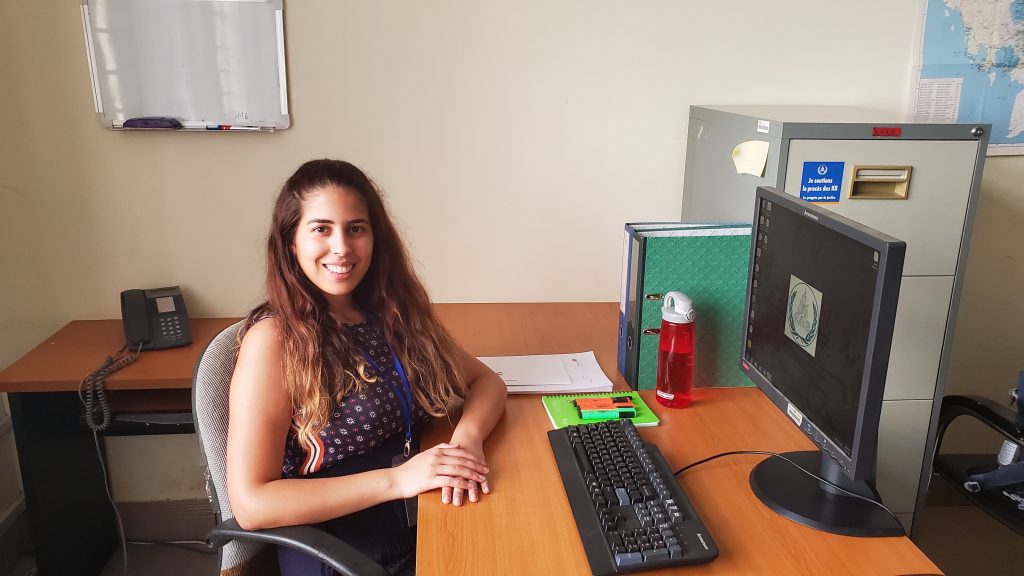 I’m about halfway through my twelve weeks interning at the Supreme Court Chamber of the Extraordinary Chambers in the Courts of Cambodia. The court is a UN-Cambodian hybrid tribunal trying the leaders of the crimes committed by the Khmer Rouge regime in the ‘70s under Pol Pot, and is therefore focused on international (and local Cambodian) criminal law. The court currently has a number of cases at different stages and in different chambers. My work is focused on the ongoing appeal for Case