Where can winter term take you?

Explore international aspects of law through a clinical opportunity or a research and writing project during Winter Term in January. The Winter Term International Travel Grant Program provides funding to HLS students for overseas travel during winter term.

Information session:
Winter Term Opportuniites for 2Ls, 3Ls, and LL.M.s
Friday, September 29 | 12 noon – 1 p.m.
WCC B015

Welcome 1Ls!

Now that you’re finding your way around campus, where can International Legal Studies take you?

Please join ILS staff for an introduction to the international opportunities awaiting you at HLS:  study abroad, winter term clinicals and writing projects, summer work abroad, and so much more.

International Opportunities for ILs
Tuesday, September 12
12 noon – 12:50 p.m.
WCC 2009


Chayes Fellow Malik Ladhani ’18 on working for the United Nations High Commissioner for Refugees in Jordan

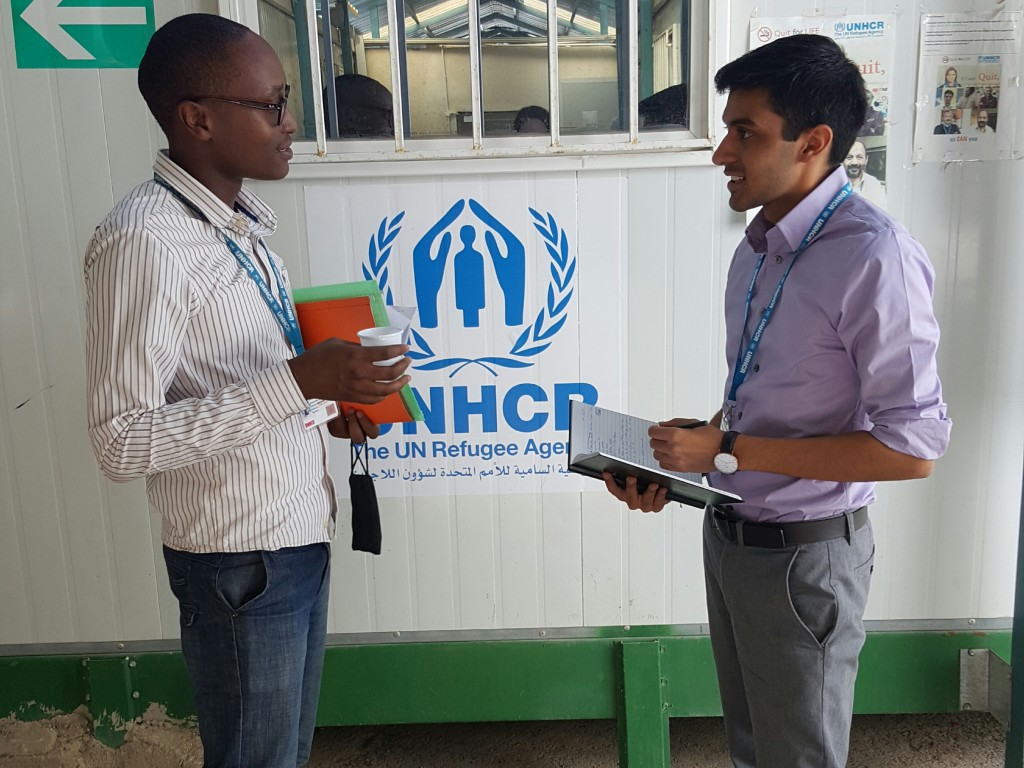
Malik Ladhani '18 at the UNHCR offices in Amman.

Malik Ladhani ’18 at the UNHCR offices in Amman. All photos courtesy of Malik Ladhani.

I spent most of my time with the Refugee Status Determination (RSD) unit, specifically on the Iraq sub-team. On this team, I drafted various case re-assessments for Iraqi asylum-seekers, applying international refugee law to determine whether these applicants should be considered refugees under international conventions. Due to the severity of the crisis in Iraq, almost all applicants had a “well-founded fear of persecution.” What was difficult (and the most interesting from a learning perspective), was the analysis needed to determine whether they were involved in any acts that would then exclude them from international protection (ex. crimes against humanity, war crimes). This meant I had the opportunity to engage in a little bit of international criminal law, which I didn’t realize I was interested in prior to the summer.Amman, Jordan.
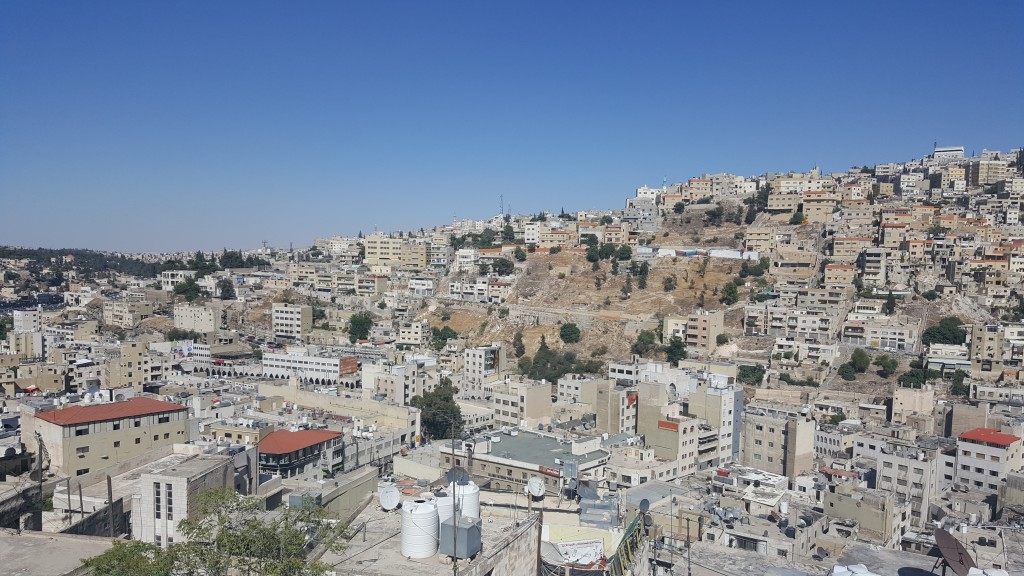
Working with the RSD team was a fantastic opportunity to really dig deep and work directly with applicant files. I would read interview transcripts, look at identification documentation, research the situation in specific areas of Iraq, understand different profiles and claims, and assess credibility. This was a very individual, case-level view of refugee law.

In contrast, I was also able to view refugee law from an overhead, structural/policy perspective. I worked with the operations coordinator (OC) for approximately two weeks. The OC’s role was primarily to coordinate the inter-agency response to a crisis at the Syria-Jordan border, where there are approximately 100,000 Syrian refugees stranded in the desert.Malik Ladhani in Amman


I had the opportunity to sit in on high-level meetings with representatives from UN agencies and NGOs who were operational at the border, and read policy documents from the heads of these agencies. I got to see diplomacy in action, as UNHCR, along with donor countries, would advocate the Jordanian government to allow food, medical, and water delivery across the border while recognizing and balancing delicate security concerns.

I also went to the Zaatari refugee camp, which is the largest refugee camp in Jordan. In a briefing with the camp manager, I learned about the complexities involved with running a refugee camp, and some of the differences between the issues that urban and camp refugees face.

Overall, I’ve had a great experience here in Amman. I feel this summer was a necessary glimpse into the field of refugee law as a potential career path, and I’m grateful for the opportunity.

Chayes Fellow Claire Horan ’18 on working at Blue Ocean Law in Guam

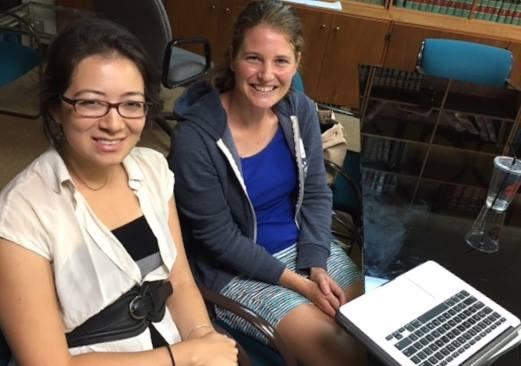
Claire Horan '18 (right) with her supervisor at Blue Ocean Law.

Claire Horan ’18 (right) with her supervisor at Blue Ocean Law. All photos courtesy of Claire Horan.

During my first week I worked on a research memo analyzing current human rights concerns in the West Papuan conflict. Now I am working on critiquing environmental and financial regulatory frameworks for deep sea mining in the Pacific region.

Mining projects are currently in the exploratory phase, and greater environmental and economic protections need to be put in place so that Pacific island states can effectively evaluate the risks before deciding whether to lease their seabed to mining companies. My supervisors, Julian and Julie (above), have been wonderful to work with; I have especially enjoyed hearing about environmental protection work from their perspective of human rights lawyers.

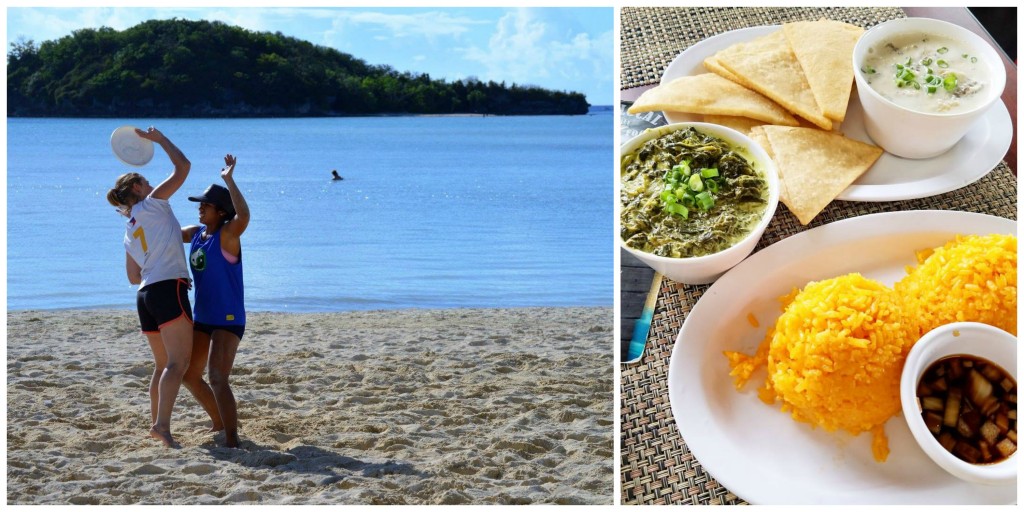
I have spent my free time visiting monuments and museums to learn about Guam’s history, playing beach ultimate with an extremely welcoming community, exploring caves in the jungle, and snorkeling. It’s easy to catch sunrises and sunsets because Guam is quite narrow and doesn’t take long to drive.collage

The traditional Chamorro cuisine is delicious. My favorite so far is kelaguen, a cold dish consisting of diced meat (ranging from chicken to octopus), coconut bits, hot peppers, and lemon juice. Another delicious dish is suni, basically spinach in coconut milk. I’ve been enjoying local fruits, like mangoes and soursops, daily.

Guam is a really interesting mix of quintessentially American traditions, clothing, music, and food plus much that is unique to Guam. I can’t believe I will be leaving in a month–there is still so much here I want to see and do.

Chayes Fellow Edith Sangueza ’18 on working at Insituto para las Mujeres en la Migracion in Mexico.

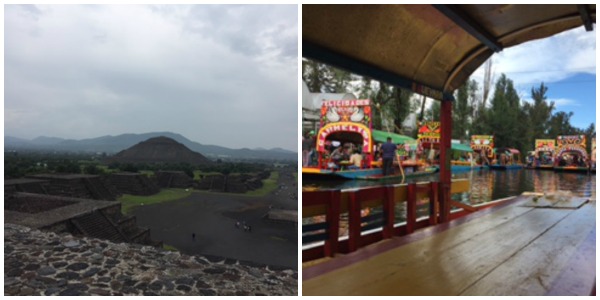
Teotihuacan and Xochimilco, Mexico.

Teotihuacan and Xochimilco, Mexico. Photos courtesy of Edith Sangueza.

I have really been enjoying my work at IMUMI. I have been working on three big client cases—two U visas (victims of criminal activity) and one VAWA visa (violence against women). I interviewed the three clients and drafted their declarations. All of my supervisor’s clients have been so generous and brave in sharing their stories. I sent out U visa certification requests to the relevant police departments, and we are waiting to hear back from them, hopefully with certification. While I learned about U and VAWA visas in my Immigration Law class, it has been a totally different matter to help put together a completed application, and I have a new understanding of how long and complicated a process it is to apply for a humanitarian visa.

I have also helped with a number of smaller tasks, such as requesting birth certificates and apostilles from different states where the clients’ children were born. Many Mexican national parents living in the U.S. don’t realize that they can register their U.S.-born children for dual nationality, and then once they return to Mexico, they need to request a copy of their child’s birth certificate, along with an apostille, before they can register their children as Mexican. Without Mexican nationality, children often can’t get access to important benefits such as medical care or food benefits, and sometimes they have difficulty enrolling in school.

Finally, building on a previous intern’s work, I am putting together a paper detailing the challenges that many transnational families face with access to identity. I am working on finishing as my time here winds down. The summer has really flown by, and I can’t believe I will only be here for another two weeks!