Chayes Fellow Lauren Blodgett on working at End Child Prostitution, Child Pornography, and Trafficking of Children for Sexual Purposes in Thailand

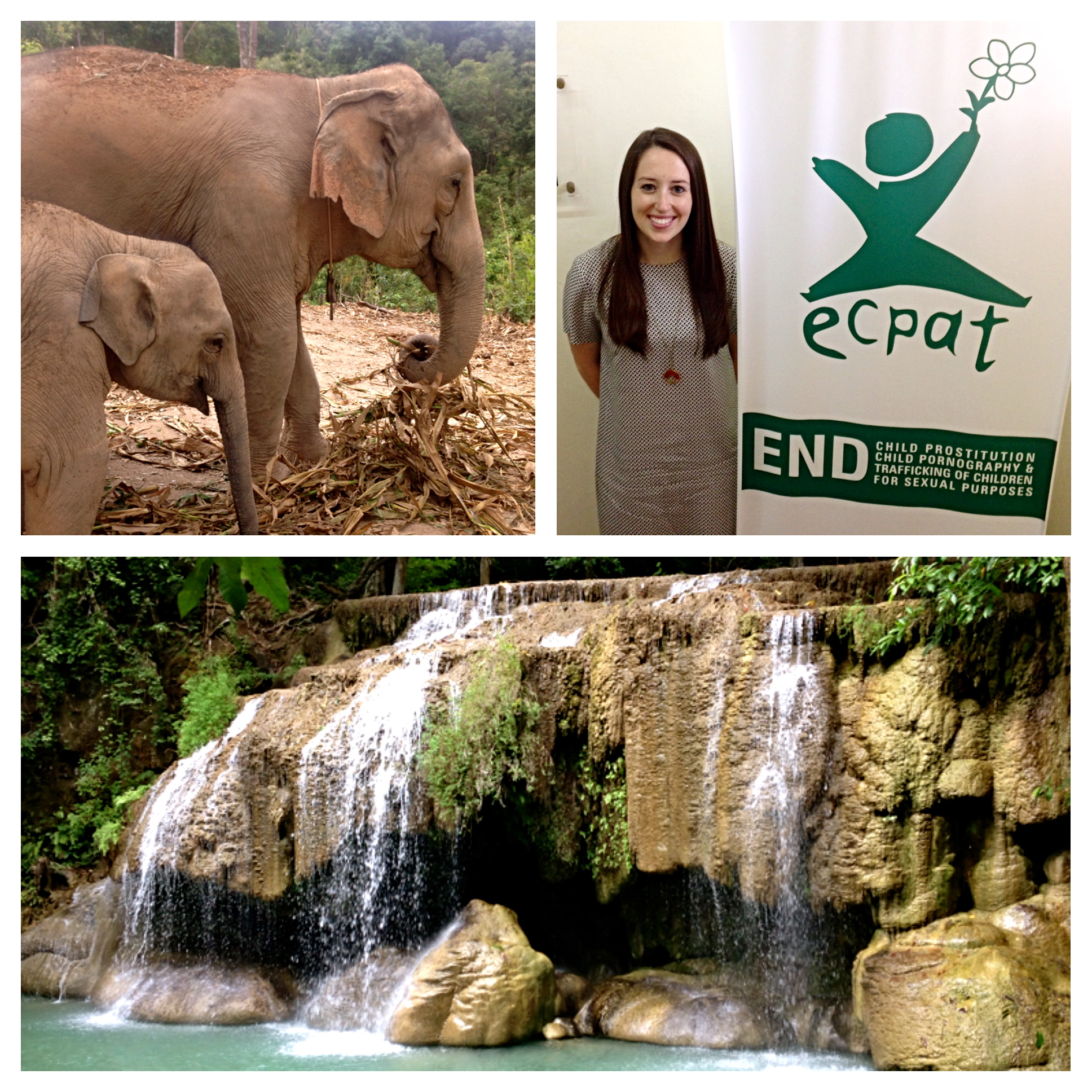
Elephants in Chiang Mai; Lauren Blodgett '16 at work; Erawan Falls. Photos courtesy of Lauren Blodgett.

Elephants in Chiang Mai; Lauren Blodgett ’16 at work; Erawan Falls. Photos courtesy of Lauren Blodgett.

I am really enjoying my experience in Thailand. For my internship at ECPAT, I am working on a project called Access to Justice for Child Victims of Sexual Exploitation. We are doing a multi-country comparative study to identify the barriers that child victims face regarding access to justice.

In particular, I am focusing on victims’ access to compensation, and I am researching the criminal, civil, and administrative avenues for compensation. I am writing about the theory behind compensation, and pulling best practices and lessons learned from the comparative study. From this research, we hope to provide our network members and other NGOs with a toolkit to help child victims in the aftermath of sexual exploitation. We also hope to use this study to inform international discussions on children’s rights and shape our advocacy efforts before the United Nations.

Chayes Fellow Aditya Pai on working at the Sehgal Foundation in India

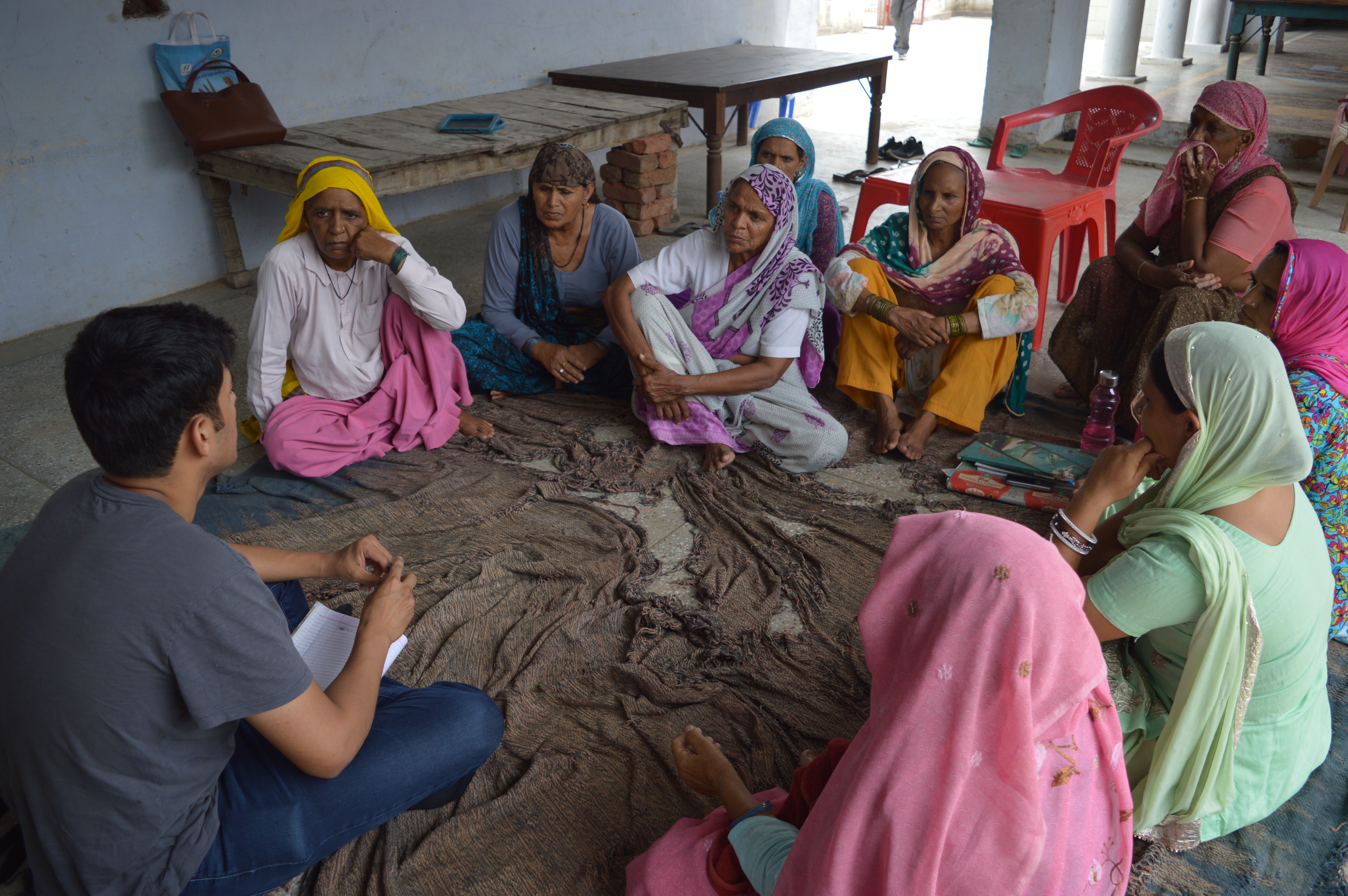
Aditya Pai '17 in the Mewat district, India.

Aditya Pai ’17 in the Mewat district, India.

I’ve recently completed my internship with the Sehgal Foundation (formerly known as the Institute for Rural Research and Development) in Gurgaon, India. My project was to analyze the effectiveness of the foundation’s legal literacy camps in the Mewat district of Haryana, through case studies. To do so, I interviewed attendees of 2014 Sehgal Foundation legal literacy camps in all five blocks of the rural Mewat district to find out what they learned at the camp, what action they took afterwards, and how (if at all) they ultimately benefited. I then spoke to attendees who were not able to secure the desired entitlement (e.g. old-age pension) even though they attended the camps. Next, I interviewed counsels and paralegal volunteers of the government legal aid centers. Finally, I interviewed members of the foundation’s field staff to gain further insights on the planning and implementation of legal literacy camps and the state of legal awareness in Mewat. All interviews were conducted in-person and in Hindi.

Aditya Pai '17 in the Mewat district, India.

By documenting both successes and setbacks, I tried to shed light on the ongoing process of improving legal literacy in Mewat. In particular, the important question was why some citizens who attend a legal literacy camp act on the information gained and secure a positive result, while others do not: what is the difference between the cases of success and the cases of ongoing setback? To explore this question, I wrote a final report and presentation in which I shared the case studies, suggested lessons learned, and applied those lessons to make recommendations for improving future legal literacy camps in Mewat.


Chayes Fellow Korey Silverman-Roati on working at the Center for Public Interest Law in Ghana

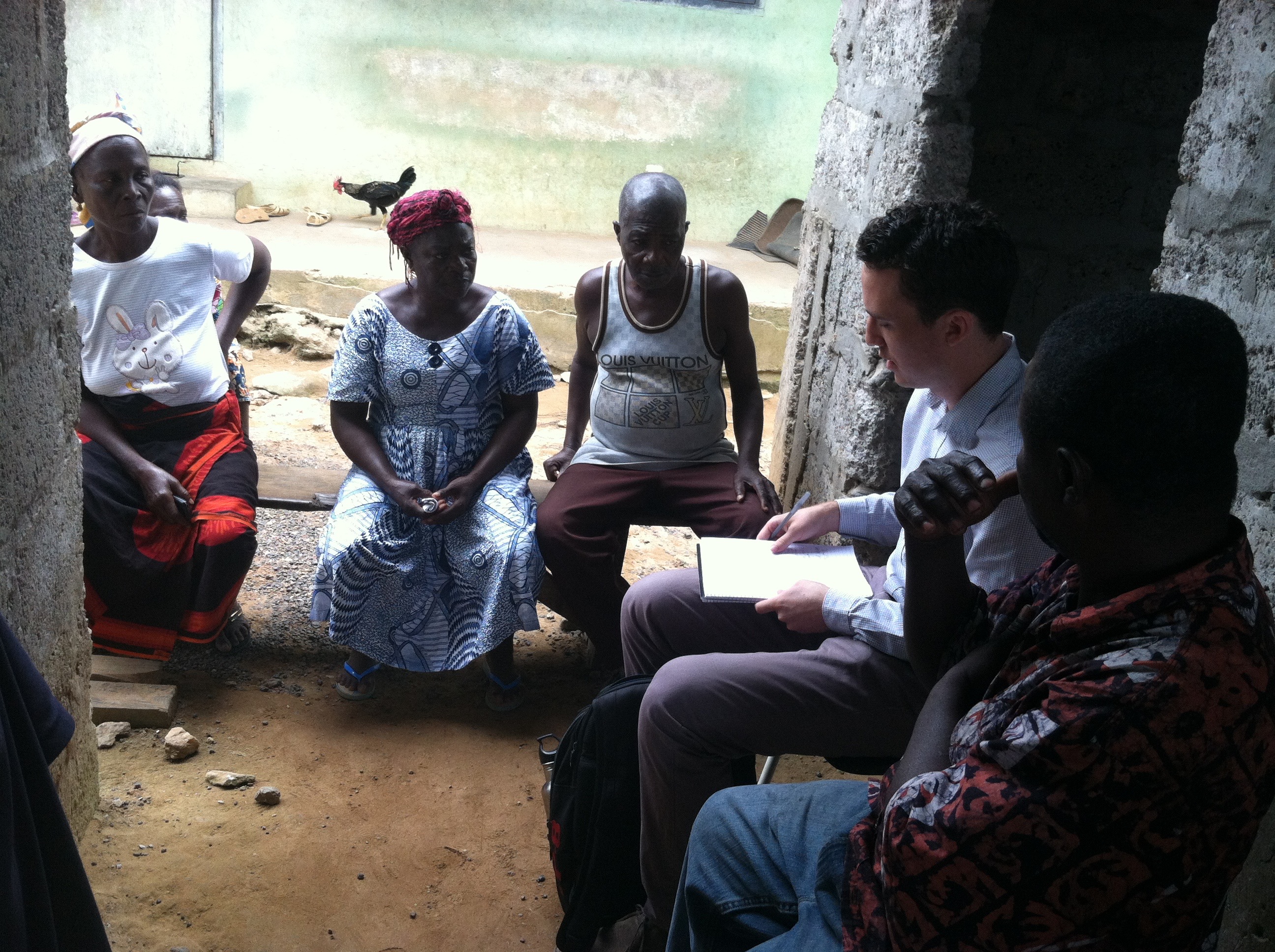
Korey Silverman-Roati '17 in Tarkwa, Ghana

Korey Silverman-Roati ’17 in Tarkwa, Ghana

My work in Accra started with a research project into international, regional, and local (Ghana) human rights issues in mining communities. I shadowed the work of one of CEPIL’s lawyers, and accompanied him to court as he litigated several cases, which included several wrongful terminations of employment and a land acquisition compensation case. Over the course of these court appearances I got to know several of the plaintiffs, discussed strategy with the CEPIL lawyer, and learned some of the challenges of litigating in Ghana.Korey Silverman-Roati in Ghana

I then began work on a research project in CEPIL’s case against the Ghana Gas Company. I researched cases in the U.S., and U.S. case law on adequate compensation, and traveled to the Western Region to view the case in court and get feedback from some of the plaintiffs.

I’ve also been gathering feedback from former recipients of CEPIL’s public interest work. This included a trip to Tarkwa, also in the Western Region, to four different mining communities for which CEPIL has provided pro bono litigation services.

Chayes Fellow Marissa Yu on working at the United Nations Environment Programme in Switzerland

Marissa Yu '17 at the Palais des Nations, the UN's Geneva headquarters.

Marissa Yu ’17 at the Palais des Nations, the UN’s Geneva headquarters.

This summer, I am interning with the UN Environment Programme’s Geneva-based Economics and Trade Branch. My main focus is on a paper concerning environmental provisions in trade and investment agreements.

I started the summer by scoping existing literature, by legal academics and by international organizations, to determine where UNEP can add value to negotiations surrounding legal text in trade and investment treaties. Because this workstream is still being developed, I was able to help determine the direction and content of this first stage of research. My team started with a survey of case law to determine some common challenges for environmental legislation in both WTO law and investor-state dispute settlement. Then, we compiled environment-related texts from trade and investment treaties that entered into force in the past three to four years, and highlighted ones that can potentially address the challenges we isolated in the case law. Examples include exceptions for environmental protection within indirect expropriation, the relationship of multilateral environmental agreement commitments to trade commitments, and implementation mechanisms for environmental commitments. A major part of the paper also examines variations among treaty language, and how each type of clause can make a legal impact on states’ abilities to perform environmental governance. In the end, we produced a 50 page report on recent trends in environmental commitments and presented our findings to UNEP’s Trade, Policy and Planning Unit.

I was also able to attend a conference at the WTO and meet with government missions and academics in order to consider these various perspectives, concerns, and goals while conducting my research. My internship has helped me learn more about international law and better understand the process behind multilateral cooperation to achieve development goals.

Chayes Fellow Katie Braun on working at the Equal Education Law Centre in South Africa

Katie Braun '17 in Cape Town

Katie Braun ’17 in Cape Town

My main project at the Equal Education Law Centre is a memo about sexual offenses committed by educators in schools—a very sad but interesting and important topic. It can be frustrating, as some of the data I need about the implementation of various laws and policies just doesn’t exist, but it’s also exciting because there are real gaps in the law and administrative guidelines that I can explore. I also think that it’s good for me to get more comfortable with this kind of research, mixing the legal framework with information about how the laws actually operate throughout the country. I’ve circulated my final memo to the office, and recently gave a presentation to the attorneys on my findings.

I’ve also been working on other ongoing projects, such as checking provincial plans to see if they’re consistent with commitments made to specific communities. I also had a chance to attend and help out at the Equal Education National Congress. Equal Education is the broader social movement to which the Law Centre is attached, and this was their second conference after the first in 2012, with delegates from a number of provinces.
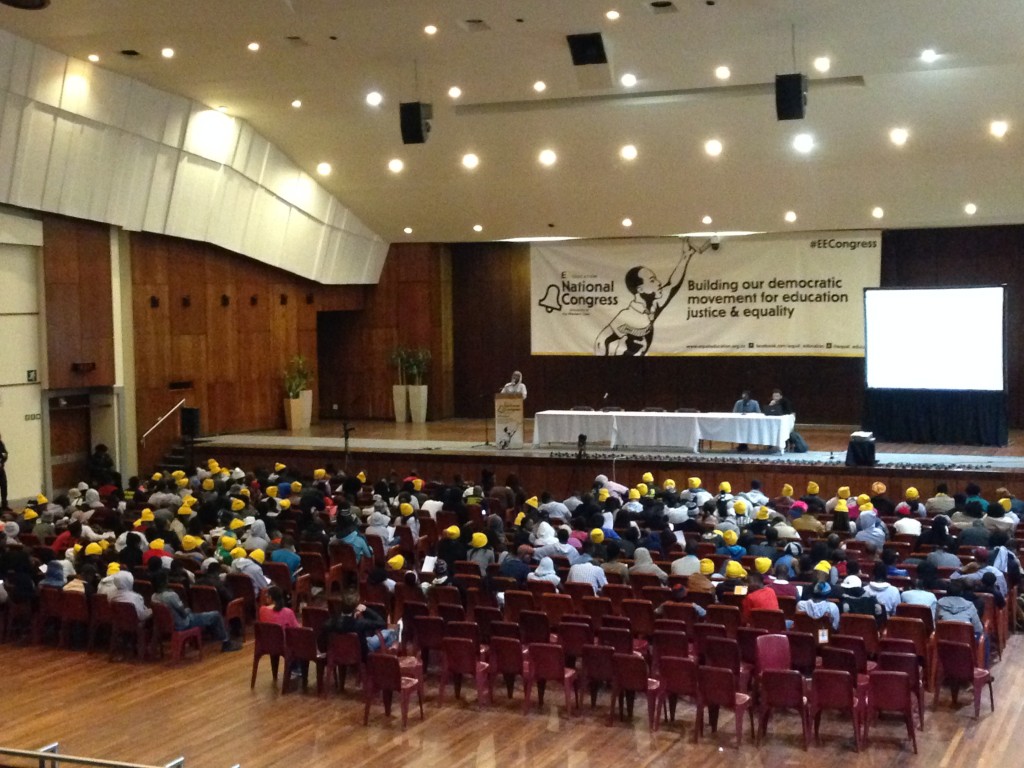
Equal Education National Congress

Equal Education National Congress

I also went with the attorneys to Dunoon, a township in Cape Town, to collect information from parents whose children have been illegally rejected from school. That was downright inspiring—a group of the parents have set up their own unofficial school to try to keep their children learning and safe. Hopefully we can help, too—the Centre is currently in contact with the Department of Education on their behalf.

For the last period of my stay, I am helping with the EELC shadow report on the Department of Basic Education’s 2015/16 annual performance plan and analysis of implementation plans for national norms and standards regarding school infrastructure that the provinces have recently released, partly in response to a previous EELC/EE campaign to get the national Department of Basic Education to promulgate these legally binding norms and standards.