
You’re invited to share in a project with us here at the Harvard Fine Arts Library: a digital humanities game using images of Islamic and South Asian art, with the chance to win an art publication of your choice, worth up to $150 USD!
For more information about The Stuart Cary Welch Islamic and South Asian Photograph Collection, see the collection page on our website. The collection consists mostly of high-definition photographs of paintings and drawings, both famous and rare, but it also contains images of historical photographs, metalwork, and architecture.
The game is easy! Just register, then click through the images and add tags, separated by commas. Keywords are fine, but the most important details would be any deeper knowledge you can impart (language, style, rough time period/era, story/text identification, motifs, techniques, artist, repository, etc.)
At the end of each round, the participants will be entered into a drawing to win an art book of their choice valued up to $150 USD. NOTE: you do need to register for an account and play the game at least once in order to be entered into the prize drawing!!
Register HERE (you’ll need to confirm your email)
…then access the game HERE!
The theme for this month is:
The Natural World: Indian & Islamic Paintings and Drawings
A little taste of themes to come (new rounds will be announced on our Instagram page, @harvardfineartslibrary, so give us a follow!):
The Supernatural World (paintings and drawings)
The Real World (historical and architectural photographs)
Challenge round (Difficult! Metalwork, frontispieces, etc.)
Thanks so much, and we hope you enjoy exploring this exciting collection! If you don’t mind, we’d love your feedback after playing, which you can give via the short form here: https://goo.gl/forms/RLxkvvtmEc0d8A3c2. Have fun!
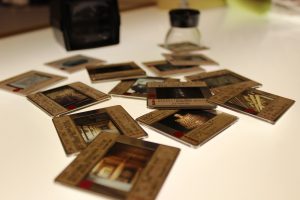
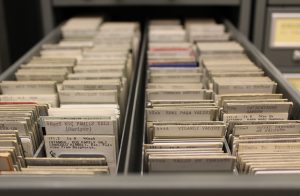


 This post inaugurates a new blog series written by the Welch project’s staff and student catalogers. Posts will contextualize how such a unique corpus of images made its way to the Harvard Fine Arts Library and will provide insight into what it’s like to prepare 65,000 slides for a new virtual existence online. To date, upwards of 10,000 Welch slides have already been scanned and published as digital images free to browse and download on
  It may or may not have come as a surprise to Welch, then, that his ‘innovative practice’ would become internationally mainstream over the next few decades. During the second half of the 20th century, university art history departments adopted the use of slides as a pedagogical tool. When digital media replaced analog image technology in the 1990s, these pre-information age collections started to take on new didactic roles beyond t