Farmer’s Market update: Now Food for Free!

This was a difficult semester of navigating through problems the team could solve, and aligning that back to our interests. Disengagement grew until I was the only one left active on the project.

I met with the Director of Dining Services, who enlightened me to a few things. One: Harvard Farmer’s Market was a community investment. Two: in the grand scheme of things, the investment made to the Farmer’s Market is so minimal that reaching financial sustainability is not a priority. Three: there are other organizations, however, that could benefit from being cost effective.

The Director introduced me to a partnering non-profit organization, Food for Free. Food for Free re-distributes leftover food from the Dining Halls to places of need. Their services are at no cost to the suppliers or benefactors, so they have to operate in a lean fashion.

I am grateful for the change in direction. This will likely transform into a Spring semester project, where we will be recruiting for a new team. Please send any interests our way!

Cindy

#DocShop meeting 10

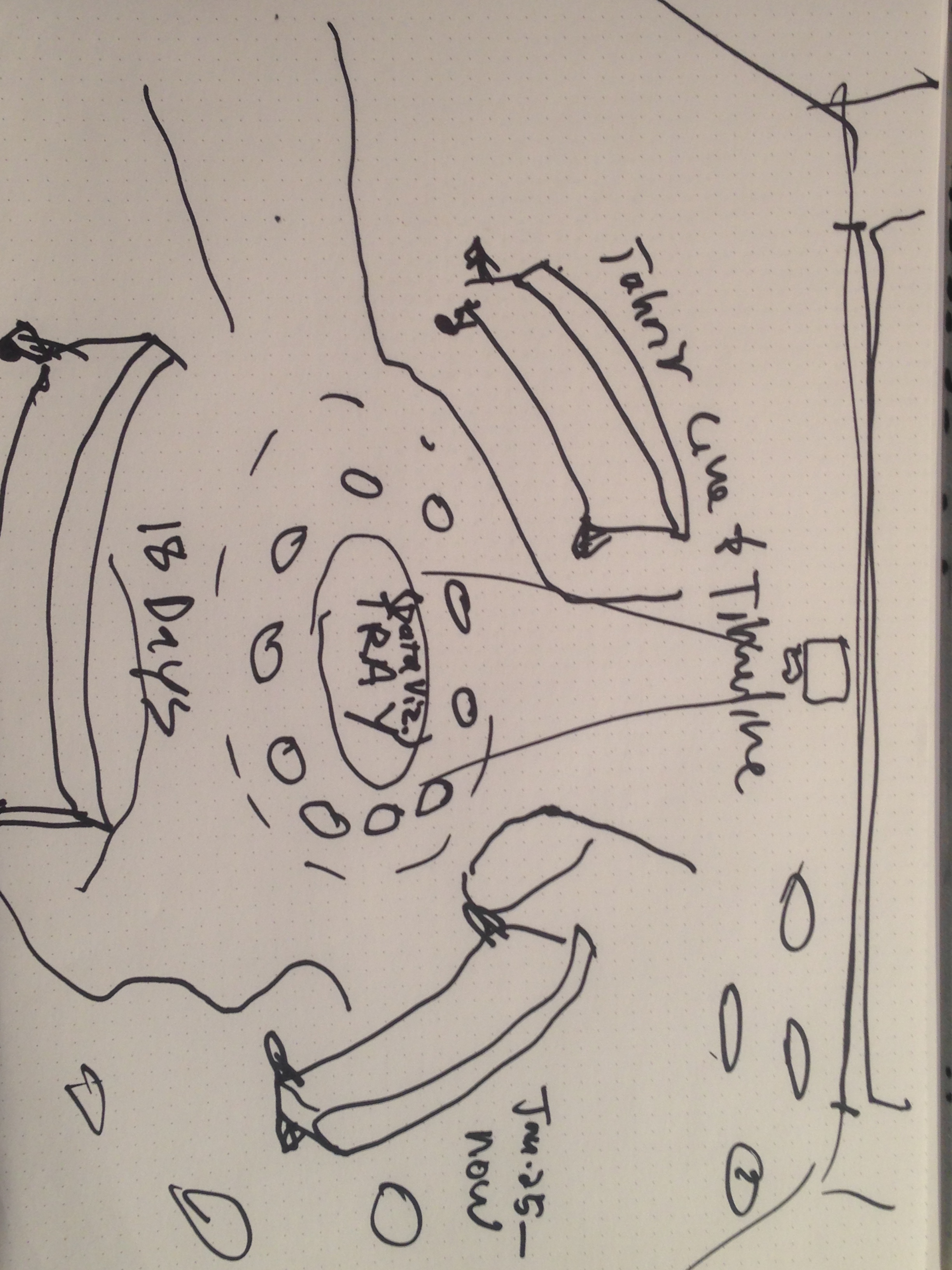
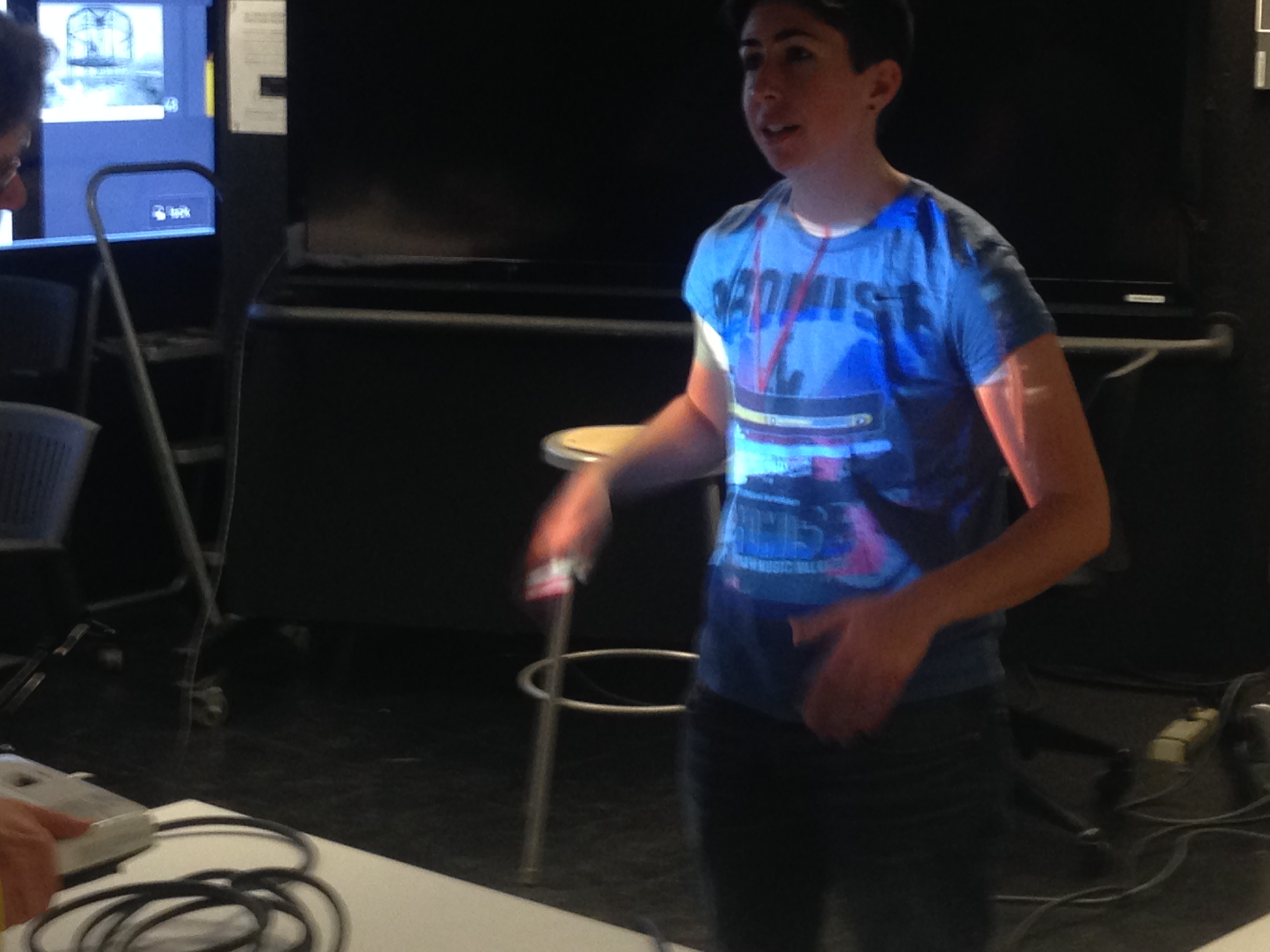
What we worked on This week we met  in Gund 522 to start figuring out the exact ‘stations’ that will be part of the spatialization of Lara’s Tahrir Square archive. We also talked about various data visualizations and tools (such as Gephi, Roundware, and BackStory) we will utilize in the buildout of this prototype for DocShop’s pilot event. We have one or two venues we are deciding between and we are looking at the evening of Thursday December 11th as a launch date. Here are some process documents/photos from today: Tahrir_map_3sld1xhk   2014-11-23 20.51.22 2014-11-23 16.44.36       2014-11-23 17.21.25   2014-11-23 15.13.53 2014-11-23 14.34.15


What went well

Dividing aspects of the archive into different ‘stations’ and dividing up tasks and ownership. The tasks include PR and outreach, media, event planning, physical layout, printing, and documentation.

What was challenging

Narrowing down the scale of this project to something attainable within two weeks while being faithful to the ideal form this embodiment of the archive will take.

What’s up next

We will meet twice in the week following Thanksgiving. Once in Gund 522 for a working meeting, and once in the space where we will be projecting/performing the archive to start blocking out the stations and media in real space.

Keep on Trucking

Hi everyone,


First, props to anyone who has stuck with our adventure thus far. We appreciate the readership!


This week, some of the mentors were out of town, so instead of a discussion meeting, we had a work session. We were successful this week with developing an understanding of how our various parts integrate together: the UI has to allow users to select variables, which tells the data manipulation module what to select, which is passed to the visualizing function which passes the graph to the UI… It requires a lot of prior coordinating and planning, so that’s part of what we focused on this week.


What has been challenging is navigating the Django framework and understanding where  the various functions that we write belong. Some of us are new to it, so we’re trying to grasp what’s going on when it loads the page and how we fit into it. Shouldn’t be too challenging, though!


With the final presentation coming in less than a month, all our efforts are focusing on cleaning up the UI and generating the visualization. It’s gonna be great!


Best,

Alex

#DocShop meeting 09

What we worked on

This week, we met with Lara Baladi, (OpenDocLab Fellow) to start making a plan for how to frame the different stations of her spatialization of her timeline and archive. The goal of DocShop’s project is to help artists realize how to animate an archive in real space and how to architect experiences that will bring artists and audiences together. Lara expressed her interest in metanarratives and that the archetypal emerges out of the multivalent.

Here is an article on the project that was in Guernica mag. You can also see a three channel buildout from the archive, along with two articles written by Lara on CreativeTimeReports. Lara had also attended the MIT Infinite Record conference and highly recommended we all see that. This is prescient in terms of her practice as this year was focused on archive, memory, and performance.

Additionally, Rachel presented to the group this week a module on interactivity and learning design, along with a project that she made on a class that examined pedagogy design, specifically around constructivist pedagogy. The readings included ‘Designing Interactions’ by Bill Moddridge and Joh Sweller’s writings on Multimedia Learning and Cognitive Load Theory. Her project is called ‘Alright Eros’, which was modeled after OK Cupid, where the user becomes complicit in giving personal information to the program, whether in the form of quizzes or actual sensitive data. At the end, you get an error message and there is a small string of text that says ‘Did you need to give your credit card information?’ Ian Bogost’s Cow Clicker came up as an example of deconstructivist or subversive social games.

What went well

We had a number of ideas to share. The group gave wonderful feedback and issues from our readings came up during discussion of interaction and in talking about Lara’s project. The most effective thing we did was articulate what we (DocShop) wanted to get out of this collaboration. Lara expressed her aims/goals/desires of this process, and each group member individually said why they wanted to do this.

What was challenging

Making sure we get the scope breakdown schedule right, to deliver this prototype by December 11, which is only 3.5 weeks away.

What’s up next

We will meet next week on Sunday in Gund 522 to keep working with the material. Lara, the group, possibly Halsey Burgund (developer of Roundware and OpenDocLab fellow) and the metaLAB team will be there.

#DocShop Meeting 08

What we worked on

We had two meetings this week. During the first DPSI meeting, we responded to last week’s visit to Lawrence to see Dan’s locative media piece ‘Fall of the Pemberton Mill’. We then shifted into project management mode to make a schedule and scope out our first event.

In the second meeting, we met in the HILT Room in Gund 522, where Lara Baladi (Egyptian-Lebanese artist and fellow at the MIT Media Lab) presented her work and posed various problematiques of working with an archive, troubling the idea of the public domain, and how to combine media with data visualization and record narratives from the audience. Lara, along with the group, came up with an idea for a prototype for the first ‘happening’ for #DocShop, which will be in the first week or two of December. More information to come next week.

What went well

It was great to start really digging into the material, with the artist present. We also got to discuss our positioning to the modes of interactivity in documentary arts and storytelling, and what it means to spatialize time-based media.

What was challenging

Planning this event in such a short time and scoping out what we will be able to do by early December. The team is working beautifully, but the challenge comes with working with media in space and planning the event, and the moving parts that go along with it, along with being respectful to the artist’s material.

What’s up next

Booking a space, meeting with Lara at our #DocShop meeting on Friday, and beginning the planning of the installation and event.

AccessED Update

After a bit of a lull for the past week as we were sending emails and planning the next stage of our project, I am pleased to say that we are back in action.  We are particularly excited for this Friday, when we will be meeting Samantha Earp, Executive Director or HarvardX, to talk about their policies regarding accessibility in their online education platform.  I’m particularly interested in seeing how the policies of HarvardX, a private entity in the sphere of online education, differs from the policies and approach set by the Disability Services Office, which is part of Harvard University itself.

More on the outcome of our meeting in our next post!


-Curren

eyeData update

This week we focused on finalizing our plans for the visualizations and finalizing which team members will contribute each part. We spent a lot of time discussing the pros and cons of d3 and Vincent, a module that allows for easy Vega visualizations of python data. We ultimately decided that d3 would be the better choice, because it gives us more options and greater flexibility with our graphs. It also allows for easier expansion of our product if we so desire. We also spoke about how we would analyze the data to determine what sort of graph to automate for each data set, and how we would output our analysis for easy use in JavaScript. We decided that outputting the most useful information in json would make our d3 visualization as efficient as possible.

We made a lot of progress on determining our overall structure and making sure that we are on a good path to finish by the time of the final presentations. What was challenging about this weeks meeting was making sure that all the parts of what we are doing and how those parts will fit together were clarified for everyone, as our product has so many components.

For the next meeting, we plan to have working visualizations and analyses of sample data files. We will spend the next meeting discussing how to improve and/or expand these visualizations in order to make our product as useful as possible.

#DocShop Meeting 07

What We DidDSC05808

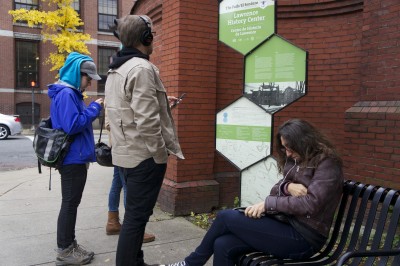
This week we took a field trip out to Lawrence, MA to experience an interactive documentary in situ: The Path: The Fall of Pemberton Mill, produced by #DocShop member Dan Koff.

This multi-modal presentation of 7 videos, played on personal smart phones over the course of a walking tour of the Lawrence mills, featured the narrative of a present-day teenager intertwined with the historical perspective of 2 sisters who had worked in Pemberton Mill disaster, interviews with present-day historians and a relative of the two sisters. Additional media assets included place markers around Lawrence, artifacts such as maps, indentures, and arrest records, as well as the historic mill buildings themselves.

What Went WellDSC05826

The Path videos augmented reality to create a novel experience of place that was connected to historic events by proximity. The maps and instructions provided in the video series led us gently along while allowing enough room for ad hoc exploration of the spaces and artifacts. There was a consensus in our group that the piece would have worked just as well if we had not had Dan to guide our way, and that the overall experience benefitted from the social context of group discussion.

DSC05818 What Was Challenging

While the overall experience was quite positive and thought-provoking, some unanswered questions remain. The piece itself was participatory, but we were not sure if it fits the definition of interactive. The spectrum of interactivity continues to be a concept that we hone and refine. We also discussed the possibility of creating a networked learning experience with the incorporation of audience participation; we brainstormed ways that participants might add content in the form of reflections on present-day industrial accidents and generating their own media that connects the present to the past. This could take many different forms and we weren’t sure which would be most effective for the participant, and most interesting for the larger network of the piece’s audience.

What’s Up Next

For the next meeting, we’ll continue to unpack our experience with The Path in a discussion of location-based storytelling and the limits of interactivity, as not all of the #DocShop members were able to join us in Lawrence.

We also plan to recap and reflect on some of the group members’ experience of Ragnar Kjartansson’s The Visitors and the recent Illuminus Festival.

Ultimately, we’ll work on a roadmap for collaborating with Lara Baladi and the final #DocShop deliverable for DPSI.


Open Access – Team Update

Midterm review/ What we did
The midterm review was productive in introducing various topics of discussions for our team to move forward with the Open Access project. Through the suggestions of the various groups, the Open Access team is working on the DASH opinions from various Harvard departments, and analyzing the data we are receiving to move forward on a method to best attack the next steps of instating the Open Access project.

What went well
Our team learnt that a possible solution on getting faculty members with published materials to participate within the program is to communicate with their assistants, and work with an online system that enables faculty members to submit their published papers through a departmental electronic system. A similar system is being used at the Berkman Center for fellows and scholars, whereby it is required before an article is submitted for review, that there is an online check-box system for scholars to tick off, and agree to their rights of file to be reviewed and submitted to the DASH system.

Another suggestion was to contact and develop relationships with publishing houses, who would like to cooperate with the DASH system and move forward with donating their published papers within the DASH system. Whereby the open access team could monitor and bring access to the Harvard University community.

What was challenging
The challenge that we foresee is for a 80% or more implementation rate of open access throughout the University level. As most publishing houses would like for their publications to be in closed rights. We are also foreseeing difficulties with faculty members remembering to submit their papers to the DASH system, and/or ensuring their participation within the check-box system.

What’s up next
Several members of the open access team are still in the stage of survey within their respective departments, and will be offering other suggestions and comments soon after they receive more feedback.

Updated: 4 November 2014 – Wendy W Fok

AccessED Update

 
After our mid-term review, we definitely knew we wanted to meet with MOOC developers and get their insights on accessibility. We are trading emails with some great people and trying to set up a time! It’s a bit of a challenge to juggle people’s schedules, but hopefully we’ll get find a time soon!