Archive for April, 2007

Free Review Copies of Culturally Sensitive Conflict Style Inventory

Thursday, April 26th, 2007
Submitted By: Ron Kraybill

Free Review Copies of Culturally Sensitive Conflict Style Inventory

English and Spanish versions available

Riverhouse ePress announces the release of free review copies in English or
Spanish of Style Matters: The Kraybill Conflict Style Inventory. The
inventory is a recently developed five-styles-of-conflict inventory used by
mediators, organizational consultants, and conflict resolution trainers
worldwide to teach personal conflict resolution skills.

Like the widely-used Thomas Kilmann Conflict Mode Instrument and a number
other inventories, Style Matters is based on the Mouton-Blake Grid. However
Style Matters adds a unique feature making the instrument culturally
sensitive.

Users as diverse as the Canadian Defense Force, a law school in Australia,
and numerous state and federal agencies have adopted Style Matters.

The 22 page instrument sells for $3.95 per copy in quantities of one hundred
or more. A free trainers’ guide is available on the web. Trainers and
consultants may request a free review copy in PDF form, by sending a note
indicating their organizational affiliation to
StyleMattersOffer@RiverhouseEpress.com. A link to download a PDF file will
be forwarded in response.

For more information and comments by existing users go to
www.RiverhouseEpress.com
What Do You Think?

Thursday, April 26th, 2007

Please use this area to share your thoughts about how to make this blog better!

Are there fixed pages that need to be added? Posting categories?

Whatever you think will make this blog better, please feel free to let us all know by posting here!

Thanks!

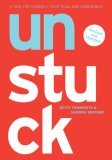
Great Read #1 : Unstuck

Wednesday, April 25th, 2007

Subtitle: A Tool for Yourself, Your Team, and Your World

Authors: Keith Yamashita & Sandra Spataro

21YSY3JGYFL._AA_.jpg

This is a Great Read because it provides a quick and easily digested process for working your way out of any problem.Sure, the focus is on organizational problems, but the steps are intuitive and the breadcrumbs are well defined. The authors take the reader as found and walk through what to do if you’re at identified junctures in your stuck-ness.

Which of the “serious seven” have ever applied to you in the middle of a mediation??

  1. overwhelmed
  2. exhausted
  3. directionless
  4. hopeless
  5. battle-torn
  6. worthless
  7. alone

The answer for most of us is “all of the above”! It’s a cute little book, a little larger than a big index card and something you can take with you and use to recharge on a break!

Welcome to The Mediator’s Dilemma!

Wednesday, April 25th, 2007

First of all, thanks to the Harvard Law School for making this space available. The idea of a blog on this topic hosted in this space is exciting!

A difficult mediation often causes a mediator to continue pulling tools out of the toolbox until it’s empty. This blog is designed to collect wisdom on the dilemma’s faced by mediators as they strive to maintain neutrality in working with difficult mediation sessions.

The Challenge of Neutrality

The ability to maintain an aura of impartiality is a mediator’s stock in trade. Without it, the mediation session devolves into a nothing more than a directive discussion. Sometimes that’s what most of the people in the room desire, but normally, they want a neutral person to assist them reach a workable peace.

The “mediator’s dilemma,” therefore, is the challenging mediation, the mediation that leads to a week’s vacation. It occurs when the mediator, no matter how skilled, reaches the bottom of her mediation toolbox, and begins to think about divine intervention.

It doesn’t take long to stumble upon this type of mediation, whether in role-play or real life. It is the mediation where:

  1. The mediator has failed to properly center himself before attempting to work with the parties
  2. Something happens within the mediation to pull the mediator off center
  3. The mediation environment creates bias

Ordinary Examples:

1) The mediator was unable to sleep the night before a mediation.
2) The manager of an employee uses an ethnic slur that involves both the mediator and the opposing party.
3) The mediator knows the proclivities of the judge assigned to the case strongly favors one party.

In the case of the prisoner’s dilemma, the person with the best information (the interrogator) intentionally hides the information from the prisoner to create sufficient pressure to obtain a confession. In the mediator’s dilemma, the mediator often has to withhold information from both parties (“I’m tired,” “I’m offended” or “I know you’re going to lose at trial”), to maintain their perceived neutrality.

I’ll make my own shameless plugs later, but for now, I simply invite you to participate in this blog, post your on-topic comments, trackbacks and other networking tools to make this truly a place for open discussion of mediator neutrality.

If you’d like to post your own articles (re-posts are fine!), please let me know!