You are viewing a read-only archive of the Blogs.Harvard network. Learn more.


Kindle: not your parents’ eBook.

On November 19, Amazon.com announced its first foray into hardware: a portable eBook reader called the Kindle. Amazon hopes the Kindle will become the iPod of books – a portable personal library you can take anywhere.

Amazon Kindle (image courtesy Amazon.com)

That same day, the National Endowment for the Arts announced the results of a new study: young Americans are reading less.

So it makes sense that despite obvious similarities, the Kindle and the iPod target very different markets. Whereas Apple turned the iPod into an icon of digital native culture, Amazon is aiming the Kindle squarely at digital immigrants.

Look at the features Amazon is touting. A display that mimics the look of ink on paper. A built in wireless book store so you never have to touch a computer. The ability to change text size. In short, it’s designed for people who hate using computers and have bad eyesight.

Meanwhile, with a screen saver featuring the likes of Jane Austen and the Gutenberg printing press, along with what the popular technology blog Engadget calls “a big ol’ dose of the ugly,” the Kindle is almost aggressively unhip. As one analyst told the Wall Street Journal, “No one is going to buy Kindle for its sex appeal.”

Moreover, digital natives tend to be more comfortable reading from traditional LCD screens than their parents are. Indeed, some of us, myself included, actually prefer reading from a screen. I’d much rather read a book on, say, an iPhone, than have to carry a separate device.

But as the NEA study (3.3 MB PDF) makes clear, most readers aren’t digital natives. If older consumers take to the Kindle in droves, perhaps they could become the digital natives of literature, defining the new paradigm for how we read digital books.

In a sense then, whether knowingly or not, Amazon is performing a large scale social experiment. We can’t wait to see the results.

-Jesse Baer

CNN YouTube Debates

Tonight, CNN and YouTube hosted the republican complement to the successful democratic debate they hosted last June. The premise is the same: allow anyone to submit a question on YouTube, and then pose selected ones to candidates. Many would agree that this is a good step towards a participatory democracy (see John Palfrey’s post about it here), but some still want more. The New York Times has a series of Op Eds about what a “real, new-media debate would look like.” The responses range from cynical to creative, with some well planned enough to see possible implementation. Here I’d like to discuss some of the most thought provoking.

Kevin Kelly, an editor at large for Wired magazine, notes that “the truth becomes something you assemble with the help of friends” and on a continuous basis. He suggests having the lives of candidates constantly documented so citizen journalists can fact check and note not only the “oops” moments but also the “aha” ones.

Andrew Rasiej and Micah Sifry, the co-founders of TechPresident.com, offer a simple and effective way to better cull the videos submitted by users: let other users vote. I agree that, in theory, this would be more representative of the population, but it allows for viral videos to overtake other ones that may be more important to ask. But who currently decides what is most important to ask? Right now, the answer is still a panel of journalists that review the submissions and try to cover the most salient issues. The panel selects videos in light of viewing all the rest, whereas a voting public likely will not.

Matt Bai, contributing editor for the New York Times magazine, proposes that the candidates have laptops behind the lecterns and type comments that would be displayed on an overhead monitor while the other candidate answers a question. In his full Op Ed piece he provides some comical examples of its use.

Obviously, the suggestions in the collection of Op Eds were designed as fantasy; an imaginative view of what a super cutting edge debate would be. Who knows how many of the ideas will be implemented, in one way or another, in the future as more DNs become politically active and engaged in elections.

What are your ideas for making the debates truly participatory?

-Tony P.

How does a foundation program officer decide how to make grants?

At the Berkman Center’s lunch speaker series, Gary Kebbel of the Knight Foundation is with us today. I’m not sure that I’ve ever seen such a public, open discussion by a program officer of a foundation about how they do their work in funding great projects. The Knight Foundation has been running the News Challenge for a few years, and they seek to learn and improve their processes each time. This year, they doubled the number of applications and, even more impressive, they reached out successfully to a global set of applicants (good news, we think, coming from the Global Voices-style perspective, as we do here at the Berkman Center). Knight has also continued to innovate with ways for people to submit public or private applications to the consideration process.  One thing I learned: News Challenge applicants are free to read these comments, in the case of an open application, and then go back and revise and improve their application. They’ve also got a blog on PBS called Idea Lab, part of the PBS Media Shift blogging empire (hey! there’s David Ardia).

In the spirit of our interest in young people, Digital Natives, doing innovative things online: The most interesting experiment, from my perspective, is their work with MTV and MTV International on the Young Creators Award. They set aside $500,000 for this award, geared toward those 25-years-old and younger. Of the new young applicants, almost half are international.

Some of the upticks that they are seeing in the applications to this year’s News Challenge: Facebook applications, use of GPS-related tools, and place-tagging for wireless.

Grant-seekers and innovators and young creators around the world, watch Gary explain how the sausage is made when it comes to grant-making at the Knight Foundation. Watch also for commentary from uber-bloggers Ethan Zuckerman and David Weinberger and Lisa Williams, who are in the room here in real-time.

– John P.

This entry is cross posted on John Palfrey’s blog here.

A new kind of “nativism”

“Stop trying to be cool.”

Chances are you’ve either heard these words uttered by a teen, or uttered them yourself. Digital natives, whether out of territoriality or impatience, often get annoyed with their elders’ well meaning attempts to “assimilate.” Call it “digital nativism.”

Of course, the existence of resistance isn’t reason to give up. It’s still important for adults to try and reach out to younger people. The question is how to do this without being invasive or offputtingly clueless.

Recently, a couple of articles have reminded us of this dilemma. First, the Guardian reports on UK educators who are trying to “exploit their students’ passion for the new generation of interactive online communication tools … to deliver academic content.”

[A] research exercise carried out by the Joint Information Systems Committee (Jisc) … revealed, amazingly, that students want to be left alone. Their message to the trendy academics is: “Get out of MySpace!”

To be fair, the article wasn’t all one sided. The study concluded that educators need to tread carefully, but should still get involved. Moreover, the article suggested that students themselves may feel ambivalent about the “adult invasion.”

“Students appear to want their cake and eat it,” says Phipps. “They appear to want to keep their online persona private but when you ask them whether they’d like instant communication with tutors or feedback on essays (via Skype or Facebook) the answer is always yes.”

All this set an interesting backdrop for news, in the New York Times, about New York City’s aggressive plans to connect with students digitally.

The city is planning an intensive campaign that would use cellphones to help motivate students, most of them minorities and from poor families, in two dozen schools. … Every student in each of the schools will be given a cellphone.The effort, officials said, will use text messages — drawn up by an advertising agency and sent over the phones — that promote achievement.

It will be very interesting to see how this approach works. Based on my experience with schools trying to be cool, I’m skeptical. The Times article raises the possibility that students won’t bite – but it doesn’t consider the possibility that it will backfire.

Instructional Technology and Digital Natives

Last week, I attended the Presidential Instructional Technology Fellow’s Showcase here at Harvard. The PITFs, graduate students who work as teaching fellows for classes here, spent the summer working with faculty to develop pedagogical applications of technology. The results were impressive and demonstrate how some professors are using technology to better connect with and teach to DNs.

I really enjoyed learning about Professor Stephen Greenblatt’s course website for Humanities 27: An Imaginary Journey in the Early 17th Century. The teaching fellows and he collaborated with over 40 other individuals—librarians, scholars at Harvard and other institutions, curators at museums, and others—to develop an immersive, engaging website.

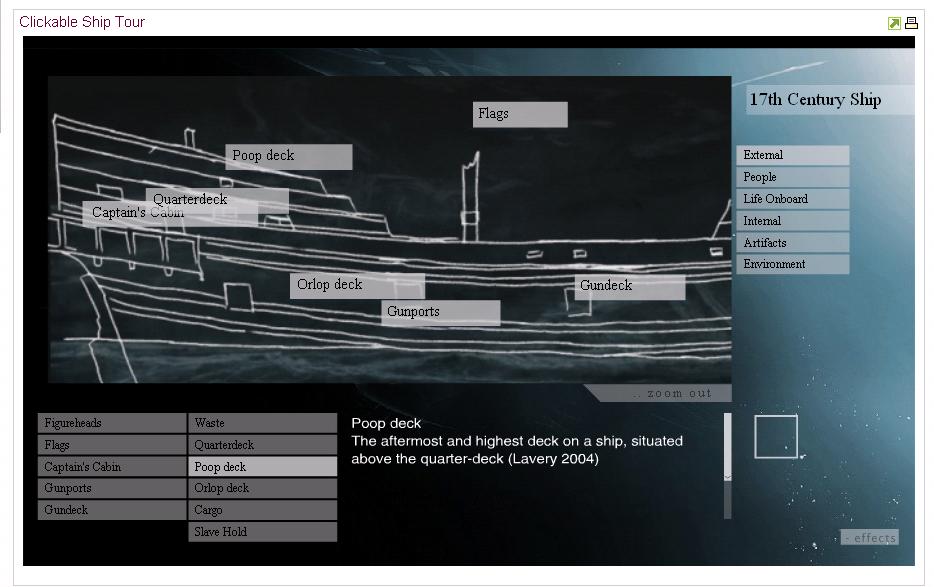
The course is designed around the journey of three imaginary ships that sail about the world to intersect with a variety of cultures, literary canons, and historical events. Multimedia informs this exploration in a variety of ways. Videos of interviews with professors that were unable to commit to a guest lecture are sprinkled about the different sections of the site, as are images of original documents and maps. A 3d tour of one of the ships supports the mission of understanding the environment in which explorers and travelers of the 17th century lived. Greenblatt begins each lecture by navigating the globe with Google Earth, showing the path of the ships and the routes they take. Finally, a class blog facilitates discussion and a feedback loop with which students share their individual research and comment on others.

I think that professors will use technology to make learning more engaging then ever as DNs arrive on college campuses across America. For now, most of the discussion as been about Facebook and MySpace, and how students are using them to network before they even arrive on campus (see a New Yorker article on the subject: http://www.newyorker.com/talk/2007/09/17/070917ta_talk_schulman), but this is only the surface. As Prensky points out in his essay, DNs enjoy learning in a different way. They like interactivity and the ability to output and produce information, not just receive it. I think it is wonderful to see instructors, especially of such classic topics as History or Literature, embrace new tools and techniques that better align with the styles of learning that DNs enjoy.

And Professors like it, too. Grennblatt was almost evangelical about teaching the course this way, and called the experience “transformative.” He noted that it has “changed the way [he] teaches the material.” That is, the same material he taught for years. This is not to say that the tools and helpful folks of yore are needless: librarians played a crucial role in developing the course website and presenting an array of resources with brief descriptions so that students can graze and “deep dive” while exploring research options. “Adapting the material for the new wave of students,” in my opinion, just means making the material more immersive, interactive, participatory, and engaging. Kudos to the professors, PITFs, and librarians that are driving this forward.

– Tony Pino, Cambridge, MA

Course Website Interactive Ship Tour Google Earth Narrative

The Future of Books in the Digital Age: Conference Report

Today, I attended a small, but really interesting conference chaired by my colleagues Professor Werner Wunderlich und Prof. Beat Schmid from the Institute for Media and Communication Management, our sister institute here at the Univ. of St. Gallen. The conference was on “The Future of the Gutenberg Galaxy” and looked at trends and perspectives of the medium “book”. I’ve learned a big deal today about the current state of the book market and future scenarios from a terrific line-up of speakers. It was a particular pleasure, for instance, to meet Prof. Wulf D. von Lucus, who’s teaching at the Univ. of Hohenheim, but is also the Chairman of the Board of Carl Hanser Verlag, which will be publishing the German version of our forthcoming book Born Digital.

We covered a lot of terrain, ranging from definitional question (what is a book? Here is a legal definition under Swiss VAT law, for starters) to open access issues. The focus of the conversation, though, was on the question how digitization shapes the book market and, ultimately, whether the Internet will change the concept “book” as such. A broad consensus emerged among the participants (a) that digitization has a profound impact on the book industry, but that it’s still too early to tell what it means in detail, and (b) that the traditional book is very unlikely to be substituted by electronic formats (partly referring to the superiority-of-design-argument that Umberto Eco made some time ago).

I was the last speaker at the forum and faced the challenge to talk about the future of books from a legal perspective. Based on the insights we gained in the context of our Digital Media Project and the discussion at the forum, I came up with the following four observations and theses, respectively:

Technological innovations – digitization in tandem with network computing – have changed the information ecosystem. From what we’ve learned so far, it’s safe to say that at least some of the changes are tectonic in nature. These structural shifts in the way in which we create, disseminate, access, and (re-)use information, knowledge, and entertainment have both direct and indirect effects on the medium “book” and the corresponding subsystem.

Some examples and precursors in this context: collaborative and evolutionary production of books (see Lessig’s Code 2.0); e-Books and online book stores (see ciando or Amazon.com); online access to books (see, e.g., libreka, Google Book Search, digital libraries); creative re-uses such as fan fiction, podcasts, and the like (see, e.g., LibriVox, Project Gutenberg, www.harrypotterfanfiction.com).

Law is responding to the disruptive changes in the information environment. It not only reacts to innovations related to digitization and networks, but has also the power to actively shape the outcome of these transformative processes. However, law is not the only regulatory force, and to gain a deeper understanding of the interplay among these forces is crucial when considering the future of books.

While fleshing out this second thesis, I argued that the reactions to innovations in the book sector may follow the pattern of ICT innovation described by Debora Spar in her book Ruling the Waves (Innovation – Commercialization – Creative Anarchy – Rules and Regulations). I used the ongoing digitization of books and libraries by Google Book Search as a mini-case study to illustrate the phases. With regard to the different regulatory forces, I referred to Lessig’s framework and used book-relevant examples such as DRM-protected eBooks (“code”), the use of collaborative creativity (“norms”), and book-price fixing (“markets”) to illustrate it. I also tried to emphasis that the law has the power to shape each of the forces mentioned above in one way or another (I used examples such as anti-circumvention legislation, the legal ban on book-price fixing, and mandatory copyright provisions that preempt certain contractual provisions.)

The legal “hot-spots” when it comes to the future of the book in the digital age are the questions of distribution, access, and – potentially – creative re-use. The areas of law that are particularly relevant in this context are contracts, copyright/trademark law, and competition law.

Based on the discussion at the forum, I tried to map some of the past, current, and emerging conflicts among the different stakeholders of the ecosystem “book”. In the area of contract law, I focused on the relationship between authors and increasingly powerful book publishers that are tempted to use their unequal bargaining power to impose standard contracts on authors and transfer as many rights as possible (e.g. “buy out” contracts).

With regard to copyright law, I touched upon a small, but representative selection of conflicts, e.g. the relation between right holders and increasingly active users (referring to the recent hp-lexicon print-version controversy); the tensions between right holders and (new) Internet intermediaries (e.g. liability of platforms for infringements of their users in case of early leakage of bestsellers; e.g. interpretation of copyright limitations and exemptions in case of full-text book searches without permission of right holders); the tension between publishers and libraries (e.g. positive externalities of “remote access” to digital libraries vs. lack of exemptions in national and international copyright legislation – a topic my colleague Silke Ernst is working on); and the tension between right holders and educational institutions (with reference to this report).

As far as competition law is concerned, I sketched a scenario in which Google Book Search would reach a dominant market position with strong user lock-in due to network effects and would decline to digitize and index certain books or book programs, for instance due to operational reasons. Based on this scenario, I speculated about a possible response by competition law authorities (European authorities in mind) and raised the question whether Google Book Search could be regarded, at some point, as an essential facility. (In the subsequent panel discussion, Google’s Jens Redmer and I had a friendly back-and-forth on this issue.)

Not all of the recent legal conflicts involving the medium “book” are related to the transition from an analog/offline to a digital/online environment. Law continues to address book-relevant issues that are not new, but rather variations on traditional doctrinal themes.

I used the Michael Baigent et al. v. Random House Group decision by the London’s High Court of Justice as one example (has the author of Da Vinci Code infringed copyright by “borrowing” a theme from the earlier book Holy Blood, Holy Grail?), and the recent Esra-decision by the German BVerfG as a second one (author’s freedom of expression vs. privacy right of a person in a case where it was too obvious that the figure used in a novel was a real and identifiable person and where intimate details of the real person were disclosed in the book.)

Unfortunately, we didn’t have much time to discuss several interesting other issues and topics that were brought up and related to the generation born digital and its use of books – and the consequences of kids’ changed media usage in a changed media environment, e.g. with regard to information overload and the quality of information. Topics, to be sure, that John Palfrey and I are addressing in our forthcoming book.

In sum, an intense, but very inspiring conference day.

– Urs G.

This post is cross posted on Urs Gasser’s blog here.