Archive for October, 2015

Miracles in The Wedding of Zein

Tuesday, October 27th, 2015

IMG_1812

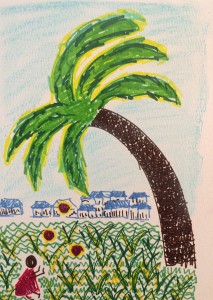
This pastel and ink representation of the dates falling from the palm tree is a representation of the auspicious dates that fell that fateful night in The Wedding of Zein. In the specific line that the Imam reads from the Koran, the person is directed to “shake towards thee the trunk of the palm tree, it will drop upon thee fresh dates fit to gather’ from the Chapter of Mary, a verse which is a particularly auspicious and blessed one”. After this reading, a comet appears and Haneen says an evening prayer. In the period of time following the “auspicious night”, “supernatural events came in quick succession, miracle following miracle in a fascinating manner”. The year is known as Haneen’s year and the townspeople all recognize that “miracle after miracle” was all attributed to the events of that fateful night.  I felt it important to capture this line of the Koran because it is the moment of revolution that begins the transformation in which Seif ad-Din corrects himself from a sacrilegious womanizer to a pious man, the personification of everything that the Imam lives for. The Wedding of Zein was a story that polarized religion and sacrilege or secularist ideals. The dates falling from the palm tree represent pieces of God and religious responsibility falling from the sky. This image from the Koran, coupled with the lines Haneen reads and the comet’s appearance combines to create a religious intervention for Seif ad-Din. Additionally, the dates falling from the tree were an interesting contrast with the forbidden fruit of Adam and Eve. In the Christian story, the consumption of the forbidden fruit immediately disconnected the couple from God. In The Wedding of Zein, the “gathering” of dates is a “particularly blessed verse” suggesting that the gathering of dates is a reaffirms one’s connection with god.
Sultana’s Dream for Reality

Tuesday, October 27th, 2015

Asleep, or wide awake I dream the dream

A world where women lead

And men are left inside

A world where women rule

And men are rarely seen


Intelligence and science are the way to succeed

The brain stops at nothing, no muscle is too strong

We, the mighty women do belong

As rulers, as queens, in charge of the greater world

Education is the road along which we travel


When the choice must be made:

Intelligence vs. Military strength

Who is the better choice?

When awake the military wins

When asleep the brain claims its voice


And they win

The sun is clear

The light is clear

The answer is clear

But dreams are unclear

So

Will this dream remain in the daylight?


After reading Sultana’s Dream I felt a sense of empowerment that could only be expressed in the form of a poem. The primary themes central to the story were not only female vs. male societal roles, but also intelligence, as associated with women, and military strength, as associated with men. As I mentioned in my blog post earlier, my education in an all girls school taught me that intelligence is the means to power for women. In Sultana’s Dream I found it interesting that the debate between military power and intelligence was portrayed under the beams of bright sunlight. I reflected upon this image in my poem, because I feel that there is an important connection between the light shining and its illumination of the female capacity to act intelligently and triumph in “battle”. The women’s scientific use of the light is a metaphor for the brightness and intellect that they possess. Upon waking up from a dream, the majority of my dreams are blurry and disconnected. I often wonder why I had such a dream, and what its “deeper significance” is. In Sultana’s Dream it was clear that the women won the test in battle, but will the decisiveness of this dream remain when the narrator awakens? What does awakening from such a dream really mean? I felt that since this dream was recalled with such clarity, the concept of female empowerment in general has commenced the transition from dream to reality. The answer, the meaning of the dream was so apparent to the reader that it seems nonsensical for it to not be a more prevalent view in society.

The Power of Sight

Tuesday, October 27th, 2015

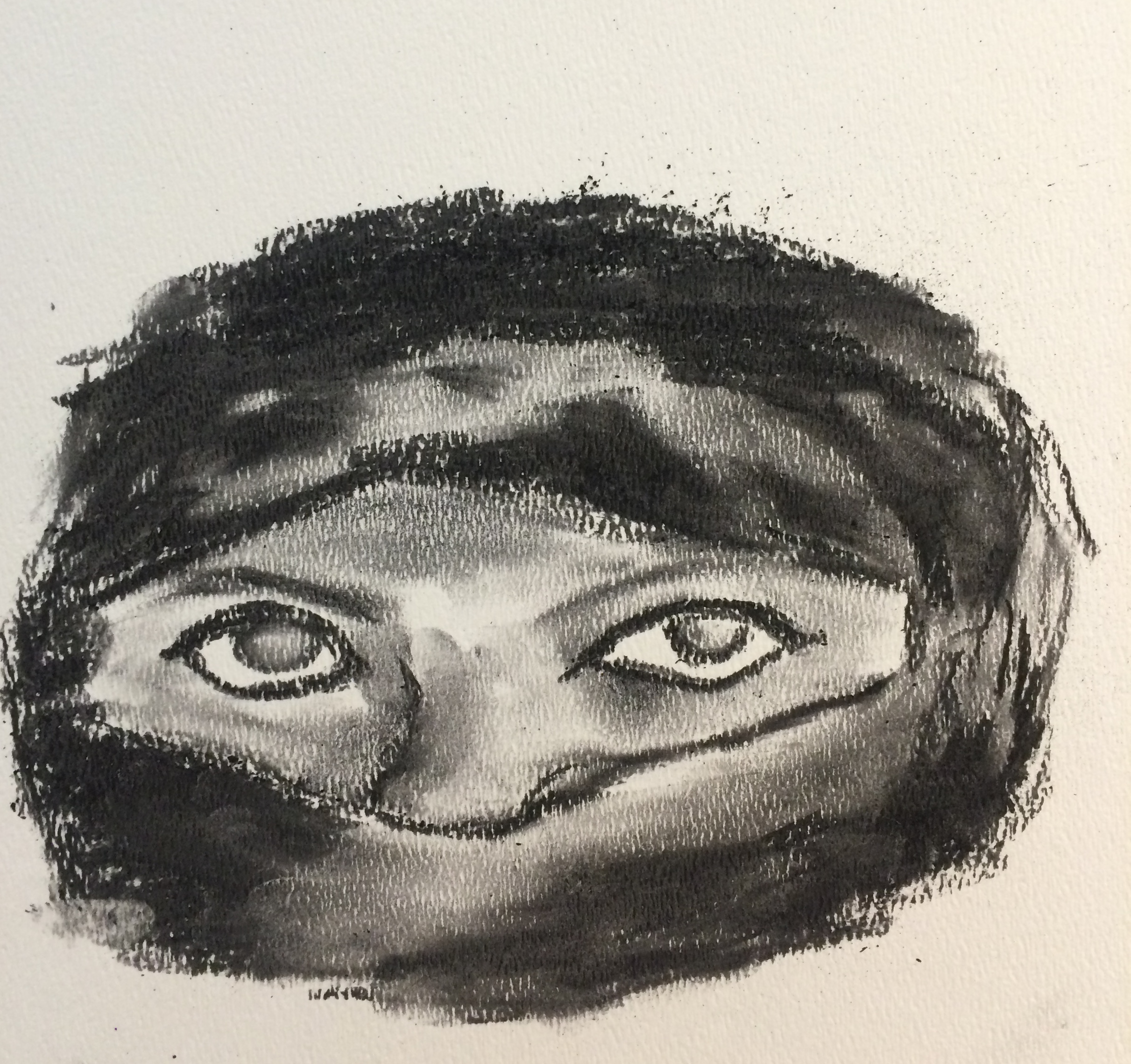
While reading an Egyptian Childhood, I was fascinated by the power of eyesight and the significance and meaning of the ability to capture light though a window to one’s soul. Taha Hussein idolized the group of religious elders who shared his disablility. He learned about the world in ways different from his peers because of his inability to understand everything he saw while playing outdoors as a child. While reading The Saint’s Lamp this symbol became even more pronounced. Fatima’s progressing blindness is a problem central to the family, as they all wish to eradicate it so that she is able to see. “Light” from the Saint’s Lamp is seen by the religion to be the cure for Fatima’s blindness, although in reality the light they would pour is really just oil. When Ismail discovers that his mother has poured the oil from the Saint’s Lamp into Fatima’s eyes he is furious. His feelings about Western science are such that he cannot reconcile religious superstitions with his newfound medical knowledge. The concept of sight versus insight is a theme central to the story, as Fatima’s sight is taken forever just as Ismail’s insight is stunted in mid-action. He entirely dismisses the religious upbringing that he was raised with. These themes combined with the tradition of some cultures to wear burkas prompted me to create this charcoal drawing. I wanted to capture the importance of eyes and sight as it is one of the few parts of both the male and female bodies that is visible to the general public. I find it interesting that woman are only connected to the outside world thorough their eyes, and Taha Hussein’s eyes are the only part of his body that is disconnected from the outer world. This contrast and the theme of sight as it relates to insight prompted me to represent the problem through a medium of visual art.IMG_1244

Who is the Beggar?

Tuesday, October 27th, 2015

IMG_7588

While reading the Beggar’s Strike, I was inspired by the relationship between the beggars and the upper castes. Traditionally I think of beggars as people who rely on others with more means to provide them with money and stability. In this story, however, the beggar’s utilized the Muslim need to give alms as a way to wield power over wealthier people. Throughout the story, I attempted to choose the party with the most power. Do the people with more money always have more power? In our society, yes, traditionally that is true. But in the Muslim community reflected in this story, the beggars wielded as much, if not more power over Mour in his quest to become vice president. Because of this complicated power dynamic, I thought of the act of giving and receiving money or a donation. One’s hands are typically folded within one another and cupped when receiving a donation. But similarly, when one is giving a donation, one also uses outstretched hands. Because of this duality, I felt that the hands of a beggar were an accurate representation of the power question that I felt central to the story. In addition, when Muslims pray, they hold their hands in the same position. This led me to ponder the relationship between praying, begging, and receiving. Praying is essential in Islam regardless of one’s socioeconomic status; this is important because it connects to the uncertainty of the power structure. Religion is never on the side of the rich or the poor. Even though in The Answer God describes the poor people as better Muslims, overall, in the eyes of God, all Muslims are equal.

Hello world!

Tuesday, October 27th, 2015

Welcome to Weblogs at Harvard Law School. This is your first post. Edit or delete it, then start blogging!