And Now for Something Completely Different

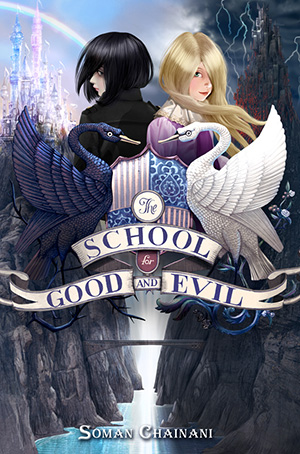
Soman Chainani’s School for Good and Evil comes out next month.  

Here’s what I wrote after reading the manuscript last January:

“It is not often that someone comes along who can reinvent fairy tales and reclaim their magic in ways that are truly for children. Soman Chainani takes the racing energy of Roald Dahl’s language and combines it with the existential intensity of J.K. Rowling’s plots to create his own universe, inhabited by characters we grow to love. THE SCHOOL FOR GOOD AND EVIL uses the sorcery of words and the poetry of friendship to startle, enchant, and keep us turning its pages.”

And for more on the volume and the author’s career:

http://harvardmagazine.com/2013/05/princess-not-so-charming

The first of a trilogy for middle-grade readers (ages nine and up), The School for Good and Evil tracks two archetypal heroines: the lovely Sophie, with her waist-long blond hair and her dreams of becoming a princess, and her friend Agatha, an unattractive, unpopular contrarian who chooses to wear black. A giant bird snatches the pair and carries them off to the School for Good and Evil, a two-pronged magical academy that trains children to become fairy-tale heroes and villains. When, to her horror, Sophie arrives at the Evil branch to learn “uglification,” death curses, and other dark arts, while Agatha finds herself at the School for Good amid handsome princes and fair maidens, the line between good and evil blurs, the meaning of beauty twists, and the girls reveal their true natures.
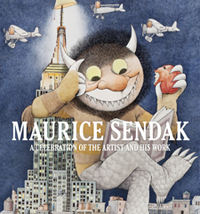
Justin Schiller’s Collection of Sendak’s Art

Beginning June 10, on what would have been Sendak’s 85th birthday, that collection will go on display at the Society of Illustrators in New York. The exhibit, containing more than 200 previously unpublished studies, sketches, and ephemera, will run through August 17. Every piece is from Schiller’s collection.

http://www.publishersweekly.com/pw/by-topic/childrens/childrens-book-news/article/56500-unseen-sendak-on-display-art-photography-books-2013.html 


More on Hollywood and Fairy Tales

Why can’t Hollywood get it right when it comes to fairy tales?  Films that allude to fairy tales or have fairy-tale subtexts are often more powerful than straight adaptations from source material.  Guillermo del Toro’s Pan’s Labyrinth is one example, but there are many others ranging from Pil Sung-Yim’s Hansel and Gretel to Christoph Hochhaeusler’s Milchwald.  Take a look at Jack Zipes’s Enchanted Screen for hundreds of great examples of fairy-tale films.

Sometimes it’s easier to do the lazy thing and just adapt from public domain material.  As Charlie Jane Anders writes:

Fairytales don’t have a lesson at the end, unlike fables — but here’s a lesson anyway: Hansel and Gretel were a public-domain piece of intellectual property, with name recognition and a connection to the hot fairy-tale brand. They were, in other words, already fattened up. Also, these two versions of Hansel represent two obvious ways of tackling the material in a way that appeals to a PG-13 audience: campy send-up, or slack-jawed action.

And here’s Ethan Gilsdorf on Hollywood’s fairy-tale obsession:

After nearly a century of fairy-tale films targeted in large part at kids — starting with Walt Disney’s 1937Snow White and the Seven Dwarfs — there’s another, edgier treatment on the rise. Last year, moviegoers saw two versions of the Grimm Brothers’ Snow White story in Mirror Mirror with Julia Roberts and Snow White and the Huntsman with Kristen Stewart. Next year, Angelina Jolie will star as Sleeping Beauty’s nemesis in Malificent, and Disney is looking to release a live-action version of Cinderella directed by Kenneth Branagh. We’ve recently seen movies like Hansel & Gretel: Witch Hunters and Jack the Giant Slayer in theaters and Grimm and Once Upon a Time on TV. The list goes on and on. What accounts for this boom in adult-sized fairy tales?

Part of the answer is that the stories and themes of the Grimms and Hans Christian Andersen never really left cineplexes — they’ve just been in better disguises. Working Girl, Pretty Woman, and Maid in Manhattanall borrowed heavily from the rags-to-riches Cinderella story. Snow White, so concerned with beauty and aging and jealousy, can be seen in countless mother/daughter rivalry plots. “We use bits and pieces of fairy tales all the time to fashion new stories, but often in ways so subtle that they escape our attention,” says Maria Tatar, chairwoman of the Program in Folklore & Mythology at Harvard University. Even Quentin Tarantino’s bloody Django Unchained, Tatar points out, draws from the Sleeping Beauty tale.

More at:

http://www.bostonglobe.com/magazine/2013/03/23/hollywood-fairy-tale-obsession/JWDnhD8EoIiH8yKj75iV6I/story.html


Sleeping Beauties vs. Gonzo Girls

Here’s my latest post on the New Yorker’s Page Turner Blog:

When Stieg Larsson’s girl with the dragon tattoo, Lisbeth Salander, encounters a man who regards her as “legal” prey, we quickly realize exactly what sets this skinny hacker apart from heroines of the past. Salander invites Advokat Bjurman into the bedroom, leading him to the bed, “not the other way around.” Her next move is to fire seventy-five thousand volts from a Taser into his armpit and push him down with “all her strength.” In a stark reversal of the nineteenth-century playwright Victorien Sardou’s famous formula for successful theatrics—“Torture the woman!”—Salander ties up Bjurman and tattoos a series of vivid epithets onto his torso. A sadistic sexual predator is transformed in an instant into her victim.


We’ve come a long way from what Simone de Beauvoir once found in Anglo-European entertainments: “In song and story the young man is seen departing adventurously in search of a woman; he slays the dragons and giants; she is locked in a tower, a palace, a garden, a cave, she is chained to a rock, a captive, sound asleep: she waits.” Have we kissed Sleeping Beauty goodbye at last, as feminists advised us to do not so long ago? Her younger and more energetic rival in today’s cultural productions has been working hard to depose her, but archetypes die hard and can find their way back to us in unexpected ways.


Read more: http://www.newyorker.com/online/blogs/books/2013/03/sleeping-beauty-lady-gaga-hunger-games-heroines.html#

Books with Magical Properties

We all know about that terrible Monster Book of Monsters in Harry Potter, but how many other literary books have magical properties?  Walter Benjamin tells us about one of those magical books in a short story by Hans Christian Andersen:

“In one of Andersen’s tales, there is a picture-book that cost ‘half a kingdom.’  In it everything was alive.  ‘The birds sang, and people cam out of the book and spoke.’  But when the princess turned the page, “they leaped back in again so that there should be no disorder.’  Pretty and unfocused, like so much that Andersen wrote, this little invention misses the point by a hair’s breadth.  Things do not come out to meet the picturing child from the pages of the book; instead, in looking, the child enters into them as a cloud that becomes suffused with the riotous colors of the world of pictures.”

There is also Lucy’s book in the Chronicles of Narnia–that intoxicating story in the Magician’s Book that she forgets as soon as she turns the pages–and she can’t go back!  Any others? Inkheart?