You are viewing a read-only archive of the Blogs.Harvard network. Learn more.
Feed on
Posts
Comments

The health and hygiene movement in the early part of the 20th century was due in part to better education, public health and welfare programs, and a handful of persuasive innovative leaders.  One such leader was May Dickinson Kimball, whose commitment to the health and well-being of girls and women, particularly for motherhood concerns, was very influential.  Following on the mission of the Girls’ Health League in Massachusetts, which was committed to reducing infant mortality rates, she developed a set of instructions aimed at educating girls, while in school, to prepare them for motherhood responsibilities.  A healthy minded girl would be a better citizen and, therefore, a better mother.  In some ways, her manual was the precursor to the landmark work of Benjamin Spock in the 1940s.  In this copy of her 1918 textbook, inscribed to Harvard President Lowell, Kimball offered a series of instructions for schools, teachers, and charitable organizations.  This movement became widely known as Mothercraft.

In her book, Kimball posed the following problem:

“How can we best safeguard the health of our
schoolgirls? and What can we do through
them to save the babies”

Her solution was holistic, using a combination of instruction and educational methods, to develop girls with “sound mind and sound body” so they could properly care for babies.

“The following are good rules:
1. Form health-giving habits.
2. Let keeping well and happy be one of
your most important duties.
The person who honestly wishes to be useful must begin
at once to make good health a certainty. “


Proper way to carry school books


Much of what she put forth was just good common sense, though not well recognized at the time.  She advocated “new’ health ideas such as “instead of giving large amounts of bread and butter to children three times a day, mothers should substitute in part vegetables and fruits” or “a glass of water should be taken before breakfast, in the middle of the morning, and in the afternoon, and two glasses in the evening.”

Caring for babies involved, proper nutrition, precautions for disease, and behavioral training. She states “A mother with a cold, when nursing her baby, should tie a handkerchief loosely over her nose and mouth in order to protect the child from infection”


Germ protection


Hands-on training for girls was provided by the Girls Health League.

“After attending three successive meetings of
the class each member will be given a Girls’
Health League button. The presentation of buttons
signifies that the girls are members of the
Girls’ Health League. On receipt of the button
each girl agrees to do some definite act each day
to make others well and happy.”

And a novel approach to reaching the public — Motion Picture Film

“This film will make its appeal to the general
public through the theatre, the school, the club
and the church. It will also make its appeal to
the girls in the school, in the office and in the
home. From many who have seen the film and who
are acknowledged and competent critics come
words of congratulation for this unique service
to the cause of Mothercraft.”


Description:
Kimball, May Dickinson. Children well and happy. New York : Craftsman Press, c1918.
Persistent Link:
http://nrs.harvard.edu/urn-3:FHCL:10310405
Repository:
Widener Library
Institution:
Harvard University


Sensationalized courtroom cases, ruthless murderers, shocking crimes, gruesome details, and the coverage of other lurid activities did not begin with mass media. Public fascination with criminal activities, especially murder, was all the rage in the 19th century. The public closely followed these violent cases and trials through whatever means possible, attendance at court, town conversations, local gossip, and of course, newspapers. When the public’s attention to the crime reached fever pitch, “eye-witness” accounts or “journalistic” investigations were compiled and published, mostly in the form of cheap pamphlets, to satisfy the public’s appetite for more and more coverage and details. Needless to say that these publications often had their own agenda and were rarely unbiased in reporting the crime.

The kidnapping of Charley Ross

Some historic crimes have made their way into popular culture and common expressions. One such example is the awful story of Charley Ross, a child who was abducted in 1874 and never seen again, after being offered candy from two strangers. This incident is considered the first ever kidnapping for ransom to have occurred in the U.S. In fact, the old adage of  “don’t take candy from strangers” is believed to have originated with this shocking event. For decades after the disappearance, dozens of imposters claimed themselves to be the true Charley Ross, all frauds and con-men hoping to gain access to the Ross inheritance. The father spent much of his fortune searching for his lost son, but to no avail.

An earlier case with much intrigue was the 1827 murder of John Whipple by Jesse Strang, who had a wife and four children whom he deserted in 1825, faking his own death and changing his name to ‘Joseph Orton’.  Orton, a.k.a Strang, found work at the Whipple home and eventually had an affair with Whipple’s wife Elsie. A la “The Postman Always Rings Twice”, they conspired to murder John Whipple, with Jesse Strang carrying out the evil deed. Eventually they were both caught and tried with Strang receiving the death sentence, while Elsie Whipple was eventually acquitted of any crime. The execution was an event in itself, estimated between 30,000 and 40,000 people witnessed the hanging of Jesse Strang. Apparently there were street hawkers selling pamphlets entitled The Confession of Jesse Strang Made to C. Pepper, Esq. as the event unfolded. Legend has it that, on the scaffold, Jesse Strang held a copy of this pamphlet and advertised it as the true story of what transpired at the Whipple home.

Frank Walworth killing his father

In other instances, these pamphlets capture certain milestones in legal jurisprudence, such as the murder of Mansfield Walworth by his own son Frank Walworth.  After attempts by Frank and other family members to prevent what was clearly ongoing abuse of his mother by his father, Frank decided to take justice into his own hands  and shot his father to death. He was convicted and imprisoned for his crime in 1873.  However, his mother, Ellen Hardin Walworth a well educated author, activist, and lawyer in her own right, came to his defense.  After studying the law further,  she eventually succeeded in getting her son freed on the basis of insanity.  The issue of domestic abuse as well as the legal determination of sanity were brought to the forefront in this case.

Twitchell disposes of the body

In November of 1868, Mrs. Mary E. Hill was killed in her house in Philadelphia. George S. Twitchell, Jr., and his wife, the daughter of Mrs. Hill, arrested on the charge of having committed the murder. The trail of evidence lead the police to George Twitchell, who apparently beat his mother-in-law to death with a poker, then threw her out a second-story window to simulate an accident. Subsequently Twitchell was found guilty and sentenced to be hung.  On April 8th, 1869, the day he was to be executed, George Twitchell committed suicide by poison. Mrs. Twitchell who may have been an accomplice, or perhaps even the murderer, was acquitted and set free.

Some examples of these pamphlets are listed below:

Description:
Montgomery, Zach. The Schroder trial :bottom facts and leading incidents connected with the killing of Dr. Alfred LeFevre : and the trial and disgraceful acquittal of the slayer … [Oakland, Calif.] : Z. Montgomery, c1881. 
Persistent Link:
http://nrs.harvard.edu/urn-3:FHCL:9978156
Description:
Spring, Arthur. The life and adventures of Arthur Spring, the murderer of Mrs. Ellen Lynch and her sister, Mrs. Shaw :with the complete trials, speeches, and conviction of the murderer. Philadelphia : T.B. Peterson, 1853.
Persistent Link:
http://nrs.harvard.edu/urn-3:FHCL:9978157
Description:
Red Nosed Mike! :confession of a terrible crime, assassination and robbery of paymaster McClure! and Hugh Flannaghan, on Wilkes-Barre Mountain : a history of the crime! as exposed by Pinkerton’s men. Wilkes-Barre, Pa. : Hart and Co., 1889. 
Persistent Link:
http://nrs.harvard.edu/urn-3:FHCL:9978159
Description:
Walworth, Frank H. The Walworth parricide! :a full account of the astounding murder of Mansfield T. Walworth by his son, Frank H. Walworth, with the trial and conviction of the parricide, and his sentence for life to the state penitentiary at Sing Sing. New York : T. O’Kane, [1873]..
Persistent Link:
http://nrs.harvard.edu/urn-3:FHCL:9978160
Description:
Twitchell, George S. The Twitchell tragedy :more about the crime, Mrs. Twitchell, a startling confession at last of the murderer of Mrs. Hill at Philadelphia : to which is added a full account of Twitchell’s poisoning and mysterious matters never before published : also startling attempt by his relations to bring a murderer’s corpse to life, after obtaining it from the authorities for burial–it being made to breathe and move. Philadelphia : C.W. Alexander, publisher, [1869?].
Persistent Link:
http://nrs.harvard.edu/urn-3:FHCL:9978161
Description:
The life of Hungry Joe :king of the bunco men ; dedicated to countrymen with the compliments of the author. New York : Frank Tousey, 1885.
Persistent Link:
http://nrs.harvard.edu/urn-3:FHCL:5156126
Description:
A sketch of the life of Miss Ellen Jewett, who was murdered in the city of New York, on Saturday evening April 9, 1836 :with a portrait copied from her miniature. Boston : Printed for the Publisher, 1836 .
Persistent Link:
http://nrs.harvard.edu/urn-3:FHCL:650155
Description:
Westervelt, William H. Life, trial and conviction of William H. Westervelt, for the abduction of little Charley Ross :the tragic death of the burglars Mosher and Douglass on Long Island, N.Y., who were implicated in abducting the poor little fellow ; the confession, the whole case, the trial in full. Philadelphia : Published by Barclay, c1875.
Persistent Link:
http://nrs.harvard.edu/urn-3:FHCL:9978163
Description:
Talbott, Albert P. The Talbotts :history of the assassination of Dr. P.H. Talbott and the trial of his two sons Albert P. and Charles E. Talbott, for the murder. Maryville, Mo. : Republican Steam Job and Book Office, [1881?]. 
Persistent Link:
http://nrs.harvard.edu/urn-3:FHCL:9978164
Description:
The life and death of Fanny White, being a complete and interesting history of the career of that notorious lady. New York : [s.n.], 1860. 
Persistent Link:
http://nrs.harvard.edu/urn-3:FHCL:650156
Description:
Stern, Samuel. Thrilling mysteries of the Rubenstein murder :never before brought to light. [New York?] : Published by S. Stern & Cohn, and sold by the American News Co., c1876. 
Persistent Link:
http://nrs.harvard.edu/urn-3:FHCL:9978165
Description:
The terrible deeds of George L. Shaftesbury :who killed his own mother and sister, fled from justice by leaping from the palisades, swimming the Hudson River, and taking refuge in New York City, where he was joined by the female murderer, Marie Lavine, whom he detected in the act of dragging to the river the body of a man whom she had murdered in one of the dens of Walnut Street, in that city : and they, after passing through the most dark and unparalleled career of crime, were finally both executed in Quebec, June 7, 1850, for the murder of Lord Amel and family. Boston, Mass. : [s.n.], 1851. 
Persistent Link:
http://nrs.harvard.edu/urn-3:FHCL:650157
Description:
Bradshaw, Wesley. Der Goodrich Schrecken :enthaltend das vollständige Bekenntnis von Kate Stoddart oder Lizzie King : weshalb sie Charles Goodrich tödtete, oder, Eines verstossenen Weibes Rache. Philadelphia : Old Franklin Publishing House, 1873. 
Persistent Link:
http://nrs.harvard.edu/urn-3:FHCL:9978166
Description:
The truly remarkable life of the beautiful Helen Jewett, who was so mysteriously murdered :the strangest and most exciting case known in the police annals of crimes and mysteries in the great city of New York. Philadelphia : Barclay & Co., c1878. 
Persistent Link:
http://nrs.harvard.edu/urn-3:FHCL:650159
Description:
Tirrell, Albert John. The trial of Albert J. Tirrell :charged with the murder of Mrs. Maria A. Bickford, before the Supreme Court in Boston. Boston : Daily Mail Report, [1846] . 
Persistent Link:
http://nrs.harvard.edu/urn-3:FHCL:9978167
Description:
Strang, Jesse. Trial of Jesse Strang, for the murder of John Whipple :at a special Court of Oyer and Terminer holden in Albany in July, 1827. Albany : Printed by D. M’Glashan, 1827. 
Persistent Link:
http://nrs.harvard.edu/urn-3:FHCL:9978158
Repository:
Widener Library
Institution:
Harvard University


Originally occupied by Aborigines, Kangaroo Island was resettled in the early 19th century by roaming sealers and whalers from all over the world looking for trade and profit. The English made the island an official colonial settlement in 1836, promoting it as a place of opportunity. W. H. Leigh, an artist, surgeon, and author boarded the vessel, South Australia, for a voyage to colonial territories from India to Australia, eventually spanning the years 1836-1838. Upon his return to England in 1838, he published a description of his travels to the South Seas, especially his time on Kangaroo Island. Upfront, he states his position against settlement in Australia and uses his own story as a warning to others, hoping to spare naive Britons of the inevitable prats and pitfalls with emigrating to Australia. His overall negative position on colonization was clearly against the prevailing political stance in England at the time, where growth and settlement was considered the best way to secure the wealth and expand the power of the British Empire. His book contains careful observations of the local flora and fauna, the native population and culture, and his personal perspective on the prospects for success. Amongst his descriptions are some particularly gruesome and detailed narratives of native cultural practices.

The Author has little to say, in the way of Preface,
beyond the expression of a hope that this his humble
but honest attempt to tell the truth, as regards emigration
to Australia, may not be without value to those
who contemplate such a step… [this] little volume shall
have the effect of deterring even one individual from
embarking on a rash and untried adventure, or of
warning those who have so embarked against the
shoals and quicksands which beset their course.

W.H. Leigh on the kangaroo, whose population was already decimated by the time of his arrival in 1837.

Some persons have considered that the Kangaroo
would be a great acquisition to our English bill of
fare: I differ from them. The English taste is better
gratified with what it already possesses than it would
with a Kangaroo joint; the flesh of which, however,
is far from being contemptible in these regions,
as the price of it proves ;it being, at Adelaide, 6d.
per lb. It very much resembles the flavour of bad
beef and old mutton, if such an union can be conceived.

hunting kangaroo

Leigh on securing a captured criminal

The wretch was an athletic ugly-looking fellow, a
kind of animal that I should not have selected to pilot
me even round a corner, much less on a journey of
150 miles…The chains and handcuffs put
upon him were utterly useless, as he broke three
pair of them with as great ease as Samson did the
green withs. Hereupon a council of whalers was held to
determine upon the best method of securing him preparatory
to sending him to the main city. After much deliberation, it
was proposed by Captain Allen to put him, like Diogenes,
into a cask. This suggestion of wisdom was instantly adopted,
and all hands were busied in putting him into it.
After he was safely in it, the cooper put on the head,
and coopered him down—where he now remains, receiving
his nourishment through the bung hole !


prisoner in chains

Leigh on the ghastly practices of the native population

I could fill volumes with accounts of their execrable
treachery, but enough has been said. They
are the lowest in intellect of the human creation.
Among them prevails the unnatural practice
of destroying the twin child, and, if the mother dies,
throwing the living infant into her grave, while
infanticide is an every-day practice. In the more
inland parts, as well as in the vicinity of Adelaide,
all mal-formed children are destroyed; and yet to
those children that are reared, they evince the
greatest affection: but it is generally girls that
suffer.

…I observed that many of the women bordering upon
the coast were deprived of the little finger, which
is cut off, for the purpose of rendering the hand more
uniform and level for winding the fish lines upon.

….Their wives are frequently punished with ferocious
brutality—the waddie being the instrument used, and
it is applied with so little mercy, that murder is not
unfrequently the result. The part aimed at is the
head ; and I have seen such gashes in the cranium,
that I have marvelled how the sufferer could have existed,
after their infliction.

warrior prepared for battle


Description:
Leigh, W. H. Reconnoitering voyages and travels :with adventures in the new colonies of South Australia : a particular description of the town of Adelaide, and Kangaroo Island : and an account of the present state of Sydney and parts adjacent, including visits to the Nicobar and other islands of the Indian seas, Calcutta, the Cape of Good Hope, and St. Helena, during the years 1836, 1837, 1838. London : Smith, Elder, 1840.
Persistent Link:
http://nrs.harvard.edu/urn-3:FHCL:9654570
Repository:
Widener Library
Institution:
Harvard University


Roald Amundsen’s expedition was the first to reach the South Pole in December of 1911, mere weeks before the arrival of the ill-fated party led by Captain Robert Scott. Though he is recognized as the first, Amundsen’s victory is often overshadowed by the heroic and tragic deaths of Scott and the British expedition. In part, some of this backlash toward Amundsen can be attributed to his secretive manner in planning for the expedition, even allowing his own crew believe they would be going to the North Pole rather than the South Pole.  He informed them of this change of direction once their ship was out in the Atlantic Ocean. Regardless of his cagey attitude, Amundsen was the better prepared explorer for the arduous journey; a detailed planner, with proficient skills in organization, and lengthy experience and expertise in the arctic conditions. Crucial to Amundsen’s success in reaching the South Pole and making a safe return home was his preference for sled dogs, placing his full trust in them as his primary mode of motility. Scott, on the other hand, was criticized in the tragic aftermath for his persistent use of ponies and motorized equipment rather than dogs. Amundsen also differed from Scott in his admiration and adoption of Inuit’s methods of survival, including sledding, furs, and food sources. In his exploration of the Northwest Passage, Amundsen appreciated the native population’s skills for surviving harsh conditions and, in turn, chose their methods rather than latest European apparatus, technology, or wool-based clothing. This two volume set, written by Amundsen soon after his return to his native Norway, is a detailed account of the epic voyage and expedition, with fascinating first hand accounts and photographs.

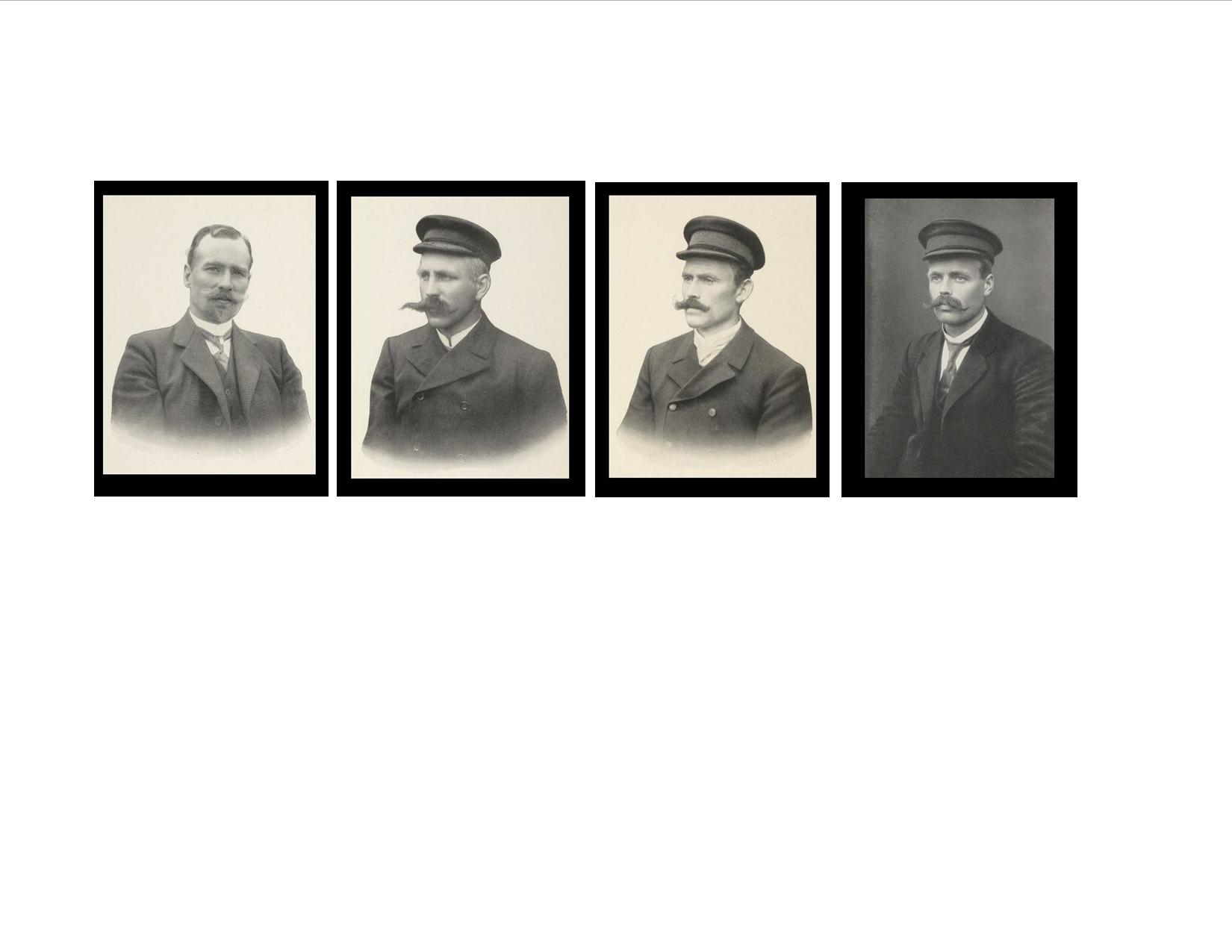
Amundsen’s party: Hassel, Whiting, Hanssen, and Bjaaland.
(Moustaches mandatory?)


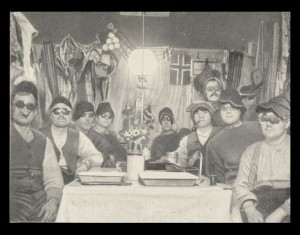
“It is true that I had worn nothing but a pair of
ordinary spectacles, with light yellow glasses, all the
autumn, and that they had proved excellent; but for
the long journey I was afraid these would give
insufficient protection. I therefore threw myself into
the competition for the best patent. The end of it was
that we all went in for leather goggles, with a little slit
for the eyes. The Bjaaland patent won the prize, and
was most adopted.”

Trying on the goggles


“In undertaking a sledge journey down there in
autumn or spring, the most extraordinary precautions
have to be taken to protect oneself against the cold.
Skin clothing is then the only thing that is of any use.”

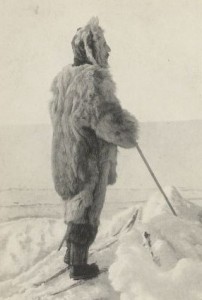
Amundsen’s party in their fur garb


“Lindstrom. He’s the man—he produces hot cakes with
astonishing dexterity; it almost reminds one of a juggler
throwing up balls, so rapid and regular is the process.
The way he manipulates the cake-slice shows a fabulous
proficiency. With the skimmer in one hand he dumps
fresh dough into the pan, and with the cake-slice in the
other he removes those that are done, all at the same
time ; it seems almost more than human !”

Pancakes for all


“After this we proceeded to the greatest
and most solemn act of the whole journey—the planting
of our flag. Pride and affection shone in the five pairs
of eyes that gazed upon the flag, as it unfurled itself with
a sharp crack, and waved over the Pole. I had determined
that the act of planting it—the historic event—
should be equally divided among us all. It was not for
one man to do this ; it was for all who had staked their
lives in the struggle, and held together through thick
and thin. This was the only way in which I could
show my gratitude to my comrades in this desolate spot.
I could see that they understood and accepted it in the
spirit in which it was offered. Five weather-beaten,
frost-bitten fists they were that grasped the pole, raised
the waving flag in the air, and planted it as the first at
the geographical South Pole.”

At the South Pole!


Description:
Amundsen, Roald. The South Pole :an account of the Norwegian Antarctic expedition in the “Fram,” 1910-1912. London : John Murray, 1912.
Persistent Link:
http://nrs.harvard.edu/urn-3:FHCL:9817971
Repository:
Widener Library
Institution:
Harvard University

With political strife almost palpable, the landmark 1860 US Presidential campaign moved through a series of pivotal moments where the direction and fate of the union vacillated between unity and conflict, meanwhile an atmosphere of distrust and apprehension loomed over the populations of the North and South. Opposing views on slavery, economics, and state rights were championed vehemently by representatives from both sides of the political fence. The political cauldron of 1860 bubbled up much more negativity, mudslinging, name calling, nasty remarks, outrageous claims, and defamation of character, than any of the prior presidential campaigns. In some ways, not much has changed in politics in over a century, except the media format and the speed of distribution. The long tradition of tossing barbs back and forth between candidates is alive and kicking in 2012. Back in 1860, print was king, and pamphlets provided an inexpensive manner in which to quickly disseminate opinions, ideology, and persuasive rhetoric. This pamphlet, The election of a Black Republican president :an overt act of aggression on the right of property in slaves : the South urged to adopt concerted action for future safety, by James Philemon Holcombe, a Professor of Law and Confederate Politician from Virginia, is a truly fascinating example of the type of rhetoric taking place at the time. Holcombe spoke fervently in favor of slavery and tried to incite the Southern population to resist what he saw as the the “evil” of a Black Republican Party. Ironically, Holcombe’s own parents did not support the perpetuation of the Southern slave system, having already freed their own slaves years before and relocated to the free state of Indiana. Nonetheless, Holcombe was vocal and committed to this cause and used his pamphlet as a venue for expressing his consternation over the election of a “Black Republican” president. At that time, the term “Black Republican” did not indicate an actual African American politician, but referred to those members of the Republican Party who were sympathetic to the abolitionist movement. Today, the pamphlet may appear to possess a bit of anachronistic irony, especially with the course of history in the Republican and Democratic parties over the past 150 years, as well as the forthcoming 2012 Presidential election involving an incumbent “Black” Democratic President running for re-election.

Holcombe statements foreshadow the inevitable war to come:

“Between the North and the South there is no real antagonism,
but the Black Republican organization proceeds upon
the assumption of one. It declares that between the free
labor of the North, and the slave labor of the South an
irrepressible conflict must take place until one gives way
to the other.”

“Is there anything short of this, which would be a more serious
aggression, whether we look at its immediate or future consequences,
than the election of a Black Republican President ? Can men be in
earnest who declare that this would not be for every substantial purpose,
an overt act of injustice ? Would it not be a declaration by the Northern
people of their final and deliberate intention to deprive us of our rights
and privileges under the constitution, as ascertained and settled
by the judgment of the highest court in the land?”

“If it is meant that we should remain in the Union, and resist
the inauguration of a Black Republican President by force, a
more dangerous and injudicious policy could not, in my judgment,
be suggested. The appeal to arms must necessarily lead to a
general civil war, of which no man could foresee the end.

Description:
Holcombe, James Philemon. The election of a Black Republican president :an overt act of aggression on the right of property in slaves : the South urged to adopt concerted action for future safety. Richmond : C.H. Wynne, Printer, 1860.
Persistent Link:
http://nrs.harvard.edu/urn-3:FHCL:5142158
Repository:
Widener Library
Institution:
Harvard University


Considered perfectly legitimate scientific disciplines during the first half of the 19th century, phrenology and physiognomy eventually became recognized as “pseudosciences” by the end of the century. But during its Victorian Age heyday, the popularity of phrenology was widespread from the scientific community to the general public. Phrenology was so popular and sensationalized that phrenology parlors appeared in Europe and America along with “automated phrenology machines” for self-diagnosis or as entertainment. What made it so popular was the notion that one could easily determine personality (and perhaps morality) from physical characteristics alone. A phrenologist’s focus was the relationship between a person’s character and the morphology of their skull. In the process of an examination, the phrenologist would evaluate, diagnose, and/or even predict a patient’s temperament through the measurement of the various “brain organs”.  These organs were identified as specific locations on, in, and around the skull, all of which were proposed and mapped out by the German physician Franz Joseph Gall in 1796. These brain organs, become generally accepted, even championed, by many budding neurologists as a valid diagnostic tool for studying the human brain. The origins of physiognomy, on the other hand, can be traced back much further than phrenology, and the lengthy discourse provided the foundation for phrenological theory. Dating back to early Greeks, Aristotle, in particular, believed strongly in physiognomy as an important and meaningful course of examination to make clear connections between the physical body and moral character. Johann Kaspar Lavater helped to revive the practice of physiognomy in 1772, with the publication of his own essays on the human face, which gained great popularity throughout Europe. Together these pseudosciences should not be viewed as fanciful, benign, or just misguided scientific endeavors of the 18th and 19th century, but rather portentous and troublesome practices, leading to or even perpetuating prejudices and long-standing biases. People could be easily categorized, labeled, and judged, not on merit or deed, but by their mere physical appearance. As a result, phrenology and physiognomy caught the interest of certain individuals with strong ideological convictions who wish to use these pseudosciences as justification for social, racial, religious, or political change.

Prof. A.E. Willis, physiognomist and phrenologist, published books on human faces, providing examples of certain physical attributes along with a character analysis.


“Godless character”


“Cute but Cold”


“Unprincipled and sneaky”


“One of those smiling, happy, I-do-not-care-in-for-a-good-time sort of
expressions”


Dr. Joseph Simms, also focused on faces, making connections to animal behavior. He also offered advice on how to chose the right companion for life.

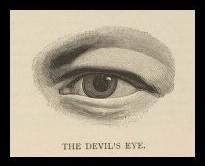
“The dove or round shape of the eye openings is the most unexceptionable
evidence of large mating love”


polyeroticity of the eye


“If you prize happiness in married life, do not marry one who is old
enough to be your father, or as young as children should be”


Prof. Nelson Sizer, Editor of the Phrenological Journal, is noted for making some 300,000 examinations in his lifetime

Phrenology map


Description:
Willis, A. E. The human face :come, view the face and see the soul engraved upon a living scroll. Chicago : A.E. Willis, 1884.
Persistent Link:
http://nrs.harvard.edu/urn-3:FHCL:8336701
Description:
Simms, Joseph. Human faces, what they mean!how to read personal character. New York, Murray Hill Publishing Company, 1887 [c1872, 1886].
Persistent Link:
http://nrs.harvard.edu/urn-3:FHCL:8519629
Description:
Sizer, Nelson. How to teach according to temperament and mental development, or, Phrenology in the school-room and the family. New York : S.R. Wells, 1877.
Persistent Link:
http://nrs.harvard.edu/urn-3:FHCL:956475
Repository:
Widener Library
Institution:
Harvard University


A-No.1—The Rambler

Well before Jack Kerouac was bit by the wanderlust bug and became an American icon and legend, there was another American road warrior who epitomized the drifter lifestyle and the “rambling man” persona. Leon Ray Livingston (aka “A-No.1”) (1872–1944) was the most notable rambler of the late 19th and early 20th centuries, taking to the trains and roaming some 500,000 miles world-wide over a span of 25 years. His story today has been largely forgotten, but at one time he was famous nationwide for his exploits, even taking up with Jack London on one coast to coast trip. A self-proclaimed “King of the Hobos”, A-No.1 is credited with developing the hobo symbols system to let fellow wandering souls know where to go for food and shelter, as well as places and people to avoid.  A-No.1 wrote at least a dozen books detailing his road adventures from the humorous to the grim. While he felt compelled to live the life of a rover, he discouraged others from choosing this same lifestyle.

“Perhaps some may think that a man who has
attained only the age of thirty-eight years has
hardly enough accrued experience to justify
him in writing an autobiography, but as I look back
over the crowded years since I first became a tramp,
I feel that the thousand and one odd and peculiar
experiences (such as never fall to the lot of the
ordinary mortal who is anchored in the city, village
or country) will justify publication.
Were other men of my age to write their life’s
story, it could ordinarily be summed up with Caesarian
brevity: “I was born; I learned a trade, and I
am beginning to have money in the bank.” But
for a man who has been wandering since his eleventh
year, and has been leading the life of a tramp, to try
and tell his experiences, is quite a different undertaking.”

“There is a dark side to a tramp’s life: —for every mile
stolen on trains, there is one escape from a horrible death;
for each mile of beautiful scenery and food in plenty,
there are many weary miles of hard walking with no food
or even water —through mountain gorges and over parched
deserts; for each warm summer night, there are ten bittercold,
long winter nights; for every kindness, there are a
score of unfriendly acts.  A tramp is constantly hounded by
the minions of the law; is shunned by all humanity, and
never knows the meaning of home and friends. To tell
the truth, it is a pitiful existence all the way through, and what
is the end? It is an even ninety-nine chances out of a hundred
that the end will be a miserable one —an accident, an
alms-house, but surely an unmarked pauper’s grave.”

—A-No.1

The Curse of Tramp Life


Hobo Camp Fire Tales


The Trail of the Tramp


Signs and Symbols by A-No.1


Eight of A-No.1 books are available at Harvard Library

Description:
A-No. 1. Life and adventures of A-No. 1, America’s most celebrated tramp. Cambridge Springs, Pa. : A-No. 1 Pub. Co., c1910.
Persistent Link:
http://nrs.harvard.edu/urn-3:FHCL:8623664
Description:
A-No. 1. Hobo-camp-fire-tales. Cambridge Springs, Pa. : A-No. 1 Publishing Co., c1911.
Persistent Link:
http://nrs.harvard.edu/urn-3:FHCL:8623663
Description:
A-No. 1. The curse of tramp life. Cambridge Springs, Penn. : A-No. 1 Pub. Co., c1912.
Persistent Link:
http://nrs.harvard.edu/urn-3:FHCL:8623665
Description:
A-No. 1. The trail of the tramp. Cambridge Springs, Penn. : A-No. 1 Pub. Co., c1913.
Persistent Link:
http://nrs.harvard.edu/urn-3:FHCL:8623666
Description:
A-No. 1. The adventures of a female tramp. Erie, PA : A-No. 1 Pub. Co., c1914.
Persistent Link:
http://nrs.harvard.edu/urn-3:FHCL:8623659
Description:
A-No. 1. The ways of the hobo. Erie, Penn. : A-No. 1 Pub. Co., c1915.
Persistent Link:
http://nrs.harvard.edu/urn-3:FHCL:8623661
Description:
A-No. 1. The snare of the road. Erie, Penn’a : A-No. 1 Pub. Co., c1916.
Persistent Link:
http://nrs.harvard.edu/urn-3:FHCL:8623662
Description:
A-No. 1. Mother Delcassee of the hoboes :and other stories. Erie, Pa. : A-No. 1 Pub. Co., c1918.
Persistent Link:
http://nrs.harvard.edu/urn-3:FHCL:8623660
Repository:
Widener Library
Institution:
Harvard University

In the 1880’s, M. Alphonse Bertillon, French policeman and researcher, developed his own scientific system of criminal classification, named anthropometry, or simply known as Bertillon System. The Bertillon system revolved around the careful measurements of physical attributes, such as head length and width, or the length of the middle finger, or the distance of the elbow to fingertip, etc., in order to monitor, track, and more reliably identify or apprehend repeat offenders. Prior to these novel methods, apprehension and identification of criminals was often relegated to specious eye-witness accounts. His research lead directly to modernization of forensics, such as mug shots and fingerprinting. Bertillon’s innovative methods were quickly adopted by penal systems around the world, including the United States. Charles E. Fenton, the Superintendent of the House of Correction in Chicago, was a strong advocate of these methods and promoted them as essential for a safe and secure society. In his 1889 report to the National Prison Association, he states with conviction:

“the Bertillon system should be followed in every prison,
everywhere, as it makes deception impossible; and the
system of registration in a central office, and of an
interchange of information between offices through the
central office, is not only desirable, but it is absolutely
necessary, if it be the aim to prevent the commission
of crime by discharged convicts, or their punishment
as recidivists, if again offending.”

“…paroled and discharged prisoners are often
weak and not reliable, notwithstanding the promises
they have made. Such men should be made to
realize that, in case of relapse and arrest, they will be
identified, and extra penalties will be imposed….
If he realizes that, if detected in crime, he will certainly
be identified and prosecuted, and an increased penalty
be given because of his having been previously convicted,
he will turn away, and avoid temptation, and say,
“Get thee behind me, Satan! it does not pay to commit crime! “”

Tools of the trade

You must know the nose

Description:
Felton, Chas. E. The identification of criminals :its value as a preventive of crime, and the importance of unity of action among prison officials in securing a fixed and general system. Chicago : Knight & Leonard Co., 1889.
Persistent Link:
http://nrs.harvard.edu/urn-3:FHCL:8632008
Repository:
Widener Library
Institution:
Harvard University

Dating back to the mid-nineteenth century, publishers produces what has been commonly known as “salesman samples” or “dummies”.  Booksellers used these samples in their door-to-door sales to entice customers and create interest in soon-to-be published titles.  These sample books promoted the virtues of the publisher’s offerings, such as elaborate illustrations, or the use of  high quality inks, stylish typefaces, durable paper, and/or in some cases, the choice of binding styles and cloth.  The dummies emulated the structure of the common Jacob’s Ladder toy,  enabling a salesman to flip back and forth between titles and highlighted illustrations.  Ruled sheets were placed at the back of the volume to record sales transactions and the name and address of the subscriber.  A prospectus sheet was often found at the beginning to help coach the salesman on the big sales-pitch.

“Our Matchless 50 cent book:  On the opposite side you see the cover design of our beautiful Fifty Cent Book. It is bound in boards, with handsome lithograph covers, especially designed and engraved for us, and copyrighted. It is within itself a work of art, as is also the back cover to the book, both of which will charm the little folks. The complete book contains about 130 pages, making it four times as large as the specimen pages shown in the prospectus.  NOTICE PAPER and PRINTING and BINDING ARE FAR BETTER THAN IS USUAL FOR THE PRICE.”

The specimen volume would advertise thematic works that complemented one another for gift-giving or personal library collections.

Typical prospectus


spine sample choices for one title


Chromolithograph Title Page Funny Stories


Cloth binding for American Pioneer Life


Eye-catching illustrations–HAWKEYE AND THE BEAR TAKE THE FOX PRISONER.

Description:
Funny stories and jolly plays for winter nights and summer days :a collection of catchy rhymes and amusing stories for our little ones to which is added the Child’s book of trades and Visit of St. Nicholas : [publisher’s sample]. Chicago, Ill. : Monroe Book Co., [1897].
Persistent Link:
http://nrs.harvard.edu/urn-3:FHCL:8730931
Description:
Fairy tales in easy words. New York : McLoughlin Bros., c1911.
Persistent Link:
http://nrs.harvard.edu/urn-3:FHCL:9829161
Description:
The Bluebell book of stories. New York : McLoughlin Brothers, [1903?].
Persistent Link:
http://nrs.harvard.edu/urn-3:FHCL:9829160
Description:
Animal friends. New York : McLoughlin Bro’s, [190-?].
Persistent Link:
http://nrs.harvard.edu/urn-3:FHCL:9829159
Description:
Shea, John Gilmary. The story of a great nation, or, Our country’s achievements :military, naval political and civil,. New York : Gay Brothers and Company, [1886].
Persistent Link:
http://nrs.harvard.edu/urn-3:FHCL:9826193
Description:
Half hour talks on character building :by self-made men and women : a stimulating volume for men and women in every walk of life. It will arouse to consciousness the spirit of moral adventure which leads to the power of initiative in the uplifting and building of noble characters : an entirely new and striking book, thoroughly human, interesting and sympathetic showing in a kindly way how to solve the problems and overcome the obstacles of everyday life : a practical book for every member of the family. [Chicago, Ill.?] : A. Hanning, c1910.
Persistent Link:
http://nrs.harvard.edu/urn-3:FHCL:9826916
Repository:
Widener Library
Institution:
Harvard University

The Victorian Cyclist

The growing popularity of cycling in the late 19th century encouraged the publication of a number of guides for the enthusiast and novice alike. Victorian England, in particular, took to the new sport with vim and vigor. The book, Cycling, published under the Badminton Library of Sports and Pastimes series, offers a unique glimpse into various cultural aspects of the sport during this time period, including such topics as racing, women, dress, and touring clubs. The book is also loaded with details about manufacturing, equipment, statistics, and history. Many of the  illustrations peppered throughout the book are by the noted illustrator/artist Joseph Pennell.

In the streets of our great cities and in highways and
byways throughout the land, carriages, swift and serviceable,
propelled by the power of human muscles alone, have become
common. The sight of a traveller of either sex, seated on a
light machine, and proceeding with considerable rapidity and
apparently but little exertion, is so usual that the wayfarer hardly
turns his head to look at the accustomed sight. Yet it is but a
very short time ago that the passage of a cyclist was wont to
produce an exhibition of considerable excitement, and sometimes
even demonstrations of hostility.

 The tricycle-bicycle controversy

One of the great advantages of the tricycle over its two-wheeled
rival is that it permits the rider to stop at will. A
bicycle, on the contrary, only retains its stable equilibrium
on the condition of being kept in constant motion. An
attempt at a halt is instantly rewarded by an upset. An active
rider can dismount very quickly ; but an elderly gentleman,
however skilful he might be, would feel the impossibility of
performing the necessary gymnastics if he should be so ill advised
as to ride a bicycle through crowded streets. The construction
of the bicycle, too, makes it an impossible mount for
ladies, to whom the tricycle offers no sort of difficulty. For
town work and for the use of the gentler sex the tricycle is
decidedly the more convenient machine. On country roads,
and for young and active riders, it is a matter of taste which
should have the preference.

Health benefits considered

It is for this reason, therefore, that it is suggested 
to the novice that he should go to a doctor who has some
knowledge of athletics. There are many, unfortunately,
who cannot stand the mild strain of a ride upon the
road, and such men would not of course venture to tempt fortune
on the racing path ; there are others also who, although they are
free from disease, might possibly damage themselves by a vigorous
course of cycling, and they also should avoid the path and
its concomitant excitement and exertion; but there are men —
many of them— to whom the hardest physical exertion is, or
would be, of the greatest practical benefit. These are men
with good physical powers, sound in wind and limb, without
any heart or lung trouble, and with an active digestion.
Such men, unless they can take a sufficiency of exercise, absolutely
suffer from those very physical advantages which they
enjoy. They grow fat and unwieldy, and in the train of the
abnormal development of adipose tissue follows any number of
ailments which might have been avoided by exercise.

How to dress appropriately

Exhilarating and enjoyable as is the sport of cycling, and healthy as it has proved itself to be, its enjoyment and its health-giving qualities are wholly dependent upon one very important point : a correct and suitable costume. It must not be forgotten that cycling is, after all, an athletic exercise, that it causes perspiration when ardently followed out, and for that reason alone it requires its votaries to be properly costumed in a dress suitable and convenient for the work in hand. It may be well to say a few words on this question of appropriate attire, as a good many riders are even now doubtful about the propriety of donning a regular cycling dress. In the earlier days of the sport, a pedestrian or a rider in cycling garb was sufficiently a novelty to attract a good deal of annoying attention in any town he might visit. But this is no longer the case, and a correctly dressed cyclist, more especially if he adopts the C. T C. costume, is so common an object, that he passes without special notice.

Women cyclists on the scene

By far the larger number of our lady riders began their
cycling experiences upon sociables or tandems with their
husbands and brothers, and thus gained by degrees the experience
and confidence necessary for the fullest enjoyment of
a cruise upon wheels, eventually attaining the self-reliance
necessary for a trip upon a single machine. It is perhaps upon
a tandem with a gentleman companion that the lady rider looks
most at home, and when, clad in a well-fitting and becoming
costume, she flits by on the front seat of one of these light and
speedy machines, the most sceptical observer is converted to the
same view. This fact is fully recognised by the general public, who
have been quite educated up to the sight of lady tricyclists
perambulating the roads, and gaze upon them with the same sort of indifference with which a nineteenth-century horse gazes upon a railway train or a steam roller.


Description:
Albemarle, William Coutts Keppel. Cycling. London : Longmans, Green, 1891.
Persistent Link:
http://nrs.harvard.edu/urn-3:FHCL:2309546
Repository:
Widener Library
Institution:
Harvard University


« Newer Posts - Older Posts »