Posts filed under 'audio'
The LibraryBox Project (along with other emerging projects like PirateBox, occupy.here, IdeasBox, and others) is an attempt at bridging the divide in delivery of digital information in areas where there is a lack of communications infrastructure or where that infrastructure has been damaged or is overly monitored or controlled. As self-contained, non-connected portable servers, these devices can be used to circumvent governmental firewalls, distribute information in areas of political upheaval, reach the most remote areas to deliver healthcare information, and help recovery efforts after natural disasters.
In this presentation Jason Griffey — founder and principal at Evenly Distributed (http://evenlydistributed.net) technology consulting and creation firm for libraries, museums, education, and other non-profits — gives an overview of the LibraryBox project and its current state, goals and development roadmap, and a discussion of possible next directions and needs.
 Download the MP3
…or download the OGG audio format!
More info on this event here.
September 24th, 2015
Berkman Center Faculty Chair Jonathan Zittrain leads a dynamic introduction to the Berkman Center for Internet & Society’s history, and the network of researchers, activists, faculty, students, technologists, entrepreneurs, artists, policymakers, lawyers, and more who are influencing the future of the Internet.
Download the MP3
…or download the OGG audio format!
More info on this event here.
September 17th, 2015
 Listen:or download | …also in Ogg
Ethnographer Whitney Phillips embedded with the trolls of 4chan, observing for years how anonymous members of its subversive “/b/” forum memed, pranked, harassed, and abused, all for the “lolz” — the thrill of doing something shocking.
The result: a book, “This is Why We Can’t Have Nice Things: Mapping the Relationship between Online Trolling and Mainstream Culture,” that sheds light on how and why trolls do what they do.
More than pushing the boundaries of taste within themselves — the “/b/” board recently made headlines for a case in which anonymous members allegedly goaded one of their own to cut off his own toe — troll behavior has had an incredibly broad impact on society. Trolling shaped the way social platforms and conversations on public forums take place. It is in no small part due to the spread of troll culture that comments sections, Facebook threads, and Twitter conversations can be minefields to productive conversation; the troll dialect is better equipped for shock and ironic bigotry than for sincerity, and a sincere conversation is just begging to be disrupted, especially when you disagree with your target.
But while wrench-throwing can and has been a very important tool in online discourse, the web has started to outgrow trolls. In 2003 when 4chan was launched, there were under 700 million people on the Internet (predominantly higher income, younger, white, western, male, and native English speakers), compared to 3.2 billion people today from many backgrounds. The incredible diversity of individuals all trying to have conversations on the same platforms has increased demand for civility, understanding, and inclusiveness, even as the conversations can seem more and more cacophonously problematic. And this threatens to make trolling less funny.
Whitney joins us this week to talk about how troll culture has changed over the years, and what platforms can do to temper darker forms of discourse.
Reference Section:
Follow Whitney Phillips work
Her book “This is Why We Can’t Have Nice Things: Mapping the Relationship between Online Trolling and Mainstream Culture”
Flickr photo courtesy of zzathras777
Music courtesy of _ghost
Listen up! Comment on the show! Tweet us! Find us on Soundcloud!

 Subscribe to Radio Berkman
This week’s episode produced by Elizabeth Gillis and Daniel Dennis Jones.
September 17th, 2015
 Listen:or download | …also in Ogg
Bitcoin is having its 7th birthday, and its promise to change the way the world thinks about money is looking less and less hyperbolic.
For one, the block chain technology underlying Bitcoin – the public ledger that makes the exchange transparent and accountable – is now being used to clean up Wall Street. A block chain-inspired service announced recently could open up the practice of lending stocks, and help prevent the kind of out-of-control short selling that led to the crash of 2008.
But there are a lot people still don’t understand about Bitcoin and block chain. We spoke with incoming Berkman Fellow Patrick Murck of the Bitcoin Foundation to explain.
Flickr photo courtesy of btckeychain
Music from Artist of the Fortnight
Reference Section:
Block chain takes on Wall Street
The History of Bitcoin
The whitepaper that launched Bitcoin
Listen up! Comment on the show! Tweet us! Find us on Soundcloud!
Subscribe to Radio Berkman
This week’s episode produced by Elizabeth Gillis, Zoe Wood, and Daniel Dennis Jones.
August 13th, 2015
 Listen:or download | …also in Ogg
The market for recorded music has undergone at least three major reinventions since the dawn of the Internet. At the turn of the century illegal downloading ate away at the music industry’s bottom line. Then the iTunes music store made it easy to buy music again, albeit disaggregated from its album form.
Then along came streaming. The combination of ubiquitous Internet connectivity and bottomless consumer appetite for music has led to the success of applications like Pandora, Spotify, and Rdio which allow users to access entire music catalogs from virtually anywhere for next to nothing.
Streaming has worked. In 2014 alone, at least 164 billion tracks were played across all streaming services according to Nielsen. And these streaming companies are raking in incredible amounts of cash from advertising and user subscription fees.
Where does the money go? A recent study from Berklee College of Music’s Institute for Creative Entrepreneurship showed that 20 to 50 percent of music revenues might never make it to their rightful owners. In some cases artists might get 20% or less of the already tiny dollar amounts coming in from streaming services.
But no one knows for sure. In a New York Times Op-Ed this week David Byrne asked the music industry to “open the black box,” and let everyone – the artists, the labels, the distributors, the listeners – know exactly where your money goes.
On this week’s episode of the podcast we try to find out if we can crack into the stream and figure out where the money is flowing.
Flickr photo courtesy of hobvias sudoneighm
Reference Section:
Berklee College of Music’s Institute for Creative Entrepreneurship’s study Transparency and Money Flows in the Digital Music Industry
David Byrne’s New York Times Op-Ed
Our full interview with Damon Krukowski
Listen up! Comment on the show! Tweet us! Find us on Soundcloud!
Subscribe to Radio Berkman
This week’s episode produced by Elizabeth Gillis, Beatrice Igne-Bianchi, and Daniel Dennis Jones.
August 5th, 2015
 Listen:or download | …also in Ogg
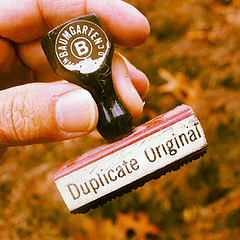
With 316 million users posting 500 million tweets a day, someone is bound to write an unoriginal tweet now and then.
But there are some Twitter users whose entire existence relies completely on plagiarizing tiny jokes and relatable observations created by other Twitter users. Many plagiarizing accounts have follower numbers ranging from the thousands to the millions. Meaning their exposure can lead to career opportunities and sponsorships built on the creativity of others who are just getting started in their writing careers.
So it was not without excitement that Twitter users found out last week that they can report plagiarizing accounts to Twitter under the Digital Millennium Copyright Act, and have these copied tweets removed.
But now we’re forced to ask the question: are jokes protected under copyright?
We asked Andy Sellars of Harvard Law School’s Cyberlaw Clinic to weigh in.
Flickr photo courtesy of wwworks
Music from Podington Bear “Bright White
Reference Section:
How many tweets could there be?
Twitter is deleting stolen jokes
@olgalexell responds
Check out the Chilling Effects database
Listen up! Comment on the show! Tweet us! Find us on Soundcloud!
Subscribe to Radio Berkman
This week’s episode produced by Elizabeth Gillis and Daniel Dennis Jones.
August 3rd, 2015
 Listen:or download | …also in Ogg
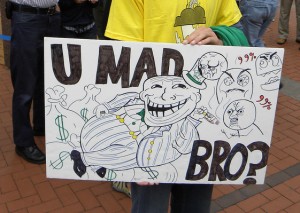
Reddit is sometimes called “the frontpage of the Internet.” 170 million people a month help upload, curate, and make viral the cat photos, prank videos, and topical discussions that help fuel our neverending thirst for content.
But recent moves by Reddit management to tighten up their content policy have threatened what is seen as the fundamentally “free speech” culture at Reddit.
David Weinberger and Adrienne Debigare recently wrote about Reddit’s crossroads for the Harvard Business Review.
They joined us this week to talk about the culture of Reddit, free speech, and just who gets to make these decisions anyway?
Credits:
Flickr photo courtesy of fibonacciblue
Music from Neurowaxx and Timo Timonen
Reference Section:
How Reddit the Business Lost Touch With Reddit the Culture
Reddit’s community responds to the changes
Internet Monitor’s roundup of highlights from the controversy
Listen up! Comment on the show! Tweet us! Find us on Soundcloud!
Subscribe to Radio Berkman
This week’s episode produced by Elizabeth Gillis and Daniel Dennis Jones.
July 27th, 2015
 Listen:or download | …also in Ogg
Why are over 450 towns in the US building their own high speed Internet networks?
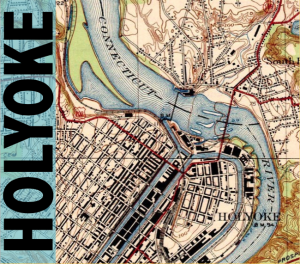
Let’s look at the example of the small town of Holyoke, Massachusetts.
A few years back the town’s mayor asked if the local cable or telephone companies wanted to build a fiber network to serve local schools and municipal buildings. The companies declined. The project was turned over to the local gas and electric utility, HG&E. Eighteen years later, HG&E have expanded this network to serve local businesses, and even other towns in the area. And it turns out this investment has more than paid for itself.
On this week’s episode we talk about what happens when municipal utilities and companies compete to provide local Internet services.
Credits:
Music by Morgantj “Fresh Doughnuts”
Reference Section:
The report: Holyoke: A Massachusetts Municipal Light Plant Seizes Internet Access Business Opportunities
A terrific map of the 450+ communities deploying their own broadband
Listen up! Comment on the show! Tweet us! Find us on Soundcloud!
Subscribe to Radio Berkman
This week’s episode written and produced by Elizabeth Gillis, with Daniel Dennis Jones.
July 15th, 2015
One of the few clear priorities of the federal Communications Act is to ensure that all Americans have reasonably comparable access to the Internet without respect to whom or where they are. Yet, in spite of this, the main focus of policymakers and legal scholars in Internet policy today has been on promoting innovation, a concept that Congress barely invokes in the statute.
In this talk, Olivier Sylvain — Associate Professor at Fordham Law School — will critique this prevailing approach to Internet regulation, anbd suggest that the singular focus on innovation could starkly exacerbate existing racial, ethnic, and class disparities because the quality of users Internet connections refract through those persistent demographic variables.
Download the MP3
…or download the OGG audio format!
More info on this event here.
July 15th, 2015
 Listen:or download | …also in Ogg
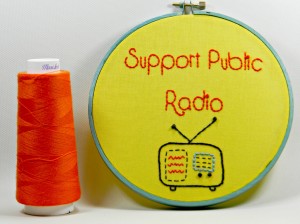
Public spaces function based on a varying give-and-take relationship with community members. Publicly supported media — whether it be college radio, a local NPR station, cable access, or PBS — shares the word “public,” but traditionally doesn’t have the same relationship with members as other “public” institutions, for examples parks and libraries.
On this episode of Radio Berkman we speak with Nieman Fellow Melody Kramer who is researching what it means to be a member of a public or community radio station. Kramer pulls from examples at stations all over the country of people supporting their public radio stations in non-financial ways, including code and story ideas.
You can see some of what she’s uncovered on her github.
Credits:
Music by Alialujah Choir “Building a Nation”
Photo by Hey Paul Studios
Reference Section:
Melody’s github, where you can fork her code!
Video of her recent talk at the Berkman Center
More about Melody’s work
Listen up! Comment on the show! Tweet us! Find us on Soundcloud!
Subscribe to Radio Berkman
This week’s episode produced by Elizabeth Gillis and Daniel Dennis Jones.
July 9th, 2015
Next Posts
Previous Posts