Winter greetings from the Lothar and Eva Just Film Stills Collection
December 21st, 2011
Season’s Greetings!
One of our largest projects of the past few years is nearing completion. The Lothar and Eva Just Film Stills Collection is in the final stages of processing. It has been handled in two main batches, the first of which is now search-able through Harvard’s finding aid database, OASIS.
To view the finding aids, search Lothar and Eva Just Film Stills Collection and limit by repository Harvard Film Archive.
If, for instance, you are looking for material for films directed by Frank Capra, you may search by typing Frank Capra into the search field and limit by repository Harvard Film Archive. One of the results will be the Lothar and Eva Just Film Stills Collection, and you will see there is material for eight of his films and one miscellaneous item.
Due to its large size, the finding aid is split into five parts, organized alphabetically by director’s last name. The finding aid will be updated again in June when the second and final section of the processing has been completed. The second portion of the finding aid will list only a director, and not each of the films represented.
The material listed in the finding aid is available for research at Harvard.
Posters from this collection will have their own finding aid.

Kaspers Reise zu den Zwergen, (Hella Mora, 1954, hand colored lobby card, from the Lothar and Eva Just Film Stills Collection)
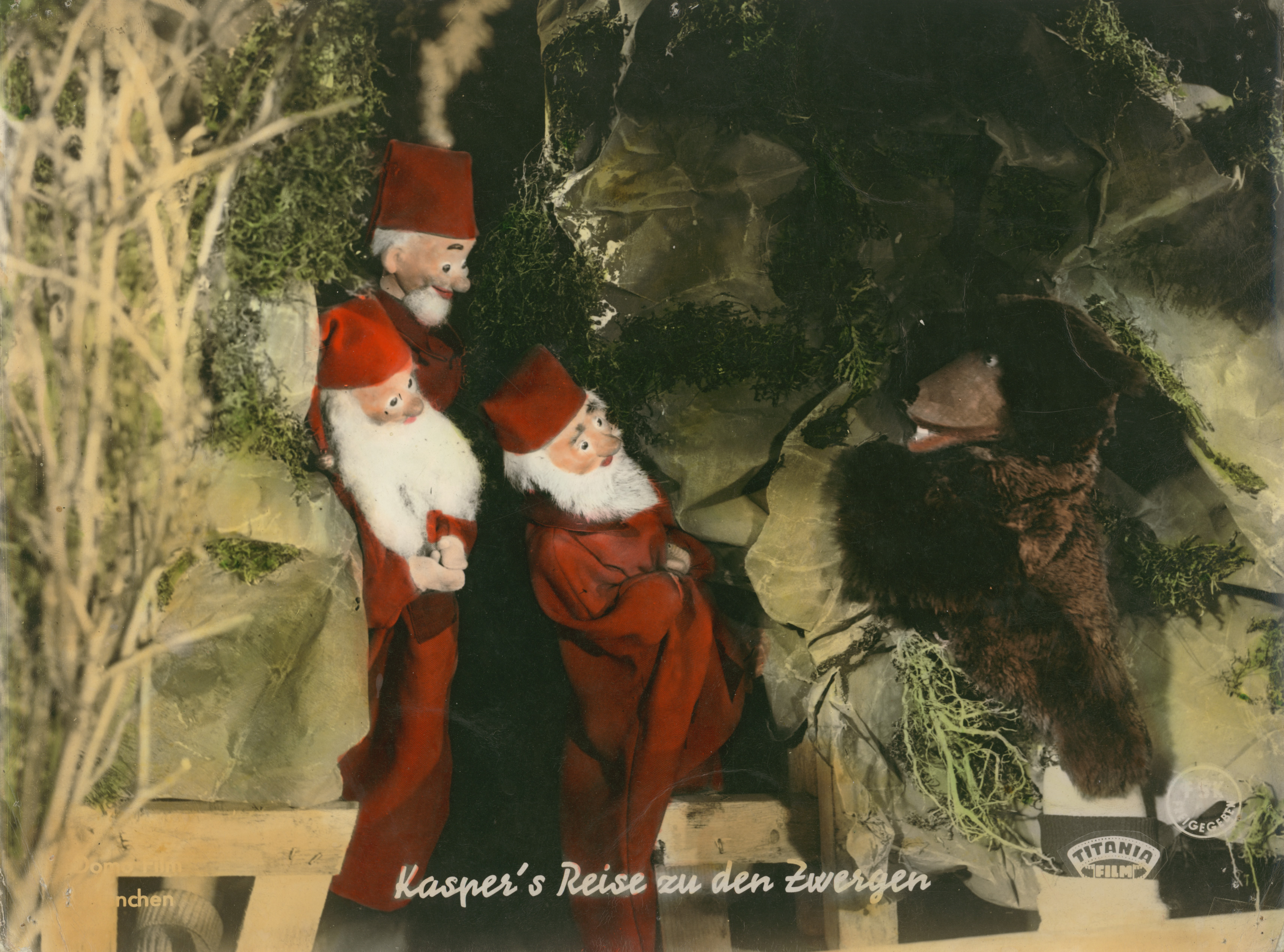
Kaspers Reise zu den Zwergen, (Hella Mora, 1954, hand colored lobby card, from the Lothar and Eva Just Film Stills Collection)

Kaspers Reise zu den Zwergen, (Hella Mora, 1954, lobby card, from the Lothar and Eva Just Film Stills Collection)
small gauge film storage
December 20th, 2011
We have a number of home movie collections at the HFA and we are always adding more. Every year we host Home Movie Day, helping the public watch home movies on formats they may not be able to watch at home.
A problem we have come across time and again in these collections is film stored on grey plastic reels that have white stuff on them. The white stuff can be light or heavy. It occurs on grey plastic reels, some of which are labeled TENITE. Tenite is a wood-based plastic made by Eastman, first developed in 1929.
The white stuff isn’t mold; it’s the result of the plastic decomposing.
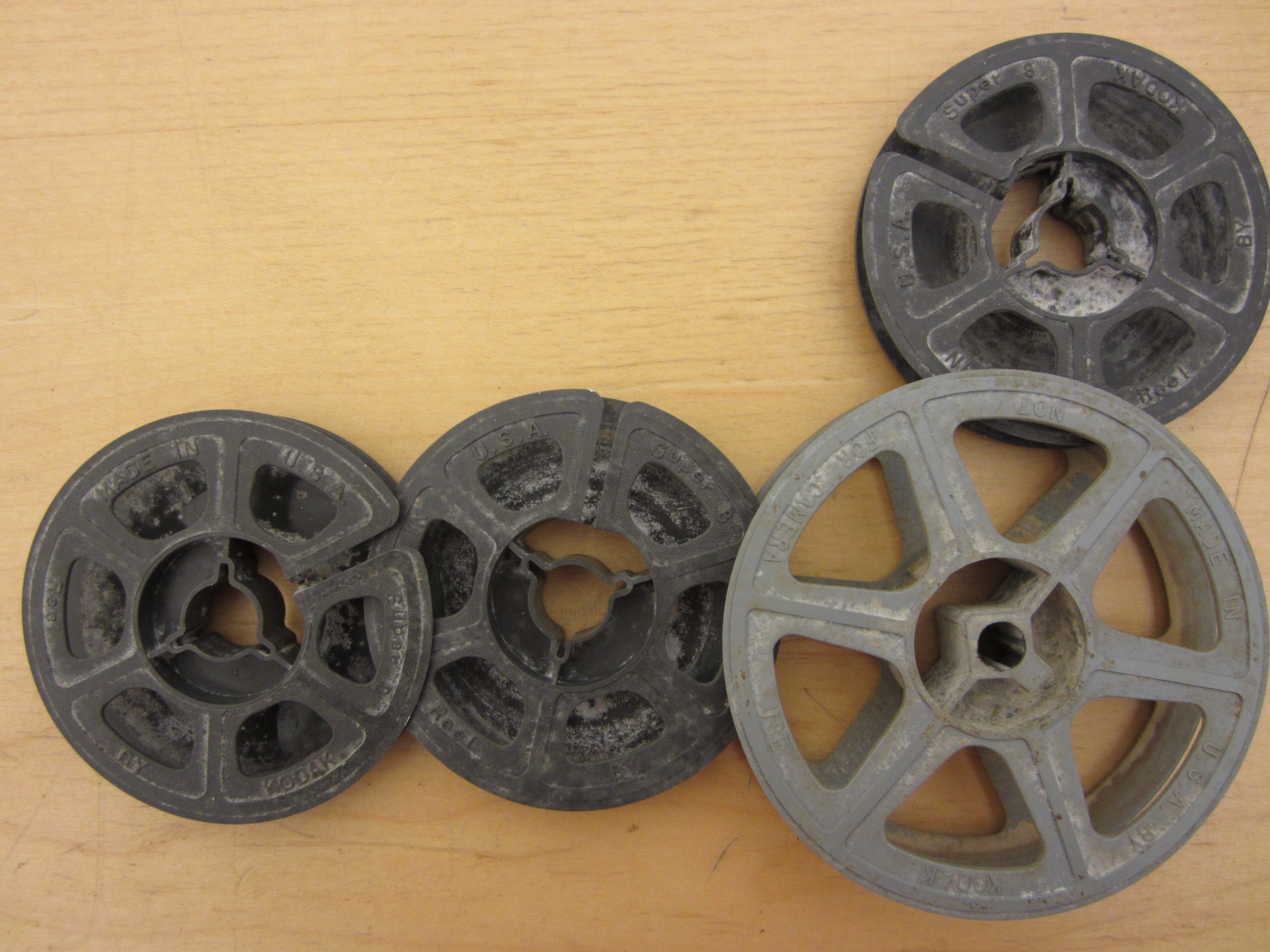
Above: decomposing Super 8 and 16mm film reels by Kodak
The decomposing reels smell “like vomit,” a technical description in the wonderful world of plastics. Weissman Preservation Center staff member Zach Long tested the super 8 reels (which were not marked Tenite), and determined the reels are most likely made of cellulose acetate butyrate.

Above: actively decaying super 8 reels

Above: In early stages of decomposition, the reels have only a small amount of white on them and do not smell.
If you find you have film on grey plastic reels or reels labeled TENITE, we recommend putting them on different reels and throwing the old reels away.
* We recommend wearing plastic gloves when handling these reels! *
Even if the reels are not yet decaying, they are good candidates for this problem. It is safer to store your films on a different type of reel. For 8mm or Super 8 we use polystyrene reels, which are not ideal but are better than metal or cellulose acetate butyrate. Your film will thank you!
Zdenek Miler
December 16th, 2011
From the Just Collection, some images from Zdenek Miler’s Puppy films. This Czech animator is best known for his character the animated mole ‘Krtek’. Miler made over 70 films.

Jak slunícko vrátilo stenátku vodu (1960) AKA How the Sun Returned Water to the Puppy

Jak stenátko chtelo malé pejsky (1960) AKA How the Puppy Wanted Little Dogs
Happy Halloween from The Lothar and Eva Just Film Stills Collection
November 1st, 2011

Dawn of the Mummy (Frank Agrama, 1981, USA/Egypt/Italy) lobby card
Please enjoy these scary images, and then go watch some horror movies. ‘Tis the season!
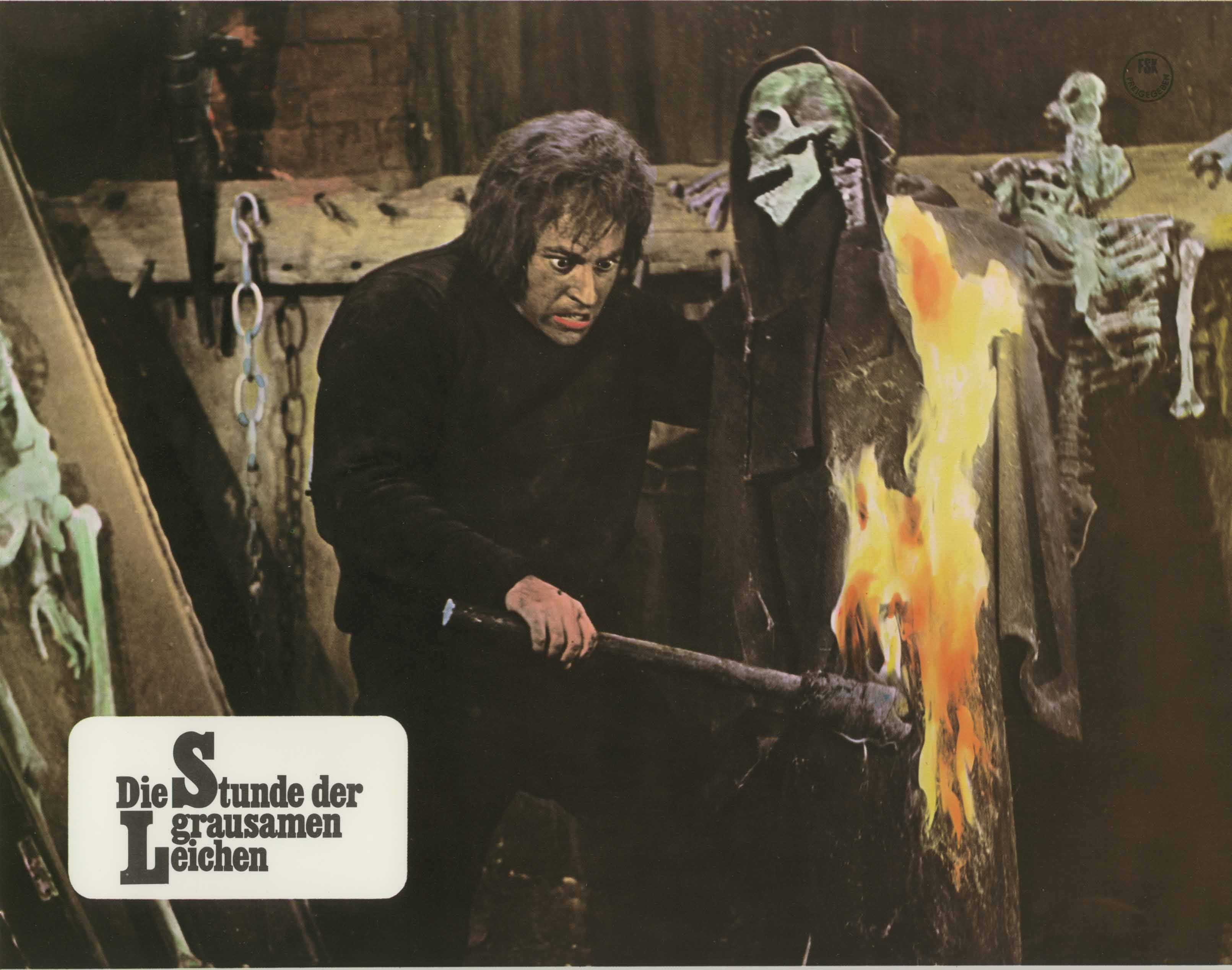
El jorobado de la Morgue AKA Hunchback of the Morgue (Javier Aguirre, 1973, Spain) lobby card
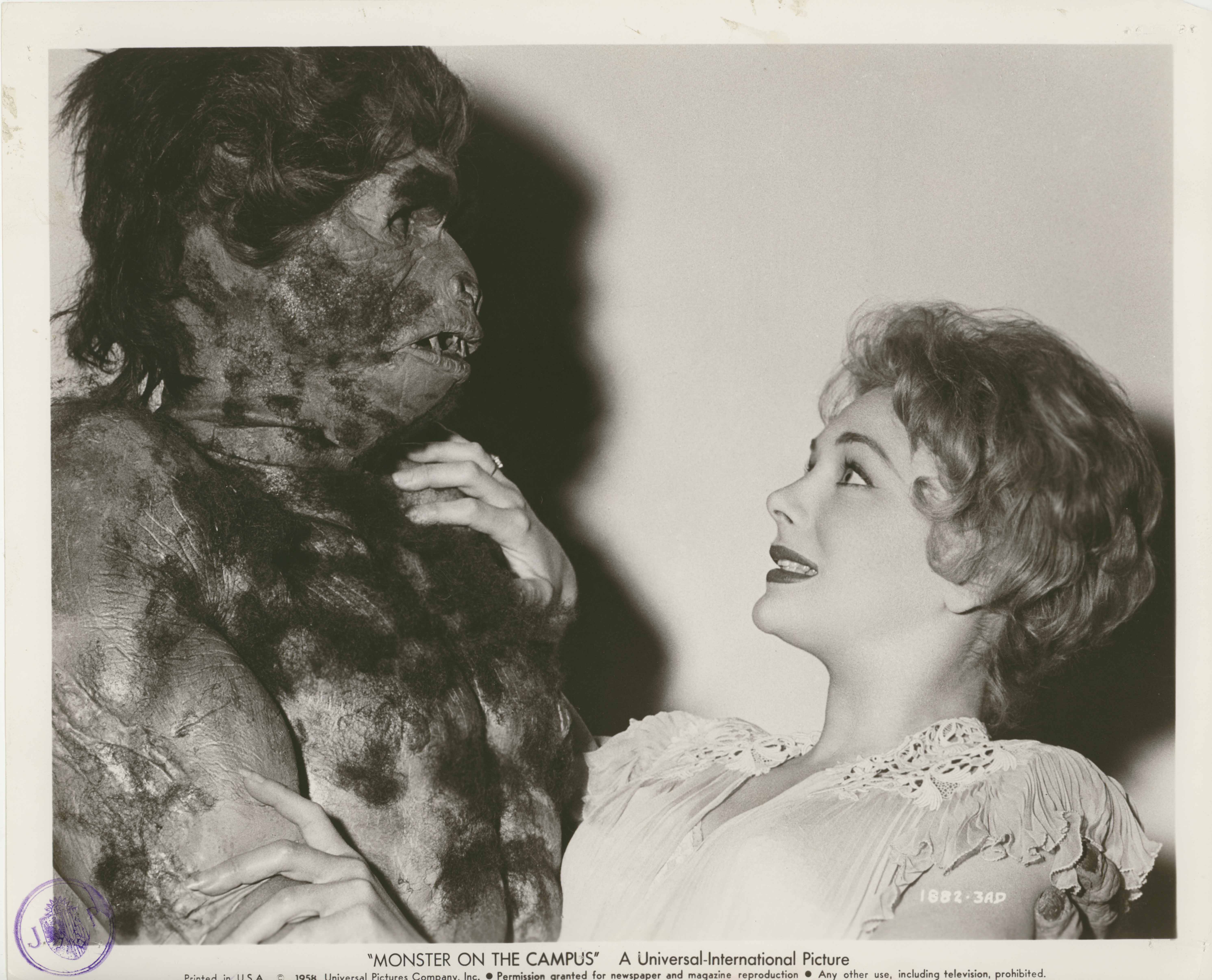
Monster on Campus (Jack Arnold, 1958, USA) film still
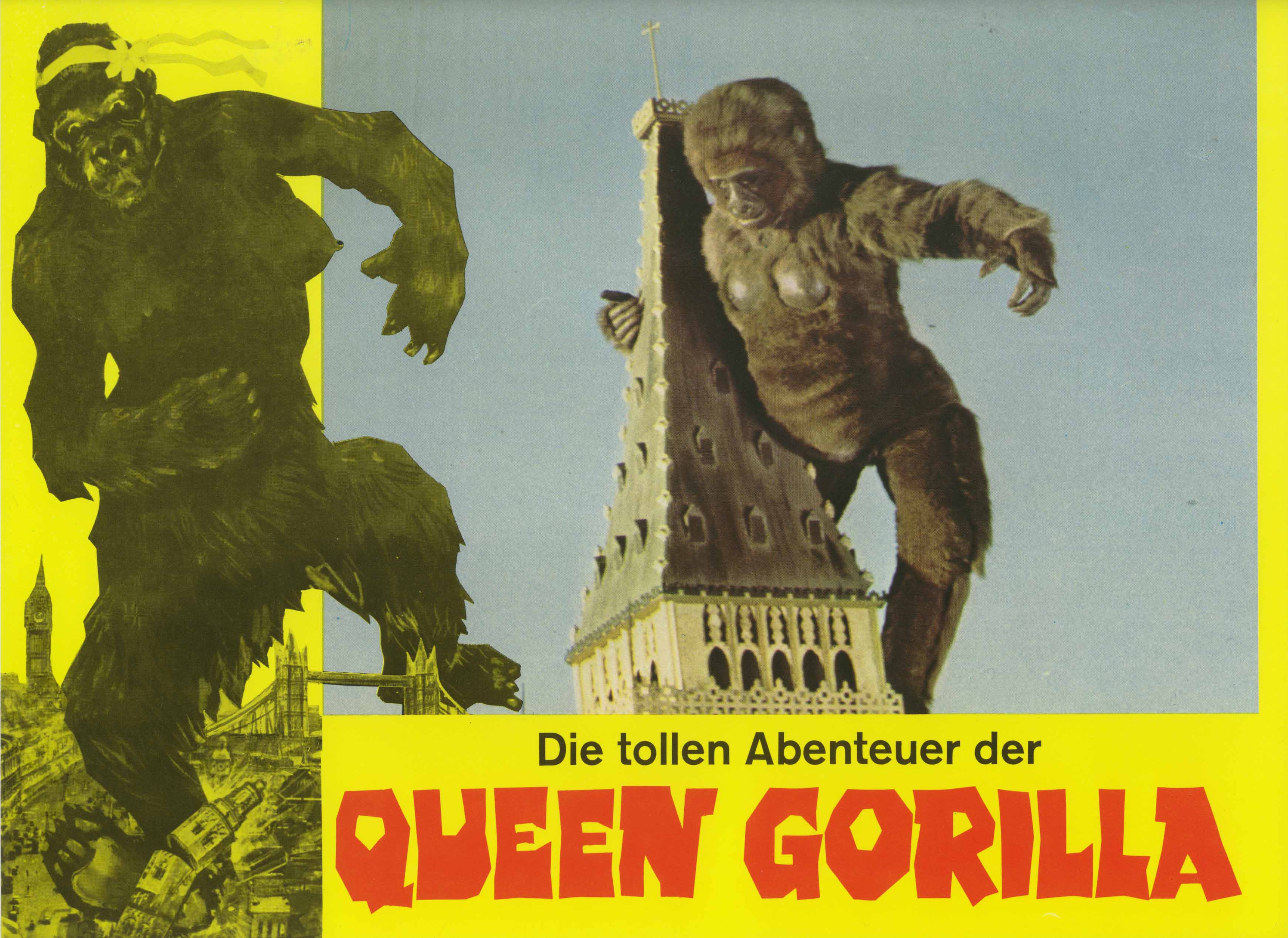
Queen Kong (Frank Agrama, 1976, UK / France / West Germany / Italy) lobby card
digging for treasures
October 26th, 2011

Today we had a colleague from another part of Harvard come by with some donors and their 1930s & 1940s 8mm films.
While we generally utilize the Steenbeck or the KEM editing tables for viewing 16mm or 35mm prints, when it comes to the small gauge formats, the choices are different. Shrunken, brittle 8mm and super 8 films that won’t stand the stress of projector gears are viewed on tabletop viewers that are very gentle on the perforations. The image, however, is never as bright as we would like, and the image area is small. When the film is in good shape, we like to be able to project it, especially on occasion when there is more than one person who needs to see it.
I inspected & cleaned the films, repaired some splices, added leader & determined the films were project-able. We gathered in the Conservation Center’s little theatre, where I laced up our 8mm projector (I call it the Cadillac of 8mm projectors), the Bolex-Palliard M8.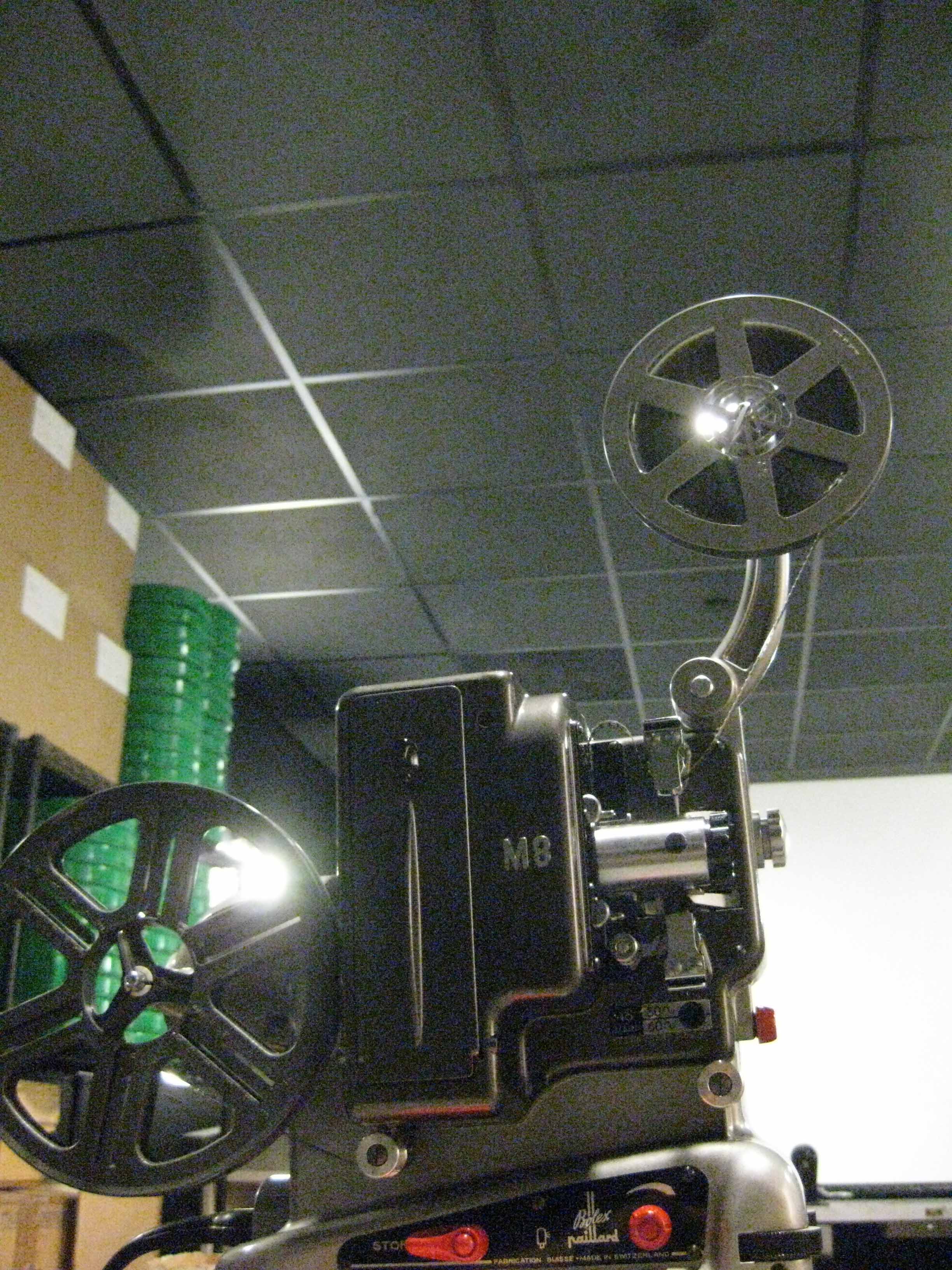
There were 6 films to view, and the first was the most exciting for most of the audience. B&W, from the late 1930s, the film was a record of an archaeological dig. Highlights for the HFA staff included a shot of a prairie dog running out of a ditch with several babies attached to its teats! It looked like a mammal with too many legs.
The screening was successful. We were able to provide a great service – access to a format not easy to work with. We also provided conservation services. The donors were able to watch the films, see people long dead and places long changed. The Harvard staff were afforded an opportunity to view the material with the donors and hear their reactions to the pictures moving on the screen.
Altogether a pleasant way to spend an afternoon.
Rest in peace, George Kuchar
September 7th, 2011
We are very sad to report filmmaker & friend George Kuchar has passed away. George and his twin brother Mike just celebrated their 69th birthday last week.
George and Mike started making films in the Bronx when they were kids. Inspired by the melodrama of Hollywood, by the weather, aliens, interesting looking people, etc., the brothers created fantastical, hilarious, beautiful works on 8mm and later on 16mm. They became involved with the NYC avant garde scene in the 1960s. When small format video became a viable alternative to the more expensive 16mm, the brothers switched formats and didn’t look back. Both have continued to regularly produce personal pictures.
George taught a film-making course at the San Francisco Art Institute from 1971 until this past semester, producing a film with his students for each course. These collaborations are fascinating time capsules, as well as terrific documents of how the imagination of an inspiring professor can really drive the creativity of a course. The HFA has many of these student films in its collection, and recently acquired the video work associated with the class.

Asphalt Ribbon (student collaboration, 1977) opening credit sequence
George Kuchar visited the Boston area several times over the years, and his generosity and affability are well known here. He was an extremely inspiring filmmaker, advising students and other interested parties that all that was needed to become a filmmaker was to get your mits on a camera, read the instruction manual, and make a picture. During his 2010 visit to the HFA, George shot some video that later wound up in his diary movie ZEALOTS OF THE ZINC ZONE. We are honored to be documented by the great George Kuchar himself and hope to preserve his memory the way he has preserved ours.
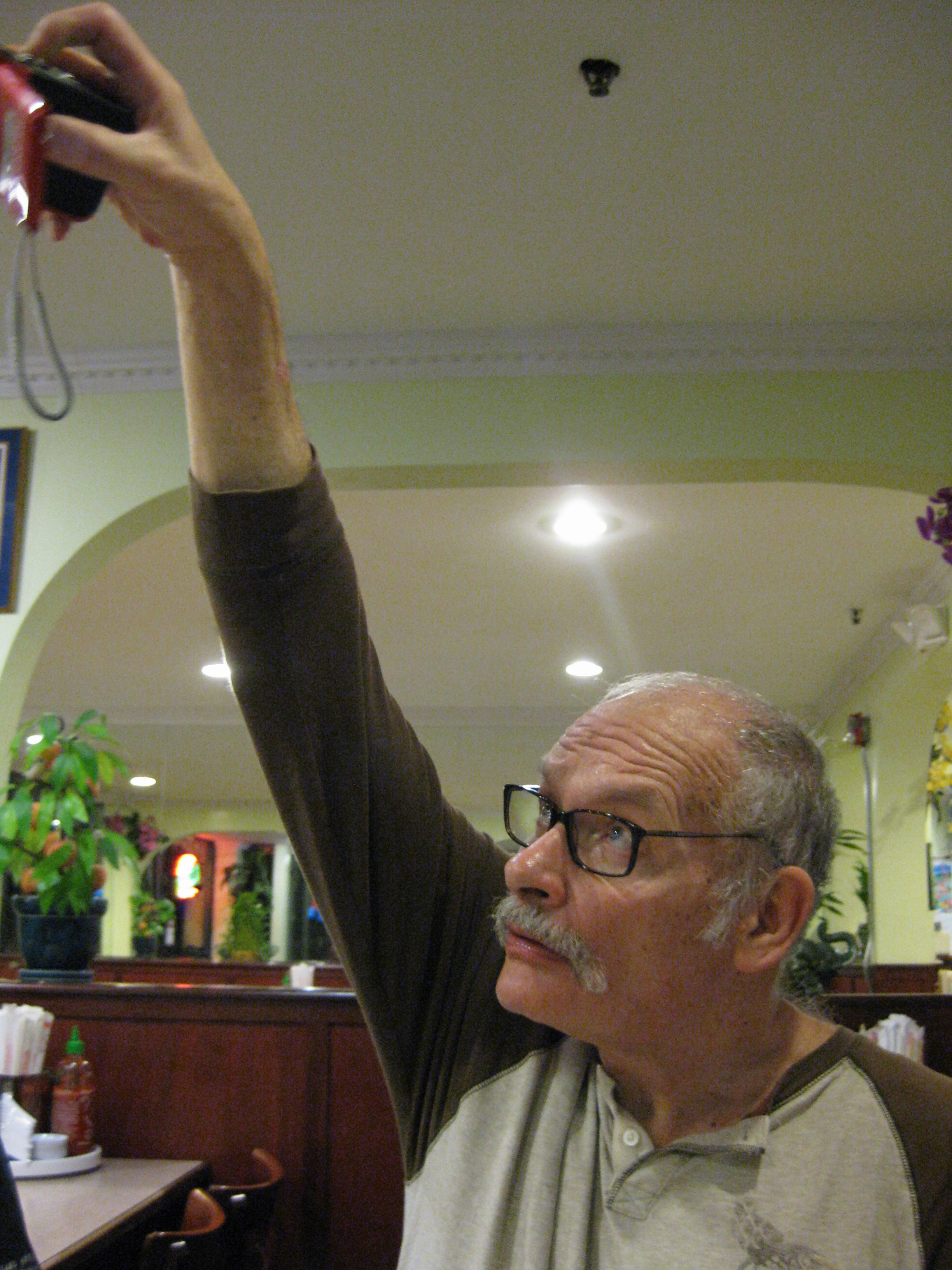
George in Boston's Chinatown, shooting material for ZEALOTS OF THE ZINC ZONE (George Kuchar, 2010)
Anthology Film Archives has restored the Kuchars’ teenage 8mm offerings as well as some of the brothers’ later works. The Pacific Film Archive has preserved several of George’s titles, including the famed I, AN ACTRESS. The Harvard Film Archive, which also houses some of George’s work, has been working to preserve some films he made with his students, some of which showed in a program here last year, and all three institutions continue to collaborate on Kuchar preservation projects.
The HFA was pleased to show some of George’s WEATHER DIARIES last month, including his last film, HOTSPELL, which documents his annual weather-chasing trip to Oklahoma this past May. George, who was too sick to make the trip to the East coast, offered to do an introduction and Q&A via Skype, which was a really moving experience. We recorded the event and hope to put it online soon. Stay tuned!
The HFA recently acquired George’s video masters, which includes his student collaboration movies, The Weather Diaries, and other diary videos. We are honored to have expanded our collection of George’s work, which is available for rental to screening venues through such institutions as Canyon Cinema and Video Data Bank. We hope to present more of George’s work at our cinematheque next summer, including new 16mm preservation prints of student films THE CARNAL BIPEDS (1973) and CLUB VATICAN (1984).
George will be missed by friends, students, and archivists. Our heart goes out to Mike.
There is a lot of information about the Kuchars on the web. In memory of George, read more about him and watch some of his pictures. He was a unique person whose like will not be seen again.
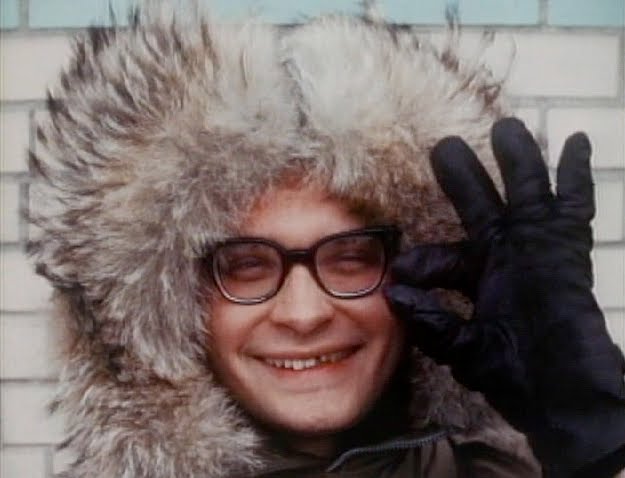
Hold Me While I'm Naked (George Kuchar, 1966)
Canadian Censorship
August 12th, 2011

Poster for Billy Wilder’s ONE, TWO, THREE (1961), from the HFA’s poster collection. Poster by Saul Bass.
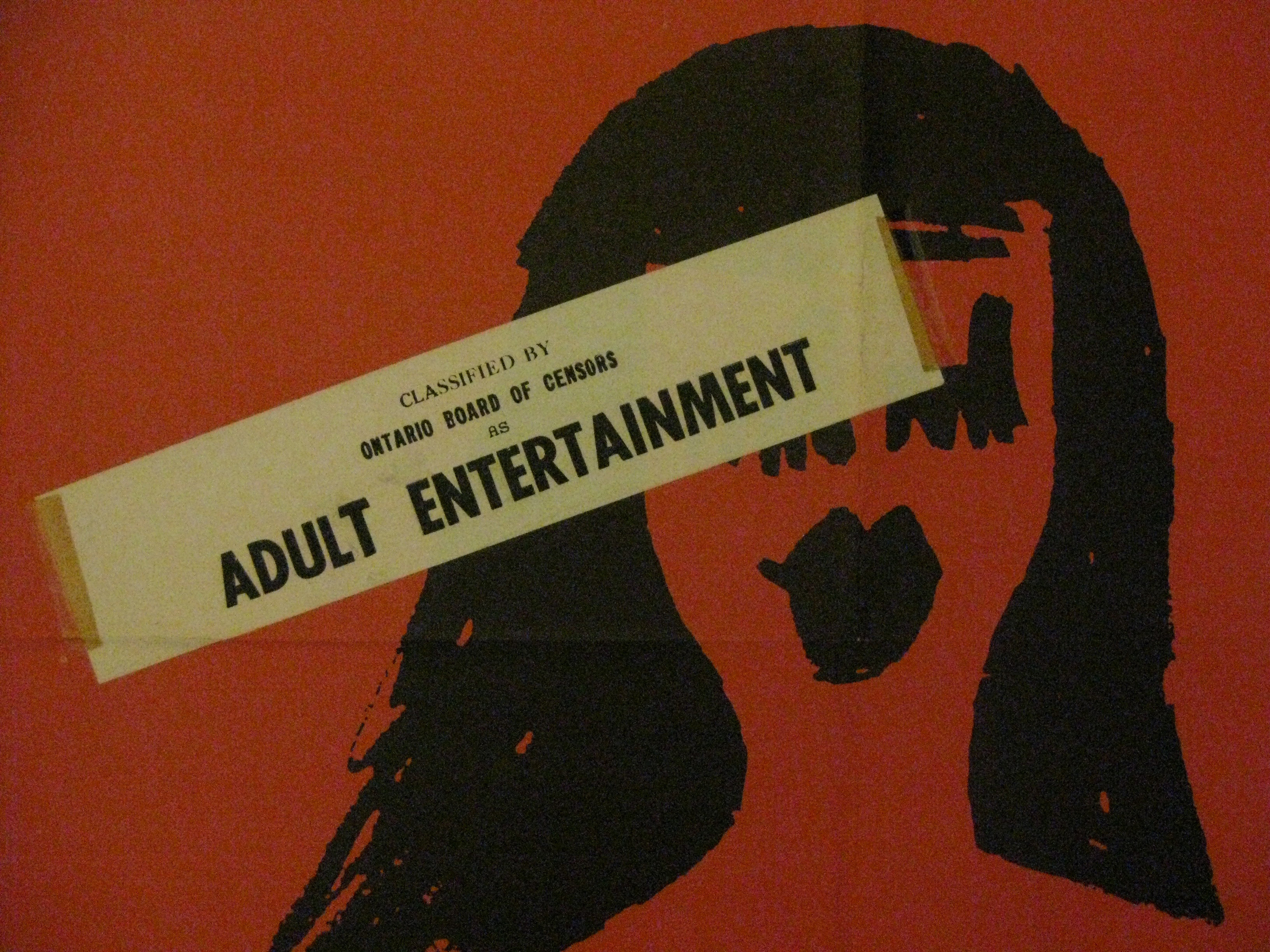
Classified by the Ontario Board of Censors as ADULT ENTERTAINMENT!
A film container is something you keep film in.
June 24th, 2011
Here at the Harvard Film Archive, we store motion picture films in inert, polypropylene film cans on cores made of the same plastic. The cans provide protection in case of a water event, and are vented to give the film some breathing room. The cans are round discs, like the film rolls that are housed inside.
When film arrives at the archive, however, it doesn’t always arrive in what we consider a proper film can. (Cookie tins are suprisingly popular among collectors!) What follows is an image gallery of unusual film containers that have arrived at the HFA over the past few years.
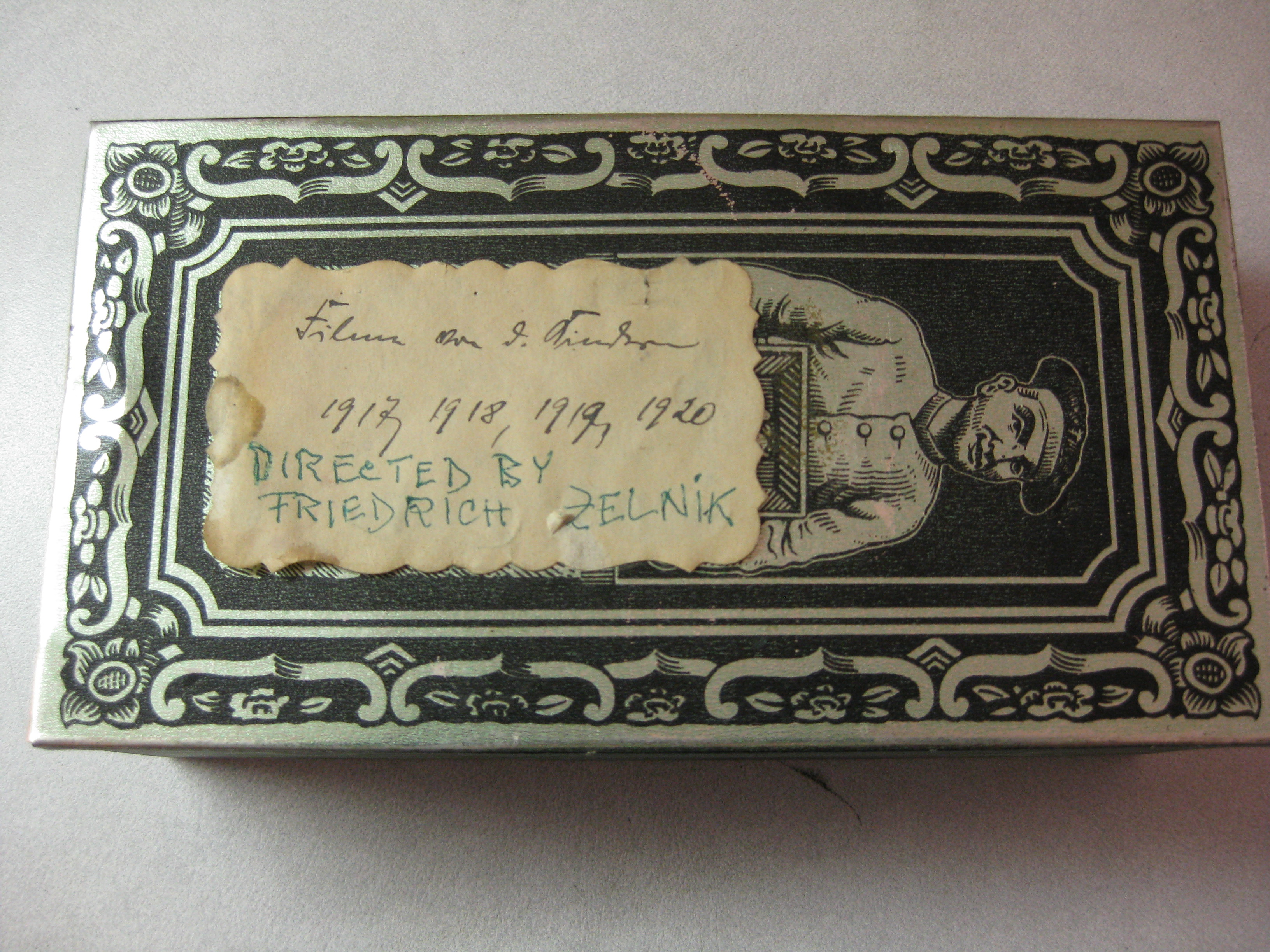
This film was not donated to the archive, but was brought in by a patron. It was stored in this box for decades.
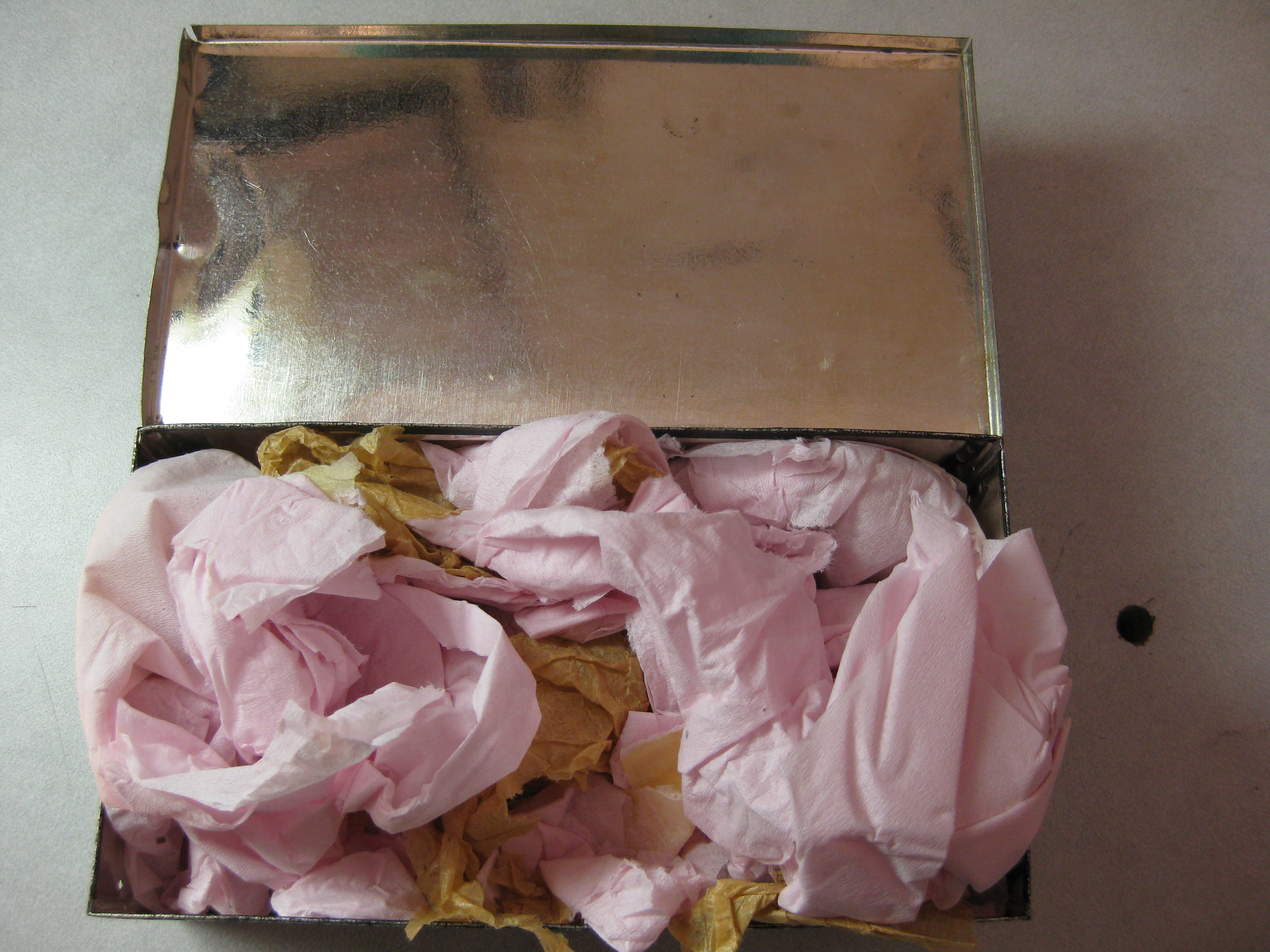
Interior of the box.
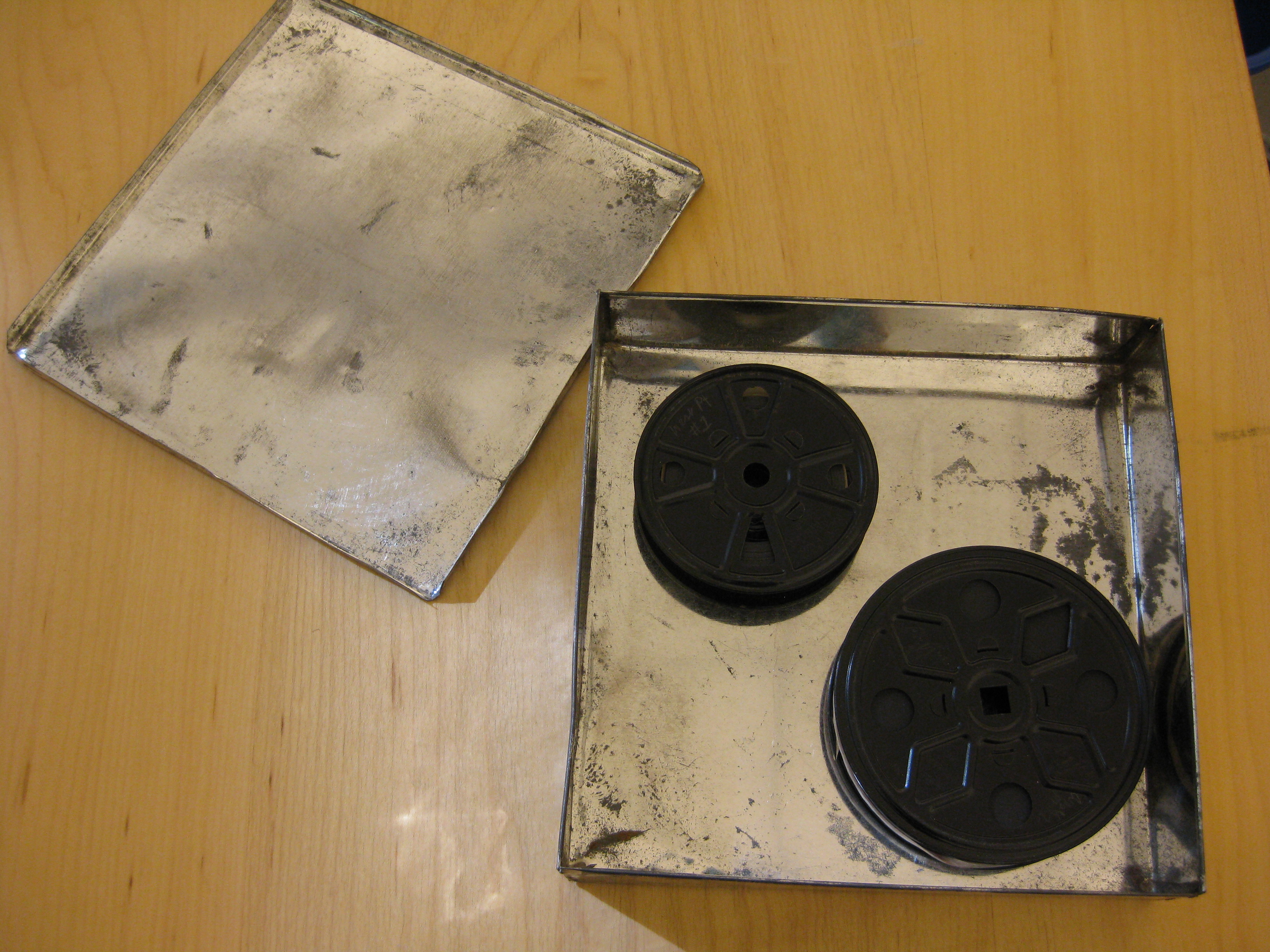
Contained one 50' and one 100' 16mm film. From the Burr Collection.

Contained Crooner's Holiday (Del Lord, 1932). From the Burr Collection.
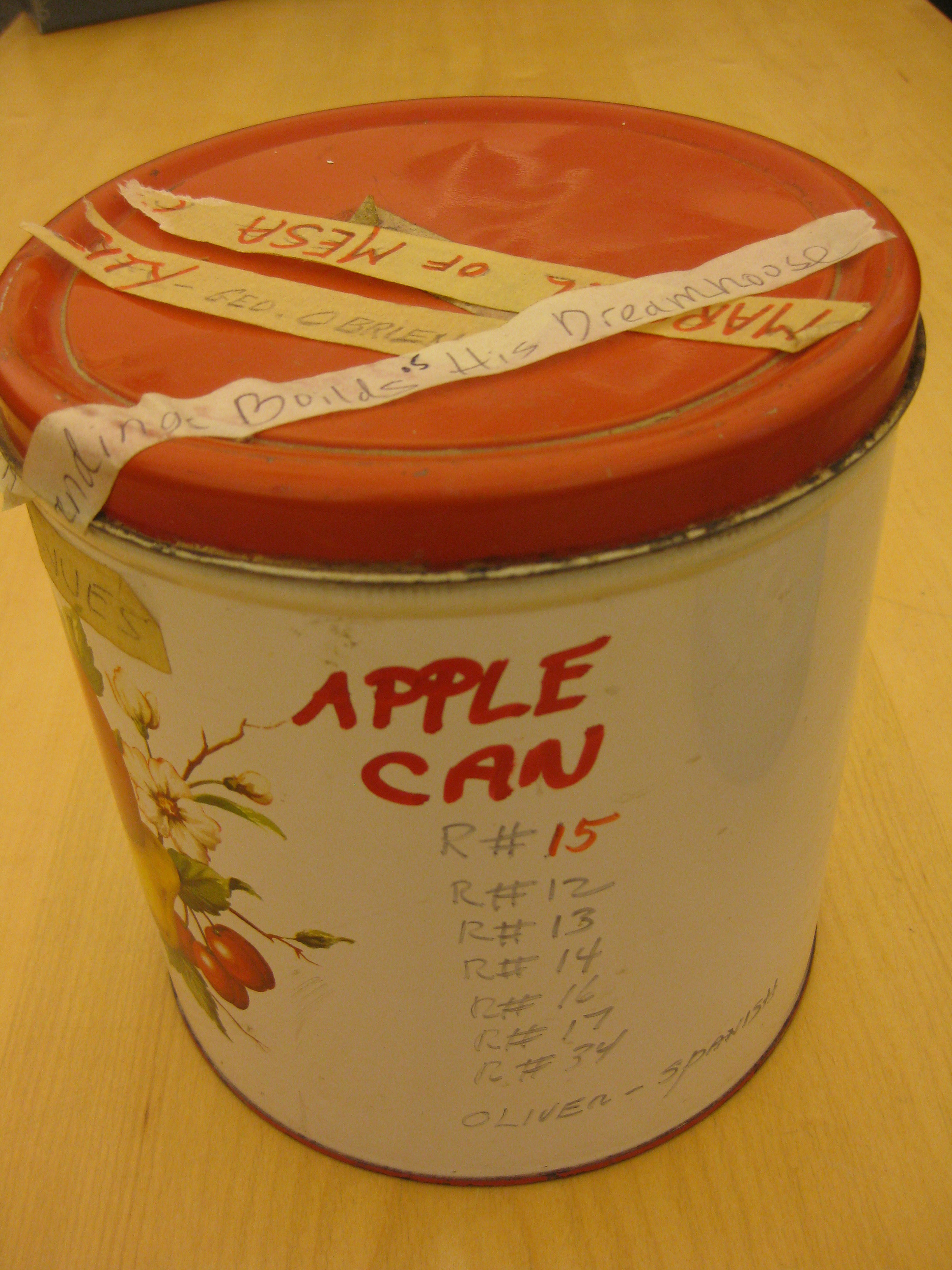
"Apple can" was a location in this collector's filing method. From the Burr Collection.
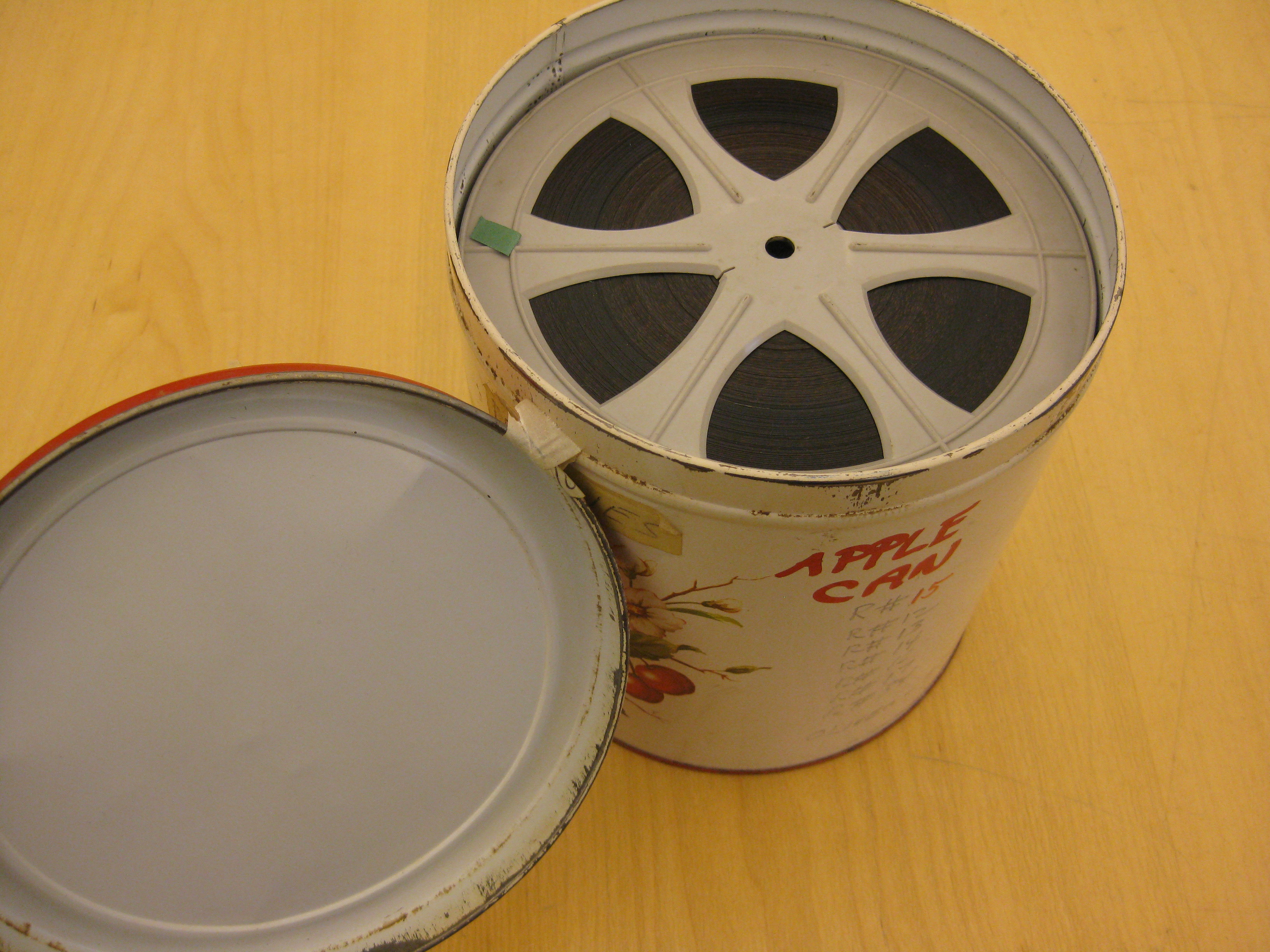
The "apple can" held a stack of 400' 16mm reels. From the Burr Collection.
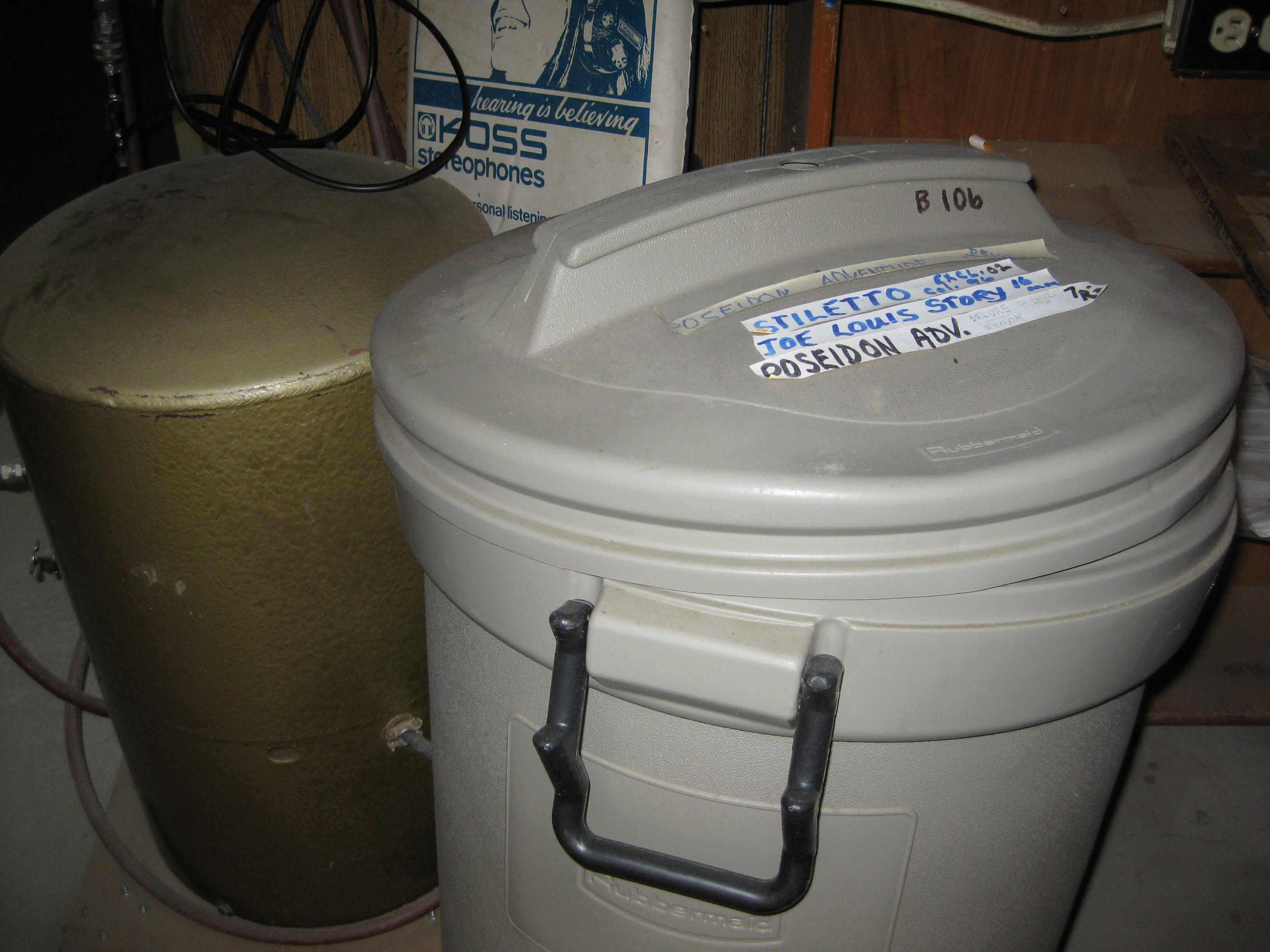
This plastic trash can contained a stack of 16mm feature films. From the Burr Collection.
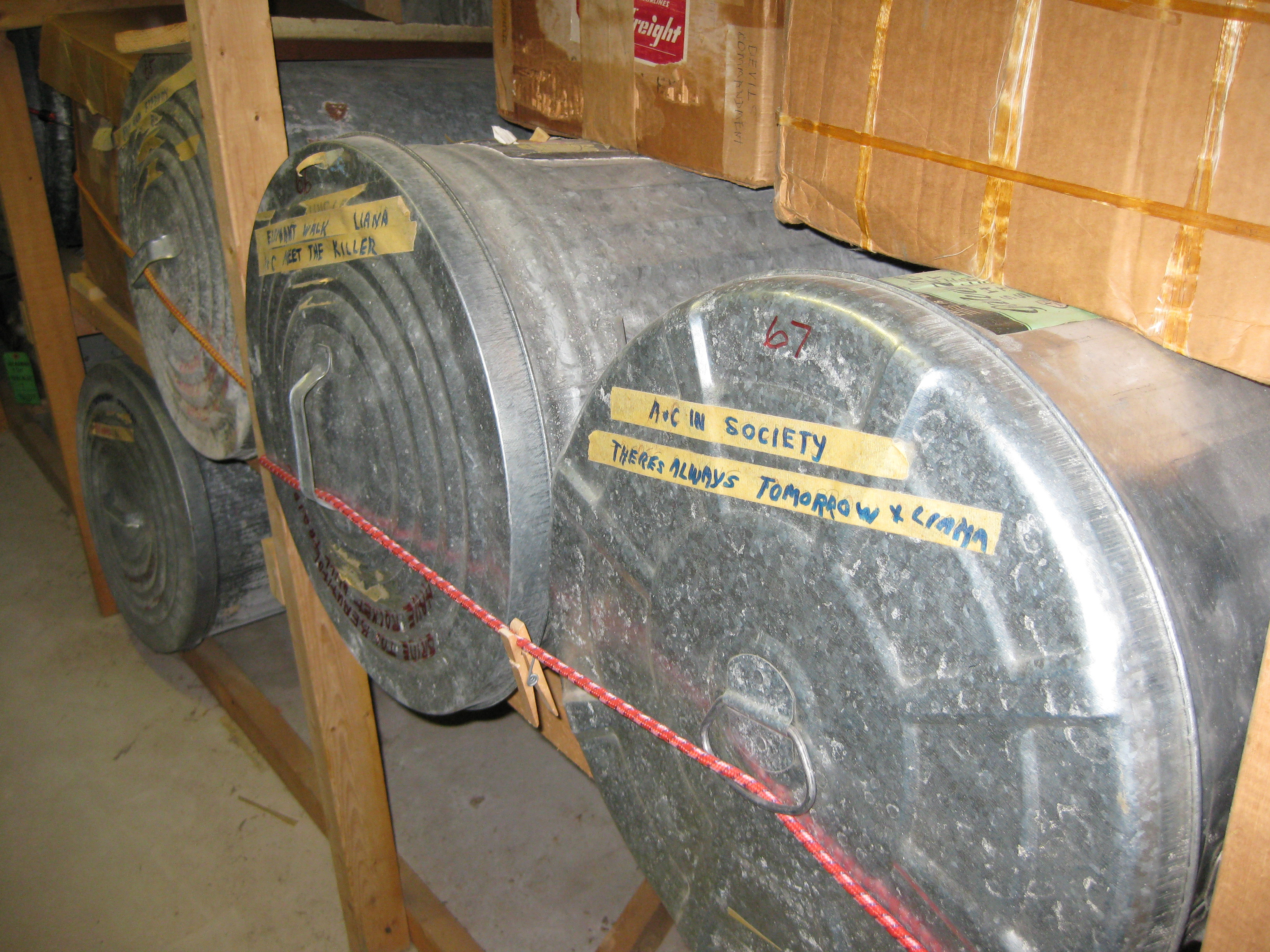
Metal trash cans, stored horizontally, contained 16mm films. From the Burr Collection.

These large food-grade cylindrical containers held 35mm reels. Stored horizontally on custom shelving. From the Burr Collection.

Cookie tin, Burr Collection.
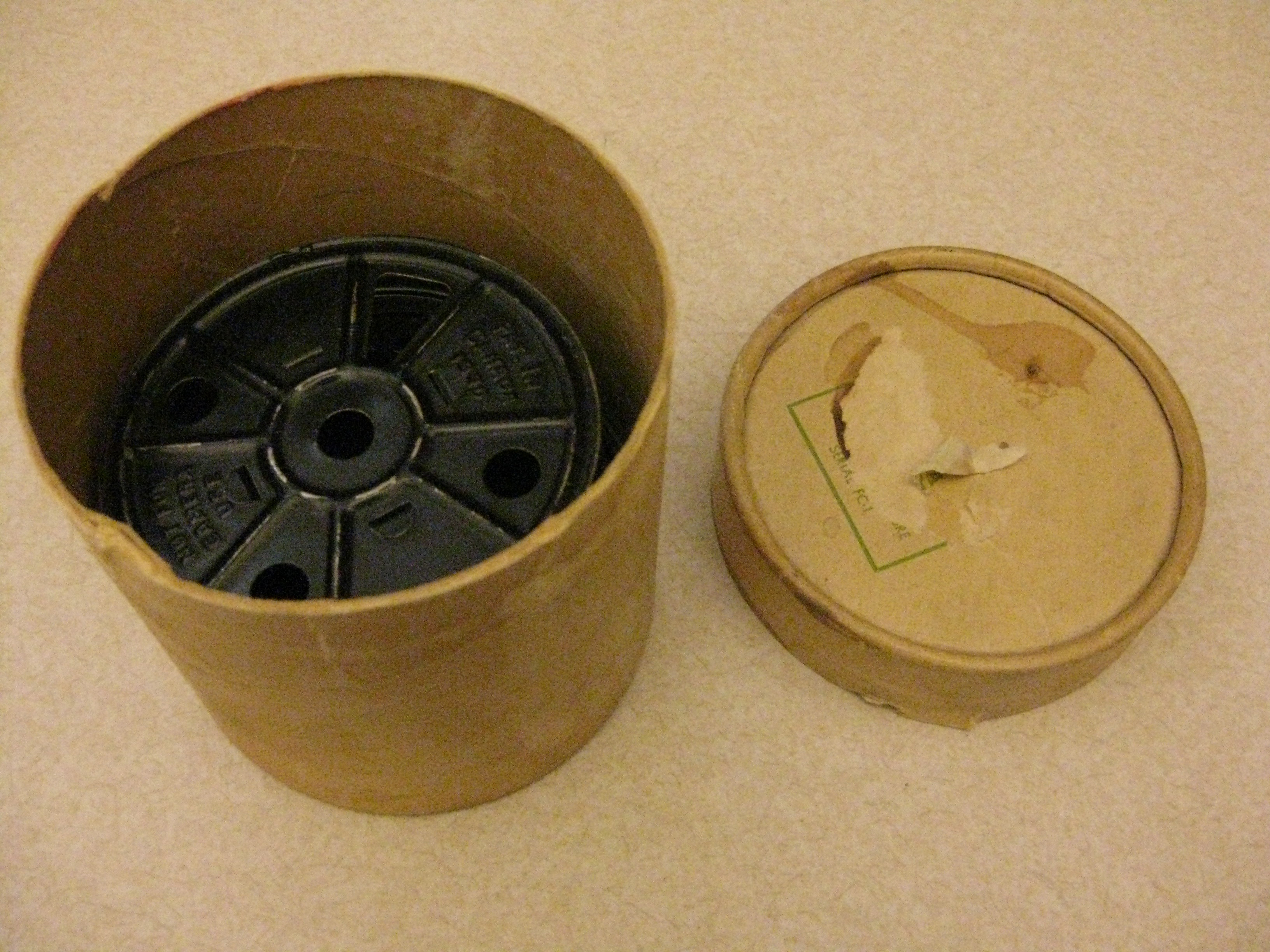
Dry pint cardboard can held 100' 16mm reels, collection unknown.
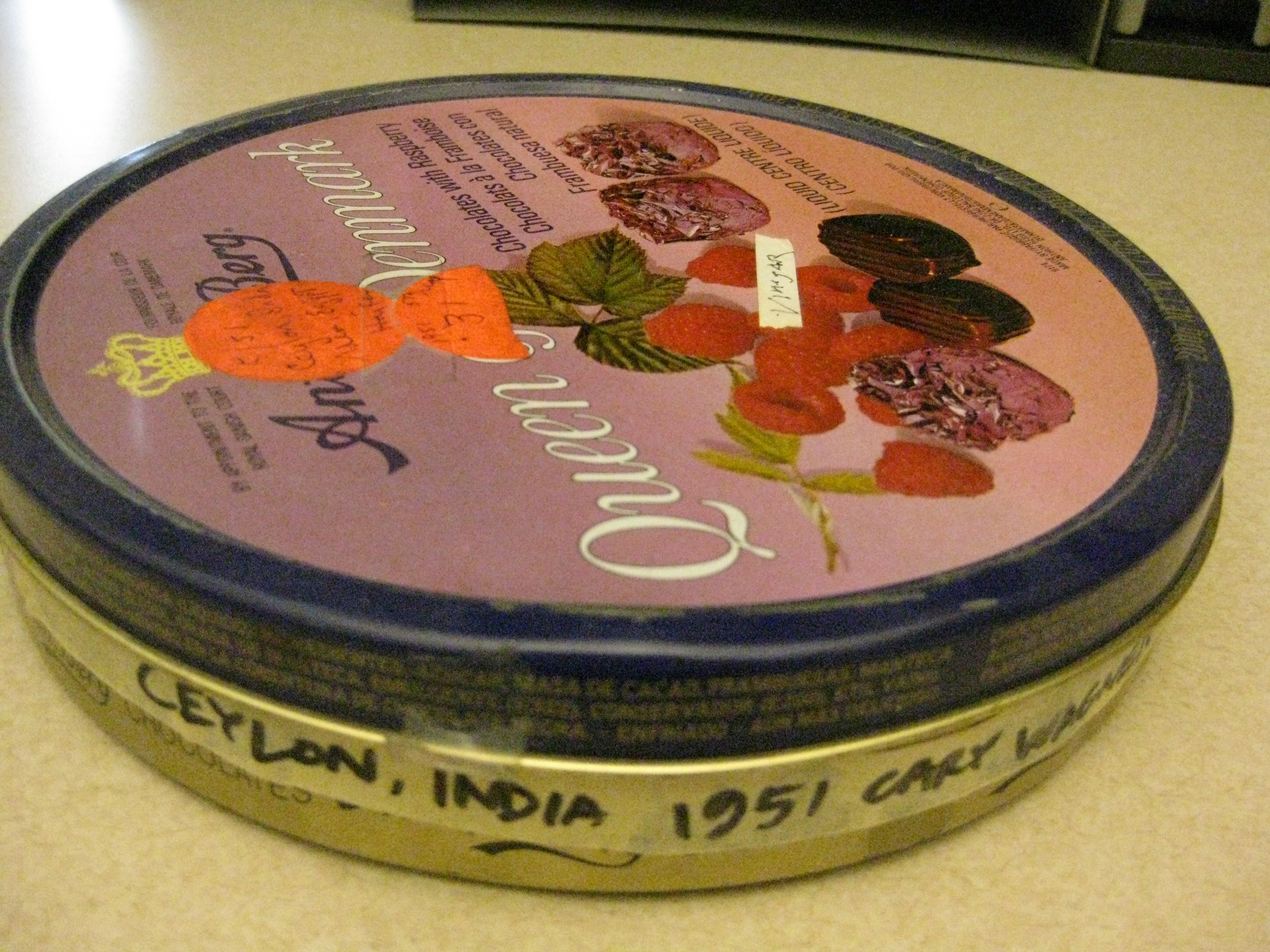
Candy tin, held 16mm home movies, Carry Wagner Collection.
matte mystery
April 19th, 2011
From the BRANDON/FLEETWOOD film library collection, this strange matte for HIGHWAY PICKUP
6 short reels, each looks like this:

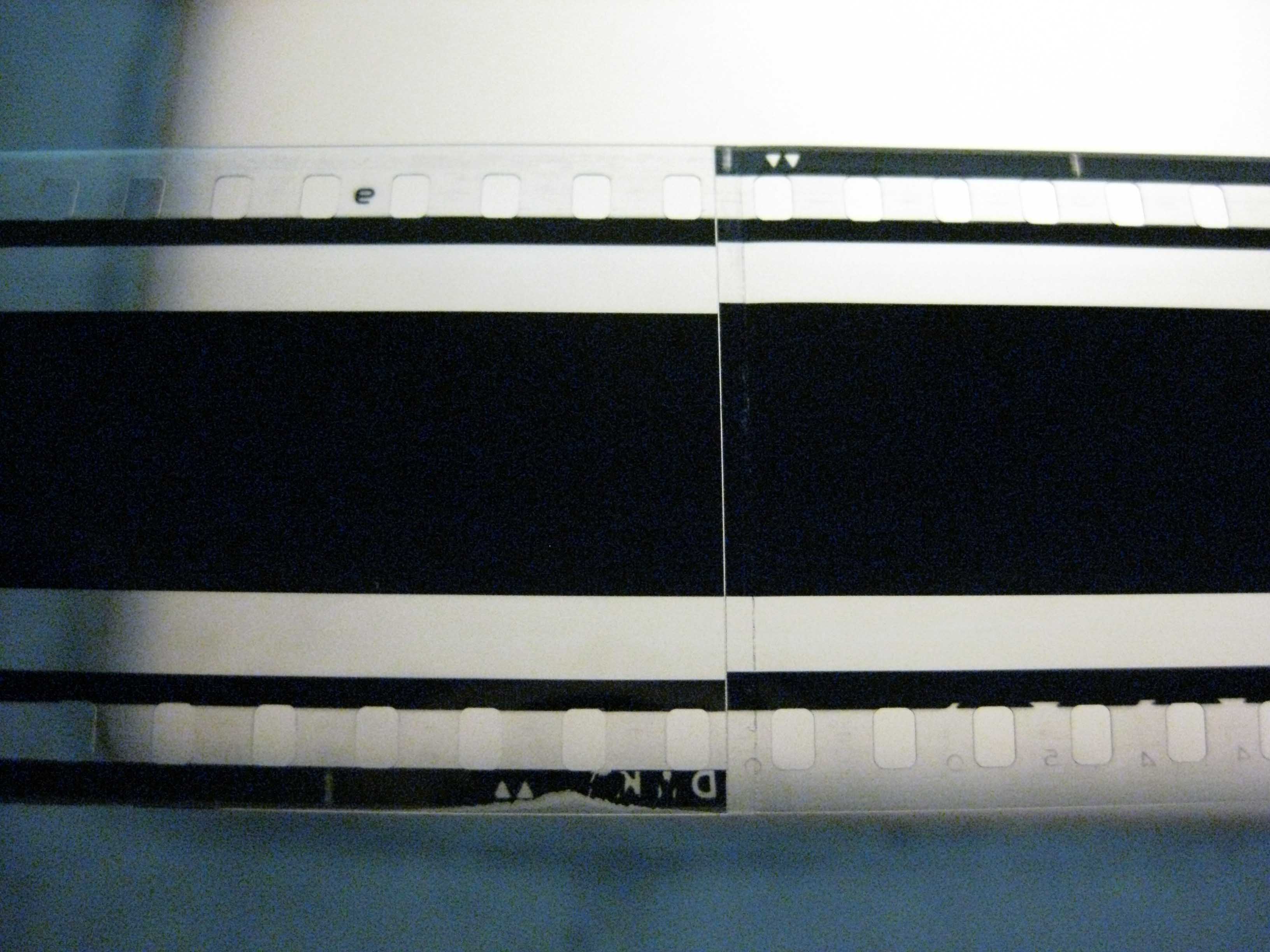
Nitrate print-through, many cement splices, but it’s just the same matte spliced together, head to tail, over and over.
Leader reads: MATTE TRAILER for B&H Automatic Sound Picture printing system
place directly over aperture
Any ideas what this is? Get in touch!
another curiosity from the Burr collection
March 16th, 2011
Howard Burr stored his large film collection in whatever containers were handy. Film shipping boxes are not such an unusual choice, but what about trash cans? Between each reel inside the trash cans, he put a piece of cardboard, cut from whatever was handy. What follows is only a small percentage of the cardboard discs we found.


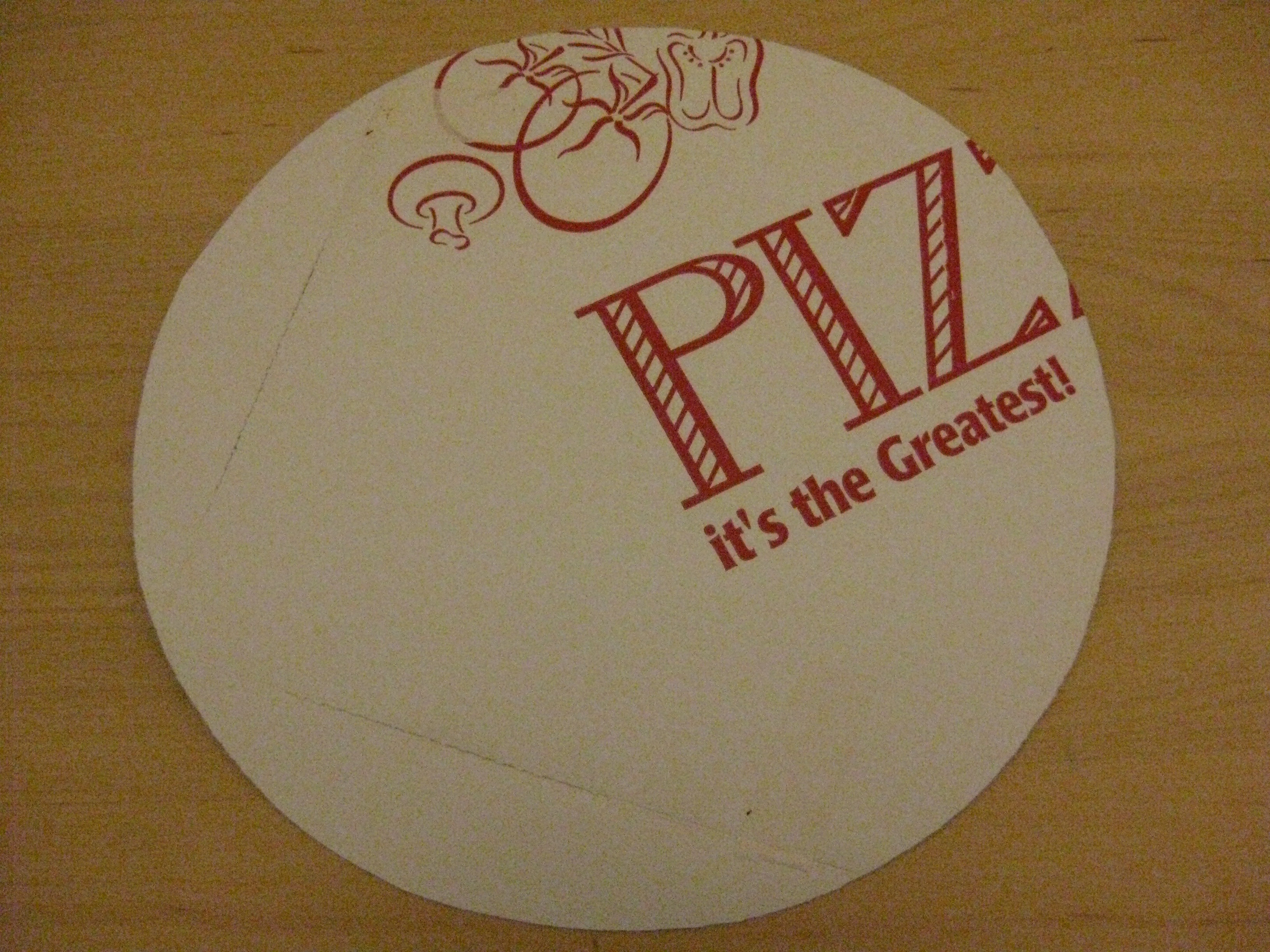
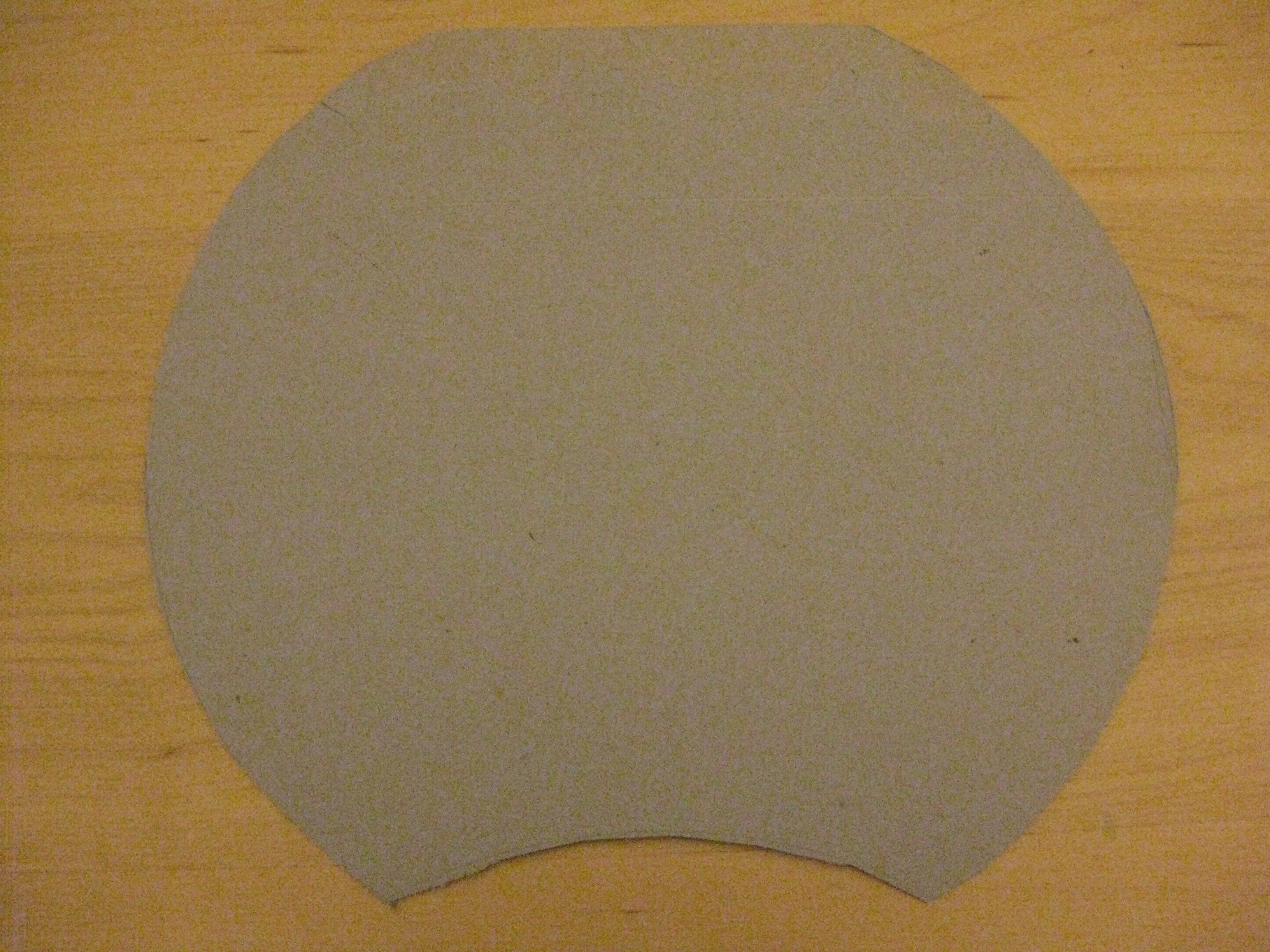


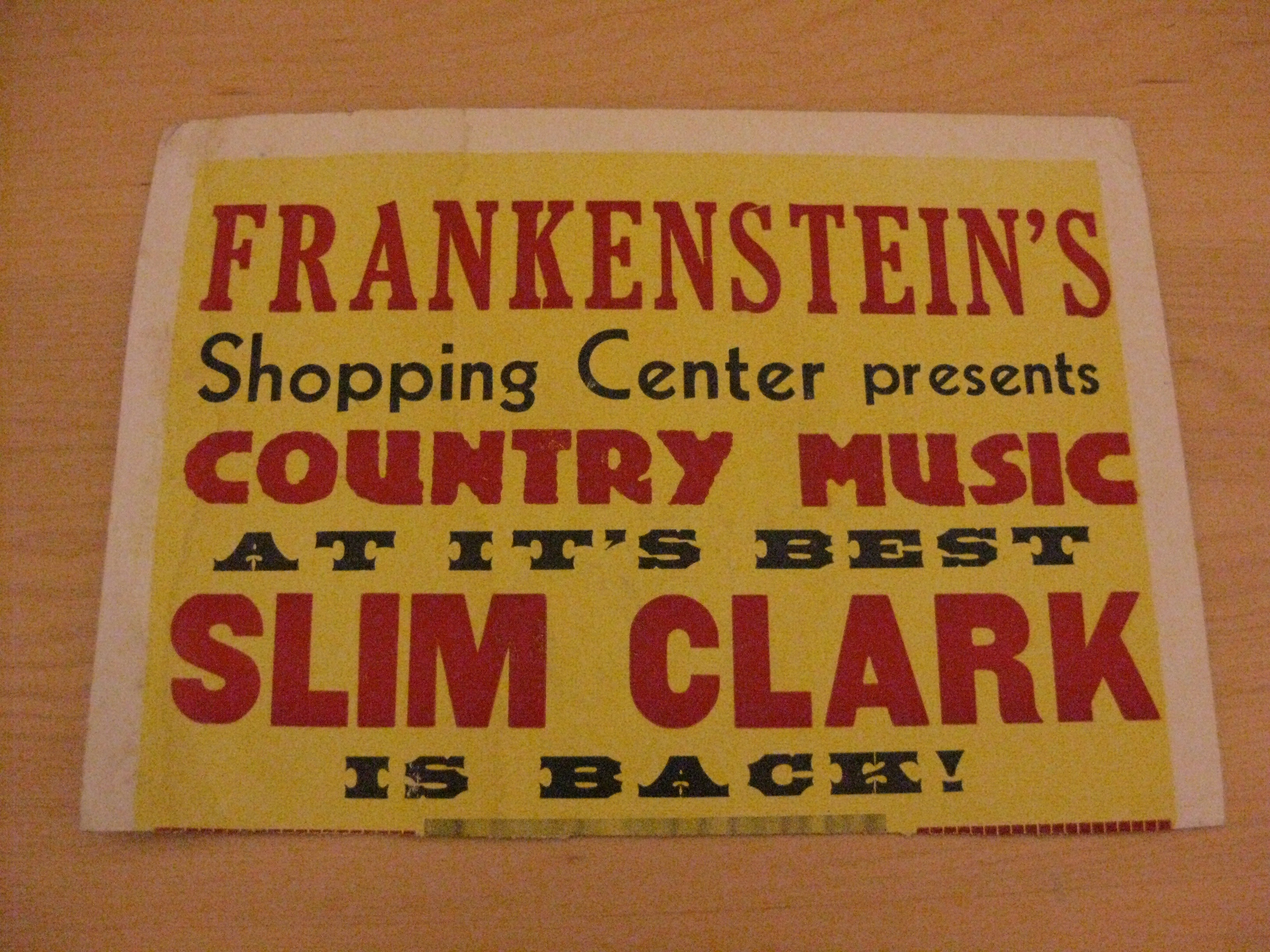
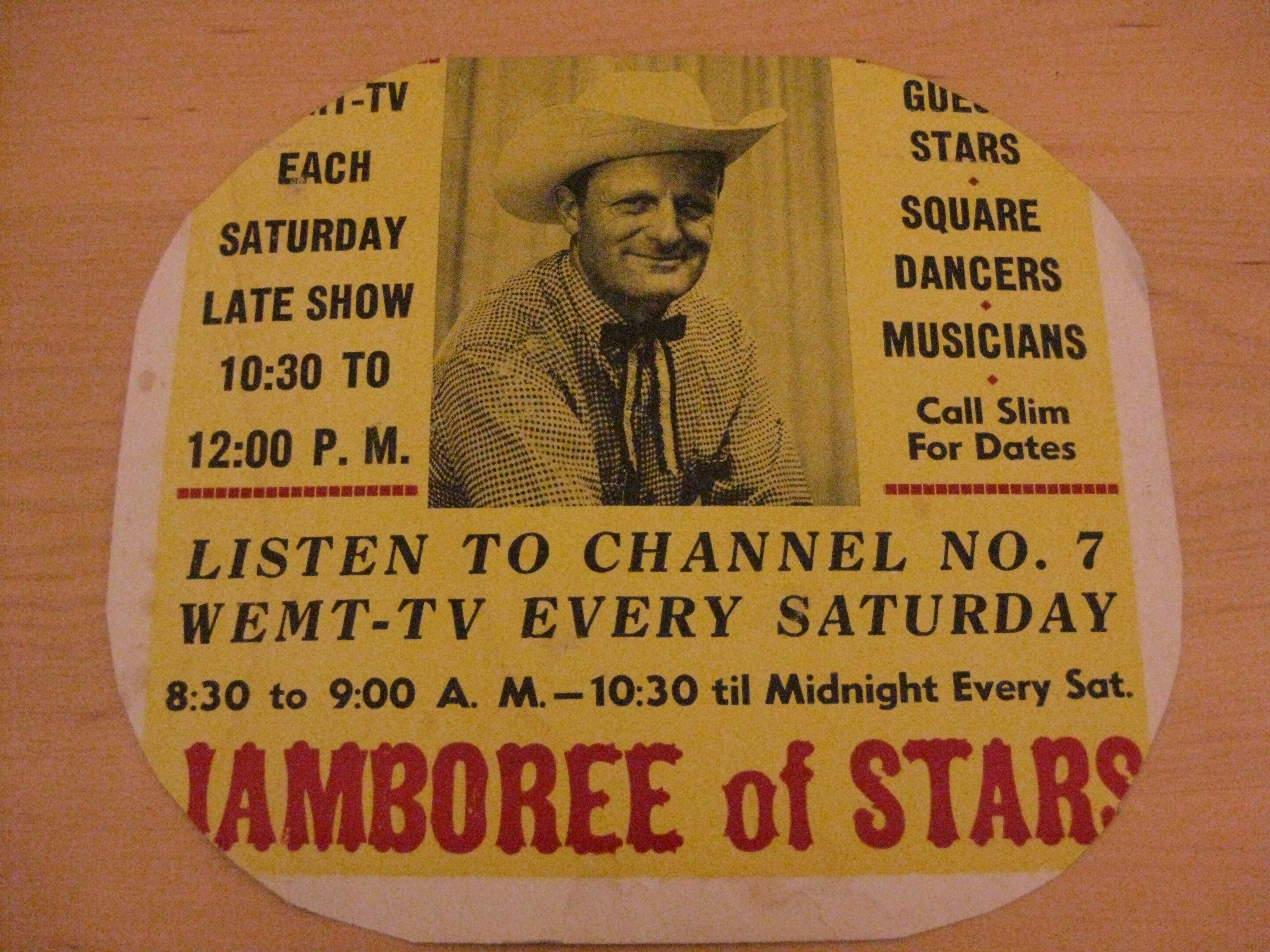
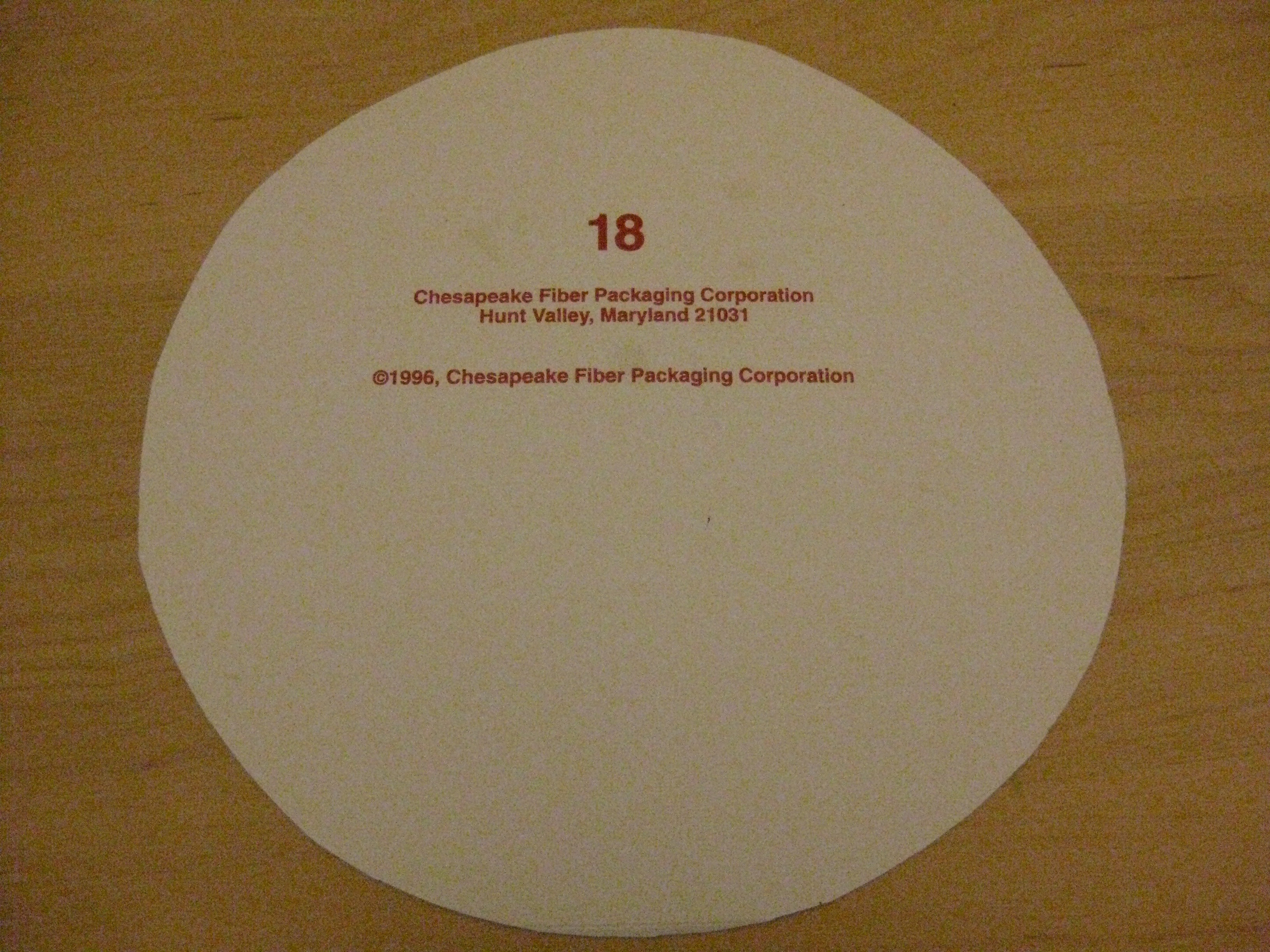


The films don’t seem to have suffered ill-effects from being stored with the cardboard, which probably absorbed some humidity before it could harm the film.