You are viewing a read-only archive of the Blogs.Harvard network. Learn more.

f/k/a archives . . . real opinions & real haiku

January 21, 2008

MLK, Jr Day: service, justice & nonviolence

Filed under: Haiku or Senryu,viewpoint — David Giacalone @ 10:16 am

It’s Martin Luther King, Jr. Day, and as we did last year, the f/k/a Gang re-commits to a Day of Service in his honor, as well as beginning “40 Days of Nonviolence: Building the Beloved Community.” Other f/k/a MLK Day themes that deserve a repise:

  • all of us who are responsible for the operation of our legal and judicial system (that’s every American, but especially the legal profession) can use the pro-se/self-help-law movement to help ensure that wealth is no longer the key to the courthouse and that our justice system fairly serves every American.

Martin Luther King Day…
the weight of ice
on a magnolia branch

. . . by ed markowski

Martin Luther King Day – NoYabutsSN
the kid says it’s too cold
to march

. ……………… . by dagosan

[Don’t forget the 2008 Martin Luther King Day Edition of Blawg Review [#143].]

January 20, 2008

2007 winners from Mainichi

Filed under: haijin-haikai news,Haiku or Senryu — David Giacalone @ 10:39 am

The winners of this year’s Mainichi Daily News haiku contest have just been announced — see the 11th Mainichi Haiku Contest (2007) results and commentary. Congratulations to Philippe Bréham (France), who took the First Prize. I’m pleased to see that two of the earliest members of our f/k/a family had honored poems:

chambers pulsing
in the washed-up jellyfish—
waning moon

Michael Welch (U. S. A.)
2nd Prize, 11th Mainichi Haiku Contest (2007)

. . . …………………………………… . . . .

snow flurries
a childhood friend
reappears

Peggy Lyles (U. S. A.)
Honorable Mention, 11th Mainichi Haiku Contest (2007)

Déjà-ku scholar Michael Dylan Welch was the second poet to agree to share his haiku at this weblog. Here are a few of his poems that fit my mood and themes this week:

first date
letting her
put snow down my neck

a table for one–
leaves rustle
in the inner courtyard

[photo/poem]

an old woolen sweater
taken yarn by yarn
from the snowbank

………………………. by Michael Welch
“first date” – South by Southwest 10:3; “edge of light: RMA 2003″
“a table for one” & “woolen sweater” – “Open Window” (photos and poems)

LylesRain Three years ago today, we posted our “inaugural” piece on Peggy Willis Lyles. As often, Peggy touches me with the honesty and empathy of her haiku:

bitter wind . . .
the hand that cups the flame
aglow

snowed in
the wedding-ring quilt
lumpy with children

winter night
he patiently untangles
her antique silver chain

wind and rain
the hand I reach for
in the dark

…………………. Peggy Lyles, from To Hear the Rain (Brooks Books, 2002)

In a day or two, we’ll be featuring some of the poems by “our” Carolyn Hall that can be found all this month on Cornell’s Mann Library Daily Haiku page. Please don’t wait for our posting to get over there and enjoy and appreciate a month’s worth of fine haiku by the much-honored Ms. Hall, chosen by Tom Clausen. For example:

a butterfly
so long at my window
summer dusk

fieplace glow
first signs of fraying
in the cane-back rocking chair

………………………………………. by Carolyn Hall

January 16, 2008

papa g’s night train

Filed under: Haiku or Senryu,viewpoint — David Giacalone @ 8:58 pm

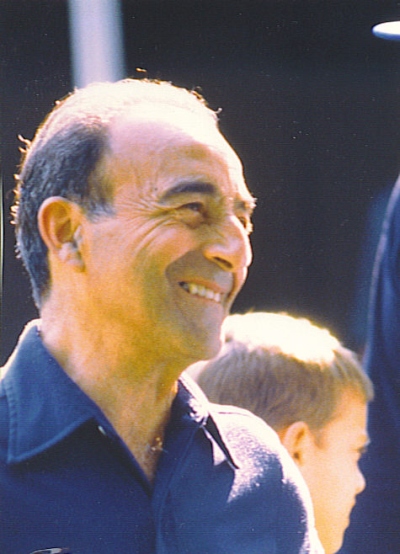
[Jitterbug Stamp] My retired mail-carrier Dad, Arthur P. Giacalone, loved swing music and famously loved to dance. When we went as a family to wedding receptions or other big parties, Papa G. always brought along a change of clothing, so he could shed the damp ones before the last dance with Mama G. [I wrote about Papa G. on his 87th birtday in 2006, and last September, when he and Mama G. celebrated their 60th Anniversary (lots of photos here).]

[big] At his funeral on Monday, one of Dad’s very favorite nieces reminded us that their eyes would meet whenever a band started to play “Night Train,” and then they would jitterbug together like crazy to the delight of all. (Click for jitterbug history, and this fun 1944 instructional video)

jitterbug gene —
dad’s skipped
a generation

………………….. dagosan

Cousin Rose Palazzo’s fond memory of dancing with Uncle Art. got me searching for a video clip of Night Train yesterday, and refreshed my recollection on many dad-and-music-related topics from my childhood. When I learned that Louis Prima did a well-known version of “Night Train,” I smiled broadly — recalling the fun I had with my parents as a (not-yet-jaded, pre-teen) kid, watching the antics of trumpet-playing band leader and “hepcat” Louis Prima and his deadpan, lovely, songstress wife Keely Smith (who can be heard in a 20-minute NPR Fresh Air presentation, from 2002, “Queen of Swing“). As one commentator explains, Italian-American Louis Prima was “one of the few obviously ethnic entertainers who never turned his back on his roots once mainstream success hit.” For example,

“He always revived — to his audience’s delight — Italian novelty numbers [e.g., titles like “Felicia No Capicia” (more),” “Baciagaloop (Makes Love on the Stoop),” “Please No Squeeza Da Banana,” and “Josephina, Please No Leana on the Bell.” ], and much of his performing persona could be traced to the wildly energetic Italian kid who never grew up.”

With much anticipation and satisfaction I located a Prima-Butera Night Train Video version of the song, which had been released on Louis Prima’s “The Wildest!” Album (Capitol Records, 1957), and has an amazing sax solo by Sammy Butera. I don’t think of myself as a swing or jazz fan, but this instrumental made me grin and tap my feet, and immediately recall the great Night Train lyrics (by Lewis C. Simpkins) that dad would occasionally sing — in what was surely my first exposure to an anti-domestic violence theme:

Night train,
That took my baby far away.
Night train,
That took my baby far away.
Tell her
I love her more and more each day.

(Chorus) [“The Wildest!cover]

My mother said I’d lose her
If I ever did abuse her,
Shoulda listened.

My mother said I’d lose her
If I ever did abuse her,
Shoulda listened.

Now I have learned my lesson
My baby was a blesssin’,
Shoulda listened.

[I plan to click on the Prima video link often, to let Night Train help “bring my daddy back to me.” Listen to Eddie Jefferson’s more optimistic version of the song, in which the night train brings his baby back.]

funeral dirge —
we bury the one
who could carry a tune

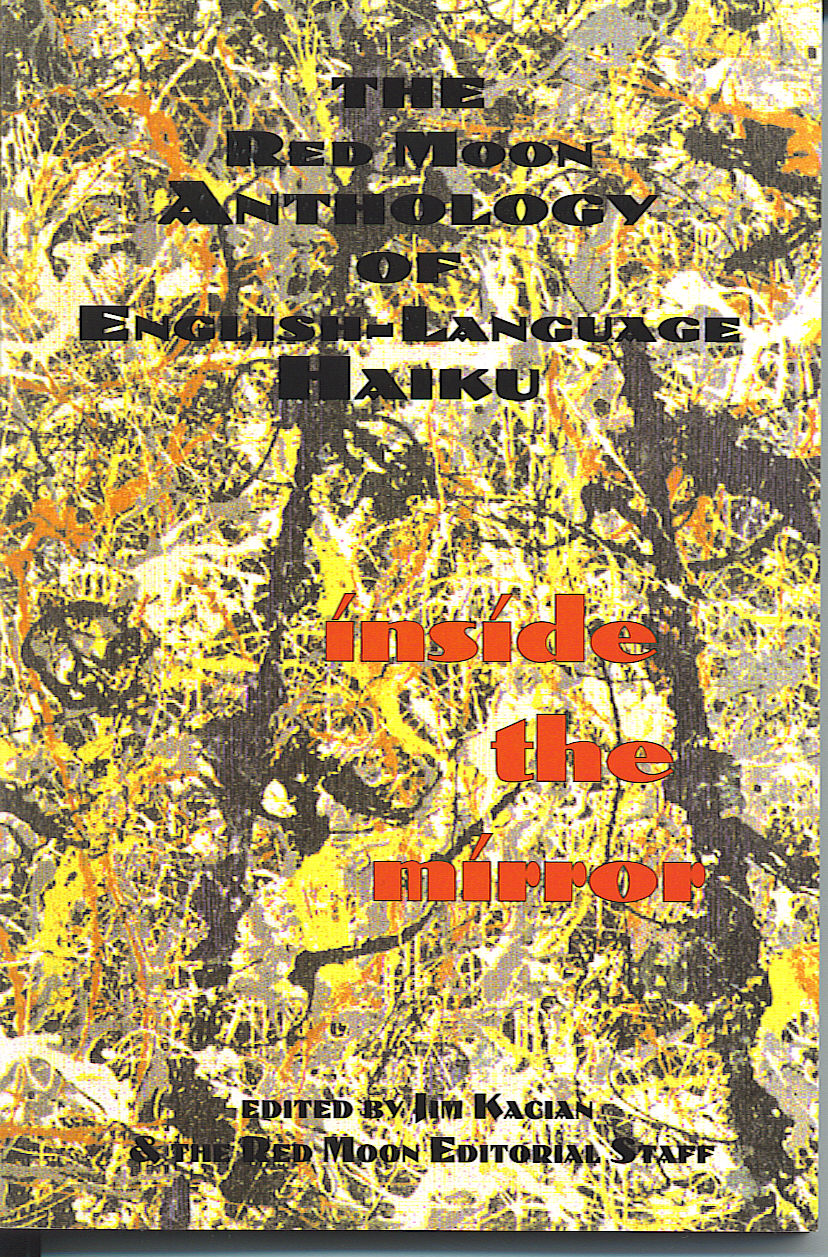
……… david giacalone – Frogpond 31:2 (2008) – selected for “white lies: Red Moon Anthology 2008

Since my arrival in my original hometown of Rochester, New York, on Saturday, I’ve been treading water in the emotional pond formed by losing a parent. Despite a few tearful episodes, it has mostly felt like a soothing communal hot-tub, warmed with the love and affection of family and friends.

Here are a few more poems that came to mind during my 4-hour trip back to Schenectady today on the New York Thruway:

driving home
from papa’s funeral —
thin noon moon half-empty

bequest wish list
a father’s smile
at the top

dad’s empty chair –
mom lets me cook the pasta
al dente

…………………………… dagosan

Here are a few one-breath poems, by members of our f/k/a haijin family, which in one way or another remind me of a man who was sadly short of breath and unable to jitterbug the past couple of decades.

winter woods
seeing myself
in black and white

………………….. by yu chang – Upstate Dim Sum 2005/1

the pinwheel stops
grandpa catches
his breath

………………… by Randy Brooks, from School’s Out (Press Here, 1999)

one of your sighs
has stayed with me
forty years, so far

……………………… by John Stevenson – Upstate Dim Sum (2005/I)

Discovery channel –
an older male vanquished
heads for the hills

within the red wine
a nap in my chair

my wife catches me
picking from our trash
again

letting her
walk all over me
ladybug

without consent
my old sneakers
in the trash

yardwork:
some of the old tire water
on my shoes

the river
full of ice
broken free

……………………. Tom Clausen
“Discovery channel” and “within the red wine” – Upstate Dim Sum (2003/II)
“me wife catches me” – from Upstate Dim Sum 2007/1
“letting her” — being there (Swamp Press, 2005)
“without consent,” “now that I’m over,” and “yardwork” – from Homework (2000)
“the river” Upstate Dim Sum (2005/II)

update (Jan. 17, 2008): f/k/a “Cousin” Ed Markowski knows a lot about family love and loss, and caring for friends. He sent me three poems overnight that belong here in this post:

funeral procession
the silence of the engine
dad tuned last april

winter funeral
a bead of holy water
freezes in mid-air

dad’s funeral
this morning uncle walt
ties my tie

[mama g, 1948]

afterglow (Jan. 18, 2008): That cutie my Dad fell in love with in 1947 loved Glenn Miller, too, and we often heard “Moonlight Serenade” at Casa Giacalone (click for YouTube version), as well as “In the Mood“. Ed Markowski sent us this little gift, which incorporates another of my favorite insects:

moonlit serenade
fireflies appear just beyond
the jitterbugs

…………………………………………. ed markowski

Meanwhile, the rarely-sentimental Prof. Yabut penned this tell-em, and caught me in a weakened condition, so I’m passing it along (with apologies to Groucho Marx):

in the mood
innuendo goes
out the window

afterwords (Jan 21, 2008): Thanks to Gideon at Public Defender Stuff, for including this posting in his stirring 2008 Martin Luther King Edition of Blawg Review [#143].

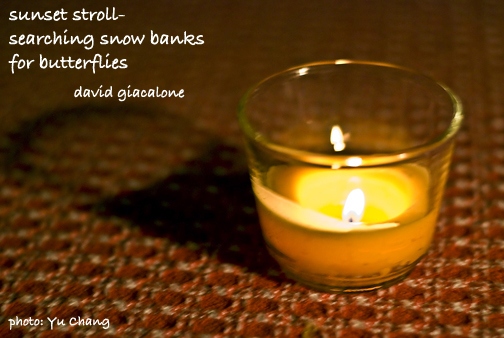
p.s. A Butterfly Connection: Go here to learn why, from now on, butterflies will remind me of my Dad, and to find a couple dozen butterfly poems by our Honored Guest poets. I’ve uploaded a “butterfly haiku memorial collection for Papa G.,” which is a Word document that you can print from this website, to create a two-sided, trifold brochure. It contains most of the poems found in the butterfly haiku posting.

sunset stroll –
searching snowbanks
for butterflies

……………………………….…………………………… by david giacalone
[in mem., Arthur P. Giacalone; haiga photo by Yu Chang]

January 11, 2008

called home late: BBS strikes again

Filed under: Book Reviews,Haiku or Senryu,q.s. quickies — David Giacalone @ 1:15 pm

As often happens, real news had a somewhat sobering effect on what started out as a typically irreverent-flippant posting here yesterday at f/k/a. about my increasingly faulty memory. See “Sufferers of Early Onset Alzheimer’s Describe Life with the Disease” (PBS NewsHour, Jan. 10, 2008), and the related NewsHour Insider Forum“Early Onset Alzheimer’s Patients Take Your Questions on Disease” (Jan. 10, 2008). For more information on the October 2007 Early Memory Loss Forum, go here and here. Also of interest (and concern) “Alzheimer’s Has an Effect on Kids, Too: Visits With Ill Relatives Are Sad but Important” (Washington Post, Jan. 8, 2008); “Dementia in More Educated Hits Later But Harder: More schooling delayed disease onset, but decline was more rapid afterward, study finds” (Health Day, October 23, 2007); and check out the Alzheimer’s Association’s Maintain Your Brain page for suggestions and information on keeping mental acuity.

My hopes and empathetic concern go out to all those truly suffering from the serious condition of Early-onset Alzheimer’s and Early Memory Loss, and to their families. Watching my father’s dementia the past few years has been a sad experience. A bemused sense of humor and horror is still about all I can manage for my own situation.

Boomer Braino Syndrome [“BBS”] is not something I’ll ever get used to — despite having experienced, joked, fretted and pontificated about it for several years (see, e.g., our first piece on “peridemenita” and our graying of the bar opus). A few days ago, it dawned on me that I had somehow totally overlooked the wonderful little book called home, by our Honored Guest poet paul m., in our cyber-Monday list of recommended holiday gifts, on November 29, 2007.

fog on the bridge
this small truck
for all our belongings

… by paul m. from called home (Red Moon Press 2006) CalledHomePaulM

We featured five poems from Called Home last May, when we introduced the book, and five more in August, when reporting that Paul’s volume of haiku and senryu received the Third Place prize in the Haiku Society of America’s Merit Book Awards for 2007 (for books published in 2006). It has more than one hundred poems and will surely help you or a loved one get through that inevitable post-holiday slump. You can click on the link above or write to Red Moon Press, P.O. Box 2461 Winchester, Virginia 22604-1661, for a copy of called moon, which is available in the USA for $12.00.

I can think of no better way to cap off the holiday season, and welcome the New Year, than sharing five more poems by Paul M. from his fine called home collection. Of course, I apologize heartily to Paul and all our readers for yet another cruel example of BBS-generated agita.

weights reset CalledHomePaulM
in the grandfather clock
morning snow

moving the cow
closer to baby Jesus
yesterday’s snow

the tree still draws water
a calendar
declaring a new year

mid-morning
and the snow is melting . . .
her thinness

snow outside
everyone else rises
to receive the host

winter light
flour, sugar, and the canister
that held dog biscuits

CalledHomePaulM … by paul m. from called home (Red Moon Press 2006)

Meanwhile, I have been unexpectedly and prematurely called home today, to mourn and celebrate the life of a man I loved very much. See “dad inspired some haiku.”

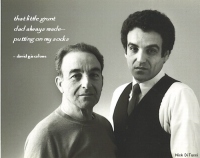
that little grunt
dad always made–
putting on my socks

………………………….. dagosan; photo by Nick DiTucci

frogpond (XXVIII: 2, 2005); inside the mirror: The Red Moon Anthology 2005

January 6, 2008

another winner from Legal Studies Forum

Filed under: Haiku or Senryu,q.s. quickies — David Giacalone @ 1:37 pm

Thanks to the New York Times, you don’t need f/k/a to tell you this morning about dissatisfaction and malaise within the legal profession. See “The Falling-Down Professions,” by Alex Williams (Jan. 6, 2008), for a discussion of the reduced prestige and status of lawyers (and doctors, too), which states:

“In a culture that prizes risk and outsize reward — where professional heroes are college dropouts with billion-dollar Web sites — some doctors and lawyers feel they have slipped a notch in social status, drifting toward the safe-and-staid realm of dentists and accountants. It’s not just because the professions have changed, but also because the standards of what makes a prestigious career have changed.”

That lets me focus instead, with alacrity, on The Legal Studies Forum. (For out last word on the ailing lawyer psyche, see “now that’s depressing,” Dec. 17, 2007)

morning shadows—
the gunslingers wait
for high noon

…………………….. David Giacalone, Legal Studies Forum (Vol. XXXII, No. 1. 2008). Click for original at HaigaOnline, photo by Arthur Giacalone, JD.

We’ve been singing the praises of the Legal Studies Forum for almost four years. As LSF tells us, it was “established by the American Legal Studies Association to promote humanistic, critical, trans-disciplinary legal studies.” At the core of LSF, you will find its Editor, Prof. James R. Elkins, of the West Virginia University’s College of Law, who has done more than any academic or practitioner to remind the world of the connection between lawyers and poetry, first with his groundbreaking, comprehensive website project Stangers to Us All, and then through the vehicle of the Legal Studies Forum. It was the poetry connection that brought f/k/a to the attention of Jim Elkins and vice-versa.

low gray sky —
an afghan warming
on the radiator

……………………………….. david giacalone – Legal Studies Forum Vol. XXX (2006); The Heron’s Nest (VIII: 2, June 2006)

Off the Record,” Vol. 28 of the Legal Studies Forum (2004) was the milestone 700-page anthology of poetry by sixty-six currently-active lawyer-poets. As we said when it was first published, Off the Record is “not filled with poetry about law, lawyers, and the legal world,” but instead contains poetry by poets who happen to have been educated and trained as lawyers. The twenty-page Introduction by Prof. Elkins is a strong reminder that there is nothing inconsistent about the lawyer and the poet coming together in one man or woman. It’s also a rousing argument that every school of law must nurture a practice of law that is enfused with “the poet’s sensibilities, awareness, introspection, and care for the things and the particulars of the world.”

blue sky
behind bare branches
year-end bonus

storm alert
every kind of cloud
in one sky

………………………….. David A. Giacalone – Legal Studies Forum XXIX:1 (2005)

Intelligible Hues,” Legal Studies Forum Vol. 29 No. 1 (2005), presented about 300 pages of poetry by people with law degrees, along with interviews and essays about lawyers and poetry (see our posting, May 6, 2005).

harvest moon
the long pull
of faraway children

quiet rain
the deeper quiet
of uncut roses

…………………… roberta beary – Legal Studies Forum XXX (2006)

“harvest moon” – The Heron’s Nest
“quiet rain” – Paperclips (Press Here 2001)

Lawyers & Poets,” Legal Studies Forum Vol. 30 (2006; cover), came out in early 2006 and has over 500 pages of poetry from more than sixty living poets (see our posting from March 2006).

alone at sunset
i pick a pair
of faded daylilies

summer solstice
the insomniac
waits for dawn

before
the morning rush—
the whiteness of last night’s snow

…………………….. david giacaloneLegal Studies Forum (Vol. XXXII, No. 1. 2008)

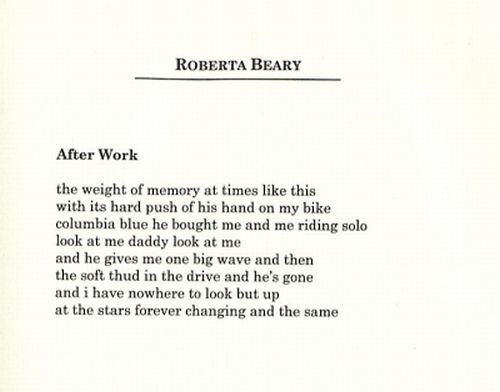
With “A Day’s Work Done,” Legal Studies Forum Vol. 32 (No. 1, January 2008), Prof. Elkins continues to promote lawyer-created poetry (plus short stories and essays), with another winning collection, that contains more than 300 pages of poems by JDs. In addition to generously presenting a few of my own poems (reproduced above), “A Day’s Work Done,” again features the work of our much-honored friend, Washington-DC attorney-poet Roberta Beary. Along with two of her haiku, LSF 32 presents a ku-less version of After Work, which was originally published in Simply Haiku as haibun, but is reborn in LSF as free verse. Volume 32 also has haiku and other poetry by Indian Law expert and appellate judge Frank Pommersheim, and several haiku from Jay Bryan, who has been instrumental in promoting poetry in his home town of Carrboro, North Carolina, and whose professional experience [“an attorney, mediator and guardian ad litem specializing in family and juvenile law”] sounds a lot like the second half of my legal career.

just enough moon
for this firefly to land
on my finger

…………………………. by roberta beary, LSF Vol. 32 (2008),
orig. pub. Jiyu-Katari (Free Talking; Ito En Ltd. 2007)

I’m pleased to remind our readers again that the poetry collections published in prior editions of Legal Studies Forum have been reproduced online at the U. Texas Tarlton Law Library’s E-text pages (and can be reached using the various hyperlinks above). But, the Dedication in Volume 32 of LSF by Prof. Elkins, to trial lawyer Hardy Parkerson, of Lake Shore, Louisiana, in gratitude for his continued extraordinary financial contributions to Legal Studies Forum, is a very good reminder that this unique publication needs and deserves the support of subscribers who honor and appreciate its mission.

  The Legal Studies Forum (ISSN: 0894-5993) publishes two issues a year, with occasional supplements. Its editorial and business offices are at College of Law, West Virginia University, Morgantown, WV 26506-6130. You can Contact Professor Elkins directly to subscribe to Legal Studies Forum.

As we’ve pointed out before, Prof. Elkins puts it so well: “If we think literature matters, . . . then the best education of a lawyer remains an education in skills practiced as an art, an occupational poetics of the real.” The pundit in me wants to ponder the state of our profession, as discussed in this morning’s NYT. The person-poet in me, is going to head outside to see whether any new snowmen appeared on my block since I checked late last night.

justice center –
even the courtroom Bible
has a number

eyeing his wrinkled shirt
from the night in question –
the defendant

tagging along
with an ice cream cone
the senior partner

……………………………….. by Barry George, JD

January 4, 2008

we focus on Mainichi Haiku (and not my Main Man’s Iowa Coup)

Filed under: Haiku or Senryu,q.s. quickies — David Giacalone @ 11:56 am

The f/k/a Gang is presented this morning with our first real test since swearing off political punditry on Christmas Eve 2007. As Judgment Junkies trying to control our Advice Addiction, we’re directly faced with an all-important question:

Did we bite off more than we can eschew, when promising to end all commentary on politics and legal ethics at this weblog?

After Barack Obama’s victory last night in the Iowa caucuses [see the Senator’s Victory Speech (Jan. 3, 2007), and David Brooks’ column “Two Earthquakes” (New York Times, Jan. 4, 2007)], we are tempted indeed to make distinctions between positive and negative punditry, or between reporting and commenting on the news. We confess to reviewing some of our prior coverage of Sen. Obama since his amazing speech to the 2004 Democratic Convention — “obama, o mama!” (July 27, 2007); like discussion of Obama on antitrust and immigration; and even our disappointing “inquiry to Obama on Tort Reform” (Aug. 4, 2004). And, we mused over his role in helping to create a Democratic morality and majority. But, we’ve never been able to have just one drink at the punditry bar, so I just put the cork back on that bottle of opine wine.

All we”re going to “say” about the historic political news last night out of Iowa, then, is a reprise of the rather inadequate (but enthusiastic) senryu poem we dashed off on July 27, 2007, after witnessing our first Barack Obama speech:

the skinny guy’s
a heavyweight –
they’re cheering for a lawyer!

……………………………………………..by dagosan, 07-27-04

Devoid of punditry, what the heck will the f/k/a Gang post about as we start the New Year? Good question. A heads-up a couple days ago from outside frozen Detroit by our friend Ed Markowski reminded me of a very good place to start 2008: the monthly selection of Haiku in English published in Japan by Mainichi Daily News. Around the first of each month, you’ll find over a dozen previously published haiku — many of them very fine — from around the world at the Mainichi site. Most months, one or more the selected poems will be by members of our f/k/a family of Honored Guests Poets.

I ‘m not big on New Year’s resolutions, but I am promising myself to visit the Mainichi haiku webpage early each month in 2008, to find poems worth sharing with our f/k/a readers. Here are haiku by our Honored Guests from the past few months:

– from January 2008 (No. 703)

spring flu —
a dream of swimming
up through new mud

………………………… by jim kacian

1 a.m.
the light in an office
on the 33rd floor

……………………………. by ed markowki

no verdict
the carpenter’s hand
melts windowfrost

………………………….. peggy willis lyles

from December 2007 (No. 702)

light of the half moon
I see my neighbors
are adding a room

…………………………………. john stevenson

snow covering things
we see every day —
the fortune left in the cookie

……………………………………………… gary hotham (From “Missed Appointment,” Modest Proposal Chapbooks, Pittsburgh, PA, USA)

from November 2007 (No. 701)

I start to judge
the haiku contest entries …
falling leaves

…….. George Swede

harbor sunset …
the ruby red
of a maguro filet

……………. ed markowski

from October 2007 (No. 700)

autumn dusk
a leaf falls into
the sound of grey

……………………….. laryalee fraser

from September 2007 (No. 699)

old friends —
pines from famous paintings
sway above the ruins

………………………… peggy willis lyles

January 1, 2008

into the new year one breath at a time

Filed under: Haiku or Senryu,q.s. quickies — David Giacalone @ 9:15 am

…………………………………………………. 

the silence of snow
falling in the salvage yard…
a new year begins

……………………………….. ed markowski

first-day flurries
last year’s snowbank
slowly whitens

…………………………………………….. dagosan

new year’s day
a squirrel emerges
from the dumpster

    ………………………………….. yu chang

New Year’s gift of tea–
where did you go
on your jouney back to me?

……………………………………………..  Kobyashi Issa, translated by David G. Lanoue

New Year’s Dawn
light first gathers
in the icicles

……………………  Jim Kacian – Presents of Mind (1996)

I rinse the rice
a second time
New Year’s Day

…………………. Peggy Lyles – To Hear the Rain (2002); Snapshot Haiku Calendar (2003)

new year’s fog
she washes
all the windows

……………………….. Pamela Miller Ness – Haiku Troubadours 2000

New Year’s Day–
bleaching work shirts
back to white

…………………….. Matt Morden  – The Heron’s Nest (2003)

the ball starts to fall
dad’s oxygen machine
loud as ever

……………………………… dagosan

– click for  more New Year’s haiku and senryu    –


December 29, 2007

you tell-em: hold the anchovies

Filed under: Haiku or Senryu,viewpoint — David Giacalone @ 10:40 pm

A recent article in the Schenectady Daily Gazette about police using too much sick leave and comp time to avoid the busiest patrol shifts caused a jarring bit of guilt on my part. Clearly, I’ve been shirking my duties on the haiku quality control beat, in the 6 months since issuing my fragnum opustoo many tell-ems: psyku lower haiku quality.”

You may recall that I’ve been lamenting the escalating trend of haiku journals publishing “tell-ems”, in which the poet “tells” what is on his or her mind (stating an insight or intellectual conclusion, or naming an emotional state) rather than “showing” us through images based on sensory experiences. As I said last May:

They may in fact constitute wonderful insights into the world, humanity, or the poet’s psyche. A few might belong in a list of the wisest epigrams or wittiest bon mots. Some readers might think they are excellent free verse poems despite their brevity. Nevertheless, psyku do not belong in our finest haiku journals and anthologies as examples of the best haiku or senryu being written in English — even if their authors are among the most respected haijin alive and the poem is structured to look or feel like haiku.

Sadly, despite voluminous research and quotes from a multitude of leading haiku scholars and luminaries, my complaints have been no more successful than similar attempts at this weblog to uphold the quality of legal services and viability of lawyer ethical rules and standards. Although I have recently sworn off lawyer punditry and playing the role of the conscience of the profession, I’m going to persevere a bit longer in pestering the haiku community about the dangers of “psyku” — especially, because the gap between my views and those of leading editors and awards-judges seems to be increasing, while my pleasure in reading many haiku journals, collections and anthologies is rapidly declining.

[orig.] Anchovies on the side: Some in the haiku community of poets, editors, scholars and readers might believe that tell-ems and the whole “psyku genre” are like literary anchovies — just a matter of an acquired taste (rather than of quality or definition), an option that deserves to remain on the menu of the best journals. If they are merely a matter of taste, tell-ems are a haikai flavor I am simply not willing to ingest, while waiting for my taste buds to be subdued, converted or numbed. Nor, as with anchovies, am I willing to succumb to pressure from purportedly more-adventurous or sophisticated peers, and to order up publications that contain tell-ems, with the understanding that I’ll just ignore them, eat around them, or place them to the side.

Every tell-em in a leading haiku journal, or in the winner’s circle of a kukai or award ceremony, is taking the spot that could have contained a better poem, while leaving an unwanted aftertaste and the growing risk of one-breath reflux on a tide of half-baked, three-line pseudo-tanka.

Crankshaft

The anchovy analogy came to mind recently when I ran across one of my all-time favorite senryu in the course of a book review:

first date–
the little pile
of anchovies

. ……………… by Roberta Beary – from The Unworn Necklace (Snapshots Press, 2007); Frogpond (Winter 2007), 1st Place, Haiku Society of America’s 2006 Gerald Brady Senryu Contest

This poem works so well as haiku/senryu because Roberta took a familiar concept (that could easily have resulted in a poetic cliche) and deftly illustrates it for us, rather than spelling it out. She tells us what was experienced, not what she thought about, or what we should conclude on the subject. She leaves it up to the reader to fill in blanks and ellipses with insights, or empathy, or questions about what was on her mind and on her lips that night.

In the hands of a lesser poet — or one who was simply not willing to take the time to invoke “the first-date anchovy experience” with a sensory image rather than a mere explanatory phrase — we could have wound up with an epigrammatic “insight,” a wry-ku bon mot such as:

i know the rule:
no first-date
anchovies

Or, perhaps a palpably inferior, regretful “sigh-ku,” like:

no goodnight kiss —
why did I have anchovies
on our first date?

The Beary Anchovy example seems to me to be a great teaching tool: an example that reminds us that the best haiku and senryu do not merely embody an interesting notion written in 17 syllables or less. The challenge of haiku — the task in crafting the highest quality haiku, at least as it has been practiced over the past few decades by those writing in the English language — is to share an experienced moment of insight, awe or heightened awareness and connection, by showing not telling.

As I said in my original tell-em essay,

Crafting the right juxtaposition of sensory images to evince the insight the haiku poet wants to share or suggest is not always easy, even for the best haijin. That’s actually my point: doing it right can be difficult, requiring special skill, creativity and focused effort. Taking the shortcut of direct explanation makes the poem — however else it might succeed — a second-rate haiku.

A tell-em is built on a lesser aspiration and gives the reader a lesser, restricted role in the overall exerperience of the poem.

Angry Anchovies logo

I’m still reluctant to draw direct attention to any particular psyku examples that I find in print or online. Although I’ve been willing to aggravate lawyers at this weblog over the past few years, I am not eager to alienate haijin — whose skin often seems considerably thinner than that of my legal brethren. Indeed, the perpetrators of some rather prominent tell-ems are in fact among my favorite poets, and even my best friends.

Nonetheless, I thought I might use anchovy parody poems to playfully illustrate the pitfalls of the tell-em phenomenon. For example, the Grand Prix winner of a recent A-Bomb memorial contest inspired me to pen this fishy shadow version of an anti-war “haiku”:

first date turmoil —
anchovies stifle the wishing
of the aging matchmaker.

Yes, the original poem was almost this loaded and awkward (and in fact read like a sentence written on three lines, and actually ended with a period).

Similarly, I don’t know what the HSA Executive Committee was eating when it chose the “best” poem from a recent issue of Frogpond, but it sure gave me indigestion. Although the original was written by one of the most honored and talented haijin on the planet, it precipitated the following, analogous small-fish “sighku/psyku” nightmare:

date’s end —
what made me think I needed
anchovies

As I encounter tell-ems in high places, I will probably craft more anchovy parodies, so watch this space for updates. Of course, I’d much prefer that haiku poets and editors heed my plea from last May:

If only to spare themselves the pain of reviewing the ever-rising flood of wryku and sighku by the less talented [and more pompous] among us, editors should draw the line and exclude (or segregate) tell-ems. They shouldn’t be shy about returning a poem to its author with a note saying “nice idea with good potential; please see if you can convert this psyku into a genuine, first-rate haiku by substituting a sensory image for your explanatory phrase.” If it happens often enough, haijin will submit fewer tell-ems and produce better poetry — and our journals will contain noticeably better haiku.

update (April 10, 2008): As I mentioned, in our posting on the 2008 Anita Sadler Weiss Awards, one of the honored poems — which is favorably compared to a couple of classic poems that solely use sensory images — has won a place among our anchovie-ku:

between constellations
and anchovies
all I don’t know

That last line turned an interesting poem into an instantly trite psyku — half a haiku attached to a cliche. I can’t imagine how this poem — by an author of many fine haiku — garnered so much praise.  And, despite not wanting to offend the cream of the haiku community, I humbly offer my dissent.

December 28, 2007

the HSA 2007 members’ anthology arrives

Filed under: haijin-haikai news,Haiku or Senryu — David Giacalone @ 3:56 pm

Almost lost in the pile of Christmas packages that arrived at my door last week was a thick envelope that helps prove the old saw “better late then never.” It contained a copy of “flower of another country: the Haiku Society of America 2007 Members’ Anthology” (edited by Wanda D. Cook and Linda Porter, 2007). The stubby volume (4.25 by 5 inches), with a purple cover and a lime green bookmark ribbon, presents 186 poems, one per page, written by 186 members of HSA. (As the editors prominently remind readers, each member is assured that one of his or her submitted poems will appear in the anthology.) I want to thank Linda and Wanda for undertaking a time-consuming and often unheralded and under-appreciated job.

Although I am far too lazy and self-absorbed (and tired of reading haiku in massive numbers) to ever volunteer for the task of editing the Members’ Anthology, I am also far too opinionated to refrain from making a couple suggestions to future editors and contributors, based on my personal preferences: 1) these annual anthologies deserve to be preserved on our personal library shelves, and can more easily be honored and housed if they are published in a more conventional shape and size (such as last year’s award-winning version, fish in love, which was 8 inches tall and 84 pages); 2) to make the HSA Members’ Anthology more valuable and memorable, the chosen poems should, to the extent possible, be previously unpublished; therefore, members should submit and editors should choose poems that aren’t already widely known and available in the most-read haiku journals; and, naturally, 3) for the sake of quality and pedagogy, “show-ems” should always be vastly preferred over “tell-ems.”

The 2006 anthology has been sold out for quite awhile. You can still order the 2007 edition: The price per copy is $11.50 in the United States, $12.00 for Canada / Mexico and $15.00 elsewhere. To receive a copy, send your check to Paul Miller, HSA Treasurer, 31 Seal Island Road, Bristol, RI 02809-5186.

As expected, most of our f/k/a Honored Guests participated in this year’s HSA Members’ Anthology. Here, in alphabetical order, are the 19 poems submitted by the f/k/a family and selected by the editors of flower of another country:

morning mist
a bent back sweeps
yesterday’s blossoms

…………. roberta beary – Vancouver Cherry Blossom Festival 2006 (Highly Commended)

a dandelion or two
none of her new friends
best friends yet

……………… randy brooks

banana leaf
our small talk
in the rain

…………. yu chang – The Heron’s Nest 9:1 (2007)

in the garden
right by St. Francis
the woodchuck hole

…………….. tom clausen – Upstate Dim Sum 2006:2

eyeing
that mosquito —
frog and I

…………….. david giacalone (see original haiga here)

a butterfly
so long at my window
summer dusk

………. carolyn hall – The Heron’s Nest 9:1 (2007)

no old habits–
the newborn’s
cry

……………….. gary hotham – The Heron’s Nest 8:1 (2006)

the end before the end September rain

……. jim kacian – Kusamakura Haiku Contest 2006 (2nd place)

beer bottles on the table
a chess
problem

…………….. david g. lanoue

Sunday afternoon–
butterflies sweep the slow end
of the soccer field

………… peggy willis lyles – Mayfly #41, 2006

snow patches
the bones of bears
in this dirt

……… paul m.

dinner with an old lover
the tang of unripe olives

……… pamela miller ness – Acorn #17, 2006

Indian summer
his name comes to me
then is gone again

…………. w. f. owen

first crocus
I make a promise
I can’t keep

…………… tom painting – Shiki Monthly Kukai, April, 2007

winter night
i lie in bed
and imagine it

………….. john stevenson – Upstate Dim Sum 2007:1

from this ridge
not another in sight–
wind and wheat

…………… george swede

mountain stillness
the loon call
held by the lake

……………. hilary tann – The Heron’s Nest 8:4 (2006)

into the lake,
our skipping stones’
intermingling rings

……………………… michael dylan welch

from deep in the forest
a haunting birdsong
sung just once

…………………… billie wilson – The Heron’s Nest 8:4 (2006)

p.s. If you’re still in the holiday mood, you can find year-end and New Year poems by our Honored Guests by clicking here, or take a look at the f/k/a Christmas Season Haiku page, as well as our Holiday Haiku from Schenectady.

December 26, 2007

a firefly under my tree

Filed under: Haiku or Senryu,q.s. quickies — David Giacalone @ 11:21 am

Don’t forget: Our holiday gifts to you: Two 12-page, printable 2008 calendars, the kitschy f/k/a Haiga Memories Calendar and the artsy Giacalone Haiga Calendar 2008, which feature a photo and linked poem for each month. Read more here.

Thanks to a thoughtful haijin friend, one present under dagosan’s Christmas Tree was “Lanterns: a firefly anthology” (Edited by Stanford M. Forrester, Bottle Rockets Press, 2007). Stan Forrester has collected 77 firefly haiku by “53 of the haiku community’s top poets” in this 5 x 6.5-inch perfectbound anthology.

I’ve always loved fireflies — whether it’s a lone male signalling for a mate in late spring, or a multitude creating a spectacular lightshow on a steamy August night — and have written quite a few haiku on the subject. Naturally, I was honored when Stan choose one of them for this collection.

cloud-covered night–
no moon, no fireflies,
no goodnight kiss

……………………… by david giacalone, Lanterns (2007)

As with all my haiku reading (as opposed to my ice cream consumption), I’m more likely to dip briefly into this lovely little book for a quick snack of firefly poems, rather than binge on the full buffet in one sitting. No matter how you approach it, though, there are bright delights to be found throughout Lanterns.

Nine of the 53 poets featured in Lanterns are f/k/a Honored Guest Poets: in alphabetical order, Roberta Beary, Randy Brooks, Yu Chang, Gary Hotham, Jim Kacian, Peggy Willis Lyles, Ed Markowski, Tom Painting, and George Swede. Here are the dozen poems that they contributed to this first-of-a-kind Firefly Anthology:

as far as the light goes —
my daughter goes
after the firefly

among the fireflies —
the children playing past
their bedtime

………………. Gary Hotham
“among the fireflies –” – Bare Feet
“as far as the light goes –” – Windchimes #26

firefly lifts off
from her open palm
another rain drop

……………….. Randy Brooks

dawn breeze —
it flickers, then goes out
the firefly

…………….. George Swede

lights out
. . . the firefly
inside

…………….. Peggy Willis Lyles
HSA Henderson Award 1980 Hon. Men.

memorial day
he turns his back
to the fireflies

late innings
the shortstop backpedals
into fireflies

………………… ed markowski
“late innings” – Baseball Haiku (2007)

on my finger
the firefly
puts out its light

so much silence
on a path
lit by fireflies

…………….. Roberta Beary
“on my finger” – Shiki Internet Kukai

broken lamp
through the briar bush
fireflies

………………. Yu Chang – from Reflections 2

paint flaking
from the porch rail
firefliess

…………. Tom Painting

closing my eyes —
a firefly
still there

……….. Jim Kacian

December 24, 2007

ebenezer had a point

Filed under: Haiku or Senryu,q.s. quickies — David Giacalone @ 8:20 pm

Tonight I might just be putting the Curmudge into Christmas, and the grin into grinchosan. If it’s going to happen in 2007, I’ve got only a few hours to finally get into the Christmas Spirit. Not even making elfin frolics, nor creating all those holiday haiku and give-away new-year calendars has done it yet.  Rather than struggle, I shall allow myself to wallow a bit more, and nurture the pre-visitation Scrooge inside every (thinking) person — you know, maybe only watch the first half of a couple Christmas Carol movies.
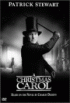
ScroogeStewart

A Christmas Carol (1999) (Patrick Stewart)

Christmas lights
my eye is drawn
to the house with none

………………………………………….. by Hilary Tann

Christmas eve-
the row of cut trees
no one took home

…….……………….. by Pamela Miller Ness

Scrooge (1970) (Albert Finney) ScroogeFinney

ready to assemble
another toy
hits the wall

——————– grinchosan

To get in the Scrooge mood, see Verlyn Klinkenborg’s musing in her The City Life column, called “ ‘Tis the Season” (New York Times, Dec. 24, 2007). VK reminds us that “the old Scrooge is as much a part of [Christmas] as the new one.” And, then ponder along with Sarah Kershaw, in “Enough of the Hills and Woods, Can I Send Grandma an E-Card?” (New York Times, Dec. 24, 2007)

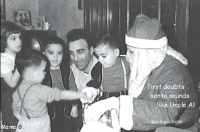
first doubts
santa sounds
like Uncle Al

………………………. photo by Mama G. (larger haiga here)

no one here
to chop “gardunes” –
Christmas soup by Progresso

. . . dagosan

– check out Lio‘s self-help action vs. Santa.

victorian christmas
a trail of horse shit
down the main street

……………….. matt morden from Morden Haiku

A Christmas Carol (1984) (George C. Scott) ScroogeScott

silent night, holy night
three
at the bar

……………….. by David G. Lanoue from the novel Haiku Guy

christmas evening
the goose she raised
all summer

christmas eve…
we yank two ton
from the # 4 mine

christmas…
there ain’t enough coal
to put in the stockings

………………. by ed markowski

Scrooged (1998) (Dan Murray) ScroogedMurray

Christmas pageant—
the one who had to get married
plays virgin Mary

another Christmas . . .
my parents visit
the son in prison

……………………….. by Lee Gurga from Fresh Scent (1998)

NoSantaGS One thing for sure, if I don’t get my butt off this desk chair and get my brain offline, I’ll be mighty grumpy when Santa gets here tonight. Hope you’ve got lots of Christmas spirit and have a joyous Eve and Christmas Day, however and why-ever you celebrate it.

Of course, I also hope you’ll be just as questioning and thoughtful as Linus was in 1968, when you’re asked whether you had “a good Christmas?”

  • Do you mean did I get a lot of presents? Or, do you mean did I give a lot of presents?
  • Are you referring to the weather or the Christmas Dinner we had? Do you mean was my Christmas good in a spiritual sense?
  • Do you mean was my Christmas good in that I saw new meaning in old things? Or do you mean . . . .

And, you better not just sigh, Charlie Brown.

December 23, 2007

elves and echoes

Filed under: Haiku or Senryu,q.s. quickies — David Giacalone @ 11:32 am

. . . Elfin Fun: This is the time of year to think about friends old and new, and wish you could be lots of places at once (often, not where you actually are). Thanks to my First Niece (graphic artist Kara LaFrance of Calabash, NC, and Vive LaFrance Design), I discovered the wonderful ElfYourself website from Office Max this week, and created a couple of clips of my elfself having a jingle-bellishly good time with some of my favorite people:

Warning: Elfing Yourself is free, but habit-forming, often leading to strained laugh muscles (my cheeks have been hurting for days). Don’t miss the encore Elf who hangs on screen between performances.

Elf, I Need Somebody! Speaking of snow and friends, see/hear The Beatles perform “Help!” (lyrics).

tiny guestroom –
an old friend
on an old mattress

……………………… by dagosan

echoes 1 (Compiled by Jim Kacian and Alice Frampton, Red Moon Press, 2007; (ISBN: 978-1-893959-67-5, 78 pages, $10,00)

Recalling special moments with friends, renewing old acquaintances, and catching up on their news, are some of the best things about the Holiday Season. In the haiku community, the recently published anthology from Red Moon Press called echoes 1 offers a great opportunity for such joyous communing. Here’s how the publisher describes the book:

echoes is both a kind of yearbook and a compendium of outstanding work. It is an updating of the careers of the New Resonance poets which forms a community in its own right. It is also an almanac of the current state of affairs in English-language haiku, since so many who have appeared in this series have become the outstanding figures of our time in our genre, as poets, volunteers, speakers, officials, judges and most generally as the face of haiku today.

A New Resonance: (Red Moon Press, 1999)

starry night —
biting into a melon
full of seeds

…………………… by yu chang
Frogpond XXI:1 (1998), Museum of Haiku Literature Award

A New Resonance 2 (Red Moon Press, 2001)

Many of my first encounters with our f/k/a Honored Guest Poets came from reading the early volumes in Red Moon’s series A New Resonance: emerging voices in English Language Haiku. Each volume gives you enough poems from each poet to get a feel for his or her talents and unique voice, while leaving you wanting more. Yu Chang was featured in the first New Resonance volume in 1999. A New Resonance 2 (2001) brought Roberta Beary, Barry George, Carolyn Hall, Rebecca Lilly, paul m., Matt Morden, Pamela Miller Ness, Bill Owen, and Tom Painting into my ken and my home. And, I first concentrated on DeVar Dahl, Alice Frampton, and Billie Wilson, after seeing their work in A New Resonance 3 (2003).

loved ones return home
a harvest moon rises
over the bridge

…………… by DeVar Dahl – Shimanami Kaido 1999, 3rd place

Over the past few weeks, I’ve posted poems from echoes 1 by Carolyn, Paul, Matt, Roberta, Barry and Dr. Bill. Here are selections from echoes 1 by DeVar and its co-editor Alice Frampton:

the flat ends
of a new pencil–
first day of school

a bare space
under the willow
overdue books

……………………………………… by DeVar Dahl in echoes 1 (2007)
“the flat ends” – Haiku Presence Award 2003 2nd place
“a bare space” – Haiku Canada Anthology 2006; Red Moon Anthology 2006

field of marigolds
a young boy uses
both hands

blossoms . . .
I dust off the last
jar of cherries

mallard pair
he rocks
on her wake

………………………… by Alice Frampton in echoes 1 (2007)
“field of marigolds” – Haiku Friends 2
“blossoms” – Hon. Mem, Vancouver Cherry Blossom Festival 2006
“mallard pair” – Hon. Mem., Harold Henderson Haiku Contest 2006

A New Resonance 3 (2003)

starXmasIt’s not often these days that I find myself thinking “this haiku book isn’t big enough.” But, that’s definitely my response to echoes 1. Three poems each from the 70 New Resonance Poets is simply not enough. I know haiku publishers have to worry about budgets, but echoes 1 would have been far more satisfying for me, if each of these poets got a two-page spread, featuring a half dozen poems or more. Or, at the very least, another poem was squeezed in and the Christmas Letter-esque litany of achievements shortened or moved to an appendix. Despite that traditional family-holiday gripe, I say from the heart that echoes 1 is a great $10 stocking stuffer, or the perfect little gift to yourself for quiet moments after the holidays.

A New Resonance 4

December 22, 2007

solstice again

Filed under: Haiku or Senryu,q.s. quickies — David Giacalone @ 9:13 am

The Winter Solstice occurred early this morning, bringing with it the ancient desire of all peoples to rekindle and celebrate the light of the sun — and light the candle of hope and forgiveness. Like our weblogging friend George M. Wallace, the f/k/a Gang always marks the day with a little philosophy and a little poetry. While some choose to celebrate this Season of Light in ways that are exclusive, we prefer an inclusiveness, in the spirit of these words from Universe Today:

The season we call “winter” begins on the Winter Solstice. The word Solstice means “sun still”. Because ancient peoples knew nothing of the earth’s tilt, the southward march of the sun was a troubling time. There was fear that one day the sun might continue moving south until it was lost entirely. Many cultures conducted rituals to encourage the sun to move north again and when it did there were great celebrations. These celebrations, regardless of culture, all had a common theme that of rekindled light. Not surprising then that many of the traditions and customs of ancient Solstice celebrations have survived to the present day. Although we know that the sun will begin moving north without any encouragement from humans, we still use this time of cold and darkness to celebrate the theme of rekindled light. From the Hanukah Menorah, to the Scandinavian Yule log, to the lights of the Christmas tree, during this season we seek to push back the darkness with light. Although the forms have evolved over the centuries, we can still see the spirit of many of the old ways in our present day Solstice celebrations.

[photo Daily Gazette, by Ana Zangroniz, “Winter arrives today, veiled in darkness” (Dec. 22, 2007)]

Here are a few poems for the season by our haijin family: starXmas

winter solstice
a flock of starlings
takes a new shape

shortest day –
all of the yellow
beaten out of eggs

before solstice
a darkness in the frost
that’s blackbird-shaped

……………… by Matt Morden
“winter solstice” – The Heron’s Nest III:3; echoes 1
“shortest day” – The Heron’s Nest V:3
“before solstice” – Morden Haiku (Dec. 17, 2007)

winter solstice
our son reads a fairy tale
to his unborn son

snow swirls
in the pitcher’s paperweight . . .
the longest night

……………………… by Peggy Lyles from To Hear the Rain

shortest day
the highrise disappears
into indigo

winter solstice
I unravel my knitting
and begin again

……………………… by Pamela Miller Ness
“shortest day” – from the haiku sequence “Can Collector’s Red Socks” (2003)
“winter solstice” – The Hands of Women (2007)

a candle
in every window
strangers light our path

winter solstice
adolescent wiccans
flunk a spelling test

……………………………….. by dagosan

winter sun
lifting his round face
to catch it

…………………. by w.f. owenManichi Daily News (No. 669)

For more holiday spirit, don’t forget the f/k/a Christmas Season Haiku page, as well as our Holiday Haiku from Schenectady. . . click to print the free 24-poem brochure of poems by Schenectady’s Yu Chang, Hilary Tann and myself.

three generations
peering down a gopher hole
winter solstice

………………………………. by yu chang

And share the spirit throughout the New Year by printing out one of our 12-month 2008 calendars. Each calendar page has a “haiga” – a combination of an image with a subtly-linked haiku or senryu. The f/k/a Haiga Memories Calendar 2008 has b&w photos taken around 1950 by Mama Giacalone of her three darling children.

The Giacalone Haiga Calendar 2008 combines photos by my brother Arthur Giacalone with my poems. Most have been published or are pending at online journals. You may print out any page or all of them. Here are thumbnails of each month’s image:

snowmelt
sunset
comes too soon

…… Simply Haiku (Spring 2007)

round and round with you
dancing
on thin ice

…………….. magnapoets jf (Dec. 14, 2007)

December 18, 2007

holiday hell week in family court

Filed under: Haiku or Senryu,q.s. quickies — David Giacalone @ 10:03 am

While I finally attack my Christmas card list, I’m re-publishing a post from one year ago today at shlep.

ides of december –
santa asks the judge
where to find the kids

……………………………. by dagosan

espMazeG Holiday spirits are put to the test in mid-December at family courts across the nation, as divorced or separated parents battle over how and where their children spend various portions of the holiday season. While serving as law guardian for many children caught in the middle of such disputes, I saw how often the parents placed their own emotional/ego needs ahead of the needs of the children — and, how often lawyers made things worse by stoking the yuletide fires. The South Carolina Family Law Blog has a number of postings that might help to avoid court or to bring out the estranged parents’ better spirits. (via Kansas Family Law Blog)

Their Dec. 15, 2006 posting Tips to Help Divorced Parents Avoid Holiday Visitation Issues has some good advice, and is based on this article by Dr. Ruth Peters, which covers keeping it civil, accommodating schedules, coordinating gifts, respecting each others’ religious traditions, and more. The posting Ten Tips to Minimize Divorce Trauma During the Holidays is also worth reading by parents and, if they have them, their lawyers. [via California Divorce and Family Law weblog] You can find a link to an article on Holiday Blended Families issues, here. I suggest you wait until after the holidays to deal with Tax Deductions and Non-Custodial Parents.

Christmas Day
the exchange
of custody

…………………………….. John Stevenson – from Some of the Silence

from Mom’s to Dad’s
the clickity-clack
of suitcase wheels

. . . . by alice framptonNew Resonance 3: Emerging Voices (2003)

Family Advocate magazine, from the ABA’s Family Law Section, often has excellent materials on parenting after divorce and finding alternatives to ugly divorces. Many editions are turned into Client Manuals. For example, check out:

espMazeN Here are my own Tips on Parenting-Apart, which I used with a course for separated parents. If you’ve been warring with your “ex” over parenting issues, consider changing your ways in the New Year — for the sake of your children.

sitting
where I sat as a child
I wait out the storm

………………………….. by Hilary Tann

afterthought (2 PM): When not billing those hours, lawyer-poet Roberta Beary (of The Unworn Necklace fame) is a frequent f/k/a visitor. She is also the haikai world’s Divorce Diva, and the Siren of Separation Senryu. Roberta just emailed me this sharp-edged gem:

custody hearing
inside my pocket
her letter to santa

Which is a good enough excuse to reprise (again), one of her senryu classics:

custody hearing holy family.
seeing his arms cross
i uncross mine

…………………………………. by roberta beary
“custody hearing/santa”- RAWNervz X:3 (2005)
“cutody hearing/uncross” – pocket change; and New Resonance 2

almost sunset
the weekend dad
drags a sled up the hill

……………. by David Giacalone – frogpond XXIX: 2 (2006)

Holiday Haiku from Schenectady. . . click to print the free 24-poem brochure

Need a 12-month calendar for 2008? Love haiga, the combination of pictures and haiku? We’ve got two 2008 Haiga calendars for you to view and print for free.

Don’t forget our Christmas Season Haiku page

« Newer PostsOlder Posts »

Powered by WordPress