Fair Use Week 2021: Day One With Guest Expert Kenneth D. Crews

We are delighted to kick off the 8th Annual Fair Use Week with a guest post by the worldwide copyright expert, Kenneth D. Crews, as he contemplates an important question on the most recent U.S. copyright legislation. -Kyle K. Courtney
Can Fair Use Survive the CASE Act?

by Kenneth D. Crews

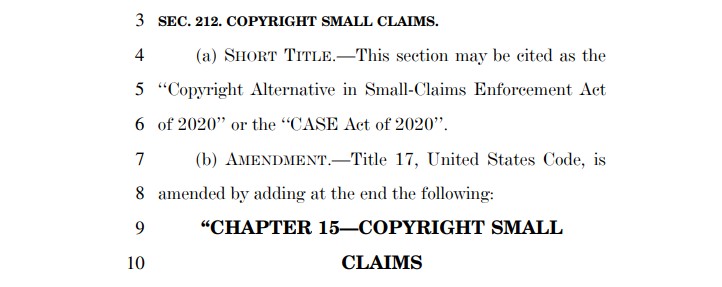
When Congress thinks of COVID, it seems to also think about copyright.  Congress made that connection at a critical moment this last December.  Embedded in the appropriations bill that gave emergency funding to citizens in need, was a thoroughly unrelated provision establishing a copyright “small-claims court,” where many future infringements may face their decider.  The defense of fair use will also be on the docket.

The new law, known as the CASE Act, establishes the Copyright Claims Board within the U.S. Copyright Office, where parties may voluntarily allow their infringement cases to be heard.  A copyright owner, as “claimant,” may choose to commence legal action in the new agency.  The user of the work, or the “respondent,” may allow the matter to proceed or may choose to opt-out, effectively sending the case back to the copyright owner to decide whether to drop the matter or file a full-fledged lawsuit in federal court.


Realistically, this new court-like Board may be a dark hole where cases mysteriously disappear.  Some claims will be filed and then bounced as the respondents opt-out.  Other claims will be launched, and respondents will simply vanish or fail to understand or react at all, sending the matter into default.  When a proceeding finally comes to fruition, the parties will investigate and present evidence, and the three appointed Copyright Claims Officers will determine the outcome of each case.  Any claim of infringement will be subject to relevant defenses, such as expiration of the copyright, as well as fair use and other copyright exceptions.

The Copyright Claims Board will not open for business until late in 2021 at the soonest, but this is a good time to contemplate how fair use might play out.  Think of these stages and possibilities:


Raising the Defense. A proceeding begins with the filing of a claim and the formal delivery of notice on the respondent.  The first mention of fair use (or any other copyright exception) will typically appear in the respondent’s reply.  But surely the claimant will foresee fair use asserted in many of these small-claims proceedings.

Gathering the Evidence. Courts and commentaries regularly remind us that fair use is a fact-specific matter, and the details of each case can determine the outcome.  Staff attorneys working for the Board have the authority to investigate a matter, and the Officers have the authority to allow the introduction of evidence.  Think of that fourth factor of fair use: the effect of the use on the market for or value of the work.  A court will often need confidential economic data about the sales of the work in question and the revenue earned.  The Copyright Claims Officers, parties, and staff attorneys do not have clear authority to compel disclosures and discovery.  They can “request” documents and information.  As a result, the Board could frequently be called upon to decide questions of fair use, but without the needed evidence.  The choices at that point will be far from satisfactory.

Reporting the Decision. The Board is required to make a public disclosure of its decisions and the legal basis for rulings, but the statute includes few other details.  The public announcement of a ruling might be little more than a conclusion, leaving only by implication the resolution of the fair use argument and the reasoning.  On the other hand, the ruling on fair use could be an elaborate legal analysis.  Because the parties have limited ability to appeal a ruling, the Officers might not feel the need to hand down complex opinions.

Depth of the AnalysisOn the other hand, all judges know that their rulings on fair use are convincing to parties and lawyers only if their analyses are solidly persuasive.  The same will be expected of the new Copyright Claims Officers, and for that reason they might want to pursue trenchant examinations of fair use.  The Officers will also be looking to the parties for their arguments, and the parties are permitted to be represented by attorneys (or even by law students).  Keep in mind that the typical proceeding will involve a modest use of a single work, and such users will also typically not be in position to retain specialized and expensive legal counsel.  Consequently, the legal analyses presented to the Officers will often be far from equitable as between the parties.

Creation of Precedent. Decisions from the Copyright Claims Board will not be binding on anyone other than the immediate parties, and they officially will have no precedential value in later actions in a court or before the Board.  Yet conventions of lawyering and the inevitability of human reasoning will surely press to the contrary.  As the Board builds a record of rulings, the outcomes and the reasoning will undoubtedly be fodder for scrutiny and statistical tabulation.  Individual rulings will in some manner be referenced in later proceedings.  Analyses of trends and patterns will be pursued for their scholarly value and as insights for parties and attorneys thinking about the next case to come before the new Board.

Can fair use survive in this small-claims Board? Technically, the answer is definitely yes. However, fair use may also be vulnerable to distorted determinations, resulting from the lack of critical evidence, the pressure to manage a growing roster of legal proceedings, and the inequities of legal representation. Until the court can demonstrate a record of wise and effective rulings on fair use, any party to a claim that is likely to hinge on an innovative or nuanced question of fair use would probably we wise to opt-out of small claims and send the case to settlement or federal court.

Kenneth D. Crews is an attorney and copyright consultant in Los Angeles, and he was previously a faculty member and copyright policy officer at Indiana and Columbia Universities.  He is the author numerous publications on fair use, including Copyright Law for Librarians and Educators, published by ALA Editions. The publisher has kindly made the new fourth edition of the book available at half price during Fair Use Week.
Fair Use Week 2020: Day Five With Guest Expert Kathleen DeLaurenti

Hacking Fair Use: Making Music Accessible

by Kathleen DeLaurenti

(Photos by Ben Johnson)

When you put music, technology, and one sleepless night in a blender, how do you end up with fair use? This year, some students at Johns Hopkins helped us figure that out!

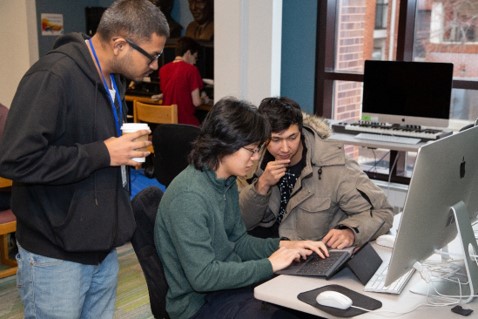
A new annual tradition at the Peabody Institute, PeabodyHacks invites students to spend 24 hours experimenting and developing projects at the cross section of music and technology. We encourage novice attendees, try to foster collaborations between engineering and music students, and focus more on process and experimentation than sophisticated final projects. The event also allows students to meet guest artists like Laetitia Sonami and Suzanne Kite, whose work challenges ideas of being, femininity, relationships with artificial intelligence, and embodiment of digital sound and physical bodies.

The second Peabody Institute annual hackathon brought to life a slew of interesting projects in January 2020 focusing on music and accessibility. Students created electronic instruments for beginners, developed games to help students with beat-deafness (it’s a thing!), and, to my delight, made music more accessible with fair use!

Ankur Kejriwal, Dylan Lewis, and Winston Wu are students who, during their day jobs, study engineering and computer science. As serious amateur musicians, they wanted to develop a project that made music more accessible for musicians who were still developing their chops and might find sitting down at the keyboard to play their favorite music intimidating. Semplice, their music simplification engine, allows anyone to take their favorite piece of music and make it easier to play without losing what they love about the piece.
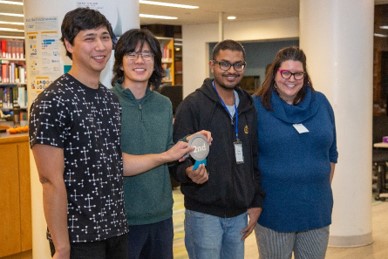
The premise behind Semplice is, well, simple: a user uploads their copy of their favorite piano piece that is too hard to play, and chooses how to make it easier. They can eliminate all 16th notes so that they don’t need to play as fast, simplify the left hand, or turn the left hand playing all into chord blocks. While simplifying the left hand makes it easier to play, it also allows for harmonic analysis of piano music, which can be beneficial for music theory students or anyone who might want to learn more about arranging and improvising.

Once you’ve selected how much easier to make the piece, then the magic happens! After quickly processing it through an OMR engine (optical music recognition), users get the new version of the piece to download and perform for their own study and personal use. Or, as I like to think of it, musical fair use magic!

When I reached out to the team after their 2nd place finish in the hacking competition, they were surprised that fair use had anything at all to do with their work. They had some experience with music copyright as music lovers: Winston Wu shared that he often buys transcriptions of his favorite symphonic works to play on piano, his main instrument. But when they were developing Semplice, they hadn’t spent a lot of time thinking about copyright.

The simplicity of the project is also what makes it such a wonderful example of fair use: users upload copies of music that they already own and only the uploader gets the simplified, derivative version. Speaking with Ankur Kerjiwal, he notes that even the processing logs don’t tell you anything about what pieces were uploaded and processed. You can see what someone named their file, but no user info is collected during the process, so the metadata in the logs doesn’t tell much of a story at all. The team is currently considering how to make the engine available, but they envision it as a free, light weight tool that solves a specific problem without copying, distributing, or making additional copies of the music available.

In conversations with Ankur, even though the team wasn’t thinking about fair use this time, copyright and fair use often create a “road bump” in his work. He relies on large datasets for testing his software projects and, as a PhD student, he needs to be able to publish that data openly to have his work peer-reviewed. While some of us who frequently work on copyright might think that the Google Books case settled the issue of computational data, it’s complicated, especially with music and websites who have restrictive terms.

I asked Ankur about his experience using the widely available musiXmatch dataset that is part of the Million Songs Dataset project. Because of copyright and other restrictions, less than one third of the million songs data lyrics are included. Also, to side-step concerns about the dataset, the research team has released the set as bag-of-words data, meaning that you don’t get the collected lyrics for each title, just counts of words across the dataset. I asked Ankur if this limited the utility of the dataset. He said, “Absolutely – you would be able to do much more if the set included full lyrics in the order they appeared in a track.”

Music continues to bring us its share of fair use challenges, but it’s exciting to see young engineers wading into the fair use waters. Uncovering unwitting fair uses in our campus community has proven a great way to educate faculty, students, and colleagues about how to flex their fair use muscle. With resources like our copyright consultation service at the Peabody Institute of the Johns Hopkins University, I hope that we can continue to work with students to help them take advantage of their fair use rights so that they can make music, accessibility, and magic happen.

Kathleen DeLaurenti is the Head Librarian at the Arthur Friedheim Library at the Peabody Institute of the Johns Hopkins University. Her work includes publishing projects for music, teaching music-focused copyright, and advocating for both fair use and the public domain. She has been active in the Music Library Association (MLA) Legislation Committee as a member since 2009 where she has also served as chair of the Best Practices for Fair Use in Music Collections task force. She has also been a member of the Copyright Education sub-committee of the American Library Association (ALA) and is the 2015 winner of the ALA Robert Oakley Memorial Scholarship for copyright research.

Fair Use Week 2020: Day Four With Guest Expert David Hansen

Fair Use: Copyright’s Deus Ex Machina?

by David Hansen

On the surface it sometimes feels like copyright law is incoherent. On the one hand, we read about how the character of copyright is aimed at benefiting society; enriching public discourse; and promoting the progress of science and the useful arts. But then, we read elsewhere about copyright as a primarily economic tool, calculated to achieve maximum incentives for economic return to owners.

Athena Pallas (Minerva) and the Centaur, by Sandro Botticelli c.1482. (No need to use fair use for this image since it is in the public domain!)

When we have what seems like an irresolvable conflict between these two characters, fair use somehow always seems to make an appearance. Like the story of those Greek dramas in which gods descend onto the stage via machine (deus ex machina) to resolve seeming plot holes, fair use can sometimes seem to swoop in and handily resolve all issues.

Except it doesn’t, or at least it shouldn’t. Fair use is not some external entity acting on the copyright system at whim, like Zeus interfering in mortal disputes. But in day to day use, I experience the allure to treat fair use this way when working with people new to copyright who are seeking answers to basic questions such as “Can I reuse this figure in my article?” or “How much of this book can I scan for my students to read online?” After some preliminary introduction to what fair use does, I find those users have the strong tendency to fall in love with the power of doctrine. Why address other complex questions (“Is the work copyrightable to begin with?” “Is what you want to do even implicating any of the owner’s exclusive rights?”), when, like a magical incantation, it seems you can just say words like “transformative” and “educational” and, presto chango, everything is OK!

While fair use is powerful, it isn’t magic. What it is, is an integral part of the Copyright Act. As the statute states, fair use is a “right” too, and exercising it is “not an infringement of copyright.” It also requires rigorous analysis. Mindlessly incanting words such as “transformative” won’t do. There is now helpful empirical evidence that fair use applied by the courts is not arbitrary, but has a robust and coherent framework of analysis for ensuring that copyright doesn’t “stifle the very creativity which the law is designed to foster.” Whole codes of best practices from a variety of communities of practice—documentary filmmakers, librarians, and many others—have been developed to put into practice lessons from those cases, providing yet more certainty and coherence to the doctrine for users in day-to-day application.

Beyond misapplication, I think a much more serious concern is in the pressure to look to fair use as a way to avoid other hard questions about other areas of copyright law. If we look to fair use to solve all our copyright questions, that pressure could start to water down and ultimately threaten the coherence of the doctrine. Two recent cases in particular raise some concerns about whether core questions about the scope of copyright protection are being punted into an unnecessary fair use analysis.

ASTM v. Public.Resource.org is one such case, at its core about whether standards (e.g., material safety standards) incorporated by reference into federal law are protected by copyright or are unprotectable as “edicts of government.” The district court in that case concluded that such standards as incorporated into the law are protectable (a decision I think was wrong).On appeal, the D.C. Circuit Court of Appeals reversed but instructed that the best way forward would be to avoid the subject matter question and instead analyze first the use primarily through the lens of fair use.

Oracle v. Google raises some similar issues. This is a case currently before the U.S. Supreme Court, primarily to answer the question of whether application program interfaces (APIs) are copyrightable. Google’s position is that they are not protectable and there is no infringement, at least in how Google has used them on the facts in that case, while Oracle says that they are. As a backup argument, Google argues that even if protectable, its use is fair use.  Google has a good, though a bit awkward fair use argument, explained well both in its brief and in supporting briefs from amici . Like the ASTM case, this case raises much more important questions about the scope of protection. Currently before the Supreme Court, my hope is that the Court does not dodge those important questions even if fair use gives them the option.

So is fair use copyright’s a deus ex machina? No, I think not, but we are sometimes tempted to ask it to be. We have a lot to lose if we do that. In any individual case, it probably doesn’t matter much, but over time and across many situations, we risk watering down the currently robust, predictable doctrine. I’m not saying that we should avoid fair use at all costs, but it’s important to remember that fair use is just one part (an important part) of the copyright system, and we shouldn’t lean on it to resolve all of our issues.

Notes and resources you may want to check out:

Some of my thinking on this subject is influenced by a fantastic article, now 15 years old, written by Matthew Sag titled “God in the Machine: A New Structural Analysis of Copyright’s Fair Use Doctrine.”

The research I mentioned above on the stability and coherence of fair use is rich. Some articles worth checking out are:

Finally, the fair use best practices are available at https://cmsimpact.org/codes-of-best-practices/.

David Hansen is the Associate University Librarian for Research, Collections & Scholarly Communications at Duke University Libraries. Before coming to Duke he was a Clinical Assistant Professor and Faculty Research Librarian at UNC School of Law. And before that, he was a fellow at UC Berkeley Law in its Digital Library Copyright Project.

Fair Use Week 2020: Day Two With Guest Expert Brandon Butler

The Feist-y Reason That Text and Data Mining is Fair Use

by Brandon Butler

Happy Fair Use Week! This is a happy week, indeed, for me, because fair use is my favorite copyright doctrine. But my favorite copyright decision just may be Feist v. Rural Telephone Co., a case about…telephone books!

Among the many wonderful qualities of the Feist opinion is the bright neon line that it draws between the purpose of copyright (to give incentives for the creation and distribution of creative, expressive works) and what way, way, WAY too many people think is copyright’s purpose: to ensure that someone who works hard to make something gets paid every time someone else uses it. If you understand why Feist draws that line, you’ll understand why text and data mining is clearly a fair use. (See, I got there! Now hang in a little longer and I’ll get back to fair use in a minute…)

The idea that whoever makes something should control it, or get paid whenever it gets used, is sometimes called “labor-desert theory,” and it sounds pretty tempting. There’s even an Enlightenment philosopher that people invoke to support it: John Locke, who is said to have argued that when someone takes something from “the commons” and mixes it with their labor, the result is a delicious property gumbo, and it is theirs.

It’s been a minute since I last read Locke, so I can’t promise that’s the most faithful representation of his thinking. But I can tell you it is a pretty faithful representation of the arguments that some copyright holders and property rights enthusiasts make in favor of long, strong copyright. They talk about how hard it is to make a movie, how much time and energy must be devoted to various forms of creative work, how many jobs are required to make the creative economy hum, and so on.

That may all be true, but the fact (ha!) is that how hard you work to make something is irrelevant to the question of whether copyright protects it. Why? Well, it is an axiom of US copyright law that the author’s monopoly protects her expressive contributions to a work, but does not protect any facts (or ideas) that might be embedded in the work.

For example, where two authors write about the same underlying historical event, the first author may prevent the second author from copying too much of her expressive prose (these were the facts of the pioneering fair use decision Folsom v. Marsh, in which verbatim copying from an exhaustive biography of George Washington to create a second, shorter biography was found to be infringing), but she certainly can’t prevent the second author from relying on facts uncovered in her research (as, for example, in Miller v. Universal, where an author’s “research” on a famous kidnapping case was held not to be the proper subject of copyright protection as against a second author). Facts are not created by anyone (pace post-modernism etc.), and are no one’s property, according to copyright law. And, crucially, wrapping facts in a crunchy, flaky layer of your copyrighted expression is not enough to give you rights in the underlying facts.

Despite the bedrock status of this proposition, and its seemingly clear embodiment in the statute at § 102(b) of the Copyright Act, courts had trouble resisting the impulse to reward “sweat of the brow” or “industrious collection” by granting copyright protection to facts first revealed in a work of authorship. It wasn’t until the 1991 resolution of a dispute over the wholesale copying of names and numbers in telephone directories in Feist that the Supreme Court gave us a strong, clear articulation of both the principle and its deep Constitutional foundations:

The mere fact that a work is copyrighted does not mean that every element of the work may be protected. Originality remains the sine qua non of copyright; accordingly, copyright protection may extend only to those components of a work that are original to the author. [citations omitted] Thus, if the compilation author clothes facts with an original collocation of words, he or she may be able to claim a copyright in this written expression. Others may copy the underlying facts from the publication, but not the precise words used to present them.

[snip]

It may seem unfair that much of the fruit of the compiler’s labor may be used by others without compensation. As Justice Brennan has correctly observed, however, this is not “some unforeseen byproduct of a statutory scheme.” Harper & Row, 471 U. S., at 589 (dissenting opinion). It is, rather, “the essence of copyright,” ibid., and a constitutional requirement. The primary objective of copyright is not to reward the labor of authors, but “[t]o promote the Progress of Science and useful Arts.” Art. I, § 8, cl. 8. Accord, Twentieth Century Music Corp. v. Aiken, 422 U. S. 151, 156 (1975)To this end, copyright assures authors the right to their original expression, but encourages others to build freely upon the ideas and information conveyed by a work. Harper & Row, supra, at 556-557. This principle, known as the idea/expression or fact/expression dichotomy, applies to all works of authorship. …This result is neither unfair nor unfortunate. It is the means by which copyright advances the progress of science and art. (Emphases added.)

The Supreme Court subsequently called this distinction (also known as the “idea/expression dichotomy”) part of the “traditional contours of copyright” and a “built-in First Amendment safety valve.” This is, in other words, about as fundamental a proposition as there can be in copyright law, grounded in both the Copyright Clause and the First Amendment of the Constitution. To the extent that fact and expression in a protected work can be separated, the facts are free for the taking. Whether it’s a phonebook or a newspaper article, expression is protected, but facts are free.

But, it turns out that one of the most powerful ways to extract and use all the facts embedded in a wide variety of creative works, to separate them from the expression in which they subsist, is to use text and data mining. But in order to perform text and data mining, a computer has to do things that ordinarily require the permission of the copyright holder, namely, copying the full text of the works into a computer, and in many cases displaying to the public contextual snippets that substantiate your claims. All this takes place thanks to technology that the Founders certainly couldn’t have foreseen, and that even the drafters of the 1976 Copyright Act might not have anticipated. Enter fair use, with the flexibility required to adapt to a changing world.

While there was already plenty of smart writing on the issue, and a long line of cases pointing in the right direction, the question of whether using computers to read in-copyright texts and extract facts from them got its fullest, and perhaps final, answer when Judge Pierre Leval decided the Google Books case. Google Books was the result of a massive digitization effort in which university libraries (including ours) provided millions of books to Google to digitize and crawl, just like they crawl websites, to help people find books. (Libraries got to keep the digital copies, which we deposited with the HathiTrust Digital Library.) Leval more or less created the modern fair use doctrine in a law review article first published 30 years ago, so it was fitting that he was the judge to finally give a broad blessing to text and data mining. In his opinion, Judge Leval answers two fundamental questions:

  1. Is Google’s purpose transformative, i.e., is it different from the author’s original expressive purpose and does it “serve[] copyright’s goal of enriching public knowledge” by using the protected material to “communicate[] something new and different from the original or expand[] its utility.” And,
  2. Does Google’s use provide the public with a “substitute” in the market for the original works in a way that does “meaningful” “significant” harm to the market for the work?

The ethos of Feist informs these two questions in a fundamental way. First, Judge Leval finds Google’s purpose to be transformative because of its fundamentally factual, informative character. The core purposes of Google Book Search—to locate relevant books by providing facts about the occurrence of search terms inside of books, and to reveal facts about the occurrence of words and phrases throughout the entire corpus of books—are of course radically different from the expressive purpose(s) of any particular book. And, not only is that purpose different, but it is consonant with the design of copyright itself, which is tailored to facilitate the free circulation of facts. It also serves the ultimate purpose of copyright, which is to “promote the Progress of Science” (where “Science” means all manner of learning and culture). Google Books is transformative because it is Feist-y – it liberates facts from expression in a way that adds to the world’s knowledge and doesn’t implicate the expressive monopoly of authors.

Which brings us to the question of market harm and substitution, which is also filtered through a Feist-ian lens. In addition to the obvious point that Google Book Search results are not a substitute for access to the underlying books (snippets are too small, and they are impossible to reassemble into the original work), which is certainly of fundamental importance, the court must contend with two other market-based challenges.

First, the Authors Guild argued that some users will find the information they need in snippets, which will forestall sales of the relevant works (either directly to researchers, or to libraries that serve them). The court’s response here is fundamentally Feist-ian: so what? That is, to the extent that the snippet reveals a fact that obviates a researcher’s need to buy a copy of the book containing that fact, that is all to the good.

Leval observes, by way of example, that a student looking for the year Franklin D. Roosevelt was first stricken by polio can find it in a snippet from Richard Thayer Goldberg’s The Making of Franklin D. Roosevelt (1981) that is returned from a Google Book Search query. The student will not have to buy Goldberg’s book, or even check it out from a library, to find this fact. And that’s fine; this is not a “harm” that copyright cares about. Judge Leval writes:

[The author’s] copyright does not extend to the facts communicated by his book. It protects only the author’s manner of expression.… Google would be entitled, without infringement of [the author’s] copyright, to answer the student’s query about the year Roosevelt was afflicted, taking the information from Goldberg’s book.The fact that, in the case of the student’s snippet search, the information came embedded in three lines of Goldberg’s writing, which were superfluous to the searcher’s needs, would not change the taking of an unprotected fact into a copyright infringement.

Or, as Justice O’Connor says in Feist, “This result is neither unfair nor unfortunate.”

The Authors Guild also argued that Google’s scanning harms a “derivative” market, namely the market for creating search databases and displaying snippets. At first glance, this may be the Guild’s most compelling argument. Maybe Google Book Search users never see the entire work, but of course Google itself necessarily does copy the full text, so the status of Google’s use behind the curtain could be less clear.

Judge Leval doesn’t think so. To the contrary, he says “There is no merit to this argument.” Why? Because

“The copyright resulting from the Plaintiffs’ authorship of their works does not include an exclusive right to furnish the kind of information about the works that Google’s programs provide to the public. For substantially the same reasons, the copyright that protects Plaintiffs’ works does not include an exclusive derivative right to supply such information through query of a digitized copy.”

Judge Leval goes on to argue that the right to create derivative works is limited to works that “re-present the protected aspects of the original work, i.e., its expressive content, converted into an altered form.” As has already been established, the Google Book Search project does no such thing. Indeed, Judge Leval distinguishes Google Book Search from other projects that have sought permission to display shorter portions of books or songs (as in ringtones) by observing that,

Unlike the reading experience that the Google Partners program or the Amazon Search Inside the Book program provides [or the listening experience that Ringtones provide], the snippet function does not provide searchers with any meaningful experience of the expressive content of the book. (emphasis added)

So, the fact/expression dichotomy, defended most memorably in Feist, does a lot of work in the Google Books opinion. And that is a good thing, because it grounds the right to text and data mine in fundamental copyright and Constitutional principles with roots as deep and broad as the fair use doctrine itself.

Brandon Butler is Director of Information Policy at University of Virginia.  There he works on implementing programs to guide the University Library on issues of intellectual property, copyright, and rights management for scholarly materials. He was a Practitioner-in-Residence at the Glushko-Samuelson Intellectual Property Law Clinic at American University’s Washington College of Law from 2013 to 2016. Before that, Brandon was Director of Public Policy Initiatives at ARL from 2009 to 2013.

Fair Use Week 2020: Day One With Guest Expert Kenneth D. Crews

Presidents, Politics, and Fair Use

by Kenneth D. Crews

It’s February in an election year, and that can only mean that fair use is everywhere.  It is on the television, in the political rallies, and in the leaks and machinations of governmental grinding.  We might often think of fair use as the basis for quotations in books, classroom materials for students, and innovative art and music built on generations of creativity that came before.  But fair use is an inherently political creature.

Fair use originated in United States court cases from nineteenth century, and it was enacted by Congress as Section 107 of the Copyright Act of 1976.  Getting anything through Congress is of course a political challenge, and every bit of the 1976 law was a belabored exercise that required almost two decades of hearing and compromises before Congress was ready to make the political decision affirming fair use into American copyright law.

Fair use is also political because it represents a policy choice by lawmakers in courts and Congress to allow limited uses of other people’s copyrighted works, taking into consideration variables of fairness, now known as the four factors of fair use.  Congress at the same time made the political decision to empower individuals to engage in fair use – to determine what is good and proper as the law directly affects the copyright owners and users – and to evaluate how uses might affect broader public interests and promote the mission of copyright to encourage creativity.

The politics of fair use also has a much more earthy manifestation.  As the campaign season becomes more heated, fair use becomes more prevalent.  Some uses are surely accomplished by license while other works may not be protectable under copyright at all.

Consider the campaign ad that includes a clip of a presidential candidate speaking pointedly on a CNN program.  Depending on the candidate’s exact statements and your point of view, you might want to use that clip in a short TV spot to support or attack this candidate. It matters not whether the speaker is Biden, Buttigieg, Bloomberg, Klobuchar, Sanders, Trump, Warren, or any other election prospect.

Imagine you are the campaign manager for a candidate trying to launch your latest ads, and those several seconds from CNN are perfect.  You could get permission, but unless you have a prior arrangement to expedite the process, permission can be fatal.  It might never come; it might be burdened with conditions; it might have a hefty fee.  Permission can stall the moment, and you are going to miss your constant rolling deadline.

Further, suppose you still want permission; you have to wonder, “Who can grant this permission?” The candidate is speaking her own words; the candidate likely owns the copyright in those words.  The CNN crew members are choosing camera angles and developing the layout and imagery on the screen; CNN surely holds those copyrights.  Other copyrights might creep into the clip, including quotations, signs, and background music.  Theoretically, multiple permissions might be needed for just the momentary passage.

Fair use fills the voids and paves over the uncertainties.  Based on the four factors, this campaign use of the clip is highly likely to be within fair use.  The election purpose advances the social policy of copyright; the work is fact-based news of great public interest; the amount is minuscule; and the use may well promote CNN and not harm it.

Realistically, this kind of use is also a classic calculated risk.  The campaign is in full tilt.  The election is on Tuesday.  The polling is grim.  You’re are holding a prime-time ad slot on the networks tonight.  You have to get this great commercial shot, cut, and launched.  The risk calculation is more than just wishing for the best or hoping no one notices.  The risk is in large part your own determination that a judge will agree that you are within fair use.

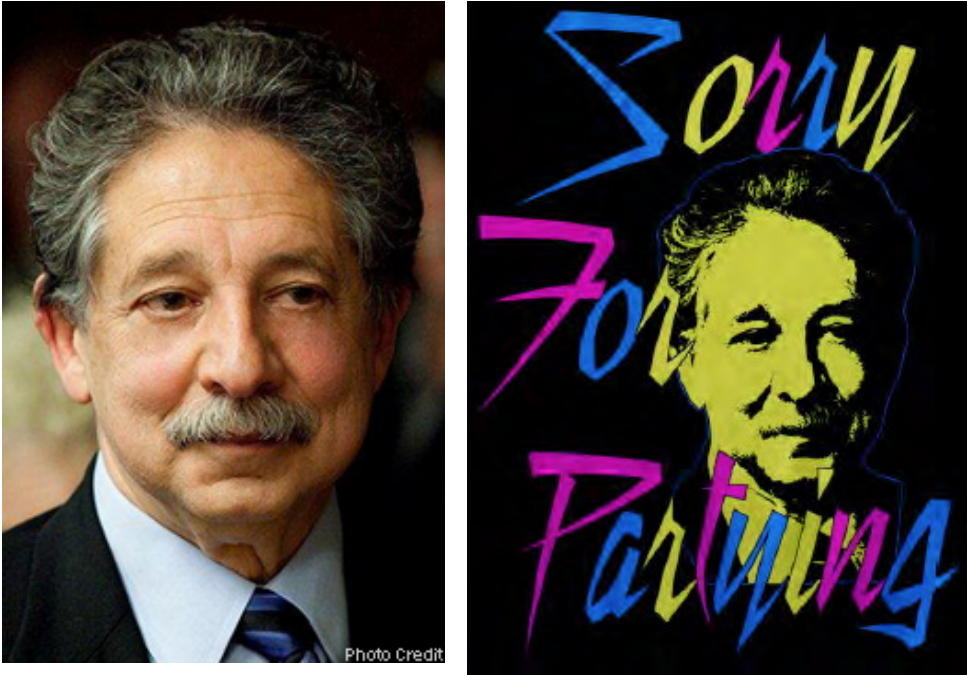
Realistically, these things rarely if ever go to court.  In Kienitz v. Sconnie Nation LLC, 766 F.3d 756 (7th Cir. 2014), the court ruled that the makers of t-shirts criticizing the mayor of Madison, Wisconsin acted within fair use when they made transformative use of a photograph of the mayor.  Perhaps most important, the use encompassed only a portion of the photograph for a transformative purpose, and the use did not substitute for objectives of the original work.  Add the pressured production deadline for a campaign ad and that the candidate’s statements are customary political fodder, and the likely result is a stronger case for the copyright exception.

Instead of going to court, political fair use is usually fought in the trenches among well-meaning and stressed professionals.  At the least, they (i.e., their lawyers) should know the fundamentals of copyright and fair use and be ready to assert or respond to an infringement claim.  They should also know that sometimes presidential politics is breeding ground of fair use.  When Justice Joseph Story developed the concept in an 1841 court ruling, he was deciding a case that involved the published papers of George Washington.

Which takes us to Trump and Watergate.  In the thick of the latest impeachment proceedings, John Dean of Watergate fame, was a guest on CNN when the topic turned to leaked excerpts from the forthcoming book by former National Security Advisor, John Bolton.  While other guests that day honed in on the formidable political threat, John Dean chimed, “You also have copyright issues here.  Start releasing books that are not published.”  The rest of the panel hit the boring button and moved on.  But Dean was onto something – a fair use lesson from his past life in Watergate.

Dean went to jail in the 1970s.  President Nixon resigned.  Gerald Ford gave a pardon, and he wrote a memoir.  The Nation magazine quoted about 300 words from the then-unpublished Ford manuscript.  The U.S. Supreme Court ruled in 1985 that The Nation magazine was not within fair use in reprinting those selected words, from a vastly longer book manuscript, into a critical news report (Harper & Row v. Nation Enterprises, 471 U.S. 539 (1985)).  Because the work was yet unpublished, the Supreme Court found that the amount was excessive and interfered with potential sales of the book.

Yes, John Dean, there are “copyright issues” surrounding the Bolton book and the Trump impeachment, especially while the book remains unpublished.  However, copyright also offers some solutions.  The press can write about the book, without necessarily using Bolton’s expression.  Moreover, if publication is stalled or if the public interest escalates, the opportunities for fair use may well expand.

Welcome to the season of fair use.  This is the time when fair use fuels elections and news reporting.  This is the season which begins to define the perimeter between the public interest and the economic marketplace.  This is the quadrennial interlude when fair use blossoms in full and is plainly visible for all to see on the daily news and the pressured campaigns.

Kenneth D. Crews is an attorney in Los Angeles and was formerly a professor of law at Columbia University and Indiana University.  He is the author of the book Copyright Law for Librarians and Educators: Creative Strategies and Practical Solutions, available in a new fourth edition launched at the end of February 2020.  Download a sample of the new edition and order online

Fair Use Week 2019: Day Five With Guest Expert David R. Hansen and Kyle K. Courtney

Fair Use, Innovation, and Controlled Digital Lending

by Kyle K. Courtney and David R. Hansen

One of the beautiful things about fair use is how it can soften the copyright act, which is in many ways highly structured and rigid, to provide flexibility for new, innovative technology.

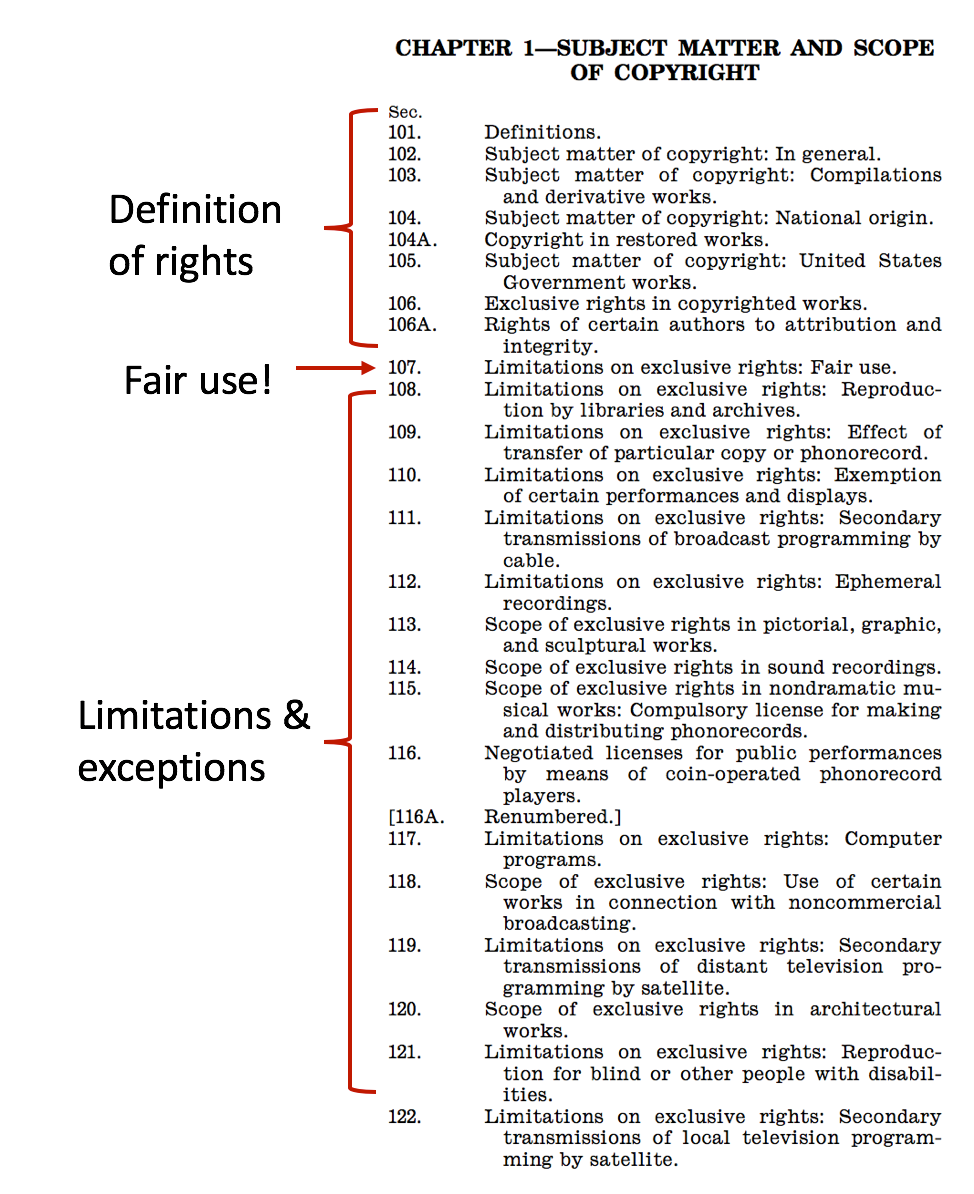
To understand how, it’s worth appreciating the structure of the Copyright Act. If you look at the table of contents of Chapter 1 of the Act (“Subject Matter and Scope of Copyright”), you see the first several sections define basic terms such as copyrightable subject matter. Included in that first half of the chapter is Section 106, which defines the exclusive rights held by rights holders: the right to control copying, the creation of derivative works, public distribution, public performance, and display.  In the bottom half of the Act, Sections 108 to 122 provide for a wide variety of limitations and exceptions to those owners’ exclusive rights. These exceptions are largely for the benefit of users and the public, including specific exceptions to help libraries, teachers, blind and print-disabled users, non-commercial broadcast TV stations, and so on.
Then, there’s fair use. As if perfectly positioned to balance between the broad set of rights granted to owners and the specific limitations for the benefit of users and the public, “fair use” is codified in Section 107, though it really isn’t a creature of statute. Fair use is a doctrine, developed by courts as an  “equitable rule of reason” that requires courts to “avoid rigid application of the Copyright Statute when on occasion it would stifle the very creativity which that law was designed to foster.” In that role, fair use has facilitated all sorts of technological innovations that Congress never could have anticipated, allowing copyrighted works and new technology to work together in harmony.

One particularly innovative system developed to enhance access to works is “controlled digital lending” (“CDL”):

CDL enables a library to circulate a digitized title in place of a physical one in a controlled manner. Under this approach, a library may only loan simultaneously the number of copies that it has legitimately acquired, usually through purchase or donation….[I]t could only circulate the same number of copies that it owned before digitization. Essentially, CDL must maintain an “owned to loaned” ratio. Circulation in any format is controlled so that only one user can use any given copy at a time, for a limited time. Further, CDL systems generally employ appropriate technical measures to prevent users from retaining a permanent copy or distributing additional copies.

While the courts have yet to weigh in directly on the CDL concept, we now have some guidance from a case in the Second Circuit Court of Appeals, Capitol Records, LLC v. ReDigi Inc. This case is about the development of an online marketplace created by ReDigi, which facilitated the sale of “used” mp3 music files. Capitol Records sued ReDigi, alleging that ReDigi infringed its exclusive rights to reproduction and distribution when it attempted to use a particular transfer method to sell the used mp3s.

The Court of Appeals upheld a lower court ruling that the doctrine of first sale is only an exception to the public distribution right and, therefore, does not protect digital lending because, in that process, new copies of a work are always made.

The court also rejected ReDigi’s fair use assertion. It found that the use was commercial in nature, was considered non-transformative, and replicated works exactly and precisely; simply put, they created mirror image copies of existing digital files.  Further, though the libraries associations in their briefs had raised the issue of a nexus of connection between fair use and specific copyright exceptions, such as Section 109 and 108, as an extension of Congressional policy that should influence the fair use analysis, the court did not discuss that argument.

That the court ruled ReDigi, a commercial enterprise, had interfered with the market for iTunes-licensed mp3s and their effort was not a transformative fair use, comes as no surprise to most lawyers and copyright scholars.

However, the decision, written by the creator of the modern transformative fair use doctrine, Judge Pierre Laval, contains several important lessons for CDL.

Transformative Use

First, the case raises a significant question as to whether CDL of digitized books may be “transformative” in nature. In the decision, examining the first factor, Judge Leval explains that a use can be transformative when it “utilizes technology to achieve the transformative purpose of improving delivery of content without unreasonably encroaching on the commercial entitlements of the rights holder.” For physical books, especially those that are difficult to obtain, this application of “transformative use” has a direct correlation to the core application of CDL.

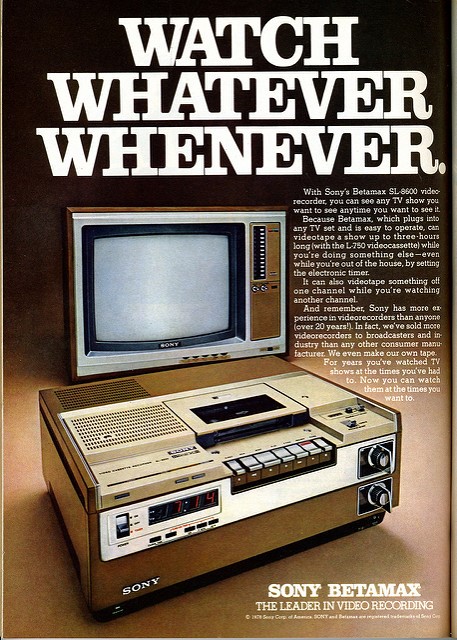
Further, this quote interprets another critical technology and fair use case from the U.S. Supreme Court, Sony Corp. of America v. Universal City Studios, Inc., 464 U.S. 417 (1984), famously called the “Betamax case.” Since its decision in 1984, the Sony ruling helped establish and foster the creation of new and vital technology, from personal computers and iPods to sampling machines and TiVo. This Sony quote was most recently used in another Second Circuit case, Fox News Network, LLC v. TVEyes, , where the same court laid out this particular reading of Sony. So, ReDigi here is drawing upon the precedent of two important transformative fair use cases to make its point. Under this transformative use definition, CDL should be determined to be transformative by the courts, especially if the commercial rights of the rights holder are not unreasonably encroached.
Therefore, while the court found ReDigi’s use to not be transformative, the Second Circuit opened the door for continued technological development, especially for non-commercial transformative uses under the first factor, like CDL. In fact, according to several scholars (Michelle Wu, Kevin Smith, Aaron Perzanowski), this creates a much stronger argument that CDL would be ruled a transformative fair use by a court.

Market Harm

The Second Circuit held that the ReDigi system caused market harm under the fourth factor of the fair use statute. Again, this is not a surprise to the copyright world. The court found that the service provider had no actual control of the objects being sold and that it “made reproductions of Plaintiffs’ works for the purpose of resale in competition with the Plaintiffs’ market for the sale of their sound recordings.”

What does this mean for CDL’s analysis under the fourth factor? Here, again, based on the language of the ReDigi decision, CDL looks pretty different. The ReDigi resales were exact, bit-for-bit replicas of the original sold in direct competition with “new” mp3s online through other marketplaces, such as iTunes. The substitutionary effect was clear, especially since the mp3 format is the operative market experiencing harm. For digitized copies of print books used for CDL, the substitutionary effect is far less clear. With most 20th-century books—the books that we feel are the best candidates for CDL—the market to date has been exclusively print. For those books, some new evidence from the Google Books digitization project suggests that digitization may in fact act as a complementary good, allowing digital discovery to encourage new interest in long-neglected works.

CDL doesn’t compete with a recognized market. When a library legally acquires an item, it has the right, under the first sale doctrine, to continue to use that work unimpeded by any further permission or fees of the copyright holder. CDL’s digitized copy replaces the legitimately acquired copy, not an unpurchased copy in the marketplace. To the extent there is a “market harm,” it’s one that is already built into the transaction and built into copyright law: libraries are already legally permitted to circulate and loan their materials. The CDL “own-to-loan ratio” ensures that the market harm for the digital is the exact same as circulating the original item.

Again, the language of the ReDigi court should be examined closely. The court distinguishes substitutionary markets from those that are complementary and natural extensions of the use inherent with purchasing the original: “to the extent a reproduction was made solely for cloud storage of the user’s music on ReDigi’s server, and not to facilitate resale, the reproduction would likely be fair use just as the copying at issue in Sony was fair use.” Reading this language through the lens of CDL, a modern reproduction service, such as CDL, that further enhances the owner’s use of materials that were purchased under first sale or owned under other authorized means would also qualify as a fair use.

All in all, the ReDigi case most certainly does not settle the CDL issue; if anything, the specific language of the court emphasizes the potential for more non-commercial transformative uses like CDL.

David Hansen is the Associate University Librarian for Research, Collections & Scholarly Communications at Duke University Libraries. Before coming to Duke he was a Clinical Assistant Professor and Faculty Research Librarian at UNC School of Law. And before that, he was a fellow at UC Berkeley Law in its Digital Library Copyright Project.

Kyle K. Courtney is Copyright Advisor and Program Manager at Harvard Library’s Office for Scholarly Communication (OSC). Before joining the OSC, Kyle managed the Faculty Research And Scholarly Support Services department at Harvard Law School Library.

Fair Use Week 2019: Day Four With Guest Expert Krista Cox

Celebrating Fair Use in Films

by Krista Cox

This year, Fair Use/Fair Dealing Week immediately follows the Oscars and I definitely have movies on my mind.  The Green Book (which I haven’t seen yet) was one of the nominees—and ultimately winner—of the coveted Best Picture Award, but was not without its share of critics.  Like other movies dealing with race, critics said that it minimized the true extent of racism and fell into the “White Savior” trope. Just before the Academy Awards, comedian Seth Meyers released a video highlighting these criticisms parodying popular films, including Hidden Figures, The Blind Side, and The Help.  Meyer’s White Savior: The Movie Trailer is a fantastic example of parody which, of course, is protected by fair use.  Since Kenny Crews covered parody so well in his Day 1 post, I’ll turn to a different aspect of fair use and movies.

Although films obviously create their own creative content, protectable by copyright, often these works incorporate existing content.  Depending on the particular use, a filmmaker or production studio may choose to license a particular copyrighted work, but in other instances the film creator has relied on fair use.  Here are some examples where fair use and films have gone hand-in-hand—both in the documentary film context as well as feature films and shows.

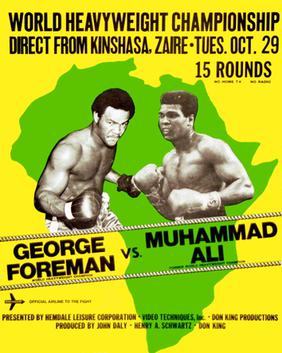
Documentary filmmakers have relied heavily on the doctrine of fair use, which makes a lot of sense. If documentary filmmakers constantly had to rely on permission and licenses—which would also mean that a rightholder could refuse to grant permission—the result could be that these documentaries lacked proper historical references and context.  In a 1996 case, the Southern District of New York refused to grant Turner Broadcasting’s motion for injunctive relief, finding that the clips of a boxing match film involving Muhammad Ali and George Foreman in a documentary about Muhammad Ali was likely a fair use.  In Monster Communications, Inc. v. Turner Broadcasting Systems, the court noted that only a small portion of the total film—just 41 seconds—was taken and that the documentary used it for informational purposes.
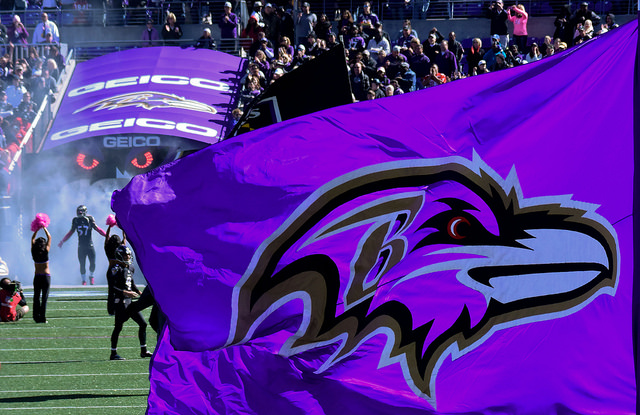
In another instance of documentary filmmaking, artist Bouchat sued over the use of the Baltimore Ravens’ logo in several videos.  While a prior case held that the Baltimore Ravens had infringed the logo design by Bouchat for several years, the use in the films (and historical exhibits) was considered fair.   The Fourth Circuit held in Bouchat v. Baltimore Ravens that the videos at issue used the copyrighted material in a transformative way, telling the history of the Baltimore Ravens and the logos were “fleeting” in nature.

And in yet another litigated case over a documentary film, National Center for Jewish Film v. Riverside Films, a district court noted that the use of film clips in Sholem Aleichem: Laughing in Darkness (about the life of a 19th century Yiddish author) was transformative because it incorporated various clips with scholarly commentary (NB: whether the films had entered the public domain was also questioned, a factor that the court weighed in favor of fair use).  Again, because these clips were used in a transformative way that did not supplant the market for the original film, the court held the use to be fair.

Not every fair use ends up being litigated, though.  Indeed, most documentary movies probably don’t involve rightsholders claiming copyright infringement in part, thanks to the Documentary Filmmakers’ Statement of Best Practices in Fair Use.  That Code of Best Practices, like other Codes (see: Code of Best Practices in Fair Use for Academic and Research Libraries or the Code of Best Practices in Fair Use for Software Preservation—two best practice statements released by ARL), relies on the consensus view of fair use best practices in the community for which it was written. The 2005 Code for Documentary Filmmakers has had a tremendous impact on the community, making it easier for filmmakers to get insurance, avoiding unnecessary licensing costs and leading to the release of films that may never have been finished otherwise.  One of the successes is This Film Is Not Yet Rated about the MPAA’s rating system.  While the director had initially planned to license the clips used, those licenses would have prevented him from using the material in a way that criticized the entertainment industry.

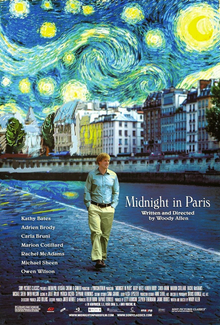
While the documentary filmmaker community relies heavily on fair use there are a number of examples where fair use was invoked in feature films, as well.  For example, the Oscar-winning movie Midnight in Paris, about a screenwriter, played by Owen Wilson, who travels back in time to the 1920s and hangs out with luminaries like Scott Fitzgerald, Ernest Hemingway, Gertrude Stein, Cole Porter, Salvador Dali and others was the subject of a lawsuit.

In one scene, the main character paraphrases a line from novelist William Faulkner’s novel, Requiem for a Nun (the line in question is, “The past is never dead.  It’s not even past”) and provided attribution back to Faulkner.  Nonetheless, the Faulkner estate sued, claiming that the use of the line infringed copyright.  The Northern District Court of Mississippi referenced de minimis usage (discussed a bit more below), but also conducted a full fair use analysis finding that the quote was of “miniscule” importance to Faulkner’s novel as a whole and the use in Midnight in Paris, which amounted to a mere 8 seconds of the feature-film, did not harm Faulkner’s market for his novel.  To the contrary, the court questioned: “How Hollywood’s flattering and artful use of literary allusion is a point of litigation, not celebration, is beyond this court’s comprehension.  The court, in its appreciation for both William Faulkner as well as the homage paid him in Woody Allen’s film, is more likely to suppose that the film indeed helped the plaintiff and the market value of Requiem if it had any effect at all.”

Similarly, in the 2013 film Lovelace, based on the biography of Linda Lovelace, an actress who starred in a famous pornographic film but later became a spokesperson against pornography, the producers re-created three scenes from Deep Throat.  The Southern District of New York in Arrow Productions v. The Weinstein Company ruled the use transformative because it provided “new, critical perspective” on Lovelace and would not supplant the market for the pornographic film.

Courts have considered and upheld fair uses in the film context, but some have found in favor of the defendant without even needing to go through the four fair use factors.  Instead, for various uses of copyrighted works in TV shows and feature films, some courts have found in favor of the use on the basis of fair use’s cousin, de minimis use.  In these de minimis use cases, courts have determined that the amount used was so small and trivial, the court need not engage in a full fair use analysis.  These cases have included, for example, the 2000 rom-com What Women Want, featuring Mel Gibson (involving the depiction of a pinball machine in the background); the 1995 crime thriller SE7EN, featuring Brad Pitt and Morgan Freeman (use of copyrighted photos appeared fleetingly and out of focus); and HBO’s TV series Vinyl which was created by Mick Jagger and Martin Scorsese about a record executive in the 1970s (fleeting use of a dumpster tagged with graffiti in the background of a single scene).

Krista L. Cox is the Director of Public Policy Initiatives for the Association of Research Libraries (ARL), in Washington D.C.  Prior to joining ARL, Cox was the staff attorney/legal counsel at Knowledge Ecology International, a nonprofit organization that searches for better outcomes, including new solutions, to the management of knowledge resources. She may be reached at krista@arl.org or on Twitter: @ARLpolicy

Fair Use Week 2019: Day Three With Guest Expert Dr. Nora Slonimsky

The Public Figure Exception(s): Finding Fair Use in the Vastness of Early American IP

Originally published on Uncommon Sense, a publication of the Omohundro Institute. This post accompanies “Copyright and Fair Use in Early America,” episode 227 of Ben Franklin’s World. You can find supplementary materials for the episode on the OI Reader app, available through iTunes or Google Play.

by Nora Slonimsky

Whether you are Gigi Hadid or Jedidiah Morse, your copyright is often more than just a proprietary claim. Public figures have long been bound together in the public eye with perception and re-use of their works, whether people share photographs of you walking down the street or a map produced more than two hundred years before GPS. In an era of Twitter, paparazzi, and a rapidly turning over news cycle, deciding what information the public needs to make informed decisions is an increasingly fraught challenge—but not a new one. As early national writers sought to shape American media in the wake of independence, they confronted what it meant to be a public figure and what value that role had in the creation of new forms of expression.

A legal doctrine highlighted this week through collaboration among libraries, institutions of higher education, and professional research organizations, fair use emerged as a formalized legal framework in the nineteenth century with infamous competing biographies of George Washington and the 1841 case of Folsom v. Marsh, as Kyle K. Courtney and Liz Covart discuss in the #FairUseWeek episode of Ben Franklin’s World. The concept is intended to protect the right to circulate information that would otherwise be covered by copyright.

Fair use doctrine intersects with similar principles around the globe, but several of its particular qualities were formulated in the United States and have roots that date to the beginning of the nation’s history. One root involves a proposed aspect of fair use called the “public figure exception.” As described in the 1985 case of Harper & Row v. The Nation, the public figure exception limits an author’s or proprietor’s right to be paid for their expression when the work contains “matters of high public concern.”[i] A work “containing matters of high public concern” can often be intertwined with the public role of the author. As a consequence, the public figure exception introduces the reputation or image of the author as a consideration in the balance between the individual claims of artists and innovators over their creative labor and the broad social need for the learning and engagement that comes from expression.

Turning to early America can provide a deeper understanding of why. When the phrase “public figure exception” appears today, it is frequently in the context of defamation. In my first book project, I look closely at the relationship between libel and copyright, and how they function in the construction authorial, as well as state, authority. To write and publish a criticism of a public figure was still considered seditious libel in the late eighteenth century. The logic that something could not be libelous if it wasn’t true was not formalized in United States law until 1805, and even then, was determined by state, and not federal, law.[ii] The truth defense evolved over the next century and a half, but in the early national period, the standing of a writer – through their racial, religious, ethnic or gender identity, political affiliation, wealth, education, networks, regional ties – determined the authenticity of their expression alongside any innovative qualities.

It is more Jedidiah Morse than Gigi Hadid then who ties together these complex threads of copyright, fair use, libel, and public opinion. Although media in the late eighteenth century was indeed very social, the media were quite different. Morse might not have been the most adept at the eighteenth-century equivalents of Twitter, like pamphlets and broadsides, but he was extremely skilled at social networking. For the “father of American geography,” Morse shrewdly marketed his nationalistic series of geography books, from 1784’s Geography Made Easy to the 1789 The American Geography to The American Universal Geography, which appeared in several editions in the 1790s and early 1800s. As a strong supporter of the Federalist coalition who consistently cultivated an image of expertise in topography, environmental science, history, and political commentary, Morse was extremely close with other leading figures in the knowledge industry like Noah Webster and employed Alexander Hamilton and James Kent as his copyright lawyers in what would be the first known federal copyright case, Morse v. Reid, in 1798.

Despite, or perhaps because he was such a staunch advocate for copyright, Morse relied heavily on what we would now consider fair use. Writing that he often “aimed at utility rather than originality, and of course, when he has met with publications suited to his purpose, has made free use of them,” Morse added, without irony, that he “frequently used the words as well as the ideas of [other] writers” without telling the reader.[iii] Morse did not see any issue with compiling the work of other writers and using it in his own. Morse conducted his own research and wrote much of The American Geography on his own, but to bolster his credibility, “maintained extensive correspondence with men of Science,” and “in every instance, has endeavored to derive his information from the most authentic sources.”[iv] In other words, he relied on the expertise of others, and in turn, shared their findings while expanding his own. So if one of these experts in turn relied upon Morse’s work for their own, it does not appear that he had much of a problem with it.

Where Morse did have a problem, however, was when someone whom Morse did not deem a valid authority did so. Even worse, when the “pirate” in question was a Baptist minister held in Newgate Prison for sermons in favor of the French Revolution, the Congregationalist, pro-British Morse was aghast. William Winterbotham was in reputation everything Morse feared. He published An Historical, Geographical, Commercial and Philosophical View of the United States of America and of the European Settlements in the West Indies in London in 1795; it was reprinted in New York in 1796.

Only then did Morse have any legal recourse, as international copyright did not exist. Alerted to Winterbotham’s book by Morse’s London publisher, John Stockdale, Morse immediately recruited Hamilton as his attorney, writing that “After going over the Work with care & a great deal of labour, I have estimated that nearly a third part of the whole of Winterbothams work, has been copied verbatim from my work, or about 600 pages out of about 2000.”[v] By current fair use standards, this was a high percentage, but what seemed to truly incense Morse was not the quantity, but rather how Winterbotham had “artfully, in many instances … transposed paragraphs & sentences, apparently with a view to deceive the reader.”[vi] It was evident, according to Morse and his legal team, that Winterbotham had copied more of Morse’s work than was appropriate to demonstrate expertise or “authentic sources.” As you can see in the images to the left, while maps were not a source of dispute for Morse, there was clear reliance on The American Geography (top) in the New York edition of An Historical, Geographical, Commercial and Philosophical View of the United States of America and of the European Settlements in the West Indies made by John Reid (bottom).
Winterbotham did not criticize Morse. In fact, when Winterbotham mentioned him at all, it was to praise his status as a geographer and writer. Still, because of Winterbotham’s politics and precarious position, Morse remained worried about his authority as a public figure. This was both a commercial and credit-based fear. If readers began to associate Morse and The American Geography series with the work of Winterbotham, it could encroach on Morse’s market share, but also influence American readers about Morse’s message and his political standing within the Federalist network. Winterbotham’s piracy, whether rational or irrational, reasonable or unreasonable, functioned to Morse like a libel.

Whether the people involved are presidents like George Washington or Gerald Ford, or well-known authors like Morse, the public figure exception is based on an understanding of fair use in which the public need for the expression contained within a writer’s work is pivotal to making informed choices. If the author is an authority in a given subject, especially one that has obvious relevance for pressing issues, financial barriers to that material can have drastic consequences. And yet writers, like all workers, need to make a living. Writing nearly two hundred years before Harper & Row v. The Nation, and fifty years before Folsom v. Marsh, Morse was not articulating clear legal doctrine by any means, but rather musing on exceptions to exceptions. The copyright consciousness in which Morse wrote and published was one in which he could both reap the benefits of fair use and complain of piracy at the same time, in large part because both relied upon his carefully crafted public persona as a geographic expert. When looking at media, authority, and access through the lens of fair use, the early history of copyright is thus as much about public opinion as it is property.

Nora Slonimsky works on the history of copyright and its relationship with media regulation, state formation, and knowledge production in the long eighteenth century. Dr. Slonimsky is the Gardiner Assistant Professor of History at Iona College and Director of the Institute for Thomas Paine Studies (ITPS). This post also appears at the Copyright At Harvard Library blog.

_______

[i] Harper & Row v. Nation Enterprises, 471 U.S. 539 (1985): 3.

[ii] This was in the case of People v. Croswell (1804), in which Alexander Hamilton argued the truth defense. It was written into law by New York State the following year.

[iii] Jedidiah Morse, The American Geography; Or, A View of the Present Situation of the United States of America Containing – Astronomical Geography, Geographical Definitions, Discovery, and General Descriptions of America and the United States – of their Boundaries, Mountains, Lakes, Bays and Rivers, Natural History, Production, Population, Government, Agriculture, Commerce, Manufactures, and History –a Concise Account of the War, and of the Important Events with have Succeeded with a Particular Description of Kentucky, the Western Territory and Vermont – of their Extent, Civil Divisions, Chief Towns, Climates, Soils, Terrain, Character, Constitutional, Courts of Justice, Colleges, Academies, Religion, Islands, Indian, Literary and Humane Societies, Springs, Curiosities, Histories &c to Which is Added an Abridgement of the Geography of British, Spanish, French and Dutch Dominions in America and the West Indies – of Europe, Asia and Africa Illustrated with Two Sheet Maps – One of the Southern, the Other of the Northern States – From the Latest surveyors. Shepard Kollock: Elizabeth, New Jersey, 1789: vi-vii.

[iv] Morse, The American Geography, iv.

[v] Jedidiah Morse, “Letter from Jedidiah Morse to James Kent, January 21st, 1796,” Box Two, Morse Family Papers, Sterling Memorial Library, Yale University.

[vi] Morse, “Letter from Jedidiah Morse to James Kent.”

Fair Use Week 2019: Day Two With Guest Expert Brandon Butler

Some Software-informed Thoughts on Fair Use and Licensing for Fair Use Week

by Brandon Butler

I thought I knew a fair bit about fair use—then I started doing more work with software. That’s when I realized I hadn’t thought quite enough about fair use and licenses. This fair use week, I want to share a little bit of what I’ve been thinking. For too long my quick-and-dirty rule of thumb for licensed content was that fair use would be of little or no value for works covered by a license. That’s not an accurate picture, however, and it does a disservice to fair use!


Non-overlapping magisteria

I want to start with what I now see as the right way to think about these two issues. To borrow a fancy-sounding term from biologist Stephen Jay Gould, I conceptualize licenses and fair use as ‘non-overlapping magisteria‘ — separate and compatible sources of authority for anyone in need of guidance about when they can use in-copyright material. Each source of authority tells us something important, and the two can co-exist (and give us meaningful, useful guidance) even when they are in apparent conflict.

Licenses tell us the boundaries of the permission granted by the copyright holder. When I read a license, I learn what the license permits and what it does not permit. The copyright holder’s power to license her works is a very valuable asset. Licenses often permit uses that far exceed anything that could be done under ordinary copyright law—installation of the same software on multiple machines, simultaneous access to the same digital book by multiple users, or access by one user across multiple devices, and so on. But licenses typically include limits—”for personal use only,” “non-transferable,” and the like. These tell you where the permission granted in the license ends.

Fair use is a doctrine in copyright law that allows certain uses of in-copyright works regardless of permission. To put it another way, fair use is permission granted by law. Users can promise not to exercise their fair use rights, but no copyright holder can unilaterally take away the permission given by law.

It follows that user rights like fair use apply, by definition, precisely where permission has not been granted. A license that says “for personal use only” tells you the limits of the license. It doesn’t tell you the limits of fair use.

Which is not to say that fair use always picks up where licenses leave off. To the contrary, we would expect that in most ordinary cases fair use will not permit licensees to exceed the scope of a license. Limitations in licenses are usually put in place as a way of protecting (or segmenting) a market. Courts would be loathe to find fair use if your activity directly undermines ordinary market exploitation. However, when a license no longer supports an active market, and adherence to a license would frustrate core purposes of copyright (like scholarship or teaching), fair use can apply.

Unless They Do Overlap

There is one circumstance where license terms and fair use can come into direct conflict: where a user promises explicitly not to engage in activity protected by fair use (to create a parody from a licensed work, for example). Only licenses that not only limit the scope of permission, but also secure from the user a promise not to do certain things, can cause this conflict.

In these cases, though, what is the consequence for the licensee who breaks her promise? I’d suggest that if such uses are still fair, then failure to comply with the license can’t make you a copyright infringer. You may be in breach of the agreement, and the licensor could sue for damages due to the breach, but the extraordinary statutory damages (infamously up to $150k per work for willful infringement) associated with copyrights are off the table. This should lower the stakes considerably for folks considering fair use.

One last thing you can consider if you’re concerned about anti-fair use language in a license agreement: a contract only binds the parties to the agreement, not third parties. Someone who comes to possess a digital work without ever affirmatively agreeing to license terms (e.g., a second-hand purchaser who never sees a shrink-wrap license or clicks on a pop-up “I agree” button) is not likely to be bound by those terms. They would also not be able to benefit from the license, but that’s where fair use would have a role to play.

Brandon Butler is Director of Information Policy at University of Virginia.  There he works on implementing programs to guide the University Library on issues of intellectual property, copyright, and rights management for scholarly materials. He was a Practitioner-in-Residence at the Glushko-Samuelson Intellectual Property Law Clinic at American University’s Washington College of Law from 2013 to 2016. Before that, Brandon was Director of Public Policy Initiatives at ARL from 2009 to 2013.

Fair Use Week 2018: Day Five With Guest Expert Carla Myers

Fair Use and Course Reserves: Fact and Fiction

By Carla S. Myers

Almost ten years ago I accepted a position as the course reserve manager for Bierce Library at the University of Akron. In this position I oversaw both the print and electronic reserve services, and early on I was charged by my supervisors to learn as much as I could about copyright to help ensure that the library’s reserve practices fell within the scope of the law. As I began researching the law I was a bit surprised by how much information I found on the application of fair use for reserve services. Unfortunately, it took me a while to realize that much of the information available online on this topic is deficient and propagating many myths and misconceptions regarding fair use. In turn, this flawed information was limiting the ways in which academic libraries provided reserve services to our campus communities. In this post, I’d like to address a few of the fair use misconceptions hear most often regarding reserve services.

Taking a Look at the Law

To identify the commons misconceptions related to fair use and course reserves it’s best to start with an understanding of the law itself. The fair use statute, which is found in Section 107 of U.S. Copyright Law, reads:

Notwithstanding the provisions of sections 106 and 106A, the fair use of a copyrighted work, including such use by reproduction in copies or phonorecords or by any other means specified by that section, for purposes such as criticism, comment, news reporting, teaching (including multiple copies for classroom use), scholarship, or research, is not an infringement of copyright. In determining whether the use made of a work in any particular case is a fair use the factors to be considered shall include—

  • the purpose and character of the use, including whether such use is of a commercial nature or is for nonprofit educational purposes;
  • the nature of the copyrighted work;
  • the amount and substantiality of the portion used in relation to the copyrighted work as a whole; and
  • the effect of the use upon the potential market for or value of the copyrighted work.

Common Misconceptions

Misconception #1: Fair use has specific limits. For example, fair use is limited to one chapter from a book, one article from a newspaper or periodical, or a single photo, chart, or graph from a book, periodical, or newspaper.

This misconception is tied to the third factor of fair use and, as you’ll see in the statute, there are no such limits found in Section 107. To determine how much of a work can be reused under fair use, it is helpful to know the caselaw of the statute. Examining the U.S. Copyright Office’s Fair Use Index, you’ll find cases in which the reuse of 100% of a work was considered fair use, and other cases in which reusing small portions of works were found not to be fair use. When faculty hold up a book and ask me “How much of this can be scanned and placed on electronic reserve?” I ask them to tell me how much of the work they need to use for course instruction and help them consider how this amount balances with the other three factors. When making a fair use determination it’s important to remember that no one factor on its own determines fair use, rather they all need to be considered in relation to each other.

Misconception #2: Fair use can be considered for the first semester of use only. Any subsequent use of a copyrighted work for reserve requires that you pay a license fee for the use.

There are no term limits found in the fair use statute. When a faculty member who has placed a work on print or electronic reserve under the auspices of fair use asks me about reusing the work in subsequent semesters, I encourage them to work through the four factors of fair use again to determine if any of the circumstances of their use has changed. If they have, and if their use of the work may no longer fall within the scope of fair use, we consider other options that may be available to them for making the work acessible to students. This could include the utilization of other exceptions found in the law, such as the Technology, Education and Copyright Harmonization Act (TEACH Act) found in Section 110(2) of US copyright law, linking to a copy of the work made freely and legally available online, seeking permission to reuse the work, or obtaining a license to reuse the work.

Misconception #3. Fair use can only be used to make “x” number of works available to students through reserve, and after you hit that number you must obtain permission or a license to share other works with students.

I have heard many variations of this particular misconception, including:

  • Fair use is sharing up to five photographs.
  • Fair use is sharing up to nine journal articles per class.
  • Fair use is sharing up to two chapters/readings from a particular author.

These limits are also not found in the fair use statute. Fair use can be utilized as many times as needed for each individual course, each semester. Just make sure you’re making fair use determinations on a case-by-case basis for each work being placed on reserve. The American Library Association’s Fair Use Evaluator can help you in making these determinations.

These misconceptions (and many others) arise from the Agreement on Guidelines for Classroom Copying in Not-For-Profit Educational Institutions with Respect to Books and Periodicals (also known as the “Classroom Photocopying Guidelines”) that ware put forward as part of a House Report in 1976.
It is important for librarians to understand that these Guidelines hold no force of law, nor does following them provide any type of safe harbor against claims of copyright infringement. This fact has been illustrated in Cambridge Univ. Press v. Becker (the Georgia State e-Reserves Lawsuit)” in which three academic publishers, Oxford University Press, Cambridge University Press, and Sage Publishing, filed suit against officers of Georgia State University over the copying and distribution of copyrighted works through the library’s electronic reserve system. In her initial opinion on the case, Judge Orinda Evans of the U.S. District Court for the Northern District of Georgia stated:

[T]he Guidelines establish numerical caps on how many words a teacher may copy and still stay within the safe harbor. This brightline restriction stands in contrast to the statutory scheme described in § 107, which codified a multi-factorial analysis in which no factor is dispositive. Thus, the Guidelines’ absolute cap, which would preclude a use from falling within the safe harbor solely on the basis of the number of words copied, is not compatible with the language and intent of § 107.

The Eleventh Circuit Court of Appeals echoed these sentiments. The opinion, written by Judges Gerald Bard Tjoflat and Stanley Marcus (with a concurrence by Judge C. Roger Vinson) states:

We note that the Classroom Guidelines, although part of the legislative history of the Copyright Act, do not carry force of law. In any case, to treat the Classroom Guidelines as indicative of what is allowable [under fair use] would be to create the type of “hard evidentiary presumption” that the Supreme Court has cautioned against…so we must not give undue weight to the amounts of copying set forth in the Classroom Guidelines.

The case is still under appeal, and you can learn more about it and follow new developments in this LibGuide hosted on the Georgia State University College of Law Library’s website. I also encourage you to read The Law of Fair Use and the Illusion of Fair-Use Guidelines, authored by Dr. Kenneth D. Crews, an attorney, author, professor, and international copyright consultant, as it will help you better understand how many of the various “fair use guidelines” were developed and the ways in which they misconstrue the law.

Managing Course Reserve Copyright Issues

When talking with faculty and librarians about copyright, I also always encourage them to remember our shared mission and not let fear of being sued prevent them from utilizing the exceptions found in the law when looking to connect students with educational resources or provide new services to them. This does not mean that we should ignore the law in its entirety or assume that because we have an educational purpose we are free to reuse works however we want. Rather, it means should consider what options the law allows and work within the scope of that law to support the educational mission of our institution. There are also options aside from the exceptions found in US copyright law that are available to use when providing course reserve services. This includes linking to works available in the library’s online collections or made legally and freely available online, using Creative Commons and Open Access works within the scope of their license terms, and obtaining permission to reuse works from the rightsholders. If these options do not work, the library can then investigate acquiring a license to make the work available through reserve.

I’m excited to announce that I have a forthcoming book on this very topic, available later this year: Copyright and Course Reserves: Legal Issues and Best Practices for Academic Libraries, published by Libraries Unlimited (978-1-4408-6203-8). In the meantime please feel free to reach out to me with your questions regarding copyright and course reserves or seek additional information in the many excellent sources I’ve cited here.

Carla Myers is Assistant Professor and Coordinator of Scholarly Communications for the Miami University Libraries. Her professional presentations and publications focus on fair use, copyright in the classroom, and library copyright issues. She has a B.S. in Psychology from the University of Akron and a Masters in Library and Information Science from Kent State University.